




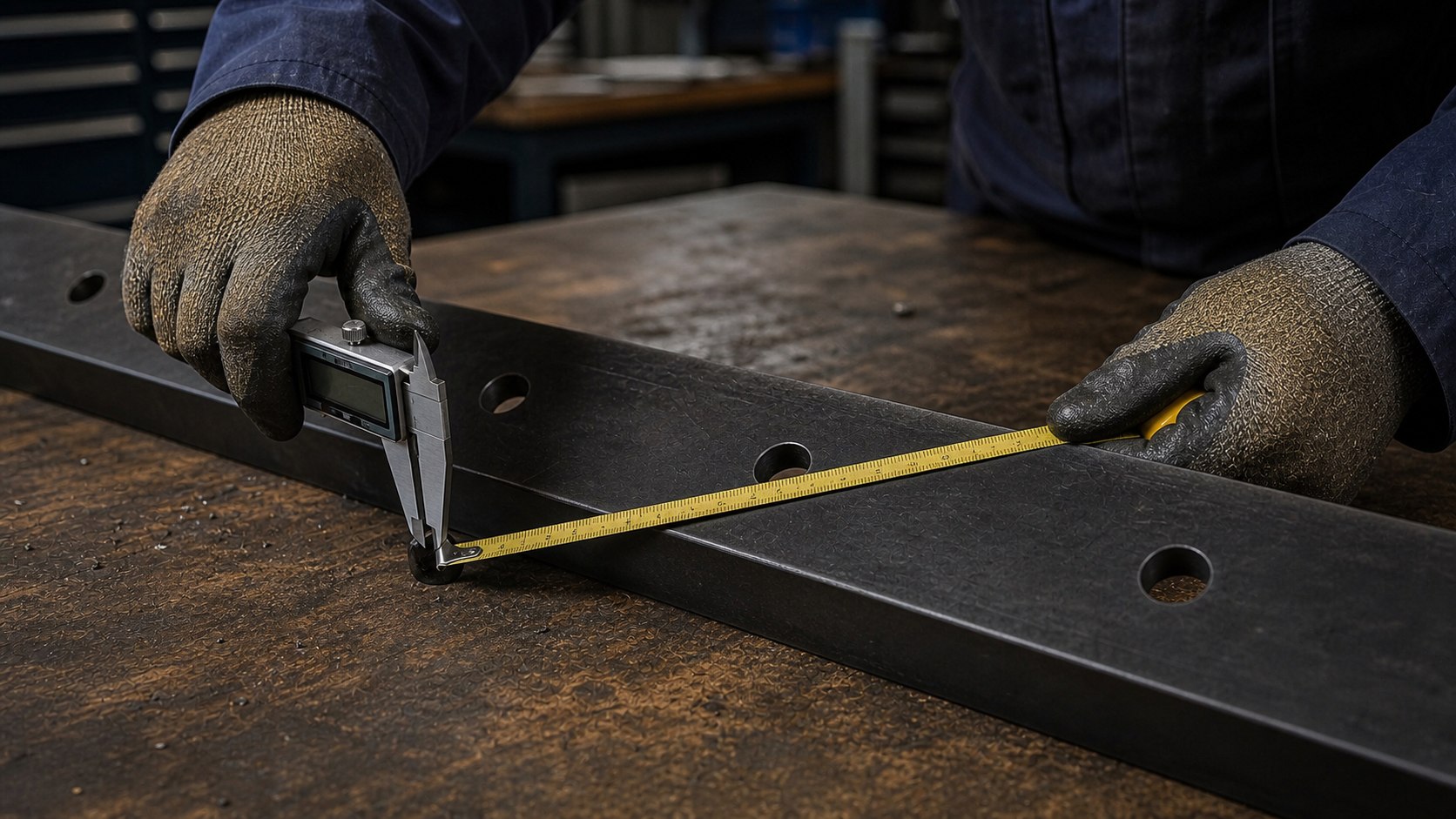
Five clauses make an insert specification complete
Geometry and dimensions, grade, pocket tolerance, bond method and inspection. Anything less and the supplier fills the gap.
Geometry, grade and pocket tolerance
State the insert shape, the nominal dimensions and the pocket tolerance that governs fit. Grade should be named by its properties rather than a trade name, so that equivalent grades can be bid without ambiguity.
- carbide Insert Tolerance: Why Fitment Starts at the Drawing
- why ±0.02mm Tolerances Matter for Automated Blade Assembly
- ice Resurfacer Carbide Studs: Specs, Traction, and Procurement
- snow Plow Carbide Inserts: Selection, Specs, and Replacement
- how Do AI Cameras Ensure Carbide Insert Tolerances
- the Future of Winter Maintenance: Why Custom Carbide Inserts Are Replacing…
- 400 Tungsten Carbide Studs Ice Tires: Innovation, Performance, and Market…
- how Do Carbide Inserts Benefit B2B Buyers From a Manufacturer’s Perspective
- carbide Insert Identification Chart PDF: How To Read Every Code Correctly
Bond method and inspection
Name the bonding process and the inspection that proves it — a sample pull test for validation and a production method such as ultrasonic or penetrant inspection for control. This is the clause that makes a quality claim enforceable.
Make the tender comparable without closing the market
Fix the interface, allow the construction to be proposed, and evaluate on cost per metre of cutting edge rather than per insert.
Cost per metre, not cost per insert
Inserts are sold by number and consumed by distance. Converting offers to a cost per metre of cutting edge makes the comparison meaningful, and it is the figure that predicts the season’s spend.
- insert Cost Per Metre of Cutting Edge: The Inputs Explained
- custom Carbide Inserts for OEM Assembly Lines
- what Are Carbide Inserts for Snow Plow Blades
- advanced Vacuum Sintertering Furnace for Carbide Inserts: From Powder to…
- the Science of Shatter-Resistance: Why Virgin Material Carbide Inserts…
- what’s New in High‑Performance Carbide Inserts for 2026
- how to Identify Pressing Flaws in Green-State Carbide
- best Ice Resurfacing Machines for Carbide Studs Drivetrain Longevity Guide
- what Makes High Impact Carbide Inserts Tough Enough for Frozen Manhole Hits
- how to Select the Right Carbide Inserts for Snow Plow Road Conditions
The tender clauses that cause disputes
Ambiguous acceptance criteria, undefined measurement methods and silent substitution of grade are the three that generate most post-award arguments. Each is closed by naming the method and the document that proves it.
- is Tungsten Carbide the Same in Rings vs. Industrial Tire Studs
- why Do Engineered Carbide Tire Studs Outperform Generic Steel Over 500+…
- step-by-Step Installing High Performance Snow Plow Cutting Edge with…
- segmented Tungsten Carbide Insert Snow Plow Blades: The Engineering Guide…
- tungsten Carbide Coating, Balls, and Inserts: 2026 Trends Boosting…
- which Carbide Inserts Are Best for Non-Ferrous Metals
- how do carbide inserts for cast iron differ from those for other metals
- what Are Indexable Carbide Inserts
- who Are Leading Carbide Insert Manufacturers and What Sets Them Apart
- how Are Carbide Insert Blanks Manufactured for Industrial Use
Insert specification questions
How do I specify a carbide grade without naming a brand?
Specify the properties that matter — hardness range, grain size, binder content and transverse rupture strength — so equivalent grades from other suppliers remain bidable.
Which tolerance is most important?
Pocket and insert fit, because that governs whether the insert seats correctly and transfers load. Dimensional tolerances elsewhere matter less to performance.
Should the specification name an inspection method?
Yes. Naming the method that settles a dispute turns a quality claim into an enforceable requirement, and it costs nothing to write.
How should insert cost be evaluated in a tender?
On cost per metre of cutting edge over the expected duty, including the labour to replace. Price per insert alone cannot be compared across different spacings.
Can I leave specification to the supplier?
For low-duty applications, often yes. For anything with a tender, a warranty or a safety consequence, an unspecified insert is a risk with no paper trail.
Write the blade specification
The wider document this sits inside.
Tenders, bids and specifications
Procurement language and evaluation.
Insert types and geometry
Choosing the shape the spec describes.
Quality control and testing
What a factory can prove per batch.
Ask us to review your insert specification
Send the current document or drawing and we will point at the clauses that will cause problems after award.
✓ Current specification or drawing
✓ Application and duty
✓ Annual volume
✓ Acceptance criteria in use
Email: [email protected]