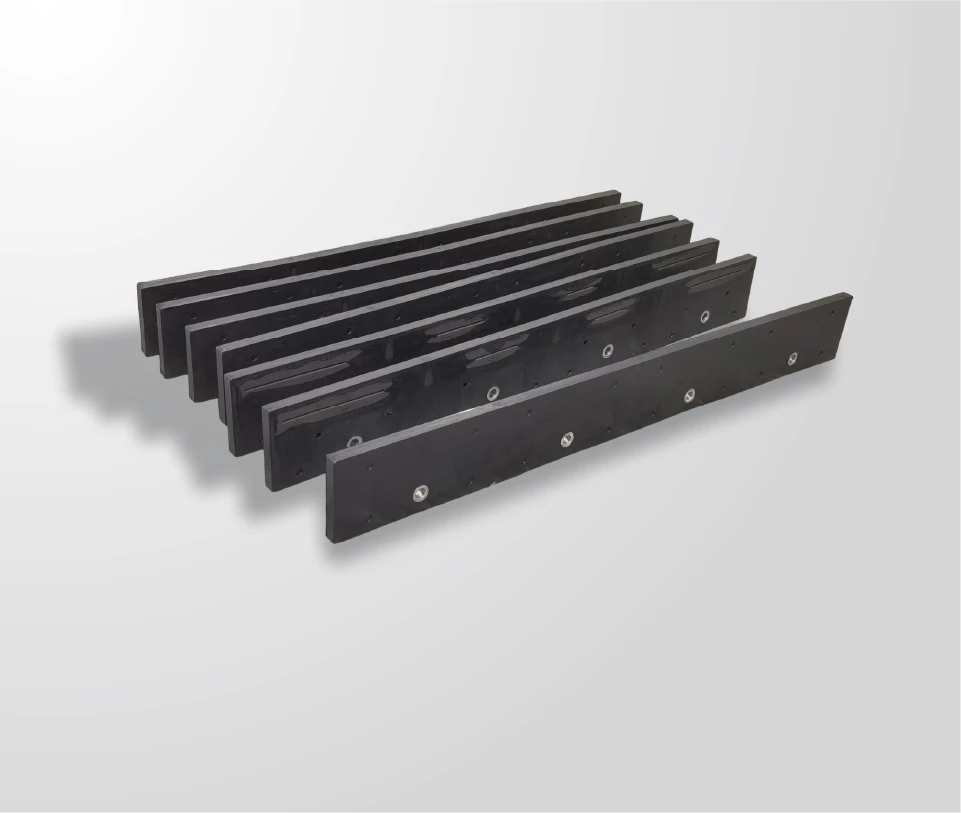
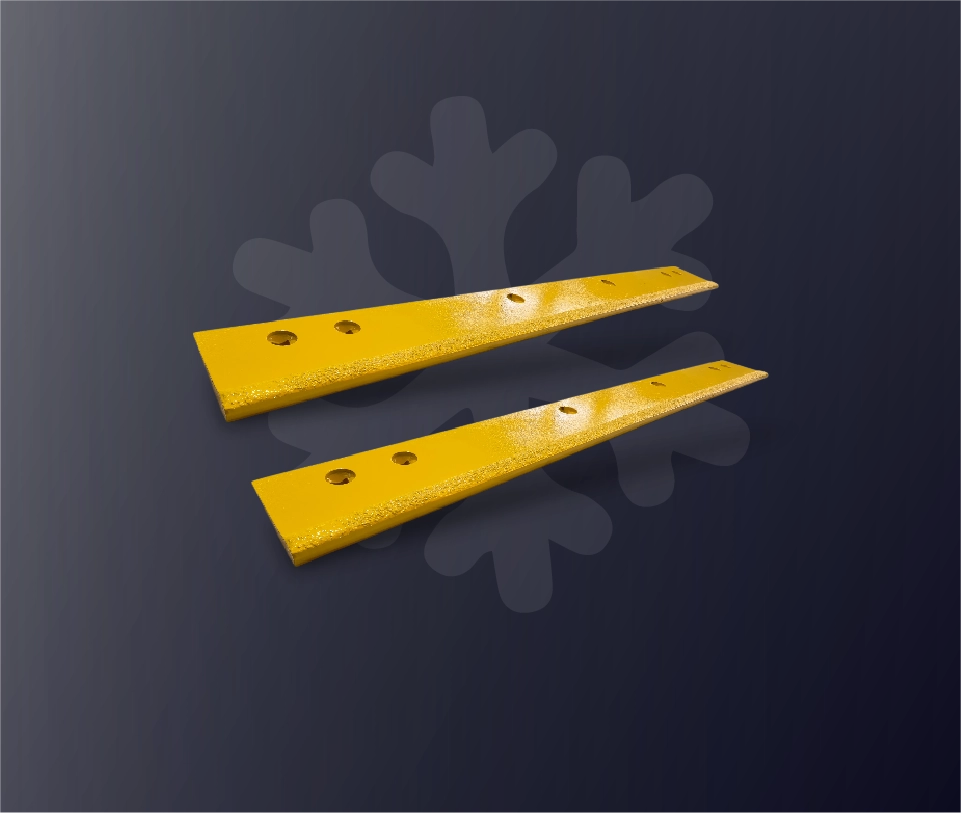
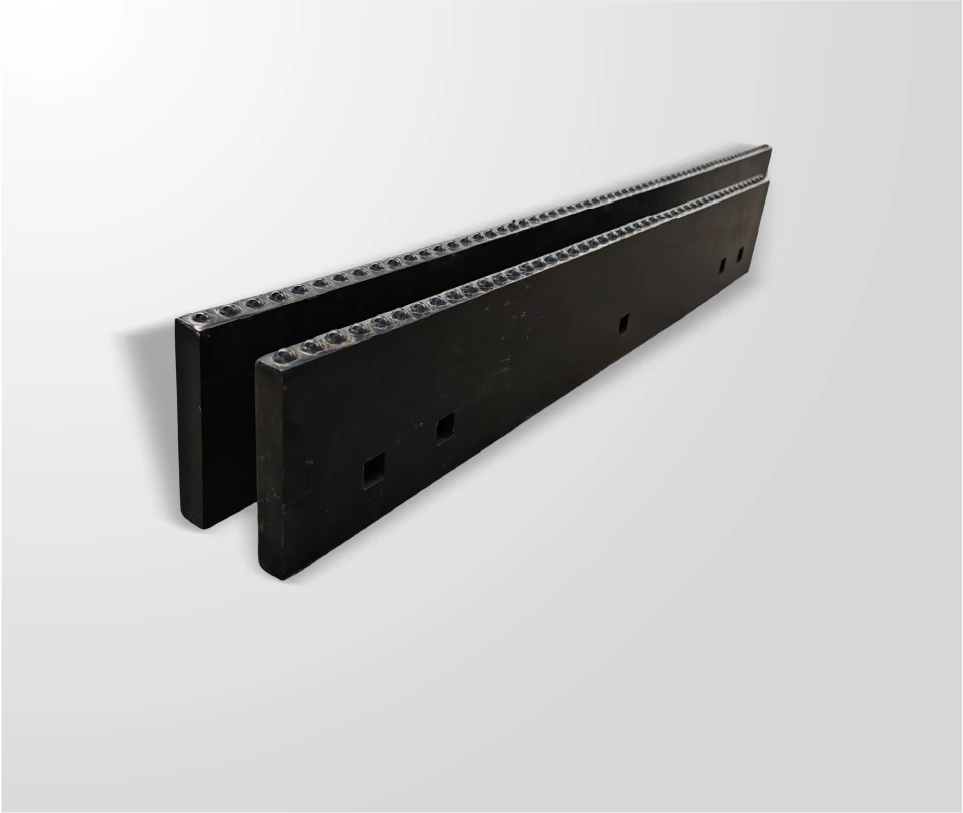
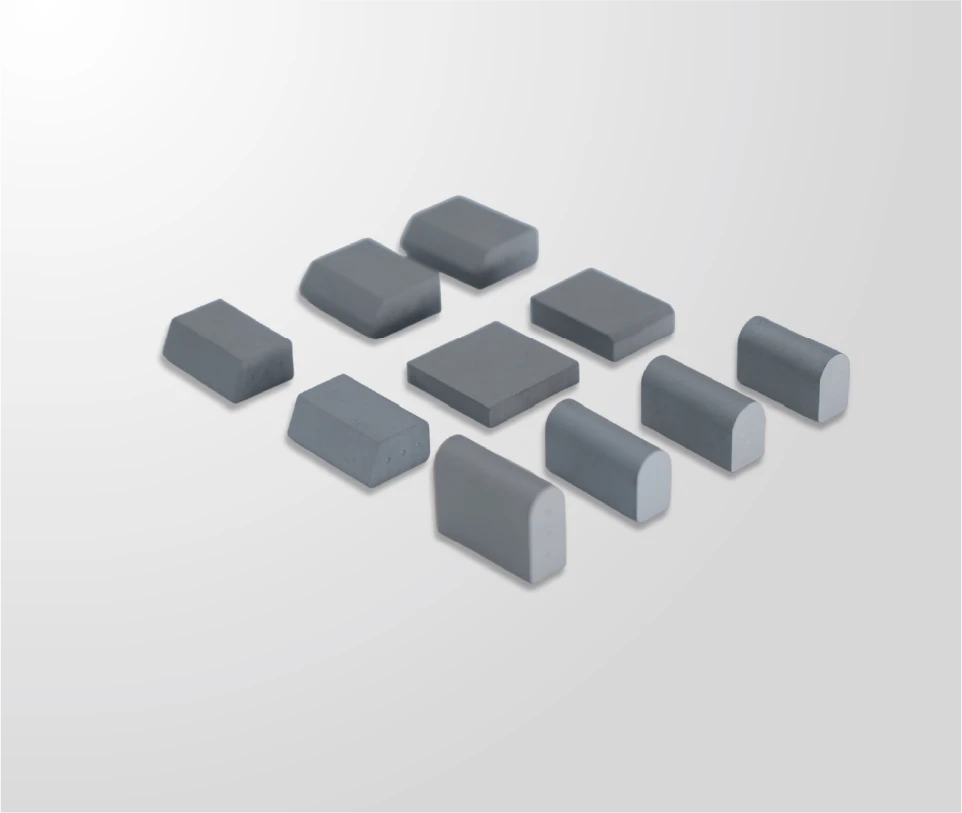


Trapezoid and chisel shapes concentrate force for ice. Bullnose and button shapes spread load and resist impact.
Trapezoid inserts present a narrow leading face that penetrates bonded ice and resists side loading. Bullnose geometry spreads the load and survives strikes better. Chisel profiles cut grooves that give the rest of the edge something to bite into.
Spacing determines the contact percentage of the edge. Dense spacing spreads load and reduces the depth each insert reaches; wider spacing concentrates cutting force but loads each insert more. The right density follows the surface and the machine’s down-pressure.
Harder grades resist abrasion and crack more readily. Tougher grades survive impact and wear faster. Match the grade to the failure you get.
Every carbide grade sits somewhere on a single line between wear resistance and impact toughness. Choosing a grade without naming the failure mode is choosing at random, which is why the same blade can be criticised as too soft and too brittle by two different fleets.
Abrasive surfaces with few obstacles want a harder grade and denser spacing. Obstacle-heavy routes want toughness and wider spacing, even though the edge wears sooner. The combination, not either element alone, decides the outcome.
Trapezoid and chisel profiles, because they concentrate force into a narrow contact area and fracture the surface rather than riding over it.
No. Dense spacing spreads the load and reduces cutting depth, which is good on rough or sensitive surfaces and counterproductive on hard ice.
Finer grain generally gives a harder, more wear-resistant insert with less toughness; coarser grain trades wear resistance for impact tolerance.
Only if the pockets are designed for it. Changing geometry usually requires a different blade or a re-tipped carrier with the new pocket pattern.
Read the wear and the surface left behind. Inserts wearing on one face, or leaving polished ice, both indicate geometry rather than grade.
How the insert is held decides whether it stays.
Reading wear before it becomes failure.
Writing geometry and grade into a spec.
The material science behind the grade chart.
The wear pattern tells us whether the geometry or the grade is wrong. Send a photograph or a sample.
✓ Photograph or sample of the worn insert
✓ Current shape, grade and spacing
✓ Surface and ice conditions
✓ Machine and down-pressure
Email: [email protected]
Browse the guides assigned to this topic.