




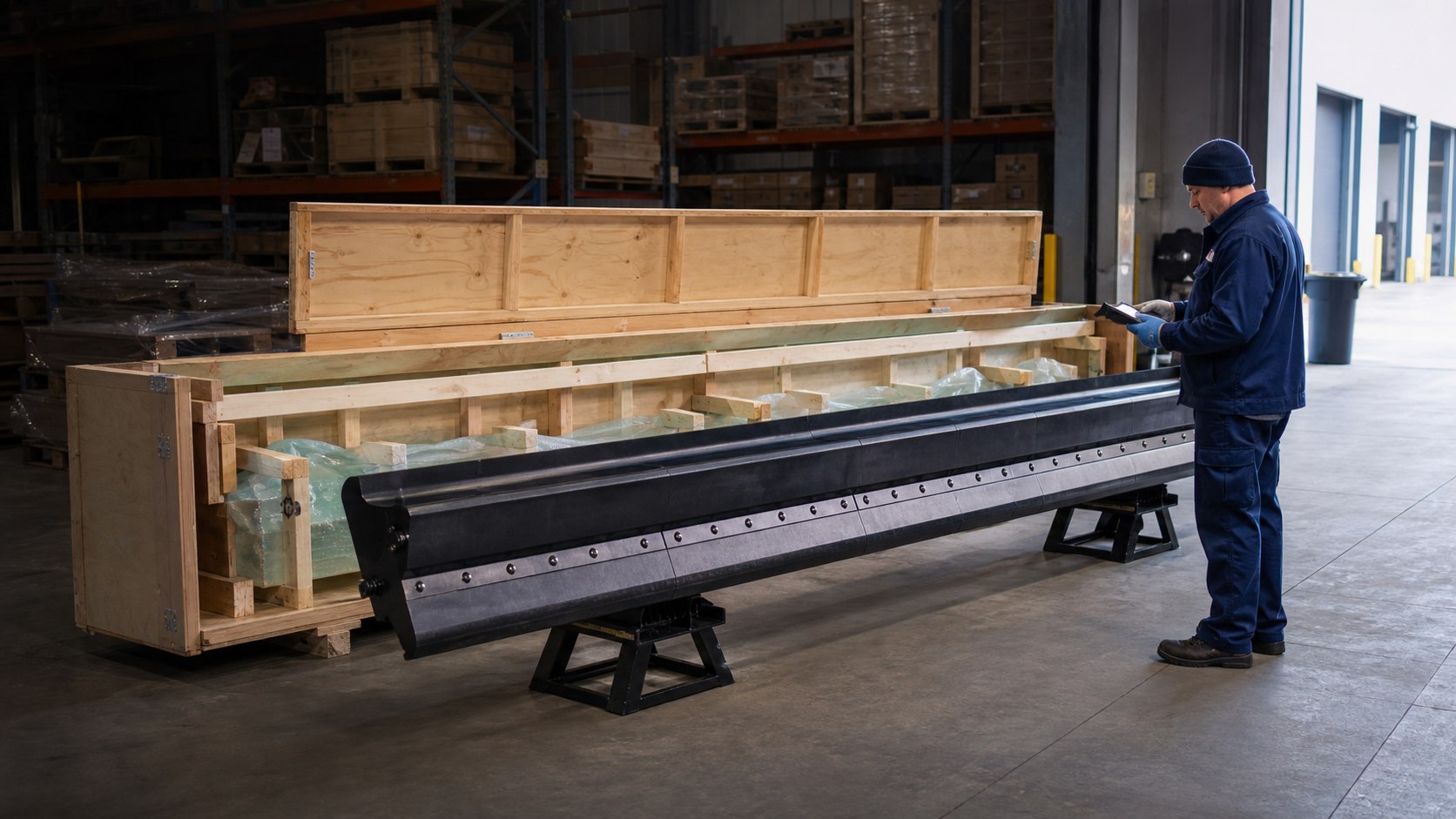
Four failures, four causes
Even wear means the specification is roughly right. Chipping means impact. Cracking means stress. Inserts coming loose means the joint.
Wear, chipping and cracking
Uniform wear is the design working. Chipped corners indicate impact loading from obstacles and point at geometry or grade. Cracks running from the joint into the insert indicate residual stress or thermal damage from the braze cycle.
- top 10 Factors That Decide Carbide Insert Wear Life (Ranked by Impact)
- insert Wear Life: What Determines How Long Snow Plow Teeth Last
- carbide Insert Wear: When to Replace Teeth
- isolated Carbide Inserts: Stopping Lateral Cracks Before They Start
- top 10 Carbide Wear Parts Manufacturers in 2026: Cutting Edges, Inserts &…
- loader Bucket Cutting Edges: How Carbide Inserts Change Wear Costs
- loader Cutting Edges: How Carbide Inserts Change Bucket Wear Costs
- carbide Insert Snow Plow Blade: Validate Fit, Wear Strategy, and Winter…
- sectional Carbide Insert Snowplow Blade Specifications for Better Wear…
- carbide Grain Size Optimization for Wear Resistance in Snow Plow Blades…
- how Can Isolated Carbide Inserts Stop Catastrophic Lateral Cracking in…
Loss and progressive bond failure
An insert that disappears leaves a mark on the pocket and the surrounding edge. Where several inserts are lost from the same blade, the pattern usually indicates a process problem rather than an in-service event.
- hardfacing Snow Plow Cutting Edges vs. Carbide Inserts: The Fleet…
- how Do Primary Crusher Wear Parts with Tungsten Carbide Inserts Protect…
- reducing Municipal Budgets with Long-Lasting Carbide Wear Inserts
- how Do Carbide Inserts Enhance Reinforced Wear Parts for Plows
- carbide Inserts for Lathe: How They Transform Machining Efficiency and…
Match the inspection to the consequence of failure
Visual inspection suits most fleets. Where failure has safety or contract consequences, add a non-destructive method and name it in the purchase order.
Visual and dimensional checks
Look for chipped corners, cracks at the joint, missing inserts and any change in the spacing pattern. Measure the remaining insert height at fixed points to build a wear rate that can be compared across the fleet.
- carbide Insert Inspection: Checking a Delivery Before Fitting
- visualizing Wear Tolerances How Wear Tracking Snow Plow Blades Prevent…
- why Do Some Carbide Inserts Fail Under Impact While Others Keep Working
- how Do Carbide Inserts Extend Wear Part Life for Construction and Mining…
- premium Tungsten Carbide Edge Inserts for Snow Plow Wear Parts
- where Can You Find Reliable Carbide Inserts Distributors
- how to Choose a Carbide Insert for Professional Road Maintenance Contractors
Non-destructive testing
Ultrasonic inspection finds internal voids and cracks in the bond. Dye penetrant finds surface-breaking cracks. Eddy-current methods sort material and detect near-surface defects. Each has a cost, and each is justified only where the consequence justifies it.
- how Does Ultrasonic NDT Verify Carbide Blank Integrity
- how Does Dye Penetrant Testing Detect Carbide Micro-Cracks
- how Does Ultrasonic NDT Find Cracks in Carbide
- removing Porosity: Why Internal Voids Lead to Blade Failure
- why Do Recycled Carbide Inserts Fail? The Hidden Role of Trace Contaminants
- carbide Insert Reinforced Snow Plow Wear Edge System Cuts Maintenance Costs
- micro-Grain Tungsten Carbide Wear Inserts for Road Maintenance
- where Can You Buy Carbide Inserts Online for Manufacturing Needs
- how Do Tungsten Carbide Inserts Elevate Snow Plow Blade Performance
Insert inspection questions
How do I tell wear from damage?
Wear is progressive and even across the edge; damage is localised and sudden. Chipping, cracks and lost inserts are damage events and point at impact or the joint rather than at the grade.
How often should inserts be inspected?
Visually at every service interval, and dimensionally whenever the blade comes off. On high-impact routes a post-storm visual check finds most damage while it is still small.
Do I need ultrasonic testing?
Only where failure is expensive or unsafe — airports, high-speed highway work, heavy impact duty. For most fleets the same money is better spent on a proper visual checklist.
What does a missing insert tell me?
That the joint failed. If several are missing from one blade, suspect the braze process for that batch rather than the service conditions.
Can wear data predict replacement?
Yes, if you measure at fixed points and record operating hours. Two seasons of records are enough to forecast replacement with useful accuracy.
Brazing and bond quality
Why the joint fails before the insert.
Re-tipping and rebuilding
Rebuilding an edge rather than replacing it.
Quality control and testing
Factory inspection and batch traceability.
Wear and lifespan
Turning wear data into a replacement plan.
Send a wear pattern for analysis
Photographs of the worn edge and the hours it took are usually enough for us to identify the mechanism.
✓ Photographs of the worn edge
✓ Operating hours or kilometres
✓ Surface, ice and obstacle conditions
✓ Current insert specification
Email: [email protected]