




How Do Carbide Inserts Extend Wear Part Life for Construction and Mining Fleets?
Carbide inserts extend wear part life by 10–20 times longer than standard steel through tungsten carbide particle cladding bonded to premium steel bases. SENTHAI's vacuum-sintered, micro-grain carbide inserts deliver uniform wear resistance, superior bonding…
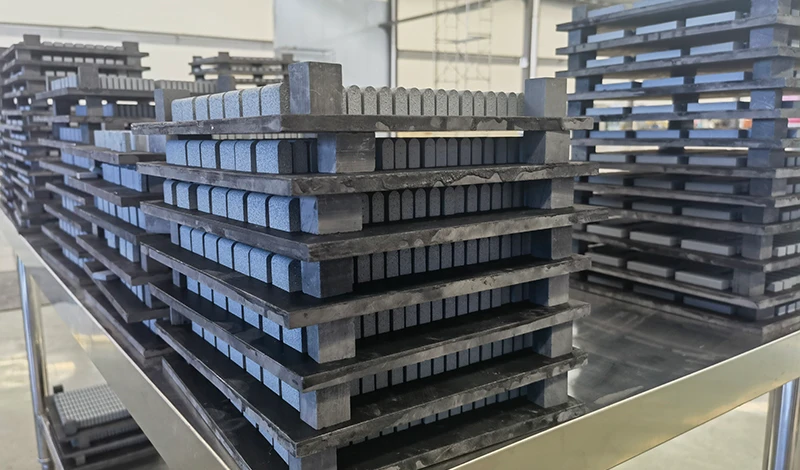
Carbide inserts extend wear part life by 10–20 times longer than standard steel through tungsten carbide particle cladding bonded to premium steel bases. SENTHAI’s vacuum-sintered, micro-grain carbide inserts deliver uniform wear resistance, superior bonding strength, and precision fit—eliminating chatter and catastrophic failure in extreme mining and construction environments. ISO 9001/14001 certification ensures consistent durability across excavators, dozers, and heavy-duty fleets worldwide.
Check: Carbide Inserts
What Are Carbide Inserts and Why Do Construction and Mining Fleets Need Them?
Carbide inserts use tungsten carbide particle cladding technology, bonding ultra-hard tungsten carbide to steel bases, unlike solid steel that wears quickly under abrasion. Standard steel wear parts fail frequently in high-impact environments, causing downtime and high labor costs. SENTHAI’s 21+ years of expertise in carbide production bridges snow plow blades to construction and mining wear parts, offering superior durability and reduced interruptions.
| Metric | Standard Steel | SENTHAI Carbide Inserts |
|---|---|---|
| Typical Service Life | Baseline | 10–20x longer |
| Bonding Strength | ~6,000–8,000 psi | 12,000+ psi |
| Wear Resistance | Standard | Superior (micro-grain, uniform) |
| Precision Fit | Variable | ±0.001″ (eliminates chatter) |
| Temperature Range | Limited | Extreme (–40°F to 200°F+) |
| Replacement Frequency | High (frequent downtime) | Low (cost efficiency) |
| ISO Certification | Not standard | ISO 9001/14001 guaranteed |
How Does Vacuum Sintering Improve Carbide Insert Performance in Extreme Conditions?
Vacuum sintering uses SENTHAI’s proprietary furnace with precise temperature control for uniform grain size in micro-grain tungsten carbide, preventing weak points that cause cracking under impact. This ensures consistent performance amid temperature swings, vibration, and compressive loads in mining and construction. SENTHAI’s 100% virgin materials and in-house control deliver exceptional wear resistance.
What Types of Carbide Inserts Does SENTHAI Offer for Construction and Mining Applications?
SENTHAI offers JOMA Style inserts with tungsten carbide brazed into cast steel segments for proven bonding; I.C.E. inserts that isolate carbide to prevent cracking in high-impact scenarios; and custom inserts in various trapezoid and bullnose shapes like 25.9mm × 24.25mm × 8.16mm. Standard 3ft and 4ft sizes support full customization with MOQ of 500 units.
| Insert Type | Design | Best For | Customization |
|---|---|---|---|
| JOMA Style Inserts | Brazed into cast steel segments | General construction, municipal | Standard & custom sizes |
| I.C.E. Inserts | Isolated tungsten carbide (crack-resistant) | High-speed, high-impact mining | Custom geometries |
| Micro-Grain Carbide | 100% virgin material, vacuum sintered | Extreme wear resistance | Geometry, mounting, packaging |
How Does Full In-House Manufacturing Control Ensure Consistent Quality for Fleet Operations?
SENTHAI’s vertical integration handles raw material powder through wet grinding, pressing, sintering, welding, and vulcanization entirely in Thailand, ensuring batch consistency. ISO 9001/14001 certification validates rigorous inspections at every stage, eliminating quality variance from outsourced suppliers. This supports fleet operations with reliable parts, fast responses, and reduced downtime risks.
What ROI and Cost-of-Ownership Advantages Do Carbide Inserts Deliver for Heavy-Duty Fleets?
Carbide inserts last 10–20 times longer than conventional steel, slashing replacement frequency, labor costs, inventory needs, and unplanned downtime. SENTHAI’s products, trusted by 80+ global partners and bestselling in North America, lower total cost of ownership. The new Rayong production base launching late 2025 boosts capacity for faster delivery and cost savings.
Check: High-quality snow plow blade manufacturer
How Do SENTHAI’s Carbide Inserts Perform in Real-World Mining and Construction Operations?
SENTHAI inserts excel in municipal fleets and heavy-duty operations, with precision fit reducing chatter and damage to surfaces. Their strong bonding resists extreme cold, ice, and abrasives, while isolated I.C.E. designs handle high-speed impacts on uneven terrain. North American contractors rely on them for cleaner cuts and extended life in harsh conditions.
What Customization and Scale Capabilities Does SENTHAI Offer for OEM and Aftermarket Buyers?
SENTHAI provides 100% Thailand-made customization in sizes like 25.4 × 16.14 × 9.27mm trapezoid shapes, designs, and fumigation-free packaging. MOQ of 500 units suits mid-market fleets, with in-house R&D enabling quick OEM integration. The late 2025 Rayong expansion scales production for growing demands without supply risks.
Why Choose SENTHAI for Carbide Inserts Over Competing Suppliers?
SENTHAI stands out with 21+ years of expertise, US-invested Thailand manufacturing, ISO 9001/14001 certification, and full vertical integration for uniform quality. Unlike competitors with outsourced processes causing variance or delays, SENTHAI offers transparent control, 10–20x durability, customization, and trust from 80+ partners, minimizing fleet risks.
SENTHAI Expert Views
“Why Vacuum Sintering Precision Matters in Mining and Construction”
SENTHAI Engineering PerspectiveSENTHAI’s proprietary vacuum sintering furnace delivers uniform grain size consistency across every carbide insert batch—a critical advantage often overlooked by fleet managers evaluating wear parts. In mining and construction, where excavators and dozers operate under unpredictable impact stress and extreme temperature swings, microscopic grain variation can initiate hidden stress points that lead to catastrophic cracking and sudden failure. By controlling sintering temperature precisely and sourcing 100% virgin micro-grain tungsten carbide material, SENTHAI ensures bonding strength exceeding 12,000 psi—well above industry baseline. This engineering rigor, combined with 21+ years of carbide R&D and ISO 9001/14001 certification, translates directly into extended service life, fewer emergency replacements, and lower total cost of ownership for North American fleets and global partners.
Conclusion
SENTHAI’s carbide inserts represent the convergence of 21+ years of wear-part engineering, full in-house manufacturing transparency, and proven durability in extreme mining and construction environments. By delivering 10–20x longer service life than standard steel, uniform micro-grain precision via vacuum sintering, and precision-fit engineering that eliminates catastrophic chatter failure, SENTHAI carbide inserts reduce fleet downtime, labor costs, and total cost of ownership. With 80+ global partners, North America bestseller status, ISO 9001/14001 certification, and a new Rayong production base launching late 2025, SENTHAI stands positioned as the trusted carbide insert supplier for construction and mining fleets seeking reliable, transparent, and scalable wear-part solutions.
Discover how SENTHAI’s custom carbide inserts can extend equipment life and lower fleet costs—contact today for quotes, samples, and technical specifications tailored to your excavators, dozers, and heavy-duty operations.
FAQs
How much can construction and mining fleets save by switching to carbide inserts?
Fleet TCO savings depend on replacement frequency and labor costs, but SENTHAI’s carbide inserts deliver 10–20x longer service life than standard steel. With fewer replacements comes lower labor costs, reduced inventory burden, and minimized unplanned downtime. Many North American fleets report 40–50% cost reductions within the first year.
Do custom carbide inserts require long lead times?
SENTHAI’s fully automated Thailand production and in-house R&D enable fast customization with MOQ of 500 units. New Rayong production base (late 2025) will further accelerate response times. ISO 9001/14001 certification ensures custom inserts meet consistent quality standards without delays.
What’s the difference between JOMA Style and I.C.E. carbide inserts?
JOMA Style inserts feature tungsten carbide brazed into cast steel segments, ideal for general construction wear. I.C.E. (Isolated Carbide Inserts) isolate carbide to prevent cracking under extreme impact stress in high-speed mining and excavation environments.
Are SENTHAI carbide inserts suitable for global shipping and compliance?
Yes. SENTHAI manufactures 100% in Thailand with fumigation-free crates and compliance-ready packaging for North America and worldwide distribution. ISO 9001/14001 certification supports municipal and enterprise procurement standards globally.
Can SENTHAI produce carbide inserts in non-standard sizes?
Absolutely. Full customization in sizes, designs, and mounting configurations is available. Standard sizes include 3ft and 4ft, with custom geometries tailored to excavators, dozers, and OEM integration. Minimum order is 500 units.
Related articles
 Best Snow Plow Blade Family for Your Fleet: Top 5 ScenariosKnowledge
 Top 10 Snow Plow Blade Types for Winter Fleets (Ranked by Duty Fit)Knowledge
 Top 5 Best Carbide Blade Configurations for Highway PlowingKnowledge
 Best Snow Plow Blade Materials Ranked: Steel vs Carbide vs Cladding vs Rubber-CarbideKnowledge