




Why Do Recycled Carbide Inserts Fail? The Hidden Role of Trace Contaminants
Common trace contaminants in low‑quality recycled carbide inserts include iron, copper, nickel, and lead. These impurities weaken the bonding matrix, reduce impact resistance, and cause micro‑cracking under snow plow loads. Even 1–3% contamination can…
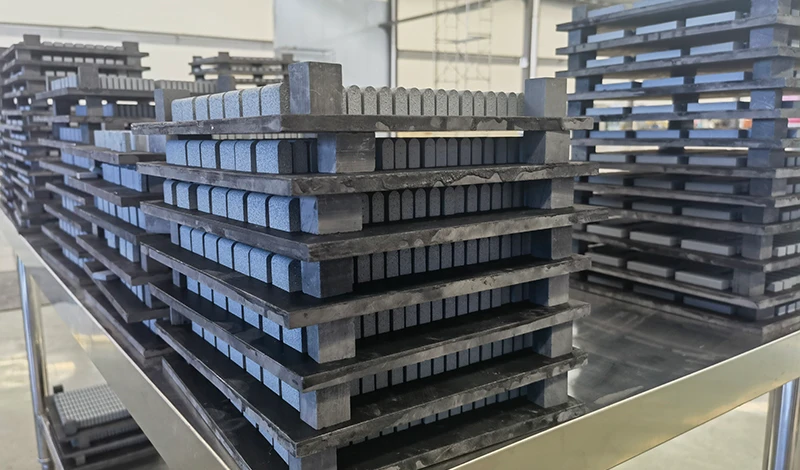
Common trace contaminants in low‑quality recycled carbide inserts include iron, copper, nickel, and lead. These impurities weaken the bonding matrix, reduce impact resistance, and cause micro‑cracking under snow plow loads. Even 1–3% contamination can cut blade lifespan by 40–60% compared to virgin micro‑grain carbide. Always request a material purity certificate from your supplier.
Check: Virgin vs Recycled Carbide: Which Wins for Snow Plow Blades?
What Are Trace Contaminants in Recycled Carbide Inserts and Where Do They Come From?
Recycled carbide starts from scrap tools, grinding sludge, or worn parts. During collection, iron and copper enter from mixed‑metal streams—steel tooling debris and copper brazing residues. Low‑cost recyclers often skip rigorous purification, leaving 2–5% trace contaminants like nickel, lead, or uneven cobalt redistribution.
- Common contaminants: iron, copper, nickel, lead, cobalt redistribution.
- Sources: steel debris, brazing residues, alloyed scrap from worn tools.
- Low‑budget recyclers omit steps like acid leaching or density separation, allowing impurities to persist.
How Do Iron and Copper Contamination Weaken Carbide Snow Plow Blades?
Iron forms brittle intermetallic phases at grain boundaries, while copper reduces cobalt binder strength, lowering fracture toughness. Under snow plow impact, micro‑cracks propagate from contaminated zones, leading to edge chipping and catastrophic blade breakage. A 3% iron impurity can cut impact resistance by over 50% (industry studies confirm this).
- Micro‑structure damage: grain boundary embrittlement and binder weakening.
- Failure modes: micro‑cracking → edge chipping → breakage during impact.
- Real‑world consequence: reduced reliability in heavy‑duty municipal plowing.
What Is the Real Performance Difference Between Virgin and Recycled Carbide Inserts?
| Property | Virgin Carbide (Typical) | Recycled Carbide (Typical) | SENTHAI Virgin Micro‑Grain |
|---|---|---|---|
| Hardness (HRA) | 92.5 | 89–91 | 92.5 |
| Transverse Rupture Strength (MPa) | 3,200 | 2,100–2,600 | 3,200 |
| Impact Resistance (J/m²) | >1,500 | <1,000 | >1,500 |
| Wear Rate (relative) | 1x (baseline) | 1.5–2x higher | 1x (baseline) |
Virgin micro‑grain carbide delivers consistent results because its grain size is precisely controlled, no embrittling phases exist, and cobalt binder is uniformly distributed. Recycled material suffers from random impurity pockets that cause unpredictable failure. SENTHAI’s JOMA Style Blades are designed for impact‑heavy environments where recycled inserts would shatter.
How Can You Detect Trace Contaminants in Carbide Inserts Before Purchase?
Simple field checks include visual inspection for rust spots (iron) and weight comparison—but these are not definitive. Procurement teams should request X‑ray fluorescence (XRF) elemental analysis and hardness testing. Lower hardness often correlates with impurities. Scanning electron microscopy (SEM) can reveal micro‑cracks from contaminated zones.
- Field checks: discoloration, unusual weight (not reliable alone).
- Advanced methods: XRF, SEM, hardness testing.
- Certified suppliers provide material purity certificates. SENTHAI offers full traceability from raw powder to finished blade.
What Quality Control Processes Does SENTHAI Use to Eliminate Contaminants?
SENTHAI Expert Views
“At SENTHAI, we source only 100% virgin micro‑grain tungsten carbide—no recycled feedstock enters our plant. Every production lot undergoes ICP‑OES chemical analysis of raw powder, automated wet grinding for uniform particle size, and vacuum sintering with proprietary temperature control to prevent binder segregation. After sintering, each batch is verified by XRF elemental analysis and hardness testing per ISO 9001 requirements. This zero‑contamination strategy is built into every stage of our fully automated Thailand facilities. That’s why our blades are trusted by 80+ global partners and are bestsellers in North America.”
— SENTHAI Quality Manager
SENTHAI’s ISO 9001 and ISO 14001 certifications ensure rigorous inspection at each production stage: wet grinding, pressing, sintering, welding, and vulcanization. Samples and factory inspection reports are available for first‑time customers.
Check: Carbide Inserts
How Does Contamination Affect the Total Cost of Ownership for Snow Plow Blades?
| Cost Item | Virgin Carbide (SENTHAI) | Contaminated Recycled Carbide |
|---|---|---|
| Blade purchase (annual) | Higher upfront cost | 20–30% less |
| Replacements per season | 0 | 2–3 |
| Downtime hours per season | 0 | 6–10 |
| Road surface repair cost | $0 | Variable (lane marking damage) |
| Net annual savings with virgin | 30–45% lower total cost per season | |
Hidden costs of recycled inserts include frequent failures during critical storms, leading to lost revenue for private fleets and public safety risks for municipalities. Broken carbide also damages lane markings, requiring repaving. SENTHAI’s I.C.E. (Packed Ice Carbide Kit) Blades and JOMA Style Blades are engineered for extended service life—a direct result of contamination‑free materials.
Why Do Leading Fleets and Municipalities Choose SENTHAI’s Virgin Carbide Blades?
SENTHAI blades are bestsellers in North America, trusted by over 80 global partners including heavy‑duty fleets, municipal plows, and road maintenance contractors. A Minnesota contractor reported 2.5× longer blade life after switching from recycled to SENTHAI virgin carbide. ISO 9001 and ISO 14001 certifications, coupled with full in‑house production in Thailand, ensure fast response and reliable delivery.
- Social proof: 80+ partners, North American bestseller status.
- Case example: 2.5× longer life in real municipal operation.
- Full production control from raw powder to finished blade guarantees quality.
Can Customization Help Mitigate Contamination Risks?
Customization alone cannot fix contaminated base material. SENTHAI offers customizable blade lengths, thicknesses, and carbide grades—but only with 100% virgin material guarantees. Custom designs like JOMA Style’s reinforced edge geometry further compensate for impact stress, but the carbide must be contamination‑free to perform. Contact SENTHAI for a quote on blades tailored to your fleet’s exact specifications.
- Custom options: length, thickness, carbide grade, packaging.
- All custom blades use virgin micro‑grain tungsten carbide.
- Contact SENTHAI for a quote.
Frequently Asked Questions
Can recycled carbide ever be as good as virgin carbide for snow plow blades?
No – even high‑quality recycling introduces micro‑scale impurities (iron, copper) that reduce impact toughness by 30–60%. Virgin carbide guarantees uniform microstructure and predictable wear.
How much iron or copper contamination is “acceptable” in a carbide insert?
Industry best practices target <0.5% total contaminants. Many recycled inserts contain 1–3% iron/copper – enough to cause premature failure under plow impact. SENTHAI’s virgin material ensures <0.1% total trace elements.
Does SENTHAI test every batch of carbide for contaminants?
Yes – every production lot undergoes XRF elemental analysis and hardness verification. Results are documented per ISO 9001 requirements and available upon request.
Will switching from recycled to virgin carbide save money in the long run?
Yes – despite higher upfront cost, lifecycle analysis shows 30–45% lower total cost per season due to fewer replacements, less downtime, and avoided road damage.
Can I customize SENTHAI blades for my specific plow models?
Absolutely – SENTHAI offers full customization (length, thickness, hole pattern, grade) for fleets of any size. All custom blades are made from 100% virgin micro‑grain carbide.
Conclusion
Trace contaminants—iron, copper, nickel, lead—are silent performance killers in recycled carbide inserts. Even low levels cause micro‑cracking, reduced impact resistance, and costly downtime. SENTHAI’s 21+ years of in‑house production using 100% virgin micro‑grain tungsten carbide, ISO‑certified quality control, and fully automated Thailand facilities guarantee zero contamination. Request a material purity certificate and compare specs. Visit SENTHAI’s JOMA Style Blades or I.C.E. Blade pages, or contact the sales team for a custom quote. With over 80 global partners and North American bestseller status, SENTHAI delivers the durability your winter road maintenance demands.
Related articles
 Best Snow Plow Blade Family for Your Fleet: Top 5 ScenariosKnowledge
 Top 10 Snow Plow Blade Types for Winter Fleets (Ranked by Duty Fit)Knowledge
 Top 5 Best Carbide Blade Configurations for Highway PlowingKnowledge
 Best Snow Plow Blade Materials Ranked: Steel vs Carbide vs Cladding vs Rubber-CarbideKnowledge