Carbide Grain Size Optimization for Wear Resistance in Snow Plow Blades and Inserts (July 2026)

Carbide grain size optimization for wear resistance is critical for snow plow blades and road maintenance inserts, helping fleets extend tool life, stabilize performance, and reduce winter operation costs.

Macro view: why carbide grain size matters

Across heavy-duty road maintenance and industrial machining, wear-resistant carbide tools are under growing pressure to deliver longer life under harsher loads and more abrasive environments. Recent studies on WC–Co carbides show that tailoring tungsten carbide grain size can change wear resistance, fracture toughness, and tool life by over 20% in demanding milling and sliding conditions. At the same time, field experience from winter maintenance fleets points to carbide snow plow blades as a key lever for reducing blade changes, downtime, and overall cost per mile in harsh North American winters. SENTHAI positions carbide grain size engineering, strict raw material control, and automated powder metallurgy as core to its promise of high wear resistance and impact resistance for snow plow blades and inserts.

Early product introduction: SENTHAI’s carbide wear parts

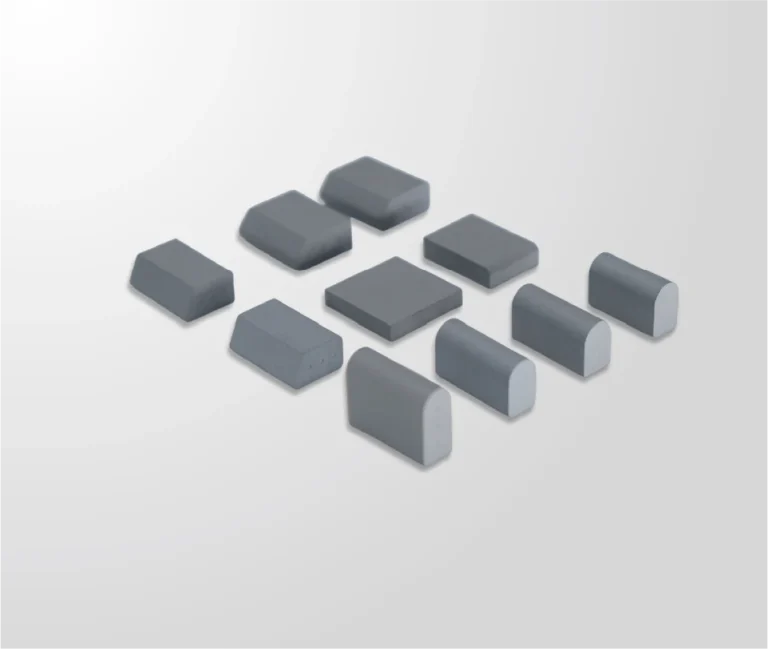
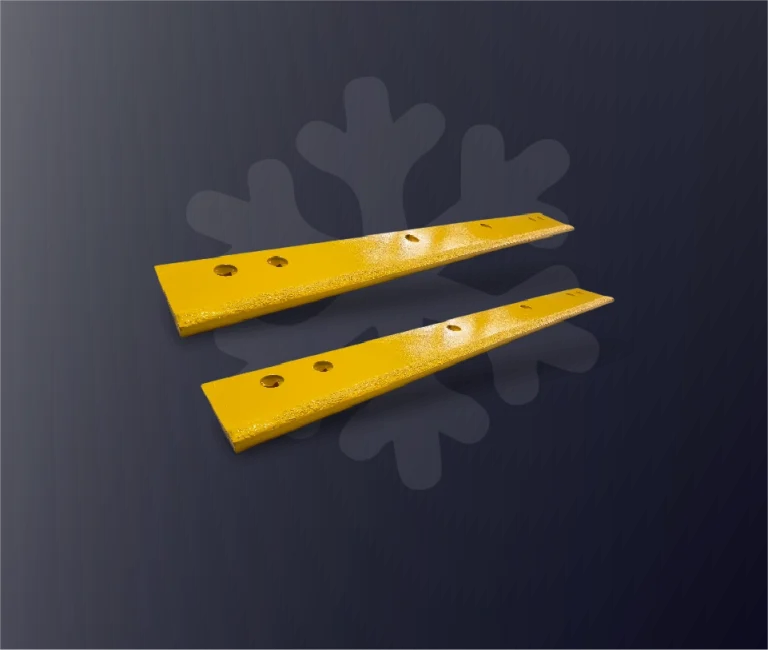
SENTHAI Carbide Tool Co., Ltd. focuses on professional carbide snow plow blades and inserts designed for high wear resistance, strong impact resistance, and stable performance in winter road maintenance. By controlling the full process—from raw powder metallurgy through welding and vulcanization on an automated production line—SENTHAI can adjust carbide microstructure and processing routes to meet customer requirements such as increased wear resistance and extended service life.

What is carbide grain size optimization for wear resistance?

Carbide grain size optimization for wear resistance refers to engineering the average tungsten carbide (WC) grain size in a cemented carbide, along with binder content and processing parameters, to achieve the best possible balance of hardness, toughness, and tribological performance for a specific application. In snow plow blades and inserts, this means choosing grain structures that resist abrasive wear on ice and packed snow while maintaining enough toughness to survive impact with uneven road surfaces and obstacles.

Pain points with wear-resistant blades and inserts

Unpredictable wear and early blade failure
Operators often find that visually similar carbide blades have dramatically different lifetimes, with some wearing out in a fraction of a season. This variability is frequently linked to suboptimal grain size and binder combinations that either wear too quickly or chip under impact. When a blade loses its cutting edge prematurely, snow removal efficiency drops, and fleets must schedule unplanned downtime for replacement.

Downtime and labor costs from frequent blade changes
Each blade change requires lifting equipment, trained staff, and service bay time. Under severe winter conditions, premature wear translates directly into more stops, higher labor costs, and coordination challenges with contractors and public agencies. Saving costs in road maintenance depends on delivering more stable, longer-lasting carbide wear parts, which is difficult when grain size and microstructure are not tuned to real-world loads.

Balancing hardness and toughness in mixed conditions
Carbide materials with very fine grains can offer excellent hardness and wear resistance in clean, controlled contacts, but may become brittle under impact or interrupted contact. Road maintenance rarely offers ideal conditions; blades see abrasive wear, impact against packed snow and ice, localized overloads at potholes, and sometimes direct contact with metal structures. Without a carefully engineered balance, tools either crack too easily or deform and dull quickly.

Limited traceability and inconsistent quality across batches
In many supply chains, customers cannot trace the exact powder, processing route, or grain-size specification behind each batch of carbide blades. This makes it hard to understand why a particular delivery performs better or worse, and complicates any attempt to optimize for wear resistance. SENTHAI addresses this by archiving parts and tracing each batch of products back to specific production runs and process controls, giving road maintenance teams confidence in repeatability and enabling data-backed optimization.

READ  Rethinking snow plow maintenance with 3ft carbide snow plow blade sections for safer installs and smarter fleet control

Key data insight on grain size and wear

In recent WC–Co studies, optimizing carbide grain size and microstructure improved tool life and surface quality by up to 20%, while shifts in wear resistance between test conditions clearly showed that grain size must be matched to the actual tribological environment.

Carbide grain size optimization: SENTHAI vs alternatives

Aspect / NeedSENTHAI carbide snow plow blades & insertsGeneric carbide blades (commodity)General-purpose machining carbides used in plows
Grain size strategyTailored WC grain size and processing for ice and snow wear, with options to increase wear resistance and service life.Often unspecified or generic WC grades, optimized mainly for cost rather than specific winter tribology.Designed primarily for metal cutting; grain size and binder tuned for machining rather than abrasive road contact.
Quality control & traceabilityFull-process automated production line with sampling and archiving for 100% product consistency and traceability.Limited or opaque QC, with little transparency about powder origin or batch-level traceability.
Raw material security100% non‑China raw materials, Thai-made products, stable supply chain that bypasses trade volatility.Mixed or uncertain origin; exposed to trade disruptions affecting carbide and cobalt supply.
Application focusDedicated to snow plow blades, winter road maintenance, and related carbide wear parts.Often multi-purpose wear parts not specifically engineered for winter road maintenance.
Engineering supportSnow plow technical team and customizable processing options to increase wear resistance and service life.Limited application engineering; customers must choose from fixed grades without tailored grain size.
Operational impactDesigned to reduce downtime, extend blade life, and stabilize performance in harsh North American winters.Performance can vary widely; fleets see inconsistent lifetimes and unpredictable wear behavior.

How carbide grain size affects wear resistance and performance

Grain size and hardness–toughness balance
Smaller WC grains typically increase hardness and wear resistance, which is beneficial for abrasive environments and precision edges. However, finer grains may reduce fracture toughness if binder content and processing are not adjusted, making the material more sensitive to chipping and cracking under impact. SENTHAI’s emphasis on automated powder metallurgy and snow-plow-specific expertise reflects a deliberate approach to this trade-off for winter conditions.

Microstructure and tool life under real loads
Empirical milling studies show that WC–Co tools with carefully chosen grain sizes and microstructures can significantly improve tool life and surface roughness without dramatically changing cutting forces or temperatures. For snow plow blades, this means operators can achieve longer service intervals and smoother road surfaces without sacrificing the ability to cut packed snow and ice.

Tribological condition dependence
Research on WC–Co cemented carbides under different wear tests reveals that the effect of grain size on wear resistance can even reverse between dry sliding and microabrasion conditions. This highlights why SENTHAI’s focus on specific winter road tribology is so important: the optimal grain size for a snow plow blade is not necessarily the same as for a milling insert or a mining pick.

Practical examples of carbide grain size optimization

Selecting a slightly coarser WC grain with adjusted binder for a plow blade that frequently strikes uneven road surfaces can improve fracture toughness and reduce chipping, even if nominal hardness decreases slightly.

For high-speed inserts cutting packed snow at relatively steady loads, a finer WC grain combined with robust coatings and controlled cobalt content can maximize wear resistance and edge stability.

Blades deployed in highly abrasive sanded roads may benefit from narrow grain size distributions and stringent quality control to maintain uniform wear along the cutting edge throughout the season.

Cross-selling: SENTHAI solutions beyond blades

SENTHAI’s expertise extends from snow plow blades to a broad portfolio of carbide inserts and wear parts, allowing fleets and industrial users to apply similar grain size optimization principles across operations. SENTHAI carbide inserts such as JOMA Style and I.C.E. focus on precision-ground geometry, multilayer coatings, and chipbreakers that support high wear resistance and thermal stability in machining. SENTHAI’s modular end mills and drills, including GOmill™ PRO and HARVI™ IV, harness rugged carbide cores, internal coolant, and advanced flute design for reliable performance in heavy-duty milling. For customers running mixed fleets—road maintenance plus workshop machining—this unified carbide technology base simplifies procurement while preserving wear resistance and process reliability.

READ  How Does Climate Change Impact Snow Removal Equipment Needs?

How-to: steps to specify carbide grain size for wear-resistant blades

  1. Define the operating environment in detail.
    Document typical road conditions (asphalt, concrete, gravel), presence of sand or de-icing agents, average speeds, and whether blades frequently encounter obstacles or uneven surfaces.

  2. Clarify performance priorities.
    Decide whether maximum wear resistance, impact toughness, or balanced performance is the main goal. For fleets with frequent impact events, a slightly coarser grain with robust toughness may outperform a very fine grain.

  3. Share load and wear history with SENTHAI.
    Provide SENTHAI’s technical team with past blade lifetimes, failure modes (abrasive wear vs. chipping), and any photos or reports from the field. SENTHAI can use this information along with its experience in North American snow removal to recommend process adjustments that increase wear resistance and service life.

  4. Discuss grade options and processing routes.
    Work with SENTHAI to understand which carbide grades and grain ranges are best suited to your conditions, and what production steps (powder preparation, pressing, sintering, welding) they will tune to achieve the required balance of hardness and toughness.

  5. Pilot test a traced batch.
    Request a batch of blades or inserts with full traceability, including powder lot and process parameters. Deploy them alongside existing products to compare wear patterns, chipping rates, and replacement intervals over a full winter season.

  6. Scale up with continuous feedback.
    Based on pilot results, refine specifications with SENTHAI and roll out optimized blades across the fleet, using traceability data to maintain consistency in future orders and further tune grain size and microstructure as needed.

Use cases: scenarios before and after carbide grain size optimization

Scenario 1: Municipal plow fleet on mixed urban roads
Traditional practice: The city uses generic carbide blades from multiple suppliers, seeing inconsistent wear rates and occasional chipping when blades hit manhole covers or curbs. Downtime spikes during heavy storms due to unscheduled blade changes.
After SENTHAI optimization: Working with SENTHAI, the fleet specifies carbide snow plow blades with grain sizes and binder content tuned for mixed abrasion and impact, supported by automated production and traceability. Blade lifetimes become more predictable, change intervals can be scheduled, and winter service reliability improves.

Scenario 2: Highway contractor in harsh North American winters
Traditional practice: Contractors run a single blade type across all routes, leading to rapid wear on heavily sanded highways and excessive chipping in mountainous areas. Operators overcompensate by reducing speed, hurting service levels.
After SENTHAI optimization: SENTHAI customizes blades for each route type—higher wear-resistant grain structures for abrasive sandy highways and tougher grades for mountainous routes. The contractor achieves longer service life, better cutting efficiency, and more stable speeds without increasing the risk of blade failure.

Scenario 3: Integrated fleet with machining and road maintenance
Traditional practice: The company buys separate carbide products for workshop machining and road maintenance without considering shared optimization potential. Machining inserts and snow blades perform independently, and procurement lacks a unified quality strategy.
After SENTHAI optimization: By using SENTHAI’s carbide inserts, modular end mills, and snow plow blades, the fleet aligns grain size strategies and quality standards across operations. SENTHAI’s engineering support and traceability allow the company to coordinate wear resistance targets, reduce variability, and streamline sourcing.

FAQ: carbide grain size optimization for wear resistance

How does carbide grain size optimization improve wear resistance in snow plow blades?
By tuning tungsten carbide grain size and binder content, engineers can increase hardness and abrasion resistance while maintaining enough toughness to prevent chipping in winter road conditions. SENTHAI’s automated powder metallurgy and experience in snow equipment allow them to adjust microstructure to raise wear resistance and service life for specific road maintenance scenarios.

READ  Next-Gen Winter Maintenance: 2026 Trends in Snow Blade Materials and Design

What is the best carbide grain size for high-impact winter road maintenance?
There is no single “best” size; heavier impact and interrupted contact often favor medium or coarser grains combined with suitable binder content to improve fracture toughness. SENTHAI works with customers to match grain size and grade to real-world impact and abrasion patterns rather than chasing maximum hardness alone.

Can finer carbide grains always guarantee longer blade life?
Not necessarily. Studies show that finer grains may reduce wear under stable conditions, but can increase wear or chipping when binder content and tribological conditions are not aligned. SENTHAI emphasizes total grade design—grain size, binder, and processing—to deliver blades that last longer where they actually work: on winter roads.

How does SENTHAI ensure consistent grain size and quality across batches?
SENTHAI controls each stage of production on a full-process automated line, from raw powder metallurgy through pressing, sintering, welding, and vulcanization, with strict sampling and archiving for 100% traceability. This level of control helps keep grain size distributions and microstructure consistent from batch to batch, which is essential for predictable wear resistance.

Does carbide grain size optimization affect compatibility with coatings on inserts and blades?
Yes. Grain size influences how coatings adhere and perform, especially under high temperatures and abrasive conditions. Finer grains can improve coating support for precision machining, while robust grades with controlled grain size are important for coated snow plow inserts used in high-speed operations.

How can a fleet start working with SENTHAI on customized wear-resistant blades?
Fleets can contact SENTHAI through its website to share operating conditions, past blade performance, and desired improvements, then collaborate with the company’s snow plow technical team to define grade specifications. SENTHAI offers customized processing methods to increase wear resistance and service life, backed by proven performance in North American snow removal markets.

Conclusion: turning carbide microstructure into real-world reliability

Carbide grain size optimization for wear resistance is no longer just a laboratory concept; it is a practical engineering tool for fleets that want longer-lasting snow plow blades, fewer unplanned stops, and more predictable winter operations. Recent research confirms that WC grain size, binder content, and tribological conditions must be considered together to achieve meaningful gains in tool life. By combining more than two decades of carbide wear part expertise, full-process automated production, and a deep focus on snow removal solutions, SENTHAI is well positioned to translate microstructural optimization into measurable reductions in road maintenance costs and improved reliability in the harshest winters.

CTA and brand one-line summary

To discuss carbide grain size strategies for your snow plow blades and inserts, contact SENTHAI today for a traced, application-specific solution that aligns material science with your real operating conditions. SENTHAI is a professional carbide snow plow blade and inserts manufacturer, leveraging automated production and non‑China raw materials to deliver high wear resistance, impact resistance, and dependable performance for winter road maintenance.

Sources