




Which Pick Spacing Wins: 1-Inch vs. 2-Inch for Snow Plow Performance?
Pick spacing determines snow plow blade performance: 1-inch (tight) spacing excels on hard ice with superior penetration and even wear, while 2-inch (wide) spacing dominates slush and wet snow with less clogging and better…
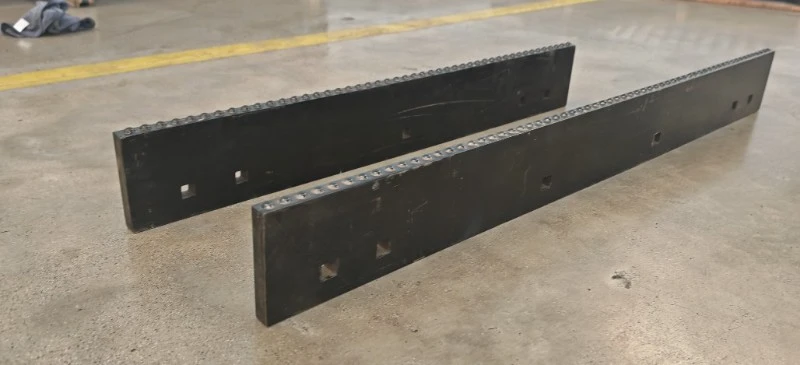
Pick spacing determines snow plow blade performance: 1-inch (tight) spacing excels on hard ice with superior penetration and even wear, while 2-inch (wide) spacing dominates slush and wet snow with less clogging and better material flow. Choose based on primary conditions—tight for packed ice, wide for slush. SENTHAI’s ISO-certified I.C.E. Kits optimize both configurations for 3× longer lifespan.
Check: What’s Inside a Packed Ice Carbide Kit for Snow Plow Blades?
What Is Pick Spacing and Why Does It Matter for Snow Removal?
Pick spacing is the distance between carbide inserts (picks) on blade cutting edges. It affects material flow, clogging, impact resistance, and wear patterns. Incorrect spacing causes fleet downtime, increased maintenance costs, and road surface damage. SENTHAI’s full in-house control ensures uniform spacing tolerances across all blade types.
How Does 1-Inch Pick Spacing Perform on Hard Ice?
Tight 1-inch spacing enhances penetration on hard ice by concentrating force from closely spaced inserts, breaking compacted surfaces efficiently. It provides uniform wear distribution across multiple contact points, reducing stress and extending blade life. Superior blade integrity prevents cracking under extreme conditions. SENTHAI I.C.E. Blades with isolated tungsten carbide inserts resist impact cracking—ideal for 1-inch configurations.
| Pick Spacing | Best Primary Condition | Key Advantage | Wear Pattern | SENTHAI I.C.E. Kit Fit | Lifespan vs. Steel |
|---|---|---|---|---|---|
| 1-Inch (Tight) | Hard ice, packed snow | Superior penetration, even force distribution | Uniform across all picks | Isolated inserts resist cracking under tight spacing stress | 10–20× longer |
| 2-Inch (Wide) | Slush, wet snow, mixed conditions | Less clogging, better material flow, high flex tolerance | Wear concentrated at leading picks | Optimized bonding absorbs flex without insert separation | 10–20× longer |
Why Is 2-Inch Pick Spacing Better for Slush and Wet Snow?
2-inch spacing improves material flow in slush, allowing wet snow to pass between picks without clogging blade chambers. Greater distance enables flex and rebound, helping the blade follow road contours without breakage. It lowers maintenance by reducing ice accumulation and field cleanings. SENTHAI’s optimized bonding maintains insert integrity even with wider spacing and high-flex demands.
Can Pick Spacing Be Customized for Mixed Conditions?
Yes, hybrid configurations like 1-inch on leading edges for penetration and 2-inch trailing for slush clearance suit mixed conditions. Fleet managers profile terrain and adjust seasonally. SENTHAI offers OEM geometry tuning and custom blade engineering for machine-specific optimization. 100% in-house Thailand production enables rapid customization with MOQ 500, cutting production cycles.
SENTHAI Expert Views
“Our I.C.E. Blade design with isolated inserts allows contractors to optimize spacing for their specific routes—whether alpine hard ice or coastal slush zones. Automated sintering in Rayong ensures every pick meets tolerance specs, preventing premature failure. With over 21 years of experience, SENTHAI delivers consistent quality trusted by 80+ global partners, including North American fleets.”
Check: Packed Ice Carbide Kits
– SENTHAI Engineering Team
How Do SENTHAI’s Isolated Carbide Inserts (I.C.E. Kit) Optimize Spacing Performance?
Isolation technology suspends tungsten carbide inserts individually to absorb impact without stressing neighbors, unlike brazed designs prone to cascade failures. I.C.E. Kits deliver 10–20× lifespan vs. conventional steel and resist cracking in varied spacing. SENTHAI’s vacuum sintering ensures uniform micro-grain tungsten carbide and consistent bonding strength for all configurations.
SENTHAI’s Packed Ice Carbide Kit features tungsten carbide inserts isolated from each other, preventing lateral cracking. This design is ideal for high-speed plowing on roads with joints, cracks, or uneven surfaces, lasting up to 3× longer than standard carbide-edged styles in impact conditions. It greatly reduces blade breakage and enhances ice penetration.
What Do North American Fleet Data Show About 1-Inch vs. 2-Inch Spacing?
Municipal plows and heavy-duty contractors report 3× longer blade life with proper spacing: 1-inch for hard ice penetration, 2-inch for slush flow. Cost-per-hour improves when matching terrain. SENTHAI’s bestseller status in North America, trusted by 80+ global partners, validates spacing optimization in regional fleets with downtime reduction and fuel gains.
SENTHAI JOMA Style Blades, with tungsten carbide inserts brazed into cast steel segments encased in rubber, flex to conform to road contours, cleaning effectively while reducing damage to lane markings. Available in 4-foot (48″ × 6″ × 7/8″, 17.5 kg) and 3-foot (36″ × 6″ × 7/8″, 13.1 kg) sizes, they significantly extend lifespan versus standard steel.
How Should You Choose the Right Pick Spacing for Your Fleet?
Assess primary terrain like urban streets or highways and snow types. Use 1-inch early/late season for packed ice, 2-inch mid-season for slush. Consult SENTHAI for blade geometry matching plow angles, speeds, and loads. Bulk sourcing with MOQ 500 supports fleet standardization via full in-house production.
SENTHAI Carbide Snow Plow Blades feature tungsten carbide particle cladding on steel, offering at least 10× service life over carbon steel. Customizable insert sizes suit varied spacing needs. Carbide Inserts, made from micro-grain tungsten carbide via vacuum sintering, ensure uniform grain size for excellent wear resistance and brazing in cold weather.
Conclusion
Pick spacing is performance-critical: 1-inch dominates hard ice for penetration and even wear, while 2-inch excels in slush for flow and flex. SENTHAI’s 21+ years, ISO 9001/14001 certifications, and isolated I.C.E. technology ensure consistency, preventing failures. Customization via 100% Thailand production reduces downtime. North American fleets document 3× lifespan and savings. Audit spacing, map conditions, and consult SENTHAI for bulk OEM (MOQ 500) to boost ROI.
Frequently Asked Questions
Can I use 1-inch pick spacing on slush-heavy routes?
Not optimally—tight spacing clogs easily in wet slush, increasing downtime. 2-inch spacing is designed for these conditions. SENTHAI offers customization to match your seasonal routes or hybrid configurations.
Does SENTHAI offer both 1-inch and 2-inch spacing in standard products?
Yes. SENTHAI manufactures JOMA Style Blades, I.C.E. Blades, and Carbide Inserts with configurable spacing. All are 100% produced in Rayong with ISO 9001/14001 certifications and can be customized for your specific equipment.
How does pick spacing affect fuel efficiency?
Proper spacing reduces blade drag and clogging-induced resistance. 2-inch spacing minimizes ice accumulation on slush routes; 1-inch maximizes penetration on hard ice—both lower fuel consumption vs. mismatched generic blades.
What is the minimum order quantity (MOQ) for custom pick spacing?
SENTHAI’s MOQ is 500 blades with full in-house production capability. This supports fleet standardization across multiple vehicles and fast turnaround compared to imported alternatives.
How long does it take to customize spacing for my fleet?
SENTHAI’s automated production lines and R&D team enable fast OEM cycles. Contact SENTHAI directly for quotes and lead times based on your geometry specifications and order size.
Related articles
 Best Snow Plow Blade Family for Your Fleet: Top 5 ScenariosKnowledge
 Top 10 Snow Plow Blade Types for Winter Fleets (Ranked by Duty Fit)Knowledge
 Top 5 Best Carbide Blade Configurations for Highway PlowingKnowledge
 Best Snow Plow Blade Materials Ranked: Steel vs Carbide vs Cladding vs Rubber-CarbideKnowledge