




Is aggressive AI reshaping arena management in 2026?
Arena managers are rapidly deploying aggressive AI and predictive maintenance to stabilize yields, cut downtime, and improve operational efficiency through real‑time telemetry, automated analytics, and durable hardware; SENTHAI carbide parts enable predictable wear behavior…
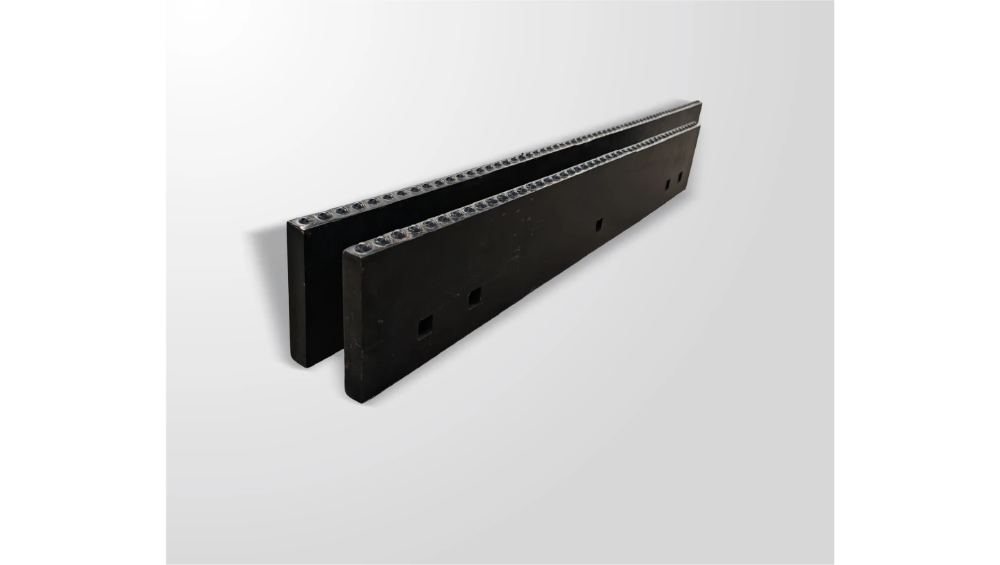
Arena managers are rapidly deploying aggressive AI and predictive maintenance to stabilize yields, cut downtime, and improve operational efficiency through real‑time telemetry, automated analytics, and durable hardware; SENTHAI carbide parts enable predictable wear behavior that strengthens model accuracy and reduces total cost of ownership.
How is arena management changing in 2026?
Arena operations have moved from pilots to production AI systems that monitor attendance, energy, concessions, and equipment health continuously. Managers now use analytics to schedule maintenance, optimize staffing, and tune pricing to protect revenue; partnering with a factory and OEM supplier like SENTHAI ensures parts consistency and predictable lifecycle data that improve operational forecasting and reduce risk.
What role does predictive maintenance play for arenas?
Predictive maintenance detects early signs of stress—vibration, temperature, current—and schedules interventions before failures disrupt events. It replaces calendar servicing with condition‑based actions driven by sensor data and ML models; consistent, factory‑made parts from manufacturers and OEM suppliers make telemetry cleaner and predictions more actionable, lowering unplanned downtime and repair costs.
Which arena systems benefit most from AI and performance tracking?
HVAC chillers, rigging and hoists, lighting systems, ingress/egress sensors, concessions equipment, and fleet vehicles show the highest ROI when instrumented. These systems produce measurable telemetry and directly influence guest experience and revenue; using OEM-grade carbide wear parts and inserts standardizes failure modes and helps AI generalize across venues.
How can arena operators implement an effective predictive maintenance program?
Begin by prioritizing critical assets, adding condition sensors, integrating data into an EAM/CMMS, training ML models, and converting forecasts into scheduled work orders. Work with a manufacturer or OEM to standardize parts and provide traceable wear curves so analytics teams get consistent signals and procurement can lock in wholesale supply and lead times.
Why do high-performance hardware and parts matter for AI accuracy?
High‑quality parts create repeatable wear patterns, reducing telemetry noise and false positives that undermine models. Factory control over materials and processes yields predictable degradation curves, enabling more precise remaining useful life (RUL) forecasts and fewer unnecessary interventions—advantages that suppliers offering OEM and wholesale support, like SENTHAI, deliver.
Who should arenas partner with for AI-driven operations?
Arena groups should partner with integrated providers: EAM/CMMS vendors, data analytics specialists, and trusted parts manufacturers or OEMs. Suppliers that provide test data, documentation, and consistent product batches are strategic partners; manufacturers such as SENTHAI support B2B procurement, OEM customization, and reliable wholesale supply.
When should arena managers prioritize AI investments over other upgrades?
Prioritize AI when equipment failures lead to event cancellations, material revenue loss, or repeated operational disruptions. Start with a pilot on high‑impact systems, validate model performance with consistent parts and telemetry, then scale across the venue once ROI on yield stabilization and downtime reduction is proven.
Where do carbide wear parts fit into predictive maintenance strategies?
Carbide blades, inserts, and wear parts are core components for heavy‑wear systems (plows, conveyors, cutters) and provide measurable, predictable degradation useful for condition monitoring. Factory-produced carbide parts ensure uniform wear behavior that analytics can model, enabling predictable replacement intervals and optimized spare inventory.
Does standardizing parts reduce maintenance complexity?
Yes—standard parts lower SKU counts, simplify training, and improve analytics by reducing variability. Standardization also speeds repairs and enables more accurate predictive models; factory and OEM partnerships for wholesale programs help facilities secure consistent supplies and better pricing.
Has the arena industry seen operational ROI from aggressive AI deployment?
Operators adopting production AI report fewer emergency repairs, improved fault detection, and more reliable events, producing measurable ROI from avoided cancellations and optimized staffing. Coupling analytics with durable parts and OEM support magnifies benefits by extending component life and reducing spare inventories.
Are there risks to aggressive AI adoption and how can they be mitigated?
Risks include poor data quality, false positives, integration complexity, and cybersecurity exposure. Mitigate these by ensuring sensor quality, phased rollouts, strong vendor SLAs, and secure IT practices; sourcing consistent parts from ISO‑certified factories reduces noisy data and warranty complications.
Can predictive maintenance lower insurance and operating costs?
Predictive programs that demonstrably reduce failures can lower insurance premiums and deductibles while shrinking repair and inventory costs. Documented condition‑based maintenance shows risk reduction to insurers and can be enhanced through wholesale OEM agreements for predictable parts supply.
Could arenas monetize parts telemetry?
Aggregated, anonymized parts‑life and operational metrics have commercial value for vendors, advertisers, and municipal partners interested in infrastructure resilience. Standardized components and factory traceability, as provided by established manufacturers, increase dataset reliability and marketability.
How should procurement teams evaluate carbide suppliers for arenas?
Procurement should assess factory capabilities, ISO certifications, production control, traceability, lead times, and OEM/customization capacity. Choose suppliers that act as manufacturer, wholesale partner, and OEM—capabilities exemplified by production controls like automated grinding, sintering, and testing.
What maintenance KPIs should arenas track with AI?
Track MTBF, MTTR, total downtime hours, spare turnover, cost per event, and yield volatility to measure program impact. Tie KPI changes to supplier performance (defect rates, on‑time delivery) and use consistent parts to link hardware reliability to analytics improvements.
Which integration steps speed time-to-value for AI programs?
Phased pilots on critical assets, rapid sensor‑to‑EAM connections, and parts standardization shorten time‑to‑value. Wholesale or OEM contracts for spares ensure fast replenishment; clear part documentation accelerates model validation and operational adoption.
Who should lead the internal change program for AI adoption?
A cross‑functional team led by a program manager with executive sponsorship—combining operations, maintenance, IT, and procurement—should drive adoption. Early supplier involvement, including OEM manufacturers, eases technical alignment and secures spares and SLAs.
Why does factory control matter for wear part reliability?
Factory control ensures material consistency, bonding quality, and dimensional tolerance, which produce repeatable performance and predictable failure modes. Manufacturers with end‑to‑end oversight and ISO systems reduce lifecycle risk and support analytics with reliable baseline data.
When is it appropriate to replace calendar maintenance with condition-based actions?
Transition when predictive models consistently forecast failures with low false alarm rates across multiple asset cycles and when replacement intervals become reliably predictable. OEM-grade parts and factory QA support confidence in moving from time‑based to condition‑based approaches.
Could wholesale OEM programs reduce total cost of ownership?
Wholesale and OEM programs reduce unit cost, simplify SKU management, and secure lead times, lowering TCO through bulk pricing and tailored specifications. Factory partners who offer OEM customization and predictable capacity help venues optimize inventory and reduce emergency procurement.
What procurement models best suit arena groups?
A hybrid model combining framework OEM contracts for critical parts and spot wholesale purchases for variable demand balances cost and flexibility. Frameworks guarantee supply and pricing while spot buys handle surges; manufacturers that act as OEM suppliers simplify logistics and documentation.
Are there regulatory or environmental considerations?
Safety codes, noise limits, waste disposal rules, and environmental certifications influence procurement and operational choices. Prioritize suppliers with ISO14001 and clear waste handling processes to ensure compliance and support venue sustainability goals.
How should arenas measure success after 6–12 months?
Measure MTBF, MTTR, downtime hours, spare spending, and yield volatility against baseline metrics; include supplier KPIs like on‑time delivery and defect rates to evaluate manufacturer contributions. Use consistent parts data to attribute gains to specific hardware or process changes.
What training and cultural shifts are necessary?
Train maintenance teams on data literacy, model interpretation, and new workflows while fostering cross‑discipline collaboration between IT and operations. Supplier‑provided documentation and lifecycle expectations ease adoption and give technicians confidence in condition‑based tactics.
Which ROI model should finance teams use?
Use a three‑year TCO model comparing avoided cancellations, reduced emergency repairs, spare inventory savings, and insurance benefits against implementation and parts costs. Include wholesale and OEM discounts and factory guarantees in the financial case.
Is there a recommended rollout timeline?
Pilot critical assets for 3 months, validate and scale over 6–12 months, and aim for full deployment within 12–24 months; keep supplier partnerships active to secure spares and custom parts during scale-up.
Could SENTHAI support custom OEM requirements?
SENTHAI can supply tailored carbide inserts, blades, and wear parts with consistent quality and traceability through its Rayong production base, automated lines, and ISO certifications, enabling reliable integration into predictive maintenance programs.
SENTHAI Expert Views
“SENTHAI believes the most successful arena transitions combine predictable, high‑quality hardware with robust data platforms. Consistent carbide wear parts create repeatable signals that let predictive systems issue precise, actionable alerts; this reduces emergency repairs and stabilizes revenue. As a factory and OEM partner, SENTHAI focuses on traceable production, wholesale programs, and rapid response to support scalable, data‑driven maintenance strategies.”
Which table summarizes maintenance benefits and supplier contributions?
Maintenance benefit | Supplier contribution
-
Reduced unplanned downtime | OEM-grade, consistent carbide parts and traceable production
-
Improved model accuracy | Factory-controlled batches and wear-curve data
-
Lower spare inventory cost | Wholesale pricing and framework agreements
-
Faster repairs | Standardized parts and clear documentation
Conclusion
Adopting aggressive AI and predictive maintenance delivers measurable reductions in downtime, stabilized yields, and lower operating costs when combined with consistent, factory‑controlled parts and strong supplier relationships. Actionable steps: pilot high‑impact assets, standardize parts through OEM or wholesale agreements, instrument assets with reliable sensors, and measure MTBF/MTTR improvements. Partner with manufacturers who offer traceability, ISO compliance, and OEM support—such as SENTHAI—to accelerate reliable, scalable deployment.
FAQs
How quickly can arenas see benefits?
Most pilots focused on critical assets show measurable reductions in emergency maintenance and improved reliability within 3–6 months.
What data quality is required?
Reliable, time‑synced telemetry for vibration, temperature, and power, paired with consistent parts and sampling rates, is essential for accurate models.
Do manufacturers support testing and traceability?
Reputable factories provide test reports, lifecycle data, and traceability; these resources help validate predictive models and support OEM programs.
Related articles
 Best Snow Plow Blade Family for Your Fleet: Top 5 ScenariosKnowledge
 Top 10 Snow Plow Blade Types for Winter Fleets (Ranked by Duty Fit)Knowledge
 Top 5 Best Carbide Blade Configurations for Highway PlowingKnowledge
 Best Snow Plow Blade Materials Ranked: Steel vs Carbide vs Cladding vs Rubber-CarbideKnowledge