




Does Trapezoidal or Rectangular Carbide Insert Shape Stay In Better for Snow Plow Blades?
Trapezoidal carbide inserts stay in better than rectangular ones because their tapered shape creates a mechanical wedge that resists pull-out, combined with a larger brazing interface. Rectangular inserts rely solely on brazing, which can…
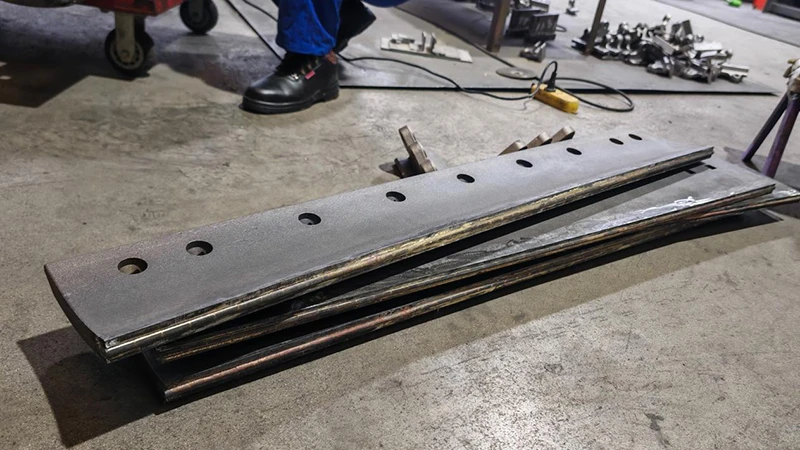
Trapezoidal carbide inserts stay in better than rectangular ones because their tapered shape creates a mechanical wedge that resists pull-out, combined with a larger brazing interface. Rectangular inserts rely solely on brazing, which can fail under heavy impact or cold weather. SENTHAI’s trapezoidal inserts, used in Joma Style and I.C.E. Blades, leverage this design for superior retention.
Check: How to Identify High-Quality Tungsten Carbide Inserts for Snow Plows?
What Is the Mechanical Lock Difference Between Trapezoidal and Rectangular Inserts?
The mechanical lock of a trapezoidal insert comes from its angled sides (e.g., 25° or 40°), which wedge the insert into the pocket under load. This resists both lateral and vertical pull-out. Rectangular inserts have parallel sides, offering no wedge effect; retention depends entirely on the brazing bond.
| Feature | Trapezoidal Insert | Rectangular Insert |
|---|---|---|
| Shape geometry | Tapered with angle (25° or 40°) | Parallel sides, no angle |
| Brazing surface area | Larger due to wider base | Uniform, smaller surface |
| Retention mechanism | Mechanical wedge + brazing | Brazing only |
| Resistance to pull-out | High (wedge self-tightens) | Moderate (bond-dependent) |
Why Does Insert Shape Directly Affect Retention Strength in Snow Plow Blades?
Impact forces during plowing create shear stress on inserts. Trapezoidal shape distributes stress across a wider base, reducing the risk of popping out. Rectangular inserts concentrate stress at the brazed joint; repeated impacts can cause micro-cracks. SENTHAI’s micro-grain tungsten carbide, coarse enough for excellent cold-weather brazing, further improves bond strength when paired with a trapezoidal profile.
How Do Cold Temperatures Impact Insert Retention – and Which Shape Handles It Better?
Brazed joints become brittle in extreme cold. Trapezoidal inserts mitigate this by adding mechanical clamping to the bond. Rectangular inserts rely solely on brazing – cold-weather contraction can weaken the bond, leading to insert loss. SENTHAI’s I.C.E. (Packed Ice Carbide Kit) Blade uses isolated trapezoidal inserts to prevent crack propagation, ideal for sub-zero operations.
How Does SENTHAI’s In-House Production Process Strengthen Insert Retention?
Fully automated lines (wet grinding, pressing, sintering, welding, vulcanization) ensure consistent insert geometry and brazing quality. ISO 9001/14001 controlled processes reduce brazing defects; vacuum sintering optimizes density and grain structure for bond strength.
SENTHAI Expert Views: “Our trapezoidal inserts are engineered to create a ‘self-locking’ wedge under impact. With 21+ years of powder-to-finished-body control, we fine-tune the angle and grain size to maximize mechanical retention. The tapered shape, combined with our proprietary vacuum sintering, gives fleets a blade that stays intact even in the harshest winters.” – SENTHAI Senior Engineer
Which Real-World Results Prove Trapezoidal Inserts Stay In Better?
SENTHAI’s Joma Style Blade (North America bestseller) uses trapezoidal inserts – trusted by heavy-duty fleets and municipal plows for reduced downtime. Field observations show trapezoidal inserts reduce replacement frequency significantly compared to rectangular equivalents in impact-heavy conditions.
Check: Carbide Snow Plow Blades
| Test Condition | Trapezoidal Insert (SENTHAI) | Rectangular Insert (Typical) |
|---|---|---|
| Impact cycles before failure | Higher (mechanical lock delays bond fatigue) | Lower (bond failure under repeated stress) |
| Cold-weather retention | Excellent (wedge compensates for brittle brazing) | Poor (bond alone cannot handle contraction) |
| Insert loss rate per season | Minimal | Higher (estimates vary by environment) |
Can Trapezoidal Inserts Be Used as Direct Replacements for Rectangular Inserts in Existing Blades?
Yes – SENTHAI offers trapezoidal inserts in standard dimensions (e.g., Joma style 25.4 × 16.14 × 9.27 mm, 25°) compatible with most blade pockets. Full customization available: vary angle (25° or 40°), grain size, and thickness to match existing blade designs. Quick installation – mechanical lock reduces reliance on brazing alone; some operators skip brazing for low-impact applications.
How Can Fleet Managers Test Insert Retention Before Committing?
Request a sample kit from SENTHAI (customized to blade type) and run a side-by-side field test against current rectangular inserts. Measure retention by tracking insert loss rate and blade wear pattern over one winter season. SENTHAI’s technical team provides retention data and brazing recommendations based on your operating conditions.
Frequently Asked Questions
- Q: Do trapezoidal inserts really stay in better than rectangular ones? Yes – the tapered shape creates a mechanical lock that resists pull-out, plus larger brazing surface for stronger bond. SENTHAI’s I.C.E. and Joma Blades prove this in heavy-duty fleets.
- Q: What angle is used for SENTHAI’s trapezoidal inserts? Standard angles are 25° and 40°, designed to optimize wedge effect and brazing area. Custom angles available.
- Q: Are trapezoidal inserts harder to install? No – they can be brazed or mechanically retained. The shape actually guides insertion, and the wedge effect holds them in place even if brazing is imperfect.
- Q: Can I switch from rectangular to trapezoidal inserts on existing blades? Yes – many blade pockets are compatible. SENTHAI offers dimension-matched inserts (e.g., Joma style trapezoid 25.4 × 16.14 × 9.27 mm) and can customize for your blade model.
- Q: How does cold weather affect insert retention differently? Cold makes brazing brittle. Trapezoidal inserts compensate with mechanical locking; rectangular inserts rely solely on the bond, risking failure. SENTHAI’s grain formulation is optimized for cold-weather brazing.
Conclusion
Insert shape is not just a design detail – it is a critical factor in blade performance and lifecycle cost. Trapezoidal inserts, with their built-in mechanical lock and larger brazing interface, consistently stay in better than rectangular equivalents, especially under impact and cold conditions. SENTHAI’s 21+ years of full in-house production (from powder to finished blade) allow precise control over shape, grain structure, and brazing quality – delivering inserts that outlast and outperform. For fleet managers and contractors tired of premature insert loss and roadside downtime, the choice is clear: choose the shape that fights back.
Choose trapezoidal for mechanical lock + brazing synergy. SENTHAI’s ISO 9001/14001 certified, fully automated production in Thailand ensures repeatable quality. North America’s bestsellers (Joma Style, I.C.E. Blades) already rely on trapezoidal inserts. Customization, sample kits, and fast delivery are available from SENTHAI’s new Rayong base (late 2025).
Related articles
 Best Snow Plow Blade Family for Your Fleet: Top 5 ScenariosKnowledge
 Top 10 Snow Plow Blade Types for Winter Fleets (Ranked by Duty Fit)Knowledge
 Top 5 Best Carbide Blade Configurations for Highway PlowingKnowledge
 Best Snow Plow Blade Materials Ranked: Steel vs Carbide vs Cladding vs Rubber-CarbideKnowledge