




Why Is 1045 Steel Better Than A36 for Carbide Snow Plow Blades? Comprehensive Material & Mechanical Performance Guide
1045 steel is superior to A36 for carbide snow plow blades because its medium-carbon composition allows precise heat treatment to 45–55 HRC — creating an unyielding, high-strength carrier that prevents brittle tungsten carbide insert…
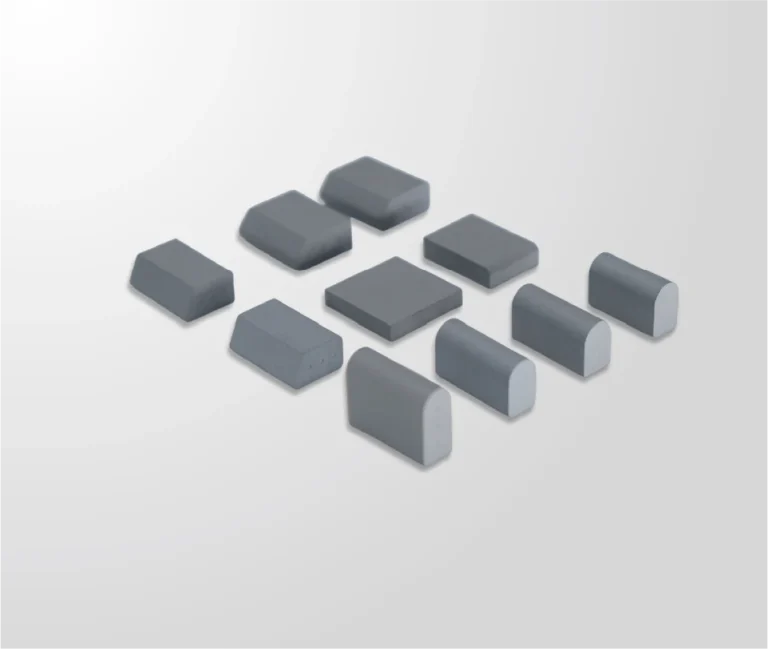
1045 steel is superior to A36 for carbide snow plow blades because its medium-carbon composition allows precise heat treatment to 45–55 HRC — creating an unyielding, high-strength carrier that prevents brittle tungsten carbide insert pop-out, cracking, and premature blade failure under heavy impact. A36 steel, a low-carbon structural steel left untreated at only 20–30 HRC, flexes, deforms, and shears under cyclic loads, leading to rapid insert loss and high operational downtime.
(Last modified date: September 7, 2026)
Quick definition: The steel carrier (or slot matrix) is the critical structural base that holds tungsten carbide inserts in place, absorbs high-energy kinetic impacts from frozen pavement, and distributes mechanical loads evenly to the plow frame.
Key Takeaways
- The steel carrier is the backbone of the carbide blade: it holds inserts, absorbs kinetic impact, and distributes loads to the plow frame — a soft carrier wastes even premium carbide.
- 1045 (0.43–0.50% C) heat-treats to 45–55 HRC; A36 (0.25% C max) cannot exceed ~30 HRC even when quenched.
- Heat-treated 1045 delivers 650–850 MPa tensile and 450–600 MPa yield strength, versus 400–550 MPa and 250–350 MPa for A36.
- Verify your carrier with an MTR or certified hardness certificate showing 45–55 HRC; see top industrial blades for highway maintenance.
What Is the Steel Carrier, and Why Is It the Backbone?
The steel carrier (or slot matrix) is the critical structural base that holds tungsten carbide inserts in place, absorbs high-energy kinetic impacts from frozen pavement, and distributes mechanical loads evenly to the plow frame. While tungsten carbide excels in abrasion resistance, its low fracture toughness makes it vulnerable to shock: if the steel carrier flexes, twists, or deforms, the stress transfers directly into the rigid brazed joint, causing the joint to shear and the carbide to crack or pop out. Without an adequately hardened carrier, even the highest premium-grade carbide is wasted.
1045 vs A36: Composition, Metallurgy, and Performance
| Property / parameter | 1045 steel (heat-treated) | A36 steel (untreated) |
|---|---|---|
| Carbon content | 0.43–0.50% (medium) | 0.25% max (low) |
| Hardness (Rockwell C) | 45–55 HRC | 20–30 HRC |
| Tensile strength | 650–850 MPa | 400–550 MPa |
| Yield strength | 450–600 MPa | 250–350 MPa |
| Wear resistance / insert retention | High; prevents pop-out | Low; flexes and shears |
| Best use | Carbide plow carriers, strength-critical wear parts | General structural fabrication, brackets |
How Heat Treatment Transforms 1045 into an Elite Carrier
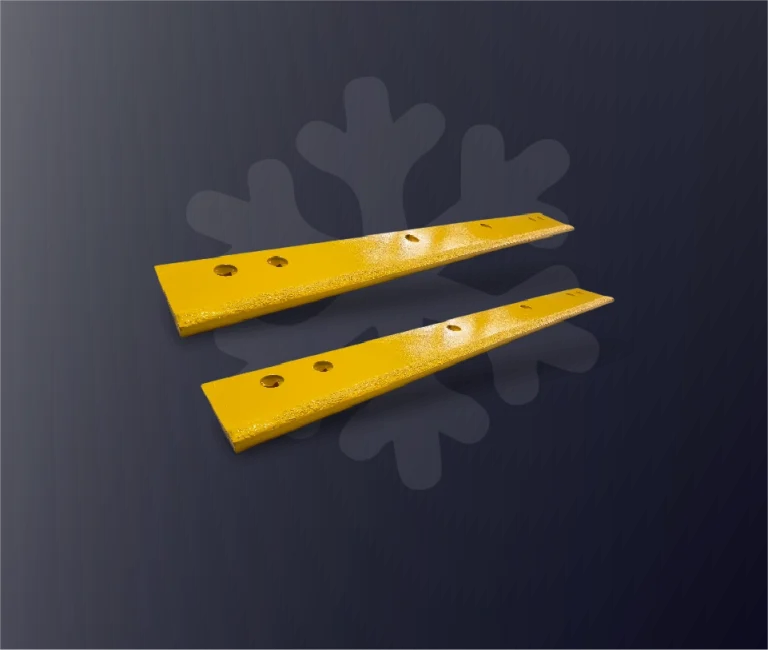
1045’s medium-carbon composition and 0.60–0.90% manganese enhance hardenability, tensile strength, and internal toughness across thick plate sections. Quenching and tempering to 45–55 HRC creates a martensitic structure with high hardness; precise tempering restores ductility and impact resistance, allowing 1045 at 45–55 HRC to absorb high kinetic shocks without cracking. When carriers are too soft, three failure modes follow: insert pop-out from a flexing pocket, joint shear from transferred stress, and rapid carrier wear that shortens blade life. See also the durable winter road equipment guide.
Cost-Benefit: Upfront Price vs Cost Per Operating Hour
Heat-treated 1045 carriers cost more upfront than A36, but they protect the tungsten carbide investment and eliminate premature insert pop-out, cracking, and downtime. The result is a lower cost per operating hour and up to 10× longer wear life in demanding winter municipal operations — the same logic that makes carbide blades cost-effective versus steel. SENTHAI utilizes in-house, ISO-certified heat-treated 1045 steel carriers and offers fully customized blade lengths, mounting hole patterns, and carbide insert configurations under ISO 9001 quality controls. See also how to add sensors to a JOMA carbide blade.
FAQs
Can A36 steel ever be heat-treated to match 1045 hardness?
No. A36 contains a maximum of 0.25% carbon, which is chemically insufficient to form a high-hardness martensitic structure; quenching A36 will not yield hardness above 30 HRC. Only medium-carbon steels like 1045 or alloy steels like 4140 achieve 45–55 HRC.
Is 1045 steel stronger than A36 steel?
Yes. Heat-treated 1045 exhibits significantly higher tensile strength (650–850 MPa vs 400–550 MPa) and yield strength (450–600 MPa vs 250–350 MPa) than A36.
Does high hardness make a 1045 steel carrier brittle?
Not when properly quenched and tempered. Precise tempering restores ductility and impact resistance, allowing 1045 at 45–55 HRC to absorb high kinetic shocks without cracking.
Is A36 better than 1045 for any applications?
Yes. A36 is preferred for general structural fabrication, building frames, mounting brackets, and simple welded assemblies where low cost, easy cold-forming, and effortless welding matter more than wear resistance or high strength.
Can 1045 and A36 be welded together on a plow assembly?
Yes, but the process must accommodate 1045’s higher hardenability: pre-heat the 1045 side to 200–300°C and use low-hydrogen filler metals to prevent cracking in the heat-affected zone.
How can I verify if my plow blade has a heat-treated 1045 carrier?
Request a Material Test Report (MTR) or a certified hardness test certificate showing 45–55 HRC readings, or perform a physical bench hardness test or file test.
Related Articles
- Durable Winter Road Equipment Guide for High-Traffic Highways
- Top 10 Industrial Snow Plow Blades for Highway Maintenance 2026
- How Can I Add Sensors to a Snow Plow Blade?
Official Resources
References
Related articles
 Best Snow Plow Blade Family for Your Fleet: Top 5 ScenariosKnowledge
 Top 10 Snow Plow Blade Types for Winter Fleets (Ranked by Duty Fit)Knowledge
 Top 5 Best Carbide Blade Configurations for Highway PlowingKnowledge
 Best Snow Plow Blade Materials Ranked: Steel vs Carbide vs Cladding vs Rubber-CarbideKnowledge