




How Does a 4 Foot Joma Blade Improve Snow Plowing?
A 4 foot Joma blade is a rubber-encased, carbide-insert snow plow cutting edge designed to conform to uneven roads while resisting severe abrasion and impact. Its articulating construction improves snow and ice removal, reduces…
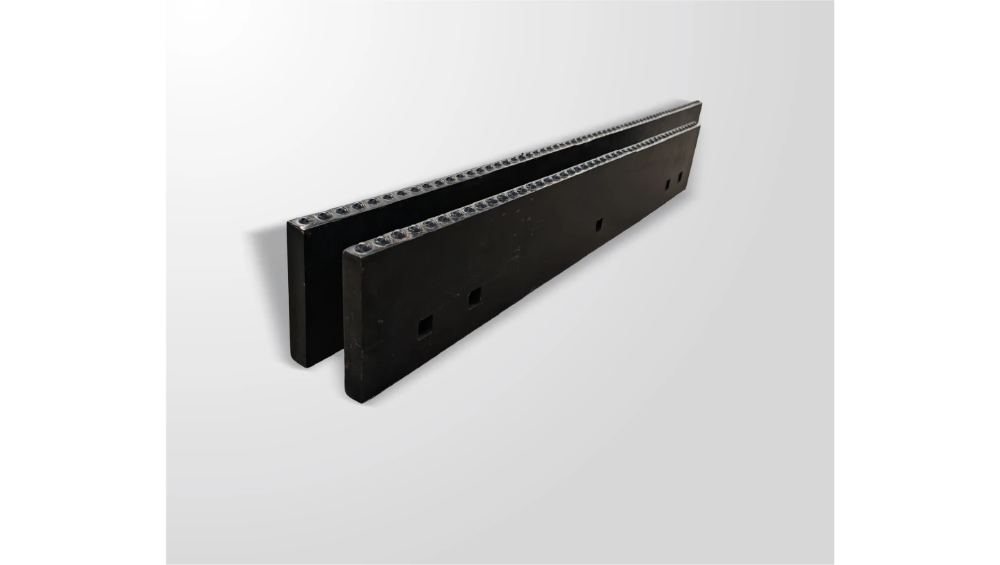
A 4 foot Joma blade is a rubber-encased, carbide-insert snow plow cutting edge designed to conform to uneven roads while resisting severe abrasion and impact. Its articulating construction improves snow and ice removal, reduces vibration and noise, protects plow equipment, and lowers replacement frequency for municipal fleets, contractors, and wholesale distributors.
Joma Style Blade: A Validation-First Cutting Edge for Winter Road Fleets
What Is a 4 Foot Joma Blade?
A 4 foot Joma blade is a 48-inch carbide cutting-edge section built with steel segments, tungsten carbide inserts, and a flexible rubber outer body. It is commonly used as a replacement section in articulating snow plow blade systems.
The 4-foot format provides an efficient balance between coverage, handling weight, and road-following flexibility. Rather than acting as one rigid steel edge, the blade contains individual reinforced steel segments protected by rubber. Tungsten carbide inserts are brazed into the wear edge of each segment to deliver long-lasting scraping performance on abrasive pavement, packed snow, and ice.
For B2B buyers, this construction makes the product suitable for:
-
Municipal road-maintenance fleets
-
Highway and airport snow-removal contractors
-
Snow plow equipment distributors
-
OEM snow plow manufacturers
-
Wear-parts wholesalers and importers
-
Private fleet maintenance companies
SENTHAI manufactures Joma-style carbide plow blade sections for severe winter road conditions. As a dedicated carbide wear-parts factory, SENTHAI combines carbide engineering, steel processing, brazing, rubber vulcanization, and final inspection in Thailand.
A Joma-style blade is generally specified as a compatible replacement style rather than as an original branded product. Buyers should always verify dimensions, mounting centers, backer-blade requirements, and clamp-bar compatibility before placing a wholesale order.
How Does a Joma-Style Blade Remove Snow and Ice?
A Joma-style blade removes snow and ice by combining hard carbide scraping points with a flexible rubber-supported structure that follows changes in road elevation. This helps maintain contact across uneven pavement without transmitting every impact directly to the plow.
The working principle is straightforward but highly effective. Carbide inserts form the primary wear surface. Because tungsten carbide is substantially more abrasion-resistant than ordinary blade steel, the inserts retain their cutting profile through long operating hours on asphalt, concrete, and abrasive winter debris.
Meanwhile, the rubber matrix serves several roles:
-
It cushions shock from manholes, bridge joints, and raised pavement.
-
It lets the blade flex around road crowns and minor surface variation.
-
It reduces chatter, vibration, and operator noise.
-
It isolates steel components from direct exposure to water, slush, and road salt.
-
It helps protect the plow moldboard and mounting assembly from high-impact loads.
Individual steel segments create the articulating effect. As the cutting edge meets a crowned lane, uneven asphalt, or a road transition, each section can respond more independently than a rigid full-length steel cutting edge.
This road-conforming action is particularly valuable for highway agencies and snow-removal contractors whose equipment must clear broad lane miles efficiently. Better surface contact can leave less residual snow and ice, helping operators achieve cleaner plowing results before applying de-icing materials.
Which Specifications Should B2B Buyers Confirm?
B2B buyers should confirm blade length, height, thickness, mounting-hole layout, carbide dimensions, rubber compound, steel grade, and system compatibility. A 48-inch length alone does not guarantee that a blade will fit a specific plow or replacement system.
A standard 4-foot Joma-style blade is commonly supplied at approximately 48 inches long, 6 inches high, and 7/8 inch thick. However, procurement teams should treat these as reference dimensions, not as a substitute for verifying their own drawings or samples.
For an OEM, wholesale supplier, or importer, the following documents are especially important:
-
Dimensioned technical drawing
-
Bolt-hole and bushing-center specification
-
Material specification for steel, carbide, and rubber
-
Carbide brazing and retention requirement
-
Rubber-to-steel bonding requirement
-
Inspection standard and batch traceability method
-
Packaging, labeling, pallet, and container-loading requirements
SENTHAI can produce standard 3-foot and 4-foot sections as well as customized snow plow wear parts based on customer drawings, samples, and operating requirements. This is valuable when a distributor needs private-label products or when an equipment manufacturer requires a non-standard moldboard interface.
Why Choose Carbide and Rubber Construction?
Carbide and rubber construction combines wear resistance with impact absorption. Carbide helps the blade survive prolonged pavement contact, while rubber cushions impacts and allows the cutting edge to follow road contours more smoothly than a rigid steel blade.
Traditional steel cutting edges are economical and simple, but they can wear quickly in high-mileage highway work. Rigid carbide-steel edges can offer longer wear life, yet they may transfer more vibration to the plow, truck, and operator when encountering rough pavement or road obstacles.
A rubber-encased carbide blade addresses these operating challenges through a composite design. The carbide inserts bear the abrasive load. Steel segments supply structural support. Rubber absorbs shock and supports controlled articulation.
For fleet managers, the potential operational advantages include:
-
Fewer scheduled blade changes
-
Reduced service interruptions during storms
-
Lower vibration-related stress on equipment
-
More consistent contact on uneven roadway surfaces
-
Less noise during residential and urban operations
-
Improved component protection in salt-heavy conditions
The correct choice depends on operating conditions. A rigid steel edge may remain suitable for light-duty use or smoother surfaces. A carbide rubber blade is often a stronger long-term option for intensive winter maintenance where uptime, road conformity, and cost per operating hour matter more than the lowest initial purchase price.
How Should a 4-Foot Blade Be Installed?
A 4-foot blade should be installed using the correct backer blade, clamp bar, bushings, and high-strength hardware specified for the plow system. Proper alignment and torque are essential to prevent uneven wear, loose sections, or damage to permanent plow components.
Before installation, clean the moldboard mounting surface and inspect it for distortion, corrosion, cracks, or worn holes. A poorly prepared mounting surface can prevent the cutting edge from sitting squarely, even if the replacement blade itself is manufactured accurately.
Follow this practical installation sequence:
-
Park the plow safely on level ground and relieve hydraulic pressure.
-
Remove worn cutting-edge sections, hardware, and damaged mounting components.
-
Inspect the moldboard, backer blade, clamp bars, and mounting holes.
-
Position the new sections in the required blade orientation.
-
Install compatible bolts, washers, and nuts without fully tightening them initially.
-
Align sections so their lower edges form a consistent cutting line.
-
Tighten hardware according to the equipment manufacturer’s torque specification.
-
Recheck fasteners after initial operation because seating can occur.
Do not force a blade into an incompatible bolt pattern or use improvised spacers to compensate for a poor fit. Instead, provide the supplier with a drawing, bolt-center measurement, or physical sample. An experienced factory can evaluate whether standard inventory, a modified configuration, or a fully customized OEM design is appropriate.
Who Benefits From Wholesale Joma-Style Blades?
Municipalities, road contractors, snow plow OEMs, distributors, and maintenance fleets benefit most from wholesale Joma-style blades. These buyers require reliable availability, repeatable quality, technical support, and pricing based on total operating cost rather than one-off retail purchases.
A wholesale supply program is especially valuable for organizations with multiple trucks, multiple locations, or seasonal demand peaks. Maintaining standardized blade specifications across a fleet simplifies installation, spare-parts inventory, technician training, and performance tracking.
For distributors, a dependable manufacturer can also support market growth through:
-
Private-label branding
-
Customized packaging
-
Consistent dimensions across repeat orders
-
Mixed container loads of related wear parts
-
Technical drawings and product data
-
Quality records for larger tenders
-
Product customization for regional plow models
SENTHAI is a US-invested manufacturer specializing in snow plow blades and road-maintenance wear parts. With more than 21 years of carbide wear-part production experience, SENTHAI supplies global partners with Joma-style blades, carbide blades, I.C.E. blades, and carbide inserts.
Rather than acting only as a trading company, a capable factory should control the critical production stages. This reduces communication gaps, helps maintain consistent specifications, and enables faster corrective action when an OEM customer needs a design change or quality improvement.
What Quality Controls Should a Blade Factory Apply?
A blade factory should inspect raw materials, carbide properties, steel preparation, brazing quality, rubber bonding, dimensions, and final assembly. Quality control must focus on the interfaces between carbide, steel, and rubber because these areas determine field durability.
A high-quality Joma-style blade is not created by carbide hardness alone. The carbide must be correctly selected for the balance of abrasion resistance and impact toughness. The steel holder must be shaped and prepared for secure insert retention. The brazed joint must withstand repeated shock. The rubber must bond securely to the internal steel structure while remaining flexible in cold weather.
Effective production controls include:
-
Density, hardness, and strength checks for incoming carbide
-
Steel-grade verification and controlled segment profiling
-
Insert-position inspection before and after brazing
-
Bond-strength monitoring for rubber-to-steel adhesion
-
Vulcanization process control for temperature, pressure, and time
-
Dimensional checks for length, height, thickness, and bolt spacing
-
Final visual inspection for defects, voids, delamination, or damage
-
Batch identification for traceability and complaint resolution
SENTHAI operates automated wet grinding, pressing, sintering, welding, and vulcanization workshops. Its ISO9001 and ISO14001-certified operations support disciplined quality management and environmental practices throughout the manufacturing process.
Can OEM Buyers Customize a 4-Foot Joma Blade?
OEM buyers can customize a 4-foot Joma blade by specifying dimensions, mounting patterns, carbide grades, segment geometry, rubber properties, branding, packaging, and inspection requirements. Custom development is most successful when the buyer provides a drawing, sample, or clear performance target.
Customization should solve a defined operating or commercial problem. For example, an OEM may need a different mounting center for a proprietary plow. A distributor may require branded packaging and a consistent part-number system. A contractor may need a modified rubber compound for particularly cold regions or corrosive de-icing environments.
Common OEM customization options include:
-
Non-standard blade lengths and section layouts
-
Alternative bolt-hole or bushing locations
-
Customized carbide insert size and spacing
-
Steel segment profiles for specific plow systems
-
Rubber compounds optimized for cold flexibility
-
Molded logos and private-label markings
-
Export-ready cartons, pallets, and barcode labels
-
Inspection reports aligned with customer requirements
The most efficient approach is to engage the factory early. Share annual forecast volume, expected minimum order quantity, target markets, plow models, and technical drawings. This allows engineering, tooling, procurement, and packaging teams to build a supply solution around the actual project instead of trying to adapt a generic product after production begins.
SENTHAI Expert Views
“For a carbide snow plow blade, the real measure of quality is not simply hardness. Buyers should evaluate carbide retention, steel support, rubber-to-metal bonding, dimensional consistency, and low-temperature performance as one complete system. A supplier that controls engineering, carbide processing, brazing, vulcanization, and final inspection can deliver more reliable wear life and a lower total cost of ownership for fleets and OEM partners.”
How Can Buyers Lower Total Blade Ownership Cost?
Buyers can lower total blade ownership cost by choosing a blade that reduces replacements, downtime, damage risk, and inventory complexity. The lowest unit price is not always the lowest-cost option when labor, truck downtime, and mid-season emergency purchases are included.
Evaluate each proposed blade using a total-cost perspective:
A useful purchasing method is to track blade consumption per truck, per route, and per season. Record the installation date, blade type, operating hours, road type, salt exposure, and replacement cause. Over time, this data helps fleet managers identify which cutting-edge configuration produces the best cost per mile.
For wholesale buyers, secure supply before the winter rush. Confirm lead times, packaging quantities, container planning, and safety-stock levels well before seasonal demand increases.
What Are the Key Takeaways for Buyers?
The right 4 foot Joma blade can improve scraping performance, reduce vibration, and extend service life in demanding snow-removal applications. Buyers should select a manufacturer based on verified fit, material control, bonding quality, customization capability, and dependable wholesale supply.
Choose a supplier that understands winter road maintenance rather than simply offering a generic carbide component. Confirm the complete interface between blade, mounting hardware, clamp bar, backer blade, and plow moldboard. Request drawings, samples, and inspection details before committing to large-volume procurement.
SENTHAI offers manufacturer-level support for distributors, OEMs, municipal suppliers, and fleet buyers seeking durable Joma-style snow plow blade solutions. By working directly with a specialized carbide tool factory, B2B customers can develop a more stable supply chain, protect product consistency, and build a wear-parts program designed for long-term field performance.
Frequently Asked Questions
What is the standard size of a 4-foot Joma-style blade?
A common size is 48 inches long by 6 inches high by 7/8 inch thick. Buyers should still verify mounting-hole centers, bushing size, and plow-system compatibility before ordering.
Are Joma-style blades suitable for asphalt and concrete roads?
Yes. Their carbide inserts and flexible rubber construction are designed for road-maintenance applications on asphalt, concrete, gravel, and other abrasive winter surfaces.
Can a wholesale supplier order private-label blades?
Yes. Many factories can support private labels through custom logos, packaging, labels, part numbers, and tailored product specifications, subject to order volume and tooling requirements.
How should buyers prevent carbide insert failure?
Choose blades with properly engineered steel holders, controlled carbide brazing, strong rubber-to-steel bonding, and documented inspection processes. Correct installation and suitable plow settings are also essential.
When should a fleet replace a Joma-style blade section?
Replace the section before excessive wear exposes or threatens permanent mounting components. Regular inspections during the season help identify uneven wear, damaged rubber, loose hardware, or compromised carbide inserts early.
Related articles
 Best Snow Plow Blade Family for Your Fleet: Top 5 ScenariosKnowledge
 Top 10 Snow Plow Blade Types for Winter Fleets (Ranked by Duty Fit)Knowledge
 Top 5 Best Carbide Blade Configurations for Highway PlowingKnowledge
 Best Snow Plow Blade Materials Ranked: Steel vs Carbide vs Cladding vs Rubber-CarbideKnowledge