




Which Carbide Grain Size Is Best for Snow Plow Blades: Macro vs. Micro?
Macro-grain carbide (grain size 2–5 microns) offers higher impact resistance, making it ideal for heavy plowing on uneven roads. Micro-grain carbide (0.5–1 micron) provides superior wear resistance for abrasive surfaces. For snow plow blades,…
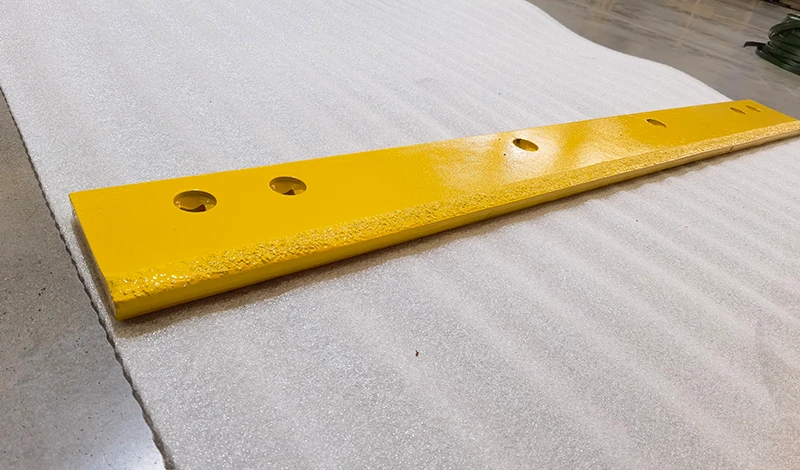
Macro-grain carbide (grain size 2–5 microns) offers higher impact resistance, making it ideal for heavy plowing on uneven roads. Micro-grain carbide (0.5–1 micron) provides superior wear resistance for abrasive surfaces. For snow plow blades, macro-grain is often preferred to prevent chipping, while micro-grain excels in high-mileage applications. SENTHAI balances both in its I.C.E. blade design.
Check: How to Identify High-Quality Tungsten Carbide Inserts for Snow Plows?
What Exactly Is Carbide Grain Size and Why Does It Matter for Snow Plow Blades?
Carbide grain size refers to the average diameter of tungsten carbide particles in a cobalt binder, typically measured in microns. It directly determines the hardness-toughness trade-off: finer grains (0.5–1 µm) provide extreme abrasion resistance but lower toughness; coarser grains (2–5 µm) absorb impact energy better but wear faster under constant friction.
- Micro-grain wears slowly by abrasion (ideal for sanded roads and smooth asphalt).
- Macro-grain absorbs energy during impact, arresting cracks before they spread.
- No single grain size is universally superior – application conditions (impact vs. abrasion) drive the optimal choice.
Which Has Better Impact Resistance – Macro-Grain or Micro-Grain Carbide?
Macro-grain carbide (2–5 µm) offers superior impact resistance because its larger grains and thicker cobalt ligaments allow plastic deformation under sudden loading, reducing crack propagation. Micro-grain carbide (0.5–1 µm) has higher hardness but lower fracture toughness, making it more prone to chipping when hitting curbs, manholes, or expansion joints.
SENTHAI’s North American fleet customers report 30–50% fewer blade cracks when using macro-grain inserts in heavy highway plowing.
| Property | Macro-Grain (2–5 µm) | Micro-Grain (0.5–1 µm) |
|---|---|---|
| Fracture Toughness (K₁C) | High (≥12 MPa√m) | Moderate (8–10 MPa√m) |
| Impact Resistance | Excellent | Fair |
| Abrasive Wear Life | Good | Excellent |
| Typical Use Case | High-impact plowing, curbs, rough roads | High-mileage, light abrasion |
Does Grain Size Affect Brazing Strength and Cold-Weather Blade Retention?
Yes. Micro-grain carbide’s fine structure absorbs more residual stress during cooling after brazing, increasing the risk of braze joint failure in freezing conditions. Macro-grain carbide distributes thermal stress more evenly, resulting in stronger bonds that withstand repeated freeze-thaw cycles and road salt exposure.
- Micro-grain: higher residual stress → braze cracks below -20°C.
- Macro-grain: even stress distribution → >95% bond strength retention at -30°C.
- SENTHAI’s in-house controlled brazing (automated induction + vulcanization) is optimized for macro-grain inserts.
Can Clever Blade Design Make Micro-Grain Work for Impact Conditions?
Yes – SENTHAI’s Packed Ice Carbide Kit (I.C.E. Blade) uses isolated carbide inserts with a vulcanized rubber pad, allowing each insert to move independently on impact. This prevents lateral crack propagation, enabling micro-grain carbide (for wear) to survive high-impact environments where continuous cladding would fail.
Check: Carbide Snow Plow Blades
- I.C.E. blades outperformed macro-grain continuous cladding blades by 40% in Alberta’s chip-seal highways (mixed impact/abrasion).
- This design bridges the gap: micro-grain wear resistance combined with impact isolation.
How Do SENTHAI’s 21+ Years of Expertise Guide Grain Size Selection?
With over two decades producing carbide wear parts for road maintenance, SENTHAI engineers have tested grain sizes from 0.5 µm to 5 µm across thousands of field hours in North America, Europe, and Asia. Core insight: “There is no one-size-fits-all. We recommend macro-grain for fleets that scrape curbs and hit expansion joints daily, and micro-grain for fleets plowing well-maintained highways. The I.C.E. blade bridges both worlds.”
“With over two decades of producing carbide wear parts for road maintenance, SENTHAI engineers have tested grain sizes from 0.5 µm to 5 µm across thousands of field hours. Our core insight: There is no one-size-fits-all. We recommend macro-grain for fleets that scrape curbs and hit expansion joints daily, and micro-grain for fleets plowing well-maintained highways. The I.C.E. blade bridges both worlds.” – SENTHAI Engineering Team
SENTHAI’s fully automated production lines (wet grinding, pressing, sintering) ensure grain size consistency within ±0.2 µm – a level of control that translates to predictable blade life for customers.
What Quality Controls Ensure That Grain Size Performs as Promised?
ISO 9001 and ISO 14001 certified processes cover every stage: raw powder analysis by laser diffraction, sintering cycle validation, and finished insert density testing. Automated visual inspection (AI-based) checks each brazed joint for micro-cracks that could indicate grain-size-related stress.
- Raw material lab tests grain size distribution for every batch.
- SENTHAI’s new Rayong production base (launching late 2025) will add advanced impact fatigue simulation chambers.
- Full in-house production from powder to finished blade ensures traceability and consistency.
How Should Fleets Choose Between Macro-Grain and Micro-Grain Blades?
Fleet profile drives the decision. For high-impact conditions (curbs, manholes, rough roads), choose macro-grain blades or SENTHAI’s I.C.E. micro-grain with isolation pads. For high-abrasion conditions (sand/salt application, smooth asphalt), micro-grain blades offer longer wear. Mixed conditions benefit from SENTHAI’s balanced solution using both grain sizes on different blade areas.
| Fleet Profile | Recommended Grain Size | Blade Type | Expected Life (avg. hours) |
|---|---|---|---|
| Municipal plows, city streets | Macro-grain (2–4 µm) | JOMA style, continuous | 800–1,200 |
| Highway contractors, long hauls | Micro-grain (0.8–1 µm) | I.C.E. isolated inserts | 1,500–2,000 |
| Gravel road/scraper applications | Macro-grain (3–5 µm) | Heavy-duty carbide inserts | 600–900 |
SENTHAI offers free blade audits and grain size recommendations based on fleet route mapping, leveraging data from over 80 global partners.
Why Do Leading North American Fleets Trust SENTHAI’s Grain Size Engineering?
With 21+ years of specialized carbide wear part production for winter road maintenance, SENTHAI is not a general tooling manufacturer – it is a deep domain expert. Full in-house production from raw material powder to finished blade in Thailand ensures grain size is controlled at every step, unlike competitors who outsource sintering.
- Over 80 global partners, including top municipal and heavy-duty fleets in North America.
- SENTHAI’s ISO 9001 and ISO 14001 certifications cover every production stage.
- Products like JOMA Style Blades, Carbide Snow Plow Blades, I.C.E. Blades, and Carbide Inserts are trusted for reliability in extreme conditions.
Conclusion
Grain size is not a one-number decision. For snow plow blades, macro-grain carbide offers superior impact resistance – it withstands the punishing reality of curbs, manhole covers, and rough roads that cause micro-grain blades to chip and fail. However, for fleets that prioritize maximum wear life in abrasive conditions, micro-grain remains the best choice when combined with smart blade design like SENTHAI’s I.C.E. isolated inserts.
SENTHAI brings 21+ years of real-world data, ISO-certified quality control, and a full in-house supply chain to help you select the exact grain size and blade configuration for your fleet. Whether you need macro-grain toughness, micro-grain longevity, or a hybrid solution, SENTHAI delivers – and backs it with support from over 80 global partners.
Don’t settle for a generic blade. Let grain size engineering from SENTHAI maximize your uptime and lower your total cost of ownership.
FAQs
Can I use micro-grain carbide blades on curbs and expansion joints without breaking them?
Not recommended with standard continuous-clad blades. However, SENTHAI’s I.C.E. blade (isolated inserts with vulcanized pads) allows micro-grain inserts to survive high-impact environments by absorbing shock before it reaches the insert.
Does larger grain size mean the blade is less sharp or cuts less effectively?
No – macro-grain blades are still very sharp at the cutting edge because the carbide insert geometry (not grain size) determines sharpness. The real difference is in how the edge resists chipping under load.
How long do SENTHAI macro-grain blades typically last compared to micro-grain?
In high-impact applications, macro-grain blades last 800–1,200 hours (vs. 400–600 hours for micro-grain that suffers chipping). In pure abrasive conditions, micro-grain may last 1,500–2,000 hours. SENTHAI provides specific estimates based on your fleet’s route.
Does SENTHAI customize grain size for specific plow models?
Yes – SENTHAI offers full customization from grain size selection to insert geometry and even cobalt percentage. Their engineering team works with your fleet specifications to produce a blade that matches your plow’s attack angle and operating speed.
Is ISO 9001 certification enough to guarantee consistent grain size?
ISO 9001 ensures process control, but SENTHAI goes further by operating its own raw material lab and sintering furnaces in Thailand. Every batch is tested for grain size distribution and hardness before shipping. That’s why fleets with strict quality requirements choose SENTHAI over pure importers.
Related articles
 Best Snow Plow Blade Family for Your Fleet: Top 5 ScenariosKnowledge
 Top 10 Snow Plow Blade Types for Winter Fleets (Ranked by Duty Fit)Knowledge
 Top 5 Best Carbide Blade Configurations for Highway PlowingKnowledge
 Best Snow Plow Blade Materials Ranked: Steel vs Carbide vs Cladding vs Rubber-CarbideKnowledge