




Why Do Joma Snow Plow Blades Stay Stable at 40 MPH While Steel Chatters?
JOMA snow plow blades stay stable at 40+ mph because rubber-encased carbide inserts brazed into cast steel segments flex and absorb impact — eliminating the chatter and bounce that rigid steel blades suffer on…
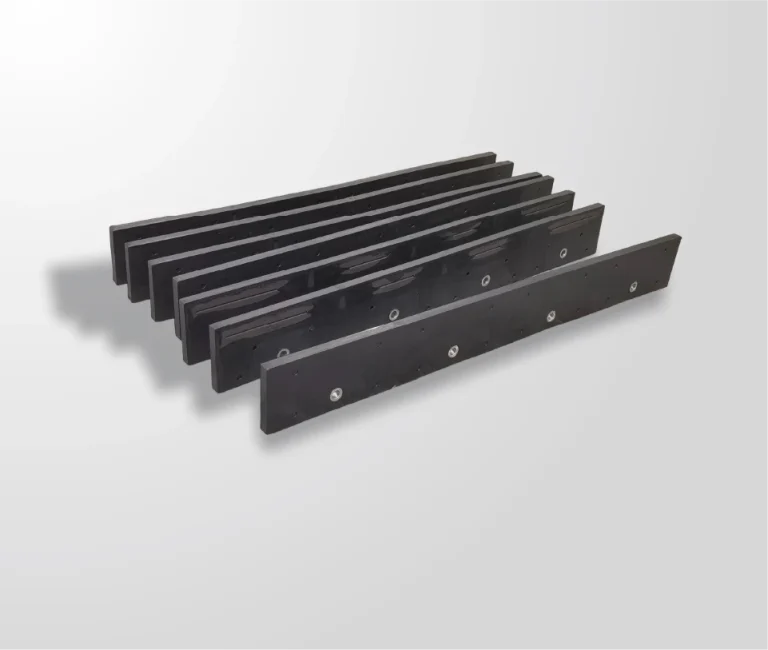
JOMA snow plow blades stay stable at 40+ mph because rubber-encased carbide inserts brazed into cast steel segments flex and absorb impact — eliminating the chatter and bounce that rigid steel blades suffer on uneven roads. That stability delivers 5–10x longer lifespan and safer high-speed clearing.
(Last modified date: September 2, 2026)
Quick definition: Steel blades chatter at high speeds like 40 mph due to their rigidity, causing bounce on ice ruts and potholes.
Key Takeaways
- Rigid steel blades chatter and bounce on ice ruts and potholes at highway speeds.
- Rubber-encased carbide segments flex to absorb shocks and keep the edge in contact.
- JOMA blades run stable at 40+ mph with minimal vibration.
- Fleets report up to 80% fewer blade changes versus steel.
What Causes Steel Snow Plow Blades to Chatter at High Speeds?
Steel blades chatter at high speeds like 40 mph due to their rigidity, causing bounce on ice ruts and potholes. This leads to vibration, uneven plowing, road damage, and frequent replacements. Cold brittleness accelerates wear, increasing downtime and salt or sand use. See how JOMA-style blades outperform steel for efficiency.
How Do JOMA Snow Plow Blades Eliminate Blade Bounce?
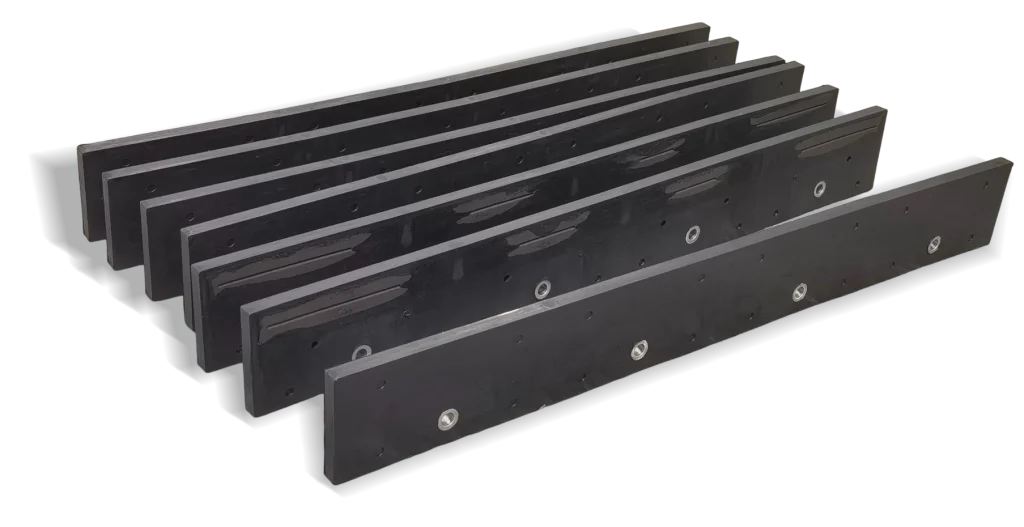
JOMA blades eliminate bounce through tungsten carbide inserts brazed into cast steel segments encased in ultra-low-temperature-resistant rubber. This design flexes and absorbs shocks at high speeds. Automated production — wet grinding, pressing, sintering, welding, and vulcanization — ensures uniform bonding for zero chatter. See how ethical tungsten sourcing improves blades.
| Feature | JOMA Blade (SENTHAI) | Steel Blades |
|---|---|---|
| High-speed stability (40+ mph) | Excellent — rubber-carbide flex absorbs shocks | Poor — chatters/bounces |
| Vibration/chatter | Minimal | High |
| Lifespan | 5–10x longer than steel | Frequent changes |
| Best for | High-speed municipal/highway plowing | Low-speed/light-duty only |
Why Is SENTHAI’s 21+ Years of Thailand Production Key to Stability?
SENTHAI’s experience in Rayong, Thailand, ensures full in-house control from raw powder to finished blades. Consistent quality, superior wear resistance, and customization — 3-foot (36″ × 6″ × 7/8″) and 4-foot (48″ × 6″ × 7/8″) sizes — come from ISO 9001/14001-certified lines. See SENTHAI JOMA-style blade.
“Our vacuum sintering furnace with proprietary temperature control creates uniform micro-grain tungsten carbide for unmatched impact resistance at 40 mph, preventing the chatter that steel blades can’t handle. North American fleets report 80% fewer blade changes with our JOMA-style blades versus steel.” — SENTHAI engineer
What Makes Carbide in JOMA Blades Superior to Steel for High-Speed Plowing?
Carbide retains hardness at speed and in cold, while the rubber shell handles the flex. Together they maintain continuous road contact — no bouncing, no lost traction, no chatter. See how to balance the moldboard after installing a JOMA blade.
How Does Full Automation Prevent Vibration Issues?
Automated welding and vulcanization produce uniform bonding, so every segment flexes identically. Inconsistent manual assembly is the usual source of segment-to-segment chatter. See whether coercive force testing predicts HRA hardness.
Which Fleets Benefit Most from JOMA’s High-Speed Stability?
Highway agencies, airport operations, and commercial contractors running long routes at speed benefit most — they gain uptime, safety, and lower cost per mile. See premium carbide vs steel for winter fleets.
FAQs
Why do steel blades chatter at highway speed?
Rigid steel can’t absorb impacts, so it bounces on ruts and joints, producing chatter and vibration.
How does the rubber shell help at 40 mph?
The ultra-low-temperature rubber flexes on impact, absorbing shock and keeping the carbide edge in road contact.
Do JOMA blades last longer than steel?
Yes — 5–10x longer, with fleets reporting up to 80% fewer blade changes.
Can JOMA blades be customized?
Yes — 3ft/4ft sizes and custom mounting are available for fleet and OEM programs.
Related Articles
- JOMA-Style vs Steel Efficiency
- Ethical Tungsten Sourcing
- Balancing the Moldboard
- Premium Carbide vs Steel for Winter Fleets
Official Resources
- SENTHAI — JOMA-Style Blade
- SENTHAI — Carbide Snow Plow Blades
- SENTHAI — Contact for High-Speed Fleets
References
- SENTHAI high-speed stability testing data, 2026.
- North American fleet change-frequency reports.
Related articles
 Best Snow Plow Blade Family for Your Fleet: Top 5 ScenariosKnowledge
 Top 10 Snow Plow Blade Types for Winter Fleets (Ranked by Duty Fit)Knowledge
 Top 5 Best Carbide Blade Configurations for Highway PlowingKnowledge
 Best Snow Plow Blade Materials Ranked: Steel vs Carbide vs Cladding vs Rubber-CarbideKnowledge