




Anatomy of a JOMA-Style Blade: Carbide, Steel, and Rubber Working Together
A JOMA-style blade is a system of three layers, and each layer has one job that the others cannot do. The carbide cuts, the steel holds, and the rubber absorbs. The blade performs when…
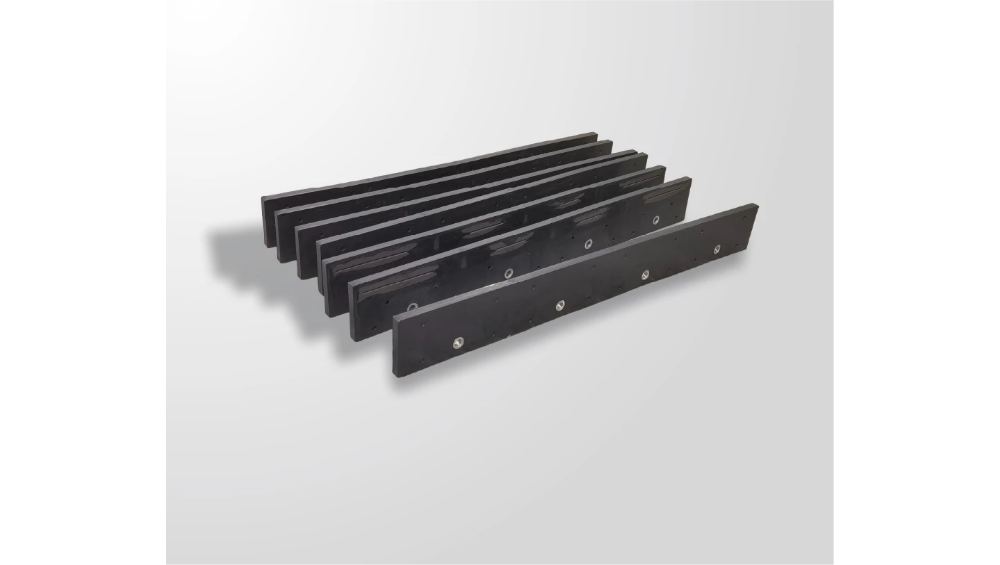
A JOMA-style blade is a system of three layers, and each layer has one job that the others cannot do. The carbide cuts, the steel holds, and the rubber absorbs. The blade performs when the three work together, and it fails when any layer breaks the arrangement. Understanding the anatomy is how an engineer specifies the blade and how a maintenance team inspects it.
This article is the construction deep dive: the carbide inserts, the steel segments and the brazed bond, the rubber shell, and the ways each layer fails.
Three layers, one cutting system
The JOMA-style blade is built in layers, and the layering is the design:
- The carbide inserts form the working edge, the teeth that scrape and cut;
- The steel segments hold the inserts and carry the load;
- The rubber shell encases the assembly, allowing flex and absorbing impact.
SENTHAI describes its Joma-style blades as tungsten carbide inserts brazed into steel segments and encased in a rubber shell. The JOMA-style blade page is the product reference; this article explains what each layer does and what to inspect.
The layering is why the system performs on uneven surfaces: the layers give the blade a combination of hardness, structure, and flexibility that a single material cannot provide.
The layering also explains the maintenance logic. Because each layer has a distinct job, the inspection can be organized by layer: the carbide check, the steel and bond check, and the rubber check. A maintenance team that inspects by layer catches the failure at the layer where it starts, instead of waiting for the whole system to fail.
The same layer logic applies to the specification: each layer’s requirements are named separately, so the supplier and the buyer are talking about the same construction. The layer-by-layer specification is the anatomy made into a document.
Carbide inserts: the working edge
The carbide inserts are the part that does the cutting. Tungsten carbide is hard, which is what lets the teeth scrape ice, packed snow, and road debris without wearing down quickly.
The insert layer’s performance depends on:
- The carbide grade and grain structure, which set the hardness and toughness balance;
- The shape and the angle, which set the cutting geometry;
- The insert quality, which is covered on the carbide inserts page;
- The seating in the steel, which connects the insert to the structure.
The carbide does the work, and the other layers exist to let it keep doing the work. A blade with great carbide and a weak structure fails as surely as one with weak carbide.
The insert layer is also where the replacement economics start. When the carbide wears, the fleet’s options are the section replacement, the re-tip, or the full blade, and the choice depends on the condition of the other layers. The carbide’s wear is the trigger, and the steel and the rubber decide the path.
The same economics connect to the carbide insert specifications: the insert as a component is the replaceable unit, and the fleet that tracks the insert consumption by route knows where the wear cost actually is.
What is the best maintenance interval for a JOMA blade? It follows the duty: the weekly visual round for the fleet standard, the post-impact check for the heavy routes, and the deep inspection at the season’s midpoint. The record refines the interval.
What role do steel segments and the brazed bond play?
The steel segments are the skeleton. They hold the inserts in the correct position, carry the plow’s downward force to the road, and give the blade the structure it needs to scrape rather than flex uselessly.
The brazed bond is the interface between the carbide and the steel. The bond has to be strong enough to hold the inserts under impact, and SENTHAI describes its brazing technology as engineered to withstand high-velocity impacts against manholes and road obstructions.
The steel and the bond together answer the structural question: will the cutting edge stay in place and in contact? A segment that bends, or a bond that fails, ends the blade’s useful life regardless of the carbide.
Rubber shell: flexibility with limits
The rubber shell is what makes the system a JOMA-style blade. It encases the steel and the inserts, allowing the segment to flex as the plow crosses uneven pavement, and it absorbs the impacts that would otherwise travel into the moldboard.
The flexibility has limits, and the limits are part of the specification:
- The rubber must stay flexible at the operating temperature, which SENTHAI states is -40°C for its Joma-style compound;
- The rubber must bond to the steel through vulcanization, with the bond strong enough to outlast the material;
- The rubber must seal the steel from salt and brine;
- The rubber must not be so soft that it loses the cutting support the steel provides.
The rubber is the layer that most buyers underestimate, and it is the layer where the maintenance inspection finds the early failures.
How do the layers fail and what should you inspect?
Each layer has its own failure mode, and the inspection follows the anatomy:
| Layer | Failure mode | What to inspect |
|---|---|---|
| Carbide | Chipped, cracked, or worn inserts lose the cutting edge | Visual check of the insert edges and corners |
| Steel | Bent, cracked, or corroded segments lose the structure | Straightness and corrosion check on the segments |
| Bond | A weakened braze shows as a loose or proud insert | Feel check for movement or raised inserts |
| Rubber | Cuts, tears, or separation expose the system to the elements | Surface check of the shell around the wear zone |
| Vulcanization | A rubber shell that separates loses the flex and the seal | Edge check where the rubber meets the steel |
The inspection routine covers all five: the visual check of the carbide, the feel check of the inserts, the rubber and bond check at the interfaces, and the hardware check that ties the segment to the plow.
The inspection frequency should follow the duty: the impact-heavy routes and the deep-cold events get the more frequent checks, and the light routes run on the standard interval. The layer that fails fastest on the fleet’s routes becomes the inspection priority, and the record shows which one that is.
The same record feeds the supplier conversation: a pattern of bond failures, rubber separations, or insert losses, documented per layer, turns the complaint into an investigation with the manufacturer.
The investigation, in turn, feeds the specification: the layer that fails determines the next order’s emphasis, whether that is a tougher grade, a stronger bond, or a different rubber compound. The anatomy is not a static description; it is the map the improvement follows.
The same map guides the training: the crew that understands the three layers understands what to inspect and why, and the training turns the anatomy from a diagram into a maintenance habit.
The habit, built on the anatomy, is the fleet’s protection.
What is the inspection order for a JOMA blade? The hardware first, then the rubber and the bond, then the steel, then the carbide. The order catches the failure at the layer where it starts.
What is the most common layer failure? It depends on the route: abrasive routes wear the carbide, impact-heavy routes test the bond, and salt-heavy routes attack the rubber and the steel seal. The fleet’s own record identifies its most common failure.
Specify a blade built for the layers to last
The specification should name the layers and their requirements: the carbide grade, the steel, the bond, the rubber compound, and the low-temperature performance. The segmented rubber-carbide blade system is the reference, and the contact page is where the specification and the maintenance guidance are confirmed.
Send the application, the temperature range, and the failure history through the contact page and ask for the layer-by-layer confirmation. The blade that lasts is the blade whose three layers are specified, built, and inspected as one system.
Expert view — SENTHAI engineering team: “Think in layers: the carbide cuts, the steel holds, the rubber absorbs. Inspect the layer that fails first on your routes.”
Frequently Asked Questions
What are the three layers of a JOMA-style blade? The carbide inserts, the steel segments with the brazed bond, and the rubber shell. Each layer has one job the others cannot do.
What does the carbide do? The carbide is the working edge that scrapes and cuts. Its grade, shape, and seating decide the cutting performance.
What do the steel and the bond do? The steel holds the inserts and carries the load; the bond keeps the inserts in place under impact. They are the blade’s structure.
What does the rubber do? The rubber allows the segment to flex and absorbs impacts, and it seals the steel from salt and brine. It is the flexibility with limits.
How do the layers fail? The carbide chips or wears, the steel bends or corrodes, the bond weakens, and the rubber tears or separates. The inspection covers all of them.
What temperature does the rubber handle? SENTHAI states that its Joma-style rubber compound remains flexible at -40°C, which is the low-temperature reference for the specification.
How do I specify the blade? Name the carbide grade, the steel, the bond, the rubber compound, and the low-temperature performance, and confirm the construction with the manufacturer.
Sources
Related articles
 Best Snow Plow Blade Family for Your Fleet: Top 5 ScenariosKnowledge
 Top 10 Snow Plow Blade Types for Winter Fleets (Ranked by Duty Fit)Knowledge
 Top 5 Best Carbide Blade Configurations for Highway PlowingKnowledgeBest Snow Plow Blade Materials Ranked: Steel vs Carbide vs Cladding vs Rubber-CarbideKnowledge