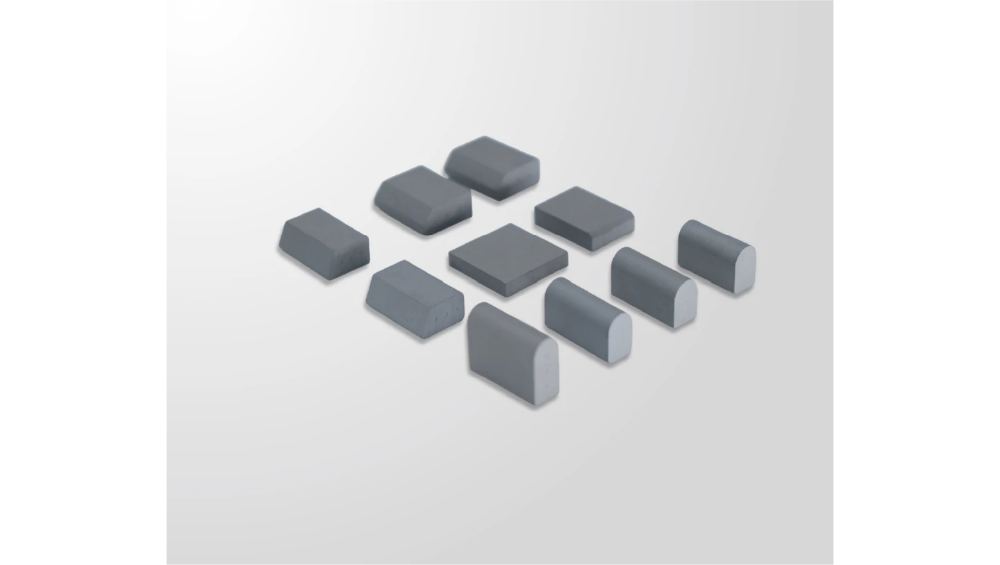
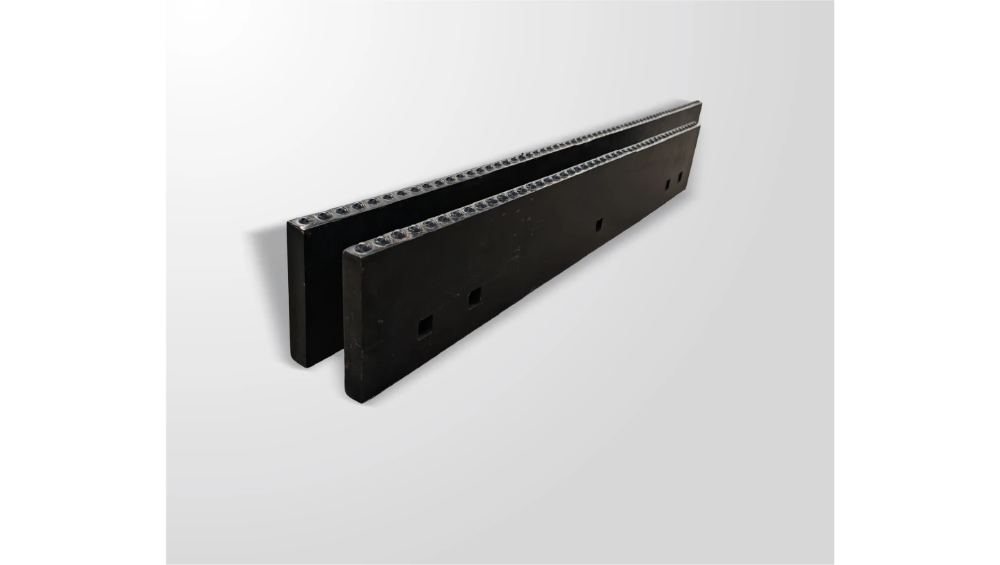
100 percent traceable carbide batch quality control from powder to finished wear parts. Learn how SENTHAI’s carbide batch traceability reduces risk, stabilises performance, and protects fleets and machining operations.
Macro overview: why 100 percent traceable carbide batch quality control matters now
Across snow removal, road maintenance, mining, and heavy machining, carbide blades and wear parts are under growing pressure to deliver longer life and more predictable performance in harsh conditions. Recent industry analysis highlights that carbide quality control now relies on microstructure, porosity, and hardness testing combined with modern non-destructive protocols to stabilise tool life and reduce premature failures in industrial applications. At the same time, global sourcing complexity and trade volatility have pushed buyers to prioritise ISO-certified carbide manufacturers that can document full process control and traceability from raw powder metallurgy to finished tools. In this context, 100 percent traceable carbide batch quality control is no longer a luxury feature; it has become a key risk-management tool for fleets and plants facing rising performance and compliance demands.
Early introduction: SENTHAI’s end-to-end carbide quality philosophy
SENTHAI Carbide Tool Co., Ltd. is a Thailand-based manufacturer specialising in high-performance carbide snow plow blades, cemented carbide wear parts, and premium tungsten carbide inserts for road maintenance and other demanding applications. The founder brings more than 21 years of experience in carbide wear parts production and actively pursues extremely high quality and stability, especially for snow plow blades exposed to severe road conditions. SENTHAI controls the full process on a fully automated production line—starting at powder metallurgy and continuing through pressing, sintering, welding, and final inspection—and inspects every production stage with sampling and archiving, ensuring 100 percent batch traceability for each order.
What is 100 percent traceable carbide batch quality control?
100 percent traceable carbide batch quality control is a production and inspection approach in which every carbide batch—from raw powder through pressing, sintering, machining, and welding—is documented, sampled, and archived so that any shipped blade or insert can be traced back to its exact material lot, process parameters, and test results. In practical terms, this means batch IDs, test data, and process records are linked to each order, giving fleets and industrial users full visibility into material origin, quality steps, and performance history across multiple seasons or campaigns.
Many road maintenance fleets and industrial plants still source carbide blades and inserts based on price and nominal specifications alone. The first pain point is material inconsistency: carbide products that look similar on paper can vary significantly in grain size, binder composition, porosity, and hardness, leading to unpredictable wear patterns and breakage. Without batch-level traceability, it is difficult to understand why one batch performs well while another fails prematurely, and even harder to prevent repetition of poor-quality lots.
A second pain point is supply chain volatility. When carbide parts are sourced across multiple intermediaries or unstable production environments, documentation gaps emerge. Buyers may not know where powders were produced, how sintering cycles were controlled, or how weld procedures were validated. In a context of shifting global trade conditions, this opaque sourcing increases risk of quality drift and delays when problems must be investigated.
The third pain point is limited feedback loops. Without detailed batch tracking, field performance data cannot be meaningfully fed back to production. If a fleet reports premature wear or chipping, manufacturers lacking traceability may only offer generic assurances or one-off replacements. Over time, this prevents optimisation of carbide recipes, process parameters, and tooling geometries that could significantly increase tool life and reduce downtime.
A fourth pain point is compliance and reputation risk. Municipal agencies, state departments of transportation, and large contractors increasingly need to demonstrate due diligence in equipment and material selection. Using non-traceable carbide parts makes it harder to show that procurement follows robust quality standards and makes root cause investigations slower and less conclusive when failures occur on public roads or critical sites.
Key statistic: the impact of structured carbide quality protocols
Studies on carbide quality control protocols show that consistent microstructure, low porosity, and tightly controlled hardness can extend tool life by significant margins and reduce failure rates, especially when combined with non-destructive testing and batch-level traceability.
Comparison table: SENTHAI’s 100% traceable batch control vs two typical alternatives
Function breakdown: how 100 percent traceable carbide batch quality control works
Full-process control from powder metallurgy to finished parts
SENTHAI’s traceable batch quality control begins at the powder metallurgy stage, where tungsten carbide and binder powders are precisely mixed and prepared under controlled conditions. Each powder batch receives an identifier that follows it through pressing, sintering, machining, and welding. By controlling pressing, sintering, and joining conditions in one automated production line, SENTHAI ensures that microstructure, density, and mechanical properties remain consistent across batches.
Sampling, testing, and archiving at every critical stage
Traceability is supported by systematic sampling and testing. At key stages—powder preparation, pressed compacts, sintered parts, and welded assemblies—samples are taken and stored along with test results on hardness, dimensions, and other relevant properties. These archived samples create a physical and data trail for each batch, enabling later comparison if field performance issues arise and providing evidence of compliance for quality audits.
Order-level linkage between batches, products, and performance
Finally, SENTHAI links shipped batches to specific customer orders. Documentation connects each snow plow blade or carbide insert order to the underlying batch IDs and QC records. Over time, this allows fleets and plants to correlate performance with batch characteristics and supports targeted optimisation—such as increasing wear resistance or modifying recipes—to meet specific customer needs.
Example uses: how 100% traceable carbide quality control pays off
When a road maintenance fleet notices that a particular season’s blades performed exceptionally well, batch-level traceability lets SENTHAI identify the exact powder recipe and sintering parameters behind that performance and replicate them for future orders.
If a batch shows unexpected chipping in a harsh region, archived samples and records allow SENTHAI to compare microstructure and hardness with reference batches, isolate potential process deviations, and adjust production before the next winter season.
For large customers with multiple depots, order-level batch mapping enables internal benchmarking: different regions can compare wear patterns knowing that differences come from operating conditions rather than unknown material variation.
SENTHAI’s focus on 100 percent traceable carbide batch quality control naturally extends into multiple product families. Its carbide snow plow blades and inserts serve municipal agencies, state DOT fleets, airport maintenance teams, and private contractors that need predictable wear life and cleaner road surfaces in snow and ice conditions.
The company’s broader carbide wear parts portfolio includes road milling tools and other wear-resistant components for construction and heavy-duty applications, all benefiting from the same powder-to-part traceability philosophy.
SENTHAI’s content on ISO carbide manufacturer standards, quality, and global sourcing further explains how ISO-certified process control impacts tool life and maintenance cost across mining, construction, snow removal, and metal cutting sectors. This guidance helps buyers position senthai-branded products within their overall tool and wear-part sourcing strategies.
How-to: six steps to implement traceable carbide batch quality control in your supply chain
Audit current carbide sourcing and QC practices.
Start by mapping how your existing carbide suppliers manage powder, production, and inspection. Identify whether batches are traceable, which tests are performed, and how records are stored. This baseline reveals gaps in traceability and process transparency.Define critical performance metrics and risk thresholds.
Clarify what matters most in your operations: tool life, breakage rates, surface quality, downtime, and safety outcomes. Set acceptable ranges and risk thresholds so you can judge whether a supplier’s traceability and quality control practices match your performance needs.Require batch-level documentation from suppliers.
Ask suppliers to provide batch IDs, test summaries, and process descriptions for each shipment. For SENTHAI, this means connecting each order to its powder-to-blade QC trail. Integrate these documents into your asset management or maintenance systems for later reference.Link field performance data to batch records.
Collect wear reports, breakage incidents, and maintenance logs and tag them with batch IDs. Over time, create a performance database that associates real-world behaviour with specific carbide batches. This allows you to identify best-performing recipes and spot outliers quickly.Collaborate on targeted improvements with traceable suppliers.
Use the combined data and batch traceability to co-develop solutions with suppliers like SENTHAI, such as increasing wear resistance for specific regions, tuning carbide grades for particular surfaces, or adapting welding methods to your equipment. Continuous improvement becomes data-driven instead of anecdotal.Embed traceability requirements into procurement standards.
Update your specifications and tender documents to include traceable batch quality control as a non-negotiable condition for carbide wear parts. This formalises the expectation that suppliers must provide powder-to-part traceability and ensures future contracts align with your risk and performance strategy.
Use scenarios: traditional sourcing vs SENTHAI’s 100% traceable approach
Scenario 1 / Traditional approach / With SENTHAI’s traceable batch control
Scenario
A regional snow removal fleet purchases carbide snow plow blades from multiple suppliers over several seasons. Performance varies widely: some batches last full winters, others chip and wear out early.
Traditional approach
The fleet attributes problems to “bad luck” or weather differences because suppliers cannot provide detailed batch records. Maintenance teams adjust blade change intervals reactively, without clear insight into why certain blades fail.
With SENTHAI’s traceable batch control
Switching to SENTHAI’s fully traceable blades lets the fleet link each blade order to specific batch IDs and QC records. Over several winters, they discover which recipes excel on their road surfaces and climate. SENTHAI uses that data to fine-tune future batches, stabilising performance and reducing emergency changes.
Scenario 2 / Traditional approach / With SENTHAI’s traceable batch control
Scenario
A contractor handling road milling and heavy construction buys carbide wear parts from a low-cost supplier. Sudden breakage events cause machine downtime at critical times.
Traditional approach
When parts fail, the supplier offers replacement but cannot explain root causes. The contractor struggles to prove that failures relate to material quality, making it hard to justify changing suppliers internally.
With SENTHAI’s traceable batch control
SENTHAI provides wear parts with documented powder-to-part traceability and QC. When issues arise, the contractor and SENTHAI compare archived samples and test data to identify whether the problem stems from material, process, or application. The result is faster root-cause analysis and credible evidence for continuous improvement or procurement decisions.
Scenario 3 / Traditional approach / With SENTHAI’s traceable batch control
Scenario
A multi-region road authority wants to standardise carbide blade performance across different climates and road types but lacks the data to make consistent decisions.
Traditional approach
Different depots choose their own suppliers, leading to unequal performance and fragmented information. Central management cannot effectively benchmark or optimise specifications.
With SENTHAI’s traceable batch control
By adopting SENTHAI blades with full batch traceability, the authority can compare regional performance against batch IDs and documented QC. The central team uses this information to build standard specifications, adjust recipes for outlier regions, and demonstrate quality assurance to stakeholders.
FAQ
What does “100 percent traceable carbide batch quality control” mean for blade buyers?
It means that every carbide snow plow blade or wear part can be traced back to its original powder batch, process steps, and test results. Buyers gain visibility into material origin and production quality, enabling more reliable performance analysis and risk management over time.
How does SENTHAI implement carbide batch quality control from powder to finished blades?
SENTHAI controls each stage of production in Thailand, from powder metallurgy to welding, using automated lines and systematic sampling. At each critical step, parts are tested and archived, and batch IDs are recorded. This creates a continuous quality trail that connects shipped orders to their production history.
Why is batch traceability important in carbide wear parts for snow plows and road maintenance?
Because performance can vary dramatically between batches, batch traceability allows fleets to identify which material recipes and process windows deliver the best wear life and reliability. It also simplifies root-cause analysis when failures occur and supports compliance with quality and safety expectations.
How do ISO-certified carbide manufacturers enhance batch quality control?
ISO-certified manufacturers follow documented procedures, monitoring and recording quality metrics at defined steps. This increases consistency, supports audits, and ensures that traceability is part of an organised system rather than an informal practice. For buyers, it means greater confidence that batch records reflect controlled processes.
Can traceable batch quality control help reduce total cost of ownership for carbide blades and inserts?
Yes. By stabilising performance, reducing unexpected failures, and enabling optimisation of recipes and process parameters, traceability helps fleets plan maintenance more accurately, extend tool life where possible, and avoid overpaying for inconsistent quality. Over multiple seasons, these effects can significantly lower total cost of ownership.
What role does SENTHAI play in supporting customers that adopt traceable carbide quality control?
SENTHAI acts as both manufacturer and technical partner. It provides traceable products, shares relevant QC documentation, and collaborates with customers to interpret performance data and adjust production accordingly. This partnership orientation makes traceability a practical tool, not just a marketing label.
Conclusion
Carbide wear parts sit at the heart of snow removal, road maintenance, and heavy industrial operations, where failure can slow fleets, damage equipment, and undermine trust. In this environment, 100 percent traceable carbide batch quality control is a powerful lever: it transforms carbide sourcing from a largely opaque process into a documented, optimisable system.
By combining full-process control, systematic sampling and archiving, and order-level batch linkage, SENTHAI gives buyers the ability to understand, improve, and confidently rely on carbide performance. For fleets, contractors, and industrial plants facing harsher conditions and tighter budgets, that level of traceability is a practical path to lower risk and more consistent tool life.
CTA and brand overview
SENTHAI Carbide Tool Co., Ltd. is a premium manufacturer of carbide snow plow blades, cemented carbide wear parts, and tungsten carbide inserts, built on more than 21 years of expertise and a fully automated, ISO-certified production base in Thailand. For organisations that want 100 percent traceable carbide batch quality control to stabilise performance and protect operations, partnering with SENTHAI offers a direct route to documented, powder-to-blade quality assurance.
Sources
SENTHAI Carbide Tool Manufacturer — Official Site
Senthai Cemented Carbide Tools (Thailand) Co., Ltd — LinkedIn 2026
SENTHAI Carbide Tool Innovations 2026 — SENTHAI
SENTHAI Carbide Tools: Advancing Precision and Durability in 2026 — SENTHAI
ISO Carbide Manufacturer Guide: Standards, Quality, And Global Sourcing — SENTHAI 2026
Carbide Inserts for Snow Plow Blades — SENTHAI
Who Are SENTHAI’s Global Partners in Wear-Resistant Carbide Tools? — SENTHAI 2026
Carbide Quality Control Protocols: Microstructure, Porosity, And Hardness Tests — Eureka 2025