
Serrated Versus Straight Grader Edges: When Serration Pays
A serrated grader blade is the most misunderstood option on a grader edge specification. It is bought as a traction feature, argued about as a surface-damage risk, and often abandoned after one season on…
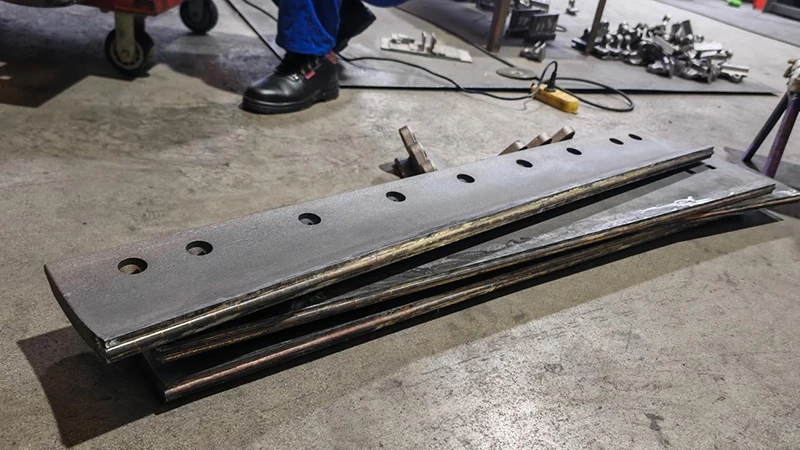
A serrated grader blade is the most misunderstood option on a grader edge specification. It is bought as a traction feature, argued about as a surface-damage risk, and often abandoned after one season on the strength of a complaint that had nothing to do with the tooth pattern. The decision is narrower than the debate suggests: serration changes how load is distributed along the cutting line, and that either helps or hinders depending on what the machine is cutting.
What Serration Is For
A serrated edge replaces a continuous cutting line with a sequence of teeth, so instead of one long contact the surface sees a series of concentrated bites. That does two things at once: it increases penetration on hard material that a continuous edge would ride over, and it leaves a broken surface rather than a polished one.
The applications follow directly. Hardpack that a straight edge skates across, ice-bonded gravel, compacted snow and frozen ruts all respond to a broken cutting line because the teeth find grip where a flat edge cannot. On loose gravel and soft shoulders the same teeth simply disturb material that a straight edge would shave cleanly.
It is worth separating this from the traction argument that dominates the marketing. A serrated edge does not put more weight on the surface; it changes how the load arrives. That distinction matters because it explains why serration helps on ice but not on wet asphalt, where the surface already yields to a continuous edge.
Traction, Cutting and Surface Finish Effects
Three effects appear in the field, and fleets should expect all three rather than discovering them one at a time.
Penetration improves on hard surfaces, which usually means fewer passes to reach grade. That is a real productivity gain on a compacted gravel road, and it is the strongest argument for serration where the surface resists a straight edge. It also puts more shock into the machine, because each tooth enters the material as a discrete impact rather than as a continuous cut.
Surface finish becomes rougher. A freshly serrated edge leaves a corrugated pattern, which is acceptable on a gravel road that will be bladed again and unacceptable where a smooth finish is the deliverable. Where a programme grades shoulders against a paved surface edge or works around structures, that finish difference is often the reason serration is rejected.
Noise and vibration change as well. The intermittent contact that produces grip also produces more noise from the blade and more vibration through the moldboard. On residential routes with noise restrictions, that can be the deciding factor regardless of the cutting benefit.
Wear Patterns Unique to Serrated Edges
Serrated edges wear differently because the teeth do not wear evenly. Each tooth has a leading face that takes the abrasion and a valley between teeth where material accumulates and passes less directly across the steel. The result is a pattern of tooth wear with valleys that remain closer to their original profile.
That has two practical consequences. First, service life is measured at the tooth rather than at the edge as a whole, so a serrated edge can look substantially unworn along its base while having lost the working portion of every tooth. Inspecting at the correct point matters, or the fleet replaces edges too late or too early.
Second, uneven tooth wear is a diagnostic. Teeth that wear faster in the middle of the edge point to moldboard bowing or down-pressure distribution; teeth worn at one end point to alignment or crossfall. Neither is fixed by changing the tooth pattern.
The interaction with edge material is worth noting as well. On steel edges, serration removes material at the cutting line and leaves each tooth with less section to support wear, so a serrated edge in a soft grade may lose its teeth quickly. On carbide-tipped edges, the inserts carry the wear and the serration becomes a matter of insert geometry and spacing rather than of grinding a tooth profile into steel.

Machine and Material Suitability
Serration suits machines working material that resists a continuous edge, and it is less useful where the machine’s job is to produce a finished surface. The pattern of use rather than the machine size is the deciding factor.
| Working condition | Serrated edge | Straight edge |
|---|---|---|
| Hardpack, compacted gravel, frozen ruts | Preferred — teeth penetrate | Rides over, needs more passes |
| Loose gravel and soft shoulders | Unnecessary disturbance | Preferred — shaves and shapes |
| Ice-bonded material | Preferred where grip and breakout are needed | Limited penetration |
| Finishing against paved edges and structures | Risk of surface marking and noise | Preferred — controlled finish |
| Mixed programmes | Keep as a second option | Baseline specification |
Where a fleet runs mixed conditions, the disciplined answer is to keep the straight edge as the baseline and treat serration as a duty-specific option for the roads that need it. Swapping profiles per machine per season is workable; specifying serration fleet-wide because one district has hardpack is not.
Cost and Sharpening Considerations
Serrated edges usually cost more than the equivalent straight edge, and the difference is not only in the purchase price. The tooth profile has to be produced rather than simply cut, the material removed at the cutting line reduces the section available for wear, and re-sharpening in the field is not practical in the way it can be for some straight edges.
The economic case therefore rests on the passes and the edge life, not on unit price. If serration halves the number of passes required to bring a compacted road back to grade, and if the teeth hold their profile through the season, the extra cost is recovered in hours. If the surface is soft, the same edge produces no productivity gain and simply costs more.
Two procurement points follow. Ask what the tooth pattern is specified as, because spacing and tooth depth change the behaviour and a supplier that cannot describe the geometry is not selling a specified product. And ask what the wear measurement point is, so the fleet knows when the edge is finished. Where an edge is being replaced for a different duty as well as for wear, it is worth revisiting the material at the same time: the material selection logic that applies is set out in the blade selection guide, and it is the same three inputs — material, downtime cost and confirmed fitment. Condition data on the surface being graded, including how compacted material behaves through a freeze-thaw cycle, is documented in public road maintenance material such as the guidance published by FHWA, with exposure considerations for operators covered by NIOSH.
Where Straight Edges Still Win
The straight edge remains the right specification across most of a fleet’s work, and it is worth being explicit about why rather than treating it as the default by inertia.
It produces a controlled finish, which matters wherever a grader is working to a defined surface: shoulders adjacent to pavement, roads carrying traffic during the work, and any programme where the grader’s output is assessed on finish rather than on penetration. It generates less noise and less shock load, which reduces operator fatigue and machine stress on long shifts. It is cheaper per unit and simpler to inspect, because wear is measured along a single line rather than at a series of teeth.
It is also easier to reverse and rotate. End-for-end reversal of a straight edge gives a genuinely fresh cutting portion, while a serrated edge with worn teeth at both ends has less to offer. For fleets whose maintenance model depends on maximising the life of each edge before replacement, that difference in reusability is a material cost.
Where both profiles are used, the operational rule that works is simple: keep a straight edge on every machine as standard, hold serrated edges for the specific roads that need breakout and grip, and record which roads are which so the decision is made once rather than argued each season.
Deciding for Ice, Gravel and Hardpack
The three conditions in the title have different answers, and the pattern of the decision is worth stating plainly.
On ice and ice-bonded hardpack, serration is a working option: it creates grip and penetration where a continuous edge cannot, and the rougher finish it leaves is usually irrelevant on a road that is being broken up rather than finished. On compacted gravel, serration earns its place when a straight edge is skating and the fleet is losing passes; it stops earning its place once the material loosens, at which point the same edge becomes the thing disturbing the surface. On loose gravel and soft shoulders, the straight edge wins on finish, cost and simplicity.
Two questions settle most cases. Does the edge need to break the surface or shape it? And is the finish a deliverable or an intermediate stage? Where the answer is breaking and intermediate, serration is worth trialling on a specific route with a recorded before-and-after on passes and hours. Where the answer is shaping and deliverable, the straight edge stands. Material standards for the edge itself come from ASTM, wear-steel abrasion data from producers such as SSAB, and the machine-side interface conventions from SAE.
Serration is a penetration tool, not a general upgrade. It pays where the surface resists a continuous edge — hardpack, compacted gravel, ice — and costs money where the surface is soft or the finish is specified. The decision points are the two questions above, plus a wear measurement taken at the tooth rather than along the base. Fleets that trial serration on a defined route and record passes and hours get a defensible answer in one season, and the wider material and edge options are set out under wear parts beyond plows.
Tell SENTHAI which roads your graders work and whether the deliverable is penetration or finish, and the technical team will advise on profile, material and fitment for each machine group.
Frequently Asked Questions
When should a serrated cutting edge be used?
Use it where the surface resists a continuous edge: compacted gravel, hardpack, frozen ruts and ice-bonded material. The teeth concentrate the load and penetrate where a straight edge would ride over, which usually reduces the passes needed. Where the surface is loose or the finish is specified, a straight edge produces a better and cheaper result.
Does a serrated edge damage gravel roads?
It does not damage the road base, but it does leave a corrugated finish, which is visible until the next blading. On a gravel road maintained for traffic at moderate speeds that finish is normally acceptable and part of the maintenance cycle. Where the surface is graded to a defined finish or drains across a specific profile, the rougher pattern is a reason to keep a straight edge instead.
How does a serrated grader blade wear?
The teeth wear faster than the base of the edge, so service life is measured at the tooth rather than along the bottom line. That means an edge can look substantially intact while its teeth have lost their working profile. Measure at the tooth, and treat uneven tooth wear as a diagnostic for moldboard bowing, alignment or down-pressure rather than as an edge fault.
Can a serrated edge be reversed or rotated like a straight edge?
Reversal is possible where the pattern is symmetrical, but it returns less benefit than it does on a straight edge, because the worn portion is a set of teeth rather than a section of the cutting line. Fleets whose maintenance model relies on maximising life through rotation generally get better value from a straight edge and reserve serration for routes where penetration is the constraint.
{
“@context”: “https://schema.org”,
“@type”: “FAQPage”,
“mainEntity”: [
{
“@type”: “Question”,
“name”: “When should a serrated cutting edge be used?”,
“acceptedAnswer”: {
“@type”: “Answer”,
“text”: “Use it where the surface resists a continuous edge: compacted gravel, hardpack, frozen ruts and ice-bonded material. The teeth concentrate the load and penetrate where a straight edge would ride over, which usually reduces the passes needed. Where the surface is loose or the finish is specified, a straight edge produces a better and cheaper result.”
}
},
{
“@type”: “Question”,
“name”: “Does a serrated edge damage gravel roads?”,
“acceptedAnswer”: {
“@type”: “Answer”,
“text”: “It does not damage the road base, but it does leave a corrugated finish, which is visible until the next blading. On a gravel road maintained for traffic at moderate speeds that finish is normally acceptable and part of the maintenance cycle. Where the surface is graded to a defined finish or drains across a specific profile, the rougher pattern is a reason to keep a straight edge instead.”
}
},
{
“@type”: “Question”,
“name”: “How does a serrated grader blade wear?”,
“acceptedAnswer”: {
“@type”: “Answer”,
“text”: “The teeth wear faster than the base of the edge, so service life is measured at the tooth rather than along the bottom line. That means an edge can look substantially intact while its teeth have lost their working profile. Measure at the tooth, and treat uneven tooth wear as a diagnostic for moldboard bowing, alignment or down-pressure rather than as an edge fault.”
}
},
{
“@type”: “Question”,
“name”: “Can a serrated edge be reversed or rotated like a straight edge?”,
“acceptedAnswer”: {
“@type”: “Answer”,
“text”: “Reversal is possible where the pattern is symmetrical, but it returns less benefit than it does on a straight edge, because the worn portion is a set of teeth rather than a section of the cutting line. Fleets whose maintenance model relies on maximising life through rotation generally get better value from a straight edge and reserve serration for routes where penetration is the constraint.”
}
}
]
}
Related articles
 Measuring Grader Edge Wear: Replacement Triggers by Machine ClassGrader blades and road grading cutting edges
 Grader Snow Wings: Mounting, Edge Load and Blade ChoiceGrader blades and road grading cutting edges
 Scarifier Teeth and Shanks: Specifying for Hardpack and GravelGrader blades and road grading cutting edges
 Grader Blade Bolt Patterns and Hole Spacing: The Layout ChecklistGrader blades and road grading cutting edges