Packed Ice Snow Plow Conditions: What They Do to a Standard Cutting Edge
What packed ice snow plow conditions do to a standard cutting edge: the riding behaviour, the failure modes and the inspection record that catches it.

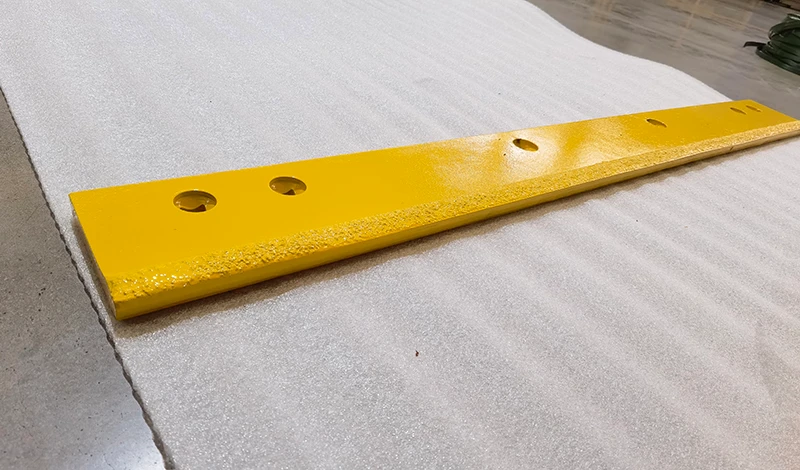
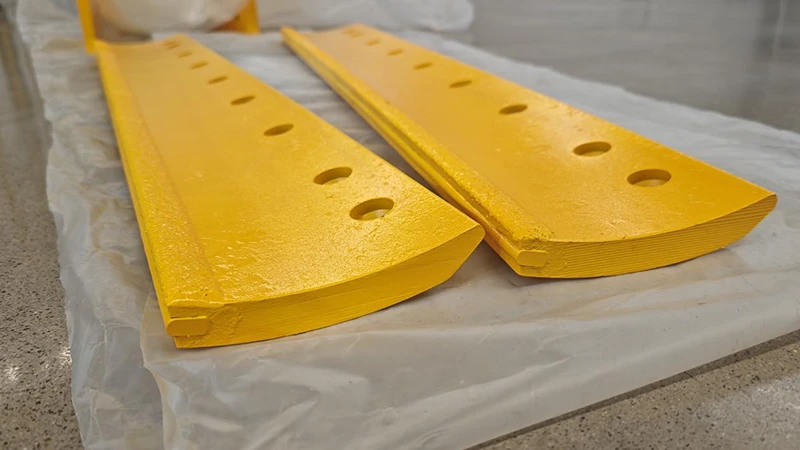
Packed ice is the condition that makes operators add down-pressure they cannot really afford. The surface is hard enough that a standard cutting edge rides over it instead of scraping into it, so the operator responds with more weight, more speed or repeated passes on the same stretch of road. Those responses remove material from the edge faster than abrasion alone would, and they load the trip mechanism and the mounting hardware at the same time. Understanding the mechanism is what turns a recurring complaint into a maintenance plan.
What Packed Ice Snow Plow Conditions Do to a Standard Edge
The edge rides the surface instead of scraping into it.
Packed, refrozen snow presents a hard, uneven surface that a standard profile cannot cut into at normal down-pressure, so the edge skates across the high points and clears less with each pass.
The visible result is a road that looks plowed but retains a bonded layer. The mechanical result is more interesting: contact is concentrated on the high points of the surface rather than distributed along the working width, so the effective load per contact point rises. Uneven contact also means the edge is loaded in bending rather than in the straight scraping mode it was designed for, which is why blades that work predominantly on packed ice show localised rather than even wear.
The operator response compounds the problem. Adding down-pressure increases load through the trip mechanism and the mounting hardware; increasing speed raises shock loads when the edge meets the ice ridges; and repeated passes multiply all of it. None of those actions is unreasonable in the moment, and all of them are expensive across a season. Fleet-level context for winter operating conditions is published by the Federal Highway Administration, and the ice-specific maintenance consequence is the subject of pooled research through Clear Roads.
Failure Modes and What Each One Signals on Packed Ice
Packed ice produces a recognisable pattern of damage. The first mode is localised material loss at the positions that meet the highest points of the surface, which appears as a scalloped wear line rather than an even reduction in height. On a blade that also runs loose snow, the pattern shifts with the route, so the same edge can look worn in one section and nearly new in another.
The second mode is mounting hardware distress. Repeated down-pressure cycles loosen fasteners, wear mounting holes and, where the moldboard is older, distort the mounting face itself. This is often reported as an edge problem when the cause is the operating load. The third mode is damage to the surrounding structure: shoe wear, trip spring fatigue and, in the worst cases, deformation of the moldboard edge where load has been applied beyond its design.
Each mode points to a different remedy. Scalloped wear suggests contact distribution and possibly edge geometry. Hardware loosening suggests preload and inspection intervals. Structural damage suggests the operating approach itself needs revisiting, because more down-pressure on a blade that cannot cut into the surface will keep transferring load into the machine. Distinguishing the three before ordering anything is the step that stops a fleet from replacing edges to solve a loading problem.
Inspection Intervals and What to Record
Packed ice shortens the interval at which wear becomes a decision rather than an observation, so the inspection schedule has to move with the conditions. A reasonable approach is to keep the standard rotation checks in place and add a check after any period of sustained ice work, because a week of ice conditions can consume more edge than a month of loose snow.
The record should capture four things: measured height at fixed reference points, the position of any localised loss, hardware condition including torques and hole condition, and the road conditions the blade ran in. The last item is the one fleets most often omit and the one that makes the other three interpretable. A reading taken after two weeks on loose snow and one taken after two weeks of refrozen surfaces are not comparable unless the conditions are recorded with them.
Photographs taken from the same position at each check are the cheapest addition to that record. They capture scallop development, gap formation at the mounting line and discolouration that a height measurement will not show. Where an edge is rotated between trucks, the photographs travel with it and let the next operator see what the previous route did.
Conditions That Change How Fast Packed Ice Forms
Ice build-up is a function of weather pattern, traffic and treatment practice rather than of any single factor. Freeze-thaw cycles with daytime melting and overnight refreezing produce the bonded, polished layer that defeats a standard edge, and they do so faster on routes that carry traffic between the melt and the refreeze. Where liquid de-icing is applied before a freeze, the surface state changes again, and where abrasives are spread, they create a gritty layer that wears the edge but does not necessarily break the bond.
Route geometry matters as well. Shaded sections, bridge decks and areas with poor drainage hold the refrozen layer longest, and any route with a mix of these sections will show a wear pattern that follows the geography rather than the odometer. Traffic volume compresses snow into a harder layer before the refreeze, which is why a residential street and a collector road can behave completely differently under the same weather.
National weather context and safety guidance are published by the National Weather Service, and the environmental and regulatory context for de-icing material use that many agencies now plan against is set out in the EPA’s municipal stormwater guidance. Both matter to the maintenance plan, because the treatment decision changes the surface the edge has to work on.
Rotation, Repair or Replacement Decisions for Packed Ice
Rotation is the cheapest response to localised wear, and it is most effective where the ice exposure is uneven across the fleet rather than across one route. Moving an edge from a route with shaded sections and bridge decks to a route with more consistent exposure spreads the load and allows the remaining material to be used rather than retired. The rotation only works if the position-specific wear record is kept, because rotating on an assumption moves the problem rather than the material.
Repair is limited to hardware and mounting issues. Fasteners, washers and worn mounting holes can be addressed in the workshop, and doing so protects the blade. Structural repair of the blade or the moldboard edge is a decision about the machine, not the edge, and it should be made on inspection rather than deferred until the end of the season.
Replacement is the right decision when localised loss has reached the point that the edge no longer presents a consistent scraping face, or when the remaining material cannot carry the down-pressure the route demands. Continuing with an edge in that condition raises the load on the machine without improving the road, which is the outcome the packed ice problem produces when it is managed as an edge issue alone.

Where an edge has to come off, the sequence, hardware and torque requirements are covered in the guide to replacing a snow plow cutting edge, which sets out the procedure this article assumes.
Tools, Hardware and Handling on Ice Routes
Handling changes when edges are worked hard. Heavier wear profiles and frequent changes mean more manual handling, and the most common injuries during edge work come from moving heavy assemblies rather than from the tools themselves. Guidance on musculoskeletal disorders at work covers the assessment principles, and general workshop requirements for hand and power tool use are set out in the OSHA occupational safety and health standards.
The practical kit for ice-route inspection is short: a straight edge for height measurement, a light for inspecting the mounting line, a torque wrench for hardware checks, and hand protection for load testing inserts and fasteners. Availability matters more than sophistication. An inspection that requires a trip to the stores will be deferred in exactly the weeks when the ice work is heaviest and the risk of damage is highest.
Season-End Storage and Preparation
Edges that have worked packed ice arrive at the end of the season with more localised damage and more hardware distress than edges that ran loose snow, so the season-end check has to be more than a visual pass. Clean the blades, remove abrasive residue from the mounting line, inspect every fastener position and record the condition of each edge before it is stored.
Store assemblies flat and supported, off damp ground, with the joint line and mounting surfaces protected from moisture. Where an edge is being kept as a spare, record its measured height and the routes it ran on, so the next fleet decision starts from data rather than from memory. That record is also what informs the following season’s specification, whether the answer is a heavier profile, a different edge angle or a packed ice carbide kit for the routes that repeatedly produce the condition.
Packed ice defeats a standard cutting edge by removing contact rather than by accelerating wear, and the operator response is what produces most of the damage: more down-pressure, more speed and more passes load the machine and the edge at the same time.
The maintenance answer has three parts. Inspect on a schedule that follows the weather rather than the calendar, record wear positions, hardware condition and the road conditions together so the readings stay comparable, and treat repeated ice exposure as a specification question rather than an operating one.
Send SENTHAI the routes where packed ice recurs, along with your wear photographs and hardware records, and the technical team will review the edge specification against the conditions you are describing.
Frequently Asked Questions
Why does my blade seem to polish the ice instead of removing it?
It usually means the edge is not making enough contact with the surface to break the bond. On hard, refrozen snow a standard profile can skate across the high points, so down-pressure is distributed across very few contact points and the layer stays intact. More weight on the same edge increases load on the machine without necessarily improving contact, which is why the problem is usually solved by specification rather than by force.
Does working packed ice damage the plow as well as the edge?
It can. Repeated application of extra down-pressure loads the trip mechanism, the shoes and the mounting interface, and older moldboards may show distortion at the mounting face. That is why a packed ice inspection should cover hardware condition and torque values as well as edge measurements. Treating the issue as an edge problem alone leaves the machine absorbing the load season after season.
How often should edges be checked during an ice period?
More often than the standard rotation schedule, because a week of refrozen surfaces can consume more edge than a month of loose snow. A practical approach is to add a check after any sustained ice period and to record measured height at fixed points, localised loss positions, hardware condition and the road conditions the blade ran in, so later readings can be compared on a like-for-like basis.
Can a standard edge be adapted for packed ice conditions?
Adaptation is limited by the fact that the issue is contact, not material. Changes to edge angle and profile can improve how the edge meets a hard surface, and heavier specifications can carry the load involved, but where packed ice recurs on the same routes every season the more durable answer is a specification intended for that condition from the outset. Base the decision on a season of recorded wear and hardware data.