




Packed Ice Kit Sizing for Different Plow Widths
Packed ice kit sizing explained: how blade width, coverage and fitment decide the configuration, and the measurements to confirm before ordering.

Sizing a packed ice kit is the step between deciding a route needs one and ordering something that fits. Blade width is the obvious input, and it is rarely the only one that matters: the mounting pattern, the installed length and the segment arrangement determine whether the kit covers the moldboard the way the specification intends. Getting that wrong produces a kit that fits the truck and does not cover the road.
Which Packed Ice Kit Sizing Points Decide Performance
Coverage, pattern and arrangement decide sizing.
The kit has to cover the full working width, match the mounting pattern of the blade it replaces, and be arranged so that contact is established across the moldboard rather than concentrated at one section.
Those three requirements interact. A kit sized to the nominal width may not cover a blade whose installed length differs because of how it sits on the moldboard. A kit that matches the pattern may still present its working face differently if the mounting face is worn or the blade sits at a different height. And an arrangement that concentrates carbide at the centre of the blade will not deliver contact across the full width where the surface is hardest at the edges.
The specification detail behind the kit itself is set out in the packed ice kit specification guide, while this article covers the sizing decision. As with any edge specification, the measurement of the blade in service is the input that decides whether the kit behaves as intended, and the method is covered in the replacement measurement guide.
How Width, Coverage and Fitment Interact
Nominal width is not installed length.
A blade described by its nominal width may be installed at a different overall length depending on how it sits on the moldboard and how the ends are trimmed or configured. Sizing against the nominal figure is how a kit ends up short at one end.
The second interaction is between coverage and contact. Covering the full width matters on packed ice because the surface is uneven: the sections of the blade that meet the high points of the refrozen layer do the work, and if those positions are not covered by carbide, the kit’s advantage is reduced. On a moldboard where the working surface is hardest at the outer sections, an arrangement that prioritises coverage at those positions contributes more than one that spreads inserts evenly.
The third is the mounting interface. Kit sizing assumes the blade seats flat and that the pattern is as drawn. Where the mounting face has worn or the pattern has been modified, the kit will fit the pattern and sit differently on the machine, which changes the angle at which the working face meets the surface. That is a fitment problem expressed as a sizing problem, and it is why the measurement step comes before the order.
Grade, Geometry and Material Choices Across Widths
Width changes how much material is involved, which changes how the kit behaves at the machine level. A wider blade carries more carbide and more mass at the leading edge, and on a carrier with limited down-pressure that mass affects contact behaviour. Sizing a kit for a wide moldboard therefore includes confirming that the carrier can work the configuration as intended, not only that the kit covers the width.
Grade selection follows the route rather than the width, but the two are connected through the way a kit is loaded. SENTHAI engineers the hardness and toughness balance against stated service conditions using hardness on the HRA scale together with carbide grain size, and supplies micro grain inserts in trapezoid and bullnose shapes, which allows the grade and the arrangement to be specified together for the surface the kit will work.
The production consequence of sizing is dimensional. SENTHAI works to plus or minus 0.02 mm dimensional tolerances on carbide components and manufactures in Rayong, Thailand, in a US-invested plant using non-China raw materials, with the process chain in-house from wet grinding and robotic pressing at up to 500 tons through vacuum and low-pressure sintering, automated high-temperature induction brazing and finishing. Where the kit has to cover a specific installed length, that tolerance is what determines whether the sections meet the blade ends as the drawing shows.
Fitment and Tolerance Requirements for Kit Sizing
Fitment requirements should be stated against measurements rather than catalogue figures. Record the installed length of the blade being replaced, the mounting pattern with hole diameter and centre-to-centre spacing, the distance from the top edge of the blade to the first hole row, and the condition of the mounting face. Those four readings allow the kit to be sized and validated before production. SENTHAI validates fitment against AASHTO and DIN bolt patterns before release, with AASHTO published standards as the reference for agency specifications and DIN covering European and export conventions.
Three sizing consequences should be checked explicitly. Whether the arrangement covers the full installed length without overhang at either end. Whether the section count and hardware allow the assembly to be fitted in the way the workshop expects. And whether the seated height of the kit changes the blade’s contact geometry enough to require the shoes or skid settings to be reviewed. Where the answer to any of those is uncertain, a supplier that has validated the dimensions can confirm it in writing.
Where a fleet runs several plow widths, sizing should be done per group rather than by rounding to the nearest available configuration. Rounding down leaves the ends of the widest blades unprotected; rounding up leaves sections overhanging, which is both inefficient and a handling hazard when the blade is lifted. Where a width does not divide cleanly into the standard sections, a custom configuration is a cheaper answer than forcing a compromise across the fleet.
Evidence to Request With the Packed Ice Kit Sizing Quote
Sizing is measurable, which makes it straightforward to require evidence. Ask for the arrangement drawing showing how the sections cover the installed length, the dimensional inspection results for the delivered kit, and written fitment confirmation against the pattern supplied. SENTHAI inspects and archives every batch, and the quality control and traceability page describes what that record contains.
Three items complete the package. Grade data referenced to a test method such as those published by ASTM, since the grade is matched to the route the kit will work. The hardware set required for the arrangement, including bolt length and torque value, because a kit changes the assembly mass and often the fastener requirement. And a statement of the pattern standard the kit is produced to, so a receiving inspection has a basis for acceptance rather than a visual judgement; where the kit includes a flexible element, its behaviour under load is documented in the technical background published by TWI on joining, which is how the carbide and the body are held together.
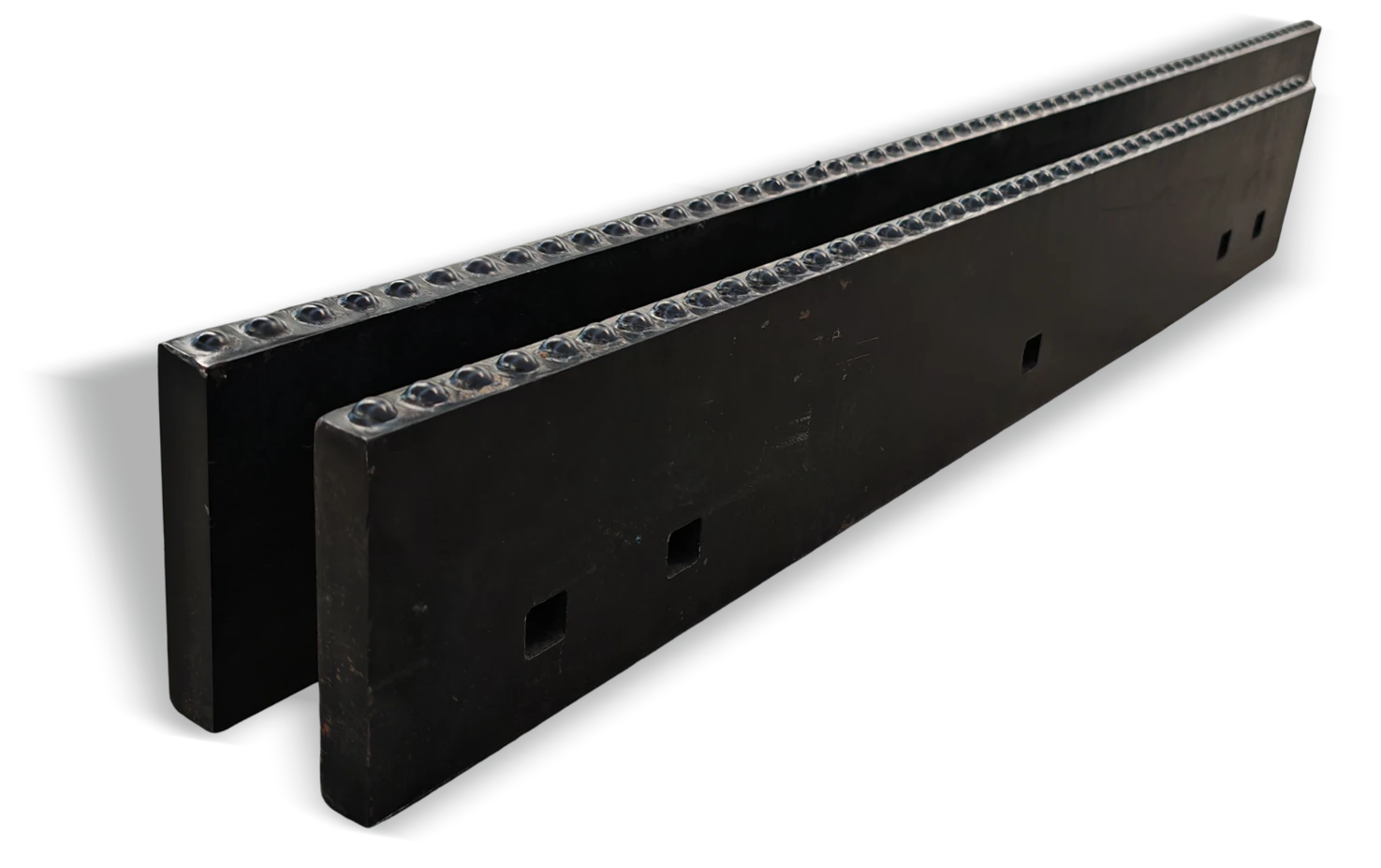
The product the sizing decision applies to is described in the material on what a packed ice carbide kit is and how it works; this article assumes that description and deals only with sizing it to a measured width.
Common Sizing Errors and Their Cost
The most common error is sizing from a catalogue width rather than a measured installed length. It produces a kit that appears correct on the paperwork and leaves a section of the working width uncovered, which the operator notices as inconsistent clearing at one end. The second is ignoring the mounting face condition, which allows a correctly sized kit to sit unevenly and change the contact angle.
The third is rounding a non-standard width to the nearest available size. Rounding down leaves unprotected ends; rounding up creates overhang, which is awkward to handle and can catch when the blade is angled. The fourth is failing to account for the additional mass when specifying the carrier, which shows up as reduced contact pressure on lighter plows and leads operators to compensate with down-pressure.
The costs appear as inconsistent clearing, premature wear at the covered positions, and handling problems at fitting rather than as a single obvious failure. That makes them easy to attribute to the product rather than to the sizing decision, which is why the arrangement drawing and the measured installed length belong in the purchase record.
Two further errors are worth recording because they recur across fleets. The first is sizing the kit for a new blade while the fleet continues to run worn blades, so the kit arrives matched to a configuration that only some trucks have. The second is changing the arrangement partway through a season without updating the specification, which leaves the fleet with two configurations in service and no way to attribute a difference in outcome. Both are prevented by treating the arrangement as part of the specification revision and recording it.
Writing the Sizing Requirement Into a Tender
A tender should state the sizing requirement against measured dimensions. Give the installed length for each plow width in the fleet, the mounting pattern with its reference standard, the tolerance accepted at the mounting features, and the requirement that the arrangement covers the full installed length without overhang. Add the hardware set required, the grade requirement with its properties, and the documentation to accompany each delivery.
Where the fleet covers several widths, list them by group and require a separate arrangement and confirmation for each rather than a single configuration applied across the order. Where the programme references published patterns, citing the relevant AASHTO standards keeps offers comparable. One clause is worth adding: require the supplier to state the installed length and pattern the arrangement was designed against, so that the acceptance check at delivery has something specific to compare with.
Packed ice kit sizing is decided by three things: the measured installed length, the mounting pattern and the arrangement that covers the working width. A nominal blade width is none of them.
Measure the blade in service, confirm the arrangement against the drawing, and check the hardware and seated height that follow from it. Sizing done that way produces a kit that covers the moldboard the specification intended, and a receiving inspection that has something to check.
Send SENTHAI your plow widths, measured blade dimensions and mounting patterns, and the technical team will confirm the kit sizing, arrangement and hardware for each group.
Frequently Asked Questions
How do I measure a plow blade for kit sizing?
Measure the installed length of the blade as it sits on the moldboard, the mounting hole diameter, the centre-to-centre spacing between holes, the number of hole rows and the distance from the top edge to the first row. Take the readings from the blade in service rather than from a manual, because working equipment carries the result of previous replacements and repairs.
What happens if the kit does not cover the full blade width?
The uncovered sections present steel rather than carbide to the hardest part of the surface, so clearing becomes inconsistent across the working width and those sections wear faster. This is most noticeable on packed ice, where the high points of the refrozen layer determine how much of the edge is doing the work. Confirm coverage against the installed length before ordering.
Can a kit be sized for a non-standard blade width?
Yes, and a custom arrangement is usually cheaper overall than forcing a compromise. Rounding down to a standard size leaves the ends unprotected; rounding up creates overhang that is awkward to handle and can affect how the blade behaves when angled. Send the measured installed length and let the arrangement be designed against it.
Does kit sizing affect the hardware required?
It often does. A kit changes the assembly mass and the number of fixing positions, so bolt length, washer type and torque values may differ from the edge it replaces. Confirm the hardware set with the supplier when the arrangement is agreed, and check the mounting face condition at the same time, since a worn face will not seat a correctly sized kit accurately.
Related articles
 Packed Ice Kit Maintenance: Inspecting What MattersPacked ice carbide kits
 Packed Ice Kit Performance on Ice Compared With Standard EdgesPacked ice carbide kitsPacked Ice Kit Installation: Fitting the Kit to the BladePacked ice carbide kitsPacked Ice Carbide Kit Cost: When the Investment Is Worth ItPacked ice carbide kits