




Packed Ice Kit Tender: Writing the Specification
Packed ice kit tender guidance: the requirements that decide performance, the fitment clauses to include and the evidence bidders must supply.
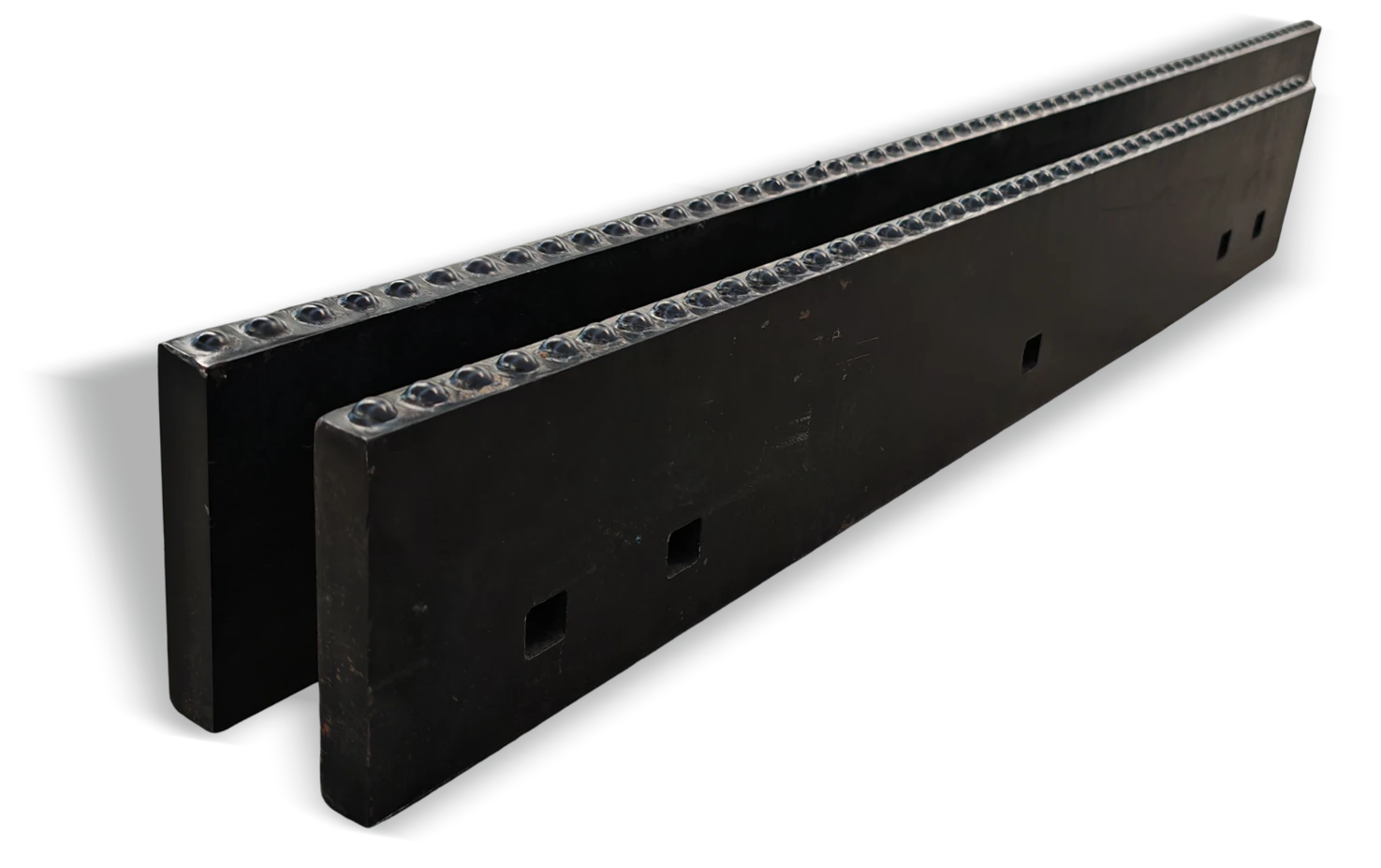
A tender for packed ice kits is written less often than one for standard edges, which makes it more likely to be drafted around a single supplier’s description. That is the point at which the agency gives away the specification. A defensible kit tender states measurable requirements, defines the arrangement it expects and requires evidence with delivery rather than promising it afterwards.
Which Packed Ice Kit Tender Requirements Decide Performance
Six requirements decide kit performance.
The arrangement across the blade, the coverage of the installed length, the carbide grade with hardness and grain size, the insert geometry, the retention method and the mounting pattern with tolerances. Quantities and delivery terms describe scope rather than performance.
The two requirements specific to a kit are arrangement and coverage. A kit is not simply a cutting edge of a certain length; it is a configuration that places carbide across the working width, and a bidder that meets the length requirement with a different arrangement produces different contact behaviour. Stating the arrangement as a drawing with positions relative to the mounting pattern makes the offer comparable and the delivery checkable.
Coverage is stated against the measured installed length rather than a nominal width, and the arrangement detail behind that requirement is set out in the packed ice kit specification guide. Where an agency operates several plow widths, the tender should list each with its measured dimensions and require an arrangement for each, rather than a single configuration applied across the order.
How the Technical Variables Interact in a Kit Tender
Kit requirements interact with the machine.
A kit adds mass at the leading edge and changes where contact is established, so the requirement depends on the carrier’s available down-pressure. A tender that specifies the kit without stating the plow classes leaves a bidder to assume one.
The interaction shows up in service as reduced clearing on lighter carriers where the specification was intended for heavier equipment. That is not a product defect; it is a specification applied to equipment that cannot work it as intended. Stating the vehicle groups and their plow classes alongside the technical requirements allows bidders to price against the machine and gives the agency a basis for evaluating an offer that is compliant on paper and unsuitable in practice.
Arrangement, grade and retention also interact. More carbide across the working width changes how load is carried into the joint, and a grade chosen for the surface may be more or less tolerant of the shock the arrangement transmits. Requiring the bidder to state grade, arrangement and retention together, rather than as independent items, is what makes the response a specification rather than a parts list.
Grade, Geometry and Material Requirements for the Kit
Grade should be written as properties. State the hardness range with the test method, the carbide grain size and the binder or toughness requirement, then define what an equivalent must satisfy and the evidence required to demonstrate it. Property test methods published by ASTM are the usual reference, and naming a method prevents two bidders from measuring the same nominal property differently.
SENTHAI engineers the hardness and toughness balance against stated service conditions using hardness on the HRA scale together with carbide grain size, and works to plus or minus 0.02 mm dimensional tolerances on carbide components. Those are the kind of stated values a tender can require: figures a bidder must confirm, rather than ranges wide enough to include anything.
Geometry belongs in an attached drawing with the arrangement, showing insert positions relative to the mounting pattern and the working face angle. Where the fleet operates several plow makes, the drawing set should show the kit against each, so that the angle at which the working face is presented is part of the requirement rather than an assumption on the bidder’s part.
Fitment and Tolerance Clauses for Kit Supply
Fitment clauses should read as acceptance conditions. State the mounting pattern with its reference standard, hole diameter and centre spacing, the tolerance accepted at the mounting features, and the requirement that the kit seats flat against the moldboard without force. SENTHAI validates fitment against AASHTO and DIN bolt patterns before release, and AASHTO published standards remain the reference for agency specifications while DIN covers European and export conventions.
Require written fitment confirmation against the agency’s drawings before production, and make it part of the delivery documentation. Add the hardware set the kit requires, including bolt length and torque value, because a kit changes the assembly mass and often the fastener requirement. Where an OEM mounting interface is involved, refer to the equipment documentation and note that SAE standards for mobile machinery describe the interfaces those designs were built around.
One clause is worth adding for kits specifically: require the bidder to state any plow class or mounting face condition for which the offered kit is not recommended. A supplier that has validated the arrangement against the drawings can answer that question directly, and the answer prevents an unsuitable application later.
Evidence to Require With Each Bid for A Packed Ice Kit Tender
The evidence list should be published with the tender and applied to every bid. Require the arrangement drawing, dimensional inspection results for the delivered kit at the mounting features and working face, grade data referenced to the stated test method, and written fitment confirmation against each pattern supplied. SENTHAI inspects and archives every batch, so these records are routine outputs; the quality control and traceability page describes what a batch record contains.
Where the kit includes brazed carbide, add the joining process description and the inspection applied to the joint, since the joint carries load from the insert into the body; technical background on brazing is published by TWI. Where the agency operates several plow widths, require the confirmation to reference each arrangement rather than the order as a whole.
Administrative requirements belong in the same section because they affect delivery rather than price. Supplier registration for federal awards is handled through SAM.gov, and general procurement guidance is published by GSA. Stating them alongside the technical requirements lets bidders plan rather than discover them after award.
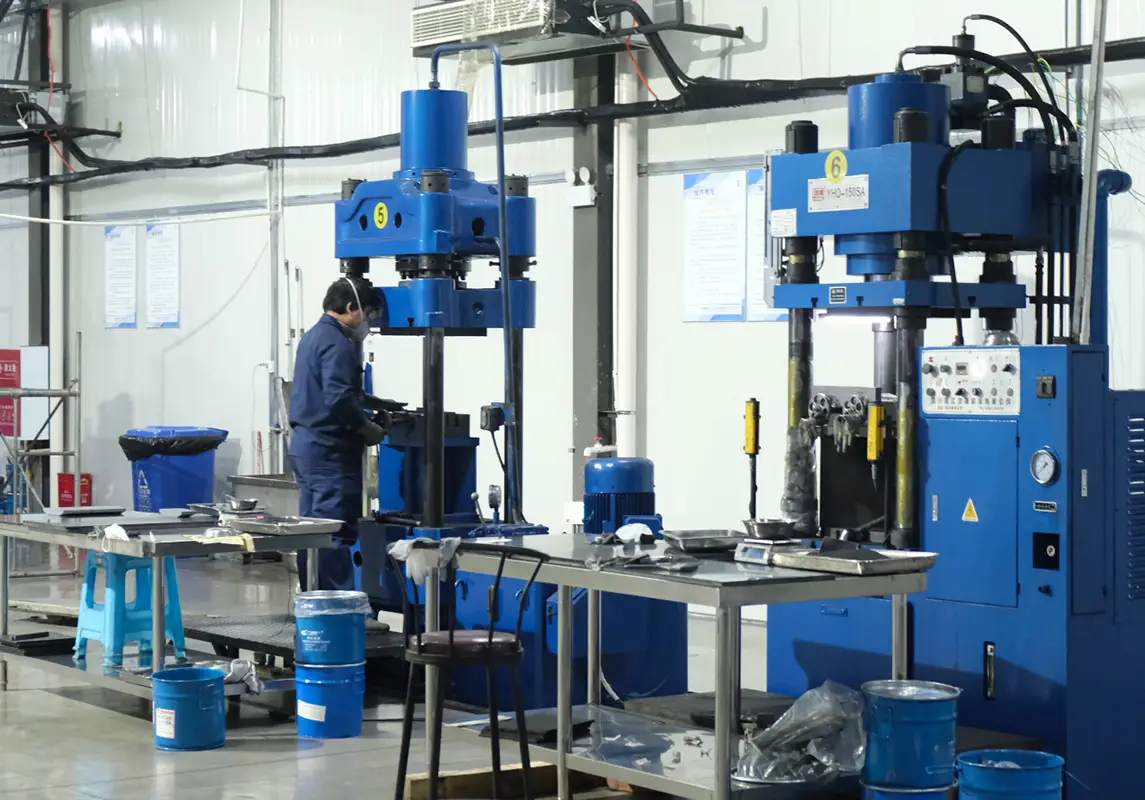
The product definition the requirements rest on is set out in the material on what a packed ice carbide kit is and how it works.
Common Kit Tender Errors
The most common error is specifying a kit by product name or by reference to a previous award. It restricts competition, removes the requirement from the document and makes an alternative offer impossible to evaluate. The second is specifying a length without an arrangement, which allows a bidder to meet the dimensional requirement with a configuration that behaves differently.
The third is omitting the vehicle groups. A kit tender that does not state plow classes and measured patterns leaves the bidder to assume both, and the resulting offers cannot be compared on fitment. The fourth is leaving the tolerance unspecified at the mounting features, which produces kits that match the drawing in the dimensions easiest to measure and miss in the ones that decide seating.
The fifth error is failing to define how a mid-contract change will be handled. Where a supplier proposes a different grade, arrangement or dimension during the contract, the agency needs a process for evaluating it against the stated properties. Without one, the specification drifts and the fleet’s records mix two configurations without a basis for comparison.
A sixth error is leaving the acceptance inspection undefined. State who checks the delivery, what they verify and what happens when a kit does not conform. Where the tender is silent, a non-conforming kit is found at fitting, when the vehicle is needed and the remedy is a conversation rather than a procedure. Defining the check at goods-in converts a dispute into a routine return while the parts are still identifiable.
A seventh and quieter error is failing to state the season policy the agency expects. Where a kit is to be exchanged with a standard edge outside ice conditions, the tender should say so, because it affects the number of units required, the hardware set and the storage arrangements. Where it is to remain fitted, the requirement should reflect that too, since the arrangement is then carrying the whole season’s work rather than part of it.
Evaluation Criteria That Keep Kit Offers Comparable
Criteria should map directly onto the requirements so that each can be scored without interpretation. Mark technical attributes, evidence quality and delivery performance separately, and state what document satisfies each criterion. Where an equivalent is offered, describe how equivalence will be tested and what evidence is required.
Where a sample or first-article inspection forms part of the evaluation, define the test conditions in advance: which dimensions are checked, which documents are reviewed and what constitutes a pass. Criteria written after a sample arrives are difficult to defend and undermine the objectivity the tender was written to provide.
Keep technical and commercial evaluation separate until both are complete. Where price is opened first, technical scoring tends to converge on the cheapest compliant offer and the requirements that distinguish capability are discounted. Separating the stages preserves the value of the technical section and allows the award to be explained on published criteria. Winter operating context published by the Federal Highway Administration is useful supporting material where the tender has to state the service conditions the kit is expected to work under.
A packed ice kit tender holds when its requirements are measurable, its arrangement is drawn rather than described, and its evidence package is required with each delivery.
State the six performance points, list vehicle groups with measured patterns, add fitment as an acceptance condition with hardware included, and evaluate technical and commercial offers separately. Written that way, the tender produces comparable bids for a specification the agency can actually administer.
Send SENTHAI your plow widths, measured patterns and route groups, and the technical team will respond to your tender requirements with stated arrangement, grade, tolerance and documentation.
Frequently Asked Questions
How should a kit arrangement be specified in a tender?
Specify it as a drawing showing insert positions relative to the mounting pattern, the working face angle and the coverage of the measured installed length. A length requirement alone can be met with several arrangements that behave differently. The drawing also gives the receiving inspection something specific to check against the delivery.
What vehicle information should accompany a kit tender?
List the plow makes and classes, the measured mounting pattern for each, the installed blade length and the route classes each group works. A kit adds mass at the leading edge, so the carrier’s available down-pressure is part of the requirement. Without those details bidders price an assumption and the offers cannot be compared on fitment.
Should the tender require a trial or sample before award?
Where a first-article inspection forms part of the evaluation, define the conditions in advance: which dimensions are checked, which documents are reviewed and what constitutes a pass. Criteria written after a sample arrives are difficult to defend. Many agencies instead require evidence with the first delivery and treat that as the acceptance point.
How should a tender handle a specification change during the contract?
State a process in advance. A proposal should identify the requirement it changes and the properties affected, and the agency should evaluate it against the same evidence standard applied to the original bid. Accepting an undocumented change amends the specification without a decision and leaves the agency unable to compare performance between deliveries.
Related articles
 Ice Control Alternatives Compared: Where Packed Ice Kits FitPacked ice carbide kits
 Packed Ice Kit for Municipalities and Contractors: How Use DiffersPacked ice carbide kitsPacked Ice Kit Maintenance: Inspecting What MattersPacked ice carbide kits
 Packed Ice Kit Performance on Ice Compared With Standard EdgesPacked ice carbide kits