




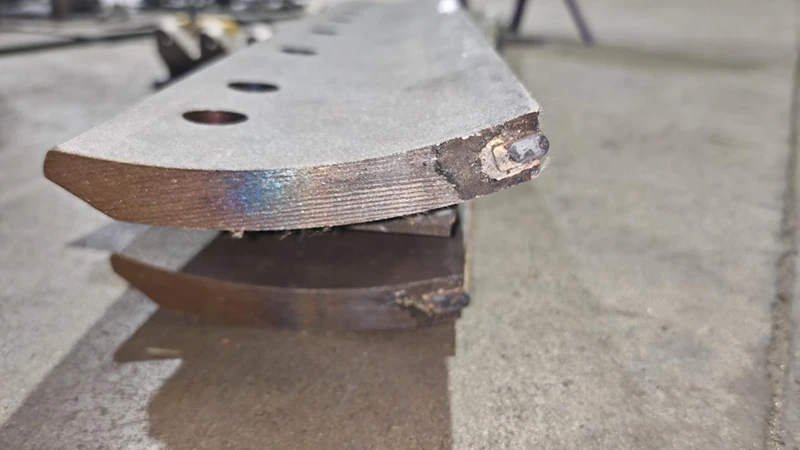
Three surfaces, three mechanisms
Black ice is a thin glaze that hides; bonded ice is thick and adhered; hard-packed snow is compaction without a glaze. Each yields to a different approach.
Black ice and glaze
A thin, transparent glaze forms from refreezing melt water and gives almost no visual warning. It cannot be cleared with pressure alone — the surface has to be broken, and often treated, because the film is too thin to scrape cleanly.
- snow Plow Blades for Minneapolis: Carbide, JOMA, and Packed Ice Solutions
- snow Plow Blades for Hartford: Carbide, JOMA, and Packed Ice Solutions
- snow Plow Blades for Duluth: Carbide, JOMA, and Packed Ice Solutions
- snow Plow Blades for Denver: Carbide, JOMA, and Packed Ice Solutions
- snow Plow Blades for Burlington: Carbide, JOMA, and Packed Ice Solutions
- snow Plow Blades for Albany: Carbide, JOMA, and Packed Ice Solutions
- snow Plow Blades for Vancouver: Carbide, JOMA, and Packed Ice Solutions
- snow Plow Blades for Sudbury: Carbide, JOMA, and Packed Ice Solutions
Bonded ice and hard-packed snow
Bonded ice is adhered to the pavement with real thickness; hard-packed snow is compaction without the glaze. Both resist a flat edge, and both yield to geometry that concentrates force into a narrow contact area rather than spreading it across the width.
- packed Ice Carbide Kit Cost: When the Investment Is Worth It
- isolated Carbide Edged Blade Systems: How They Work on Packed Ice
- packed Ice Snow Plow Conditions: What They Do to a Standard Cutting Edge
- top 5 Best Ice-Breaking Blades for Bonded Ice Corridors
- snow Plow Blades for Syracuse: Carbide, JOMA, and Packed Ice Solutions
- snow Plow Blades for Spokane: Carbide, JOMA, and Packed Ice Solutions
- snow Plow Blades for Rochester: Carbide, JOMA, and Packed Ice Solutions
- snow Plow Blades for Providence: Carbide, JOMA, and Packed Ice Solutions
- snow Plow Blades for Portland: Carbide, JOMA, and Packed Ice Solutions
- snow Plow Blades for Pittsburgh: Carbide, JOMA, and Packed Ice Solutions
- snow Plow Blades for New York: Carbide, JOMA, and Packed Ice Solutions
What actually cuts ice
Narrow contact, a harder attack angle and enough down-pressure to keep the edge in the surface. Not more weight and not more passes.
Geometry and down-pressure
Concentrating force works; spreading it does not. A narrow cutting contact under moderate pressure fractures ice, while a wide flat edge under the same pressure polishes it. This is why operators who add pressure to a flat edge get no improvement.
- snow Plow Blades for Milwaukee: Carbide, JOMA, and Packed Ice Solutions
- snow Plow Blades for Green Bay: Carbide, JOMA, and Packed Ice Solutions
- snow Plow Blades for Detroit: Carbide, JOMA, and Packed Ice Solutions
- snow Plow Blades for Cleveland: Carbide, JOMA, and Packed Ice Solutions
- snow Plow Blades for Buffalo: Carbide, JOMA, and Packed Ice Solutions
- snow Plow Blades for Winnipeg: Carbide, JOMA, and Packed Ice Solutions
- snow Plow Blades for Trois-Rivières: Carbide, JOMA, and Packed Ice Solutions
- snow Plow Blades for Sherbrooke: Carbide, JOMA, and Packed Ice Solutions
Where edges cannot help
Shaded slopes, bridge decks, gutters and refrozen melt water in dips create ice that no blade reaches cleanly. Those need drainage, material or hand work, and expecting the edge to solve them leads to over-scraping everywhere else.
- snow Plow Blades for Madison: Carbide, JOMA, and Packed Ice Solutions
- snow Plow Blades for Grand Rapids: Carbide, JOMA, and Packed Ice Solutions
- snow Plow Blades for Des Moines: Carbide, JOMA, and Packed Ice Solutions
- snow Plow Blades for Chicago: Carbide, JOMA, and Packed Ice Solutions
- snow Plow Blades for Boston: Carbide, JOMA, and Packed Ice Solutions
- snow Plow Blades for Windsor: Carbide, JOMA, and Packed Ice Solutions
- snow Plow Blades for Thunder Bay: Carbide, JOMA, and Packed Ice Solutions
- snow Plow Blades for Saskatoon: Carbide, JOMA, and Packed Ice Solutions
Ice condition questions
Why does adding down-pressure not clear ice?
Because pressure spread across a wide flat contact does not concentrate enough force anywhere to fracture the ice. It polishes the surface and accelerates edge wear instead.
Can black ice be cleared mechanically?
Partially. The film is thin and often needs treatment as well, but a cutting edge removes more of it than a flat edge and reduces the amount of material required afterwards.
What is the difference between bonded ice and packed snow?
Bonded ice is adhered to the surface with a glaze component; hard-packed snow is compaction without that glaze. The first resists scraping, the second resists penetration.
Do I need a special blade for refrozen ruts?
It helps. Ruts require both penetration and the ability to follow a channel, which suits narrower cutting geometries better than a wide flat edge.
How often should an ice kit be inspected?
At the same intervals as any blade, with extra attention to alignment and clamping because the sections are narrower and carry concentrated load.
Kit specification
Sizing a kit for the ice you get.
Ice control operations
Sequencing cutting and de-icer.
I.C.E. edge technology
Isolated and segmented carbide for ice.
Installation and maintenance
Keeping a sectional kit aligned.
Tell us which ice you get
Describe the surface — glaze, bonded or hard-packed — and how often it forms, and we will recommend the geometry.
✓ Ice type and frequency
✓ Surface and gradient
✓ Current edge and results
✓ Machine and quantity
Email: [email protected]