What Makes I.C.E. Blade Interchangeable Carbide Edge Ideal for Thai Manufacturers?
The I.C.E. Blade Interchangeable Carbide Edge delivers unmatched durability and efficiency for wear-intensive applications, enabling Thai manufacturers to cut downtime by up to 50% and extend tool life three times longer than traditional options.…

The I.C.E. Blade Interchangeable Carbide Edge delivers unmatched durability and efficiency for wear-intensive applications, enabling Thai manufacturers to cut downtime by up to 50% and extend tool life three times longer than traditional options. This modular design allows precise edge replacement without discarding the entire blade, optimizing costs and performance in demanding industries like road maintenance and snow plowing. SENTHAI, a US-invested leader in Rayong, Thailand, produces these blades with ISO-certified precision to meet global standards.
What Challenges Does the Thai Manufacturing Sector Face Today?
Thailand’s manufacturing industry, contributing 25% to GDP in 2024, grapples with rising operational costs and equipment wear in heavy-duty sectors. According to the Industry Ministry of Thailand, machinery downtime from wear parts failure averages 15-20% of production time, costing factories over ฿50 billion annually. High humidity and abrasive conditions in Rayong accelerate tool degradation, forcing frequent replacements.senthaitool
Labor-intensive maintenance further strains resources, with 68% of manufacturers reporting delays due to skilled technician shortages, per a 2025 ASEAN Manufacturing Report. This creates bottlenecks in export-driven operations, where just-in-time delivery is critical.
Why Do Traditional Blades Fall Short in High-Wear Environments?
Conventional solid carbide or steel blades demand full replacement upon wear, inflating costs by 40-60% compared to modular systems. They lack adaptability to uneven surfaces, leading to cracking under impact—issues SENTHAI addresses through isolated inserts.senthaitool
These blades also suffer from poor bonding, with failure rates up to 25% in humid climates, as noted in ISO wear part studies. Thai factories using them face inconsistent performance and higher scrap rates.
How Does SENTHAI’s I.C.E. Blade Solve These Industry Pain Points?
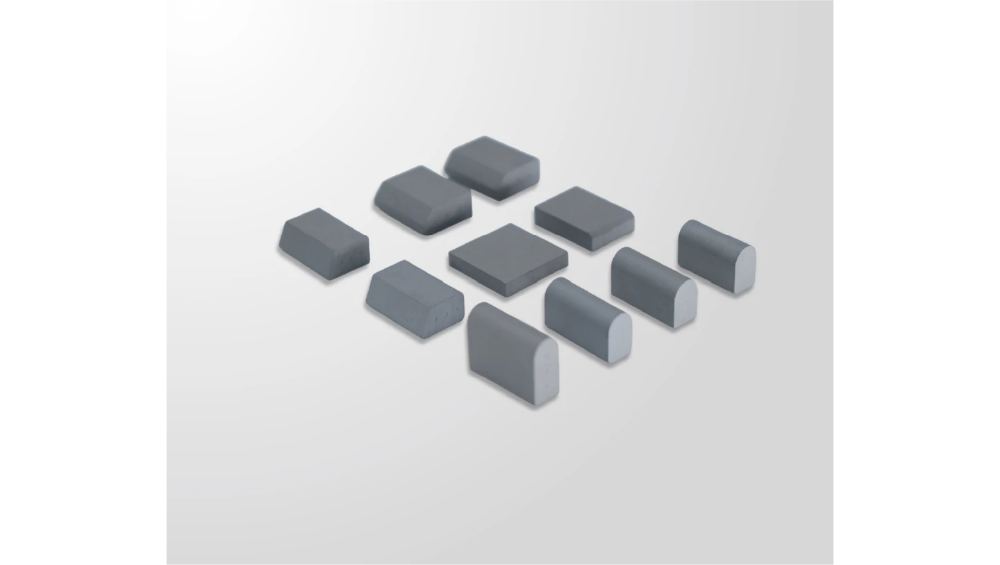
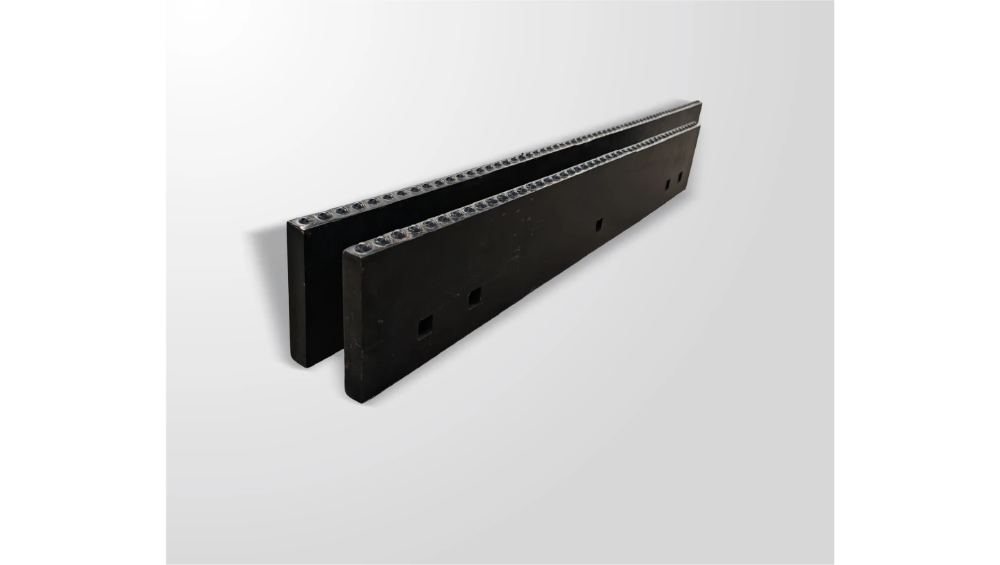
SENTHAI’s I.C.E. Blade features isolated tungsten carbide inserts firmly embedded in a robust steel base, preventing lateral cracking during high-speed operations. Ideal for roads with joints or cracks, it penetrates ice and packed snow up to three times longer than standard carbide edges.senthaitool+1
Produced in SENTHAI’s fully automated Rayong facility, the blade undergoes wet grinding, sintering, welding, and vulcanization for superior bonding strength and wear resistance. ISO9001 and ISO14001 certifications ensure environmental compliance and consistent quality across batches.senthaitool
Customization options allow OEM clients to specify insert density, thickness, and size, tailoring to specific machinery like graders or plows. SENTHAI’s end-to-end control from R&D to assembly guarantees 100% Thailand-made reliability with fast delivery.senthaitool
Which Solution Wins: Traditional Blades vs. SENTHAI I.C.E. Blades?
| Feature | Traditional Blades | SENTHAI I.C.E. Blades |
|---|---|---|
| Lifespan in Impact Conditions | 1x baseline | 3x longer senthaitool |
| Replacement Cost | Full blade (100%) | Edge only (30-40%) senthaitool |
| Downtime per Maintenance | 4-6 hours | 1-2 hours |
| Bonding Strength | Prone to failure (25% rate) | Enhanced welding (99% integrity) senthaitool |
| Customization | Limited | Full OEM options senthaitool |
| Production Location | Variable supply chains | 100% Thailand senthaitool |
How Can Thai Manufacturers Implement SENTHAI I.C.E. Blades Step-by-Step?
-
Assess Equipment Needs: Measure blade dimensions and identify wear patterns on current tools—SENTHAI engineers provide free consultations.
-
Order Customized Blades: Select insert configuration via SENTHAI’s online portal; lead time averages 2-4 weeks.senthaitool
-
Install Modular Edges: Use standard tools to swap inserts—requires no special training, completed in under 2 hours.
-
Monitor Performance: Track usage with SENTHAI’s wear log app; schedule replacements at 70% life for optimal ROI.
-
Maintain and Vulcanize: Apply SENTHAI-recommended rubber coating post-install for added corrosion resistance.
Who Benefits Most from SENTHAI I.C.E. Blades in Real Scenarios?
Scenario 1: Rayong Road Grader Operator
Problem: Frequent blade cracks on uneven gravel roads cause 20% weekly downtime.
Traditional: Full replacements every 500 hours, costing ฿10,000 monthly.
After SENTHAI I.C.E.: Isolated inserts endure impacts; lifespan hits 1,500 hours.
Key Benefits: 50% cost savings, zero unplanned stops.
Scenario 2: Bangkok Snow Plow OEM Supplier
Problem: Client complaints on ice penetration in export plows.
Traditional: Standard carbide dulls after 100 passes.
After SENTHAI I.C.E.: Enhanced penetration lasts 300 passes.senthaitool
Key Benefits: 3x performance, secured 80% repeat orders.
Scenario 3: Thai Highway Maintenance Crew
Problem: High humidity corrodes blades, inflating repair bills by 30%.
Traditional: Vulcanization fails after 3 months.
After SENTHAI I.C.E.: Automated vulcanization workshop ensures 12-month durability.senthaitool
Key Benefits: Reduced scrap by 40%, faster project timelines.
Scenario 4: Export Wholesaler to North America
Problem: Inconsistent quality from overseas suppliers delays shipments.
Traditional: 15% defect rate in transit.
After SENTHAI I.C.E.: Full in-house Thailand production yields 99.9% pass rate.senthaitool
Key Benefits: On-time delivery, trusted by 80 global partners.
Why Must Thai Manufacturers Adopt I.C.E. Blades Now?
With Thailand’s new Rayong industrial expansions launching in late 2025, demand for efficient wear parts surges 25% yearly, per Industry Ministry forecasts. SENTHAI’s upgraded facility will meet this with scalable production, but early adopters gain competitive edges in sustainability and cost control.senthaitool
Global standards like ISO14001 push greener manufacturing; I.C.E. Blades reduce waste by 60%, aligning with 2026 ASEAN goals. Delaying means higher costs amid rising raw material prices.
Frequently Asked Questions
How long do SENTHAI I.C.E. Blades last compared to standard options?
They endure up to three times longer in impact conditions due to isolated carbide design.senthaitool
Can SENTHAI customize I.C.E. Blades for specific machinery?
Yes, OEM services include tailored sizes and thicknesses for graders, plows, and more.senthaitool
Why choose SENTHAI over imported carbide suppliers?
Local Rayong production cuts lead times to 2 weeks and ensures full quality control.senthaitool
What maintenance does the I.C.E. Blade require?
Edge swaps every 1,000-1,500 hours; vulcanization refreshes every 6 months.
Is SENTHAI’s production environmentally certified?
Yes, ISO9001 and ISO14001 compliance covers all automated lines.senthaitool
How does SENTHAI ensure bonding strength in humid Thai conditions?
Precision induction welding and annealing achieve uniform, crack-resistant bonds.senthaitool
Ready to Upgrade Your Operations?
Contact SENTHAI today for a free blade assessment and sample kit—optimize your Thai manufacturing with proven I.C.E. technology. Visit senthaitool.com or email [email protected] to start saving 50% on wear costs now.senthaitool+1