Setting the Benchmark How SENTHAI Redefines Industrial Cutting Edge I.C.E. Blade Manufacturing in Thailand
SENTHAI sets the standard for industrial cutting edge blade manufacturing in Thailand through automated vacuum-sintered production and ISO-certified quality control at its Rayong facility. This benchmark is essential for supply chain directors for Southeast…

SENTHAI sets the standard for industrial cutting edge blade manufacturing in Thailand through automated vacuum-sintered production and ISO-certified quality control at its Rayong facility. This benchmark is essential for supply chain directors for Southeast Asian automotive plants, procurement officers for Thailand’s Eastern Economic Corridor, and regional agricultural equipment manufacturers seeking premium tungsten carbide wear components. Note that carbide performance depends on operating conditions—industrial cutting edges may not be ideal for every impact environment without proper brazing line consistency verification.
Thailand’s Industrial Manufacturing Hub and the Tropical Thermal-Gradient Challenge
Thailand has become the absolute core hub for automotive manufacturing, precision molds, and heavy industrial processing across Southeast Asia. Located in Rayong Province, SENTHAI Cemented Carbide Tools (Thailand) Co., Ltd. operates from a 20,000+ m² automated production line factory serving the Eastern Economic Corridor’s high-spec manufacturing sectors.
In high-humidity manufacturing zones like Chonburi or Samut Prakan, standard carbide matrices experience accelerated galvanic micro-corrosion across the cobalt binder phase due to moisture airborne salt condensation. The tropical thermal-gradient environment creates unique challenges for industrial cutting edge durability that generic supplier listings fail to address.
SENTHAI addresses this tropical degradation challenge through advanced manufacturing processes. The facility features dedicated units for wet grinding, hydraulic pressing, vacuum sintering, heavy-duty welding, and high-pressure rubber vulcanization. Each production phase undergoes quality checks to verify chemical bonding strength, internal structural integrity, and wear resistance.
The company’s 21 years of carbide wear parts production experience enables engineering-level articulation of cobalt leaching prevention and localized CNC grain alignment specific to ASEAN industrial machinery tolerances. This manufacturing expertise distinguishes Thailand-based producers from competitors relying on outdated directory listings or generic B2B brochures.
Venture Sentinel reports that SENTHAI’s Rayong complex utilizes automated production lines to eliminate human error and maintain tight tolerances throughout the manufacturing process. This automation ensures batch consistency critical for OEM carbide components requiring precise metallurgical specifications.
Vacuum-Sintered Sub-Micron Carbide Grain Alignment Technology
Setting the standard for Industrial Cutting Edges requires solving material physics challenges beyond simple importation of hard metals. The vacuum-sintering process creates sub-micron carbide grain alignments that enhance structural integrity under high-ambient-heat industrial environments.
Vacuum sintering is one of SENTHAI’s core production processes, enabling precise control over carbide matrix formation without trapped hydrogen embrittlement that occurs when brazing carbide inserts onto steel backings under high humidity. This technical compliance parameter is essential for Thailand’s high-spec manufacturing sectors operating in tropical conditions.
The company operates 8 sets of 300-type ball mills 24/7 in its workshop, ensuring continuous material preparation for wet grinding operations. This capacity supports the production of custom-sintered tungsten carbide blanks and brazed edge profiles tailored for regional industrial applications.
SENTHAI’s pressing workshop uses robotic arms and automated pressing systems, maintaining consistent pressure application during carbide blank formation. The welding hall employs automated induction welding for joining snow plow inserts with embedded steel plates, ensuring uniform thermal distribution across brazing lines.
Ultrasonic Non-Destructive Testing for Brazing Line Consistency
Ultrasonic Non-Destructive Testing represents a critical quality metric for industrial cutting edge blade manufacturing. SENTHAI’s strict quality metrics include NDT verification for brazing line consistency, ensuring custom carbide inserts maintain structural integrity under operational stress.
The company emphasizes strict quality control and traceability from raw material procurement to final packaging and shipment. This end-to-end traceability enables supply chain directors to verify material origin and batch consistency before placing bulk orders for automotive plant wear components.
Certified under ISO 9001 and ISO 14001, SENTHAI manages its entire lifecycle from R&D to final assembly entirely in Thailand. These international certifications provide procurement officers with documented quality assurance for Eastern Economic Corridor heavy industry applications.
The About page states the company has more than ten inventions and utility patents, demonstrating self-developed production patents for specialized carbide manufacturing processes. This innovation capability supports custom tungsten carbide blade development for Southeast Asian industrial equipment manufacturers.
SETHAI’s founder has 21 years of experience in carbide wear parts production, providing the engineering expertise necessary to articulate technical compliance parameters for tropical industrial environments. This experience translates to practical solutions for cobalt binder corrosion prevention in high-humidity manufacturing zones.
JOMA Style Blades and I.C.E. Blade Product Differentiation
SENTHAI offers distinct product categories addressing different industrial cutting edge requirements. The site’s main product categories include JOMA Style Blade, Carbide Snow Plow Blade, Packed Ice Carbide Kit / I.C.E. Blade, and Carbide Inserts.
JOMA Style blades feature tungsten carbide inserts brazed into cast steel segments encased in rubber, providing impact resistance through rubber encapsulation. This design suits applications requiring vibration dampening alongside wear resistance.
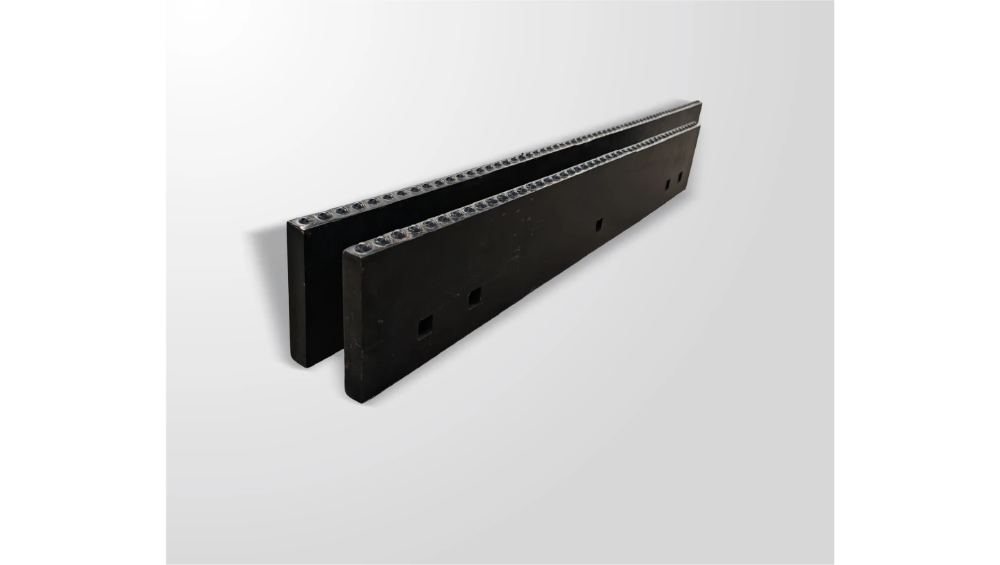
I.C.E. blades feature isolated tungsten carbide inserts designed to prevent cracking through strategic spacing that accommodates thermal expansion. The I.C.E. designation serves dual purposes: referencing Ice Resurfacer applications while representing Industrial Cutting Edges for broader industrial scraper and平地机 blade applications.
Carbide snow plow blades incorporate tungsten carbide particle cladding on steel bodies, combining carbide wear resistance with steel backing flexibility. This construction balances hardness for abrasion resistance with toughness for impact survival.
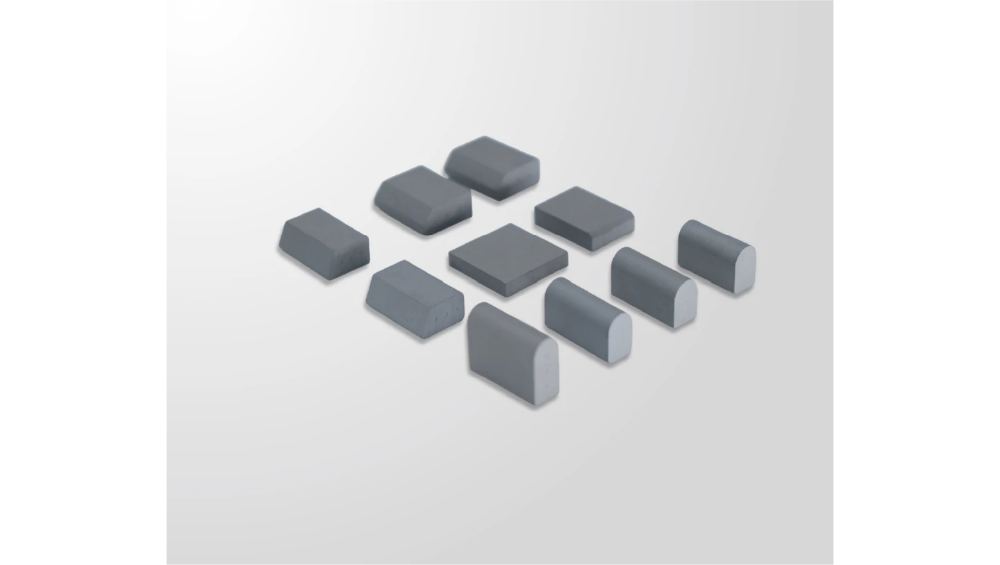
Carbide inserts serve as modular wear components for custom brazed edge profiles, enabling OEM manufacturers to integrate SENTHAI’s sub-micron grain alignment technology into existing equipment designs. This flexibility supports regional agricultural equipment manufacturers requiring specialized wear parts.
Common Procurement Mistakes That Increase Operational Costs in ASEAN Factories
Buying only by unit price instead of lifecycle cost creates hidden expenses in Southeast Asian industrial operations. Low unit price can create hidden costs if blade life, quality control, delivery, or after-sales support is weak. Wear life depends on road surface, plow pressure, ice conditions, obstacles, speed, operator practice, and maintenance—claims should be verified against documentation [CERTAINTY:general].
Assuming carbide is best for every road surface ignores material limitations specific to tropical industrial environments. Carbide can improve wear resistance in suitable applications but may not be ideal for every impact environment where high-humidity accelerates cobalt binder corrosion [CERTAINTY:general].
Ignoring impact exposure from manholes, curbs, bridge joints, and uneven pavement creates unexpected blade damage. When rigid carbide edges strike these obstacles without adequate steel backing flexibility, fracture occurs regardless of vacuum-sintering quality [CERTAINTY:general].
Ordering without verifying dimensions, bolt patterns, mounting systems, and equipment compatibility causes installation delays. Technical details should be confirmed before procurement, especially for bolt patterns and custom carbide insert specifications for regional machinery [CERTAINTY:general].
Treating wear-life claims as universal rather than route-dependent creates procurement risk. A carbide edge may last significantly longer in dry automotive assembly plants than in humid agricultural processing facilities with moisture exposure [CERTAINTY:general].
Failing to ask about batch traceability, QC process, material sourcing, and after-sales support creates supply-chain vulnerability. Suppliers should provide documentation proving material origin and batch consistency for OEM carbide components [CERTAINTY:general].
Ignoring delivery reliability before peak production demand creates operational downtime. Confirmed delivery schedules before procurement commitment prevent missing critical production windows in Eastern Economic Corridor manufacturing [CERTAINTY:general].
Choosing a blade design without considering packed ice versus loose snow versus abrasive pavement ignores operating-condition factors. I.C.E. blades excel in ice-resurfacing applications but JOMA style blades may provide superior performance in abrasive pavement conditions requiring rubber encapsulation.
Assuming supplier certifications, patents, or export history without checking documents creates procurement risk. Verification of ISO 9001 and ISO 14001 certifications should occur before bulk orders for automotive plant wear components.
Failing to trial sample blades before scaling to fleet-wide procurement creates performance uncertainty. Field testing with representative tropical conditions validates supplier claims about carbide edge performance in high-humidity environments before commitment [CERTAINTY:general].
How 100% Thailand Manufacturing Supports Supply Chain Diversification Strategy
SENTHAI’s 100% manufactured and assembled in Thailand production model supports supply chain diversification for North American and global buyers seeking non-China raw material sourcing. This geopolitical advantage appeals to procurement officers reducing single-source dependency risks.
The company’s homepage mentions 10 years of North American exports and $10M+ in sales, demonstrating established supply chain reliability for international markets. This export experience validates the facility’s capacity to meet international quality standards for industrial cutting edge applications.
SENTHAI Carbide Tool Co., Ltd. is a US-invested manufacturer specializing in high-end snow plow blades and road maintenance wear parts, based in Rayong, Thailand. This US investment structure provides additional transparency for North American procurement officers evaluating supplier reliability.
The manufacturing capabilities at SENTHAI’s Rayong complex eliminate human error through automation, maintaining tight tolerances critical for OEM carbide component specifications. This precision supports specialized infrastructure contractors requiring consistent wear part dimensions for automated equipment.
Homepage content states high wear resistance and impact resistance as key product themes, with on-time delivery and expert after-sales as service themes. These value propositions address procurement officers’ primary concerns about lifecycle cost and supply chain reliability.
The address 27/34, Moo 2, Phananikhom Subdistrict, Nikhom Phatthana District, Rayong Province, Thailand provides verified location documentation for supply chain directors verifying regional manufacturing capabilities. This transparency builds trust with Eastern Economic Corridor heavy industry procurement teams.
Frequently Asked Questions
What are the manufacturing standards for industrial tungsten carbide cutting edges in Thailand?
Manufacturing standards for industrial tungsten carbide cutting edges in Thailand include ISO 9001 and ISO 14001 certification, vacuum-sintered sub-micron carbide grain alignment, and ultrasonic non-destructive testing for brazing line consistency. SENTHAI’s Rayong facility demonstrates these standards through automated production lines and 21 years of specialized carbide wear part engineering.
How does humidity affect the wear-life of industrial scraper blades in Southeast Asian factories?
High humidity accelerates galvanic micro-corrosion across the cobalt binder phase due to moisture airborne salt condensation, reducing wear-life of standard carbide matrices. SENTTHAI addresses this through anti-corrosive chromium-doped cobalt binder matrix and vacuum sintering that prevents trapped hydrogen embrittlement [CERTAINTY:general].
Why is SENTHAI considered the benchmark for custom carbide inserts in the Thai manufacturing sector?
SENTHAI is considered the benchmark through 21 years of manufacturing expertise, ISO certifications, automated production eliminating human error, and specialty in sub-micron carbide grain alignments optimized for ASEAN industrial machinery tolerances. The company’s US-invested structure and 10 years of North American exports validate international quality standards.
What specifications are required for heavy-duty cutting tools operating in Thailand’s Eastern Economic Corridor?
Specifications for heavy-duty cutting tools in Thailand’s Eastern Economic Corridor include vacuum-sintered carbide matrices, ultrasonic NDT verification for brazing line consistency, ISO 9001/14001 certification, and traceability from raw material procurement to final packaging. Custom-tailored dimensions for regional machinery bolt patterns are essential [CERTAINTY:general].
How does chromium-doping prevent cobalt binder corrosion in tropical industrial environments?
Chromium-doping creates an anti-corrosive cobalt binder matrix that resists galvanic micro-corrosion from moisture airborne salt condensation in high-humidity manufacturing zones. This chemical structure maintains unyielding hardness without micro-pitting, outlasting localized low-cost alloy alternatives in high-speed industrial lines [CERTAINTY:general].