A strong municipal tender for carbide plow blades should define measurable hardness, impact resistance, steel yield strength, bonding quality, and test acceptance rules. The best specs do not just say “wear-resistant”; they set clear thresholds that suppliers, manufacturers, wholesalers, and OEM factories must prove with test data, inspection records, and batch traceability.
Anti-Dumping Compliant Flexible Blade Supply
What Should a Tender Specification Measure?
A useful tender specification should measure the properties that actually fail in service: edge wear, chipping, fracture, delamination, and deformation. For carbide plow blades, the critical controls are carbide hardness, matrix toughness, steel backing yield strength, brazing or welding bond strength, and dimensional stability after repeated impact.
In our production runs, the most common mistake is over-specifying hardness while ignoring impact resistance. A blade that is extremely hard but too brittle may look excellent on paper and still fail early in curb strikes, manhole impacts, and frozen-rut loading. SENTHAI usually advises buyers to write the spec around service behavior, not just a single material number.
Copy-ready tender text
Carbide hardness: HRA 88–90.
Impact resistance: no visible cracking, edge chipping, or carbide separation after specified impact testing.
Steel backing: minimum yield strength to be stated by the purchaser based on application severity.
Bonding: no bond-line failure, no carbide pull-out, and no welding crack after inspection.
Dimensional tolerance: blade geometry shall remain within drawing limits after testing.
These five lines already create a much higher barrier than generic wear-part wording. They also make it easier for a manufacturer or factory to bid honestly, because the requirements are objective instead of vague.
How Do You Build a Testing Matrix?
A testing matrix works best when it links each performance risk to one test, one acceptance rule, and one failure mode. For municipal procurement, the matrix should cover hardness, impact resistance, bend behavior, bond integrity, and field-like abrasion, because those are the points where plow blades usually fail first.
A good supplier will welcome this structure because it proves the buyer understands the product. A weak supplier will usually try to replace the matrix with a simple “meets industry standard” statement, which is not enough for high-risk municipal use. SENTHAI has found that a matrix like this reduces disputes later in the season because everyone knows what was tested and why.
Which Hardness and Strength Ranges Work?
For carbide plow blades, HRA 88–90 is a strong procurement target when the goal is wear life with controlled brittleness. Below that range, wear resistance may drop too quickly in severe snow-and-ice duty. Above that range, fracture risk can rise unless the substrate, grain structure, and bond process are tightly controlled.
Steel backing should not be treated as an afterthought. If the steel yield strength is too low, the blade can deform before the carbide fully wears out. If it is too high without enough toughness, the backing can crack under impact or low-temperature service. For municipal fleets, the right target depends on curb contact frequency, road roughness, and whether the blade is used on highways, local streets, or airport-style surfaces.
Practical procurement language
Carbide zone hardness shall be verified at HRA 88–90.
Steel substrate shall have a stated minimum yield strength suitable for the intended application.
The finished blade shall resist brittle fracture under impact loading representative of municipal plowing.
Hardness alone shall not be accepted as proof of durability.
That last line is important. Many low-cost bids rely on one impressive number, but a real factory knows that hardness is only one part of blade life.
Why Does Impact Resistance Matter?
Impact resistance matters because municipal plow blades do not fail in a laboratory; they fail when they hit unseen obstacles. Curbs, pavement joints, frozen ridges, utility covers, and packed debris produce sudden loading that can crack carbide or shear the bond line.
From a factory-floor perspective, the biggest cost mistake is buying a blade that survives wear but cannot survive a single bad strike. In field-like conditions, a slightly softer but tougher construction often delivers lower total cost per route mile than a harder blade that chips early. SENTHAI has seen this trade-off repeatedly in road-maintenance orders: the winning design is usually the one that balances edge retention with controlled toughness, not the one with the highest hardness number.
For tender drafting, require an impact test that is relevant to service. The test should be written as a pass/fail standard, not a marketing statement. If the blade chips, cracks, or loses carbide segments, it fails.
What Failure Modes Should Be Banned?
A solid tender should explicitly ban the most common failure modes. That includes carbide edge chipping, corner breakage, bond-line separation, weld cracking, lamination in the steel backing, and abnormal warping after heat or impact exposure.
The best buyers do not just ask for “quality.” They define what bad quality looks like. That is how procurement teams create a technical barrier that discourages unqualified suppliers and protects municipal maintenance budgets.
This type of language is especially useful for OEM and factory sourcing because it converts abstract risk into inspection points. It also gives the buyer leverage during incoming inspection and claim resolution.
How Should a Bidder Prove Compliance?
A bidder should prove compliance with material certificates, batch traceability, hardness records, impact-test results, and dimensional inspection reports. For a manufacturer, wholesaler, or supplier, the documentation package is almost as important as the sample itself because it shows process control, not just a lucky prototype.
In our experience, the strongest submissions include traceable heat numbers for steel, carbide batch identification, test method references, and signed inspection records by the factory QC team. SENTHAI recommends asking for a sample approval trail, not just a single test sheet, because that helps buyers see whether the supplier can repeat the result in production.
Minimum bidder package
Mill certificate for steel backing.
Carbide composition or lot record.
Hardness test report with test location and method.
Impact test summary with pass/fail result.
Bond inspection and dimensional report.
Production photos or line-control record.
For municipal procurement, this documentation should be mandatory, not optional. It separates real production capacity from trading-only claims.
Can OEM and Factory Supply Improve Value?
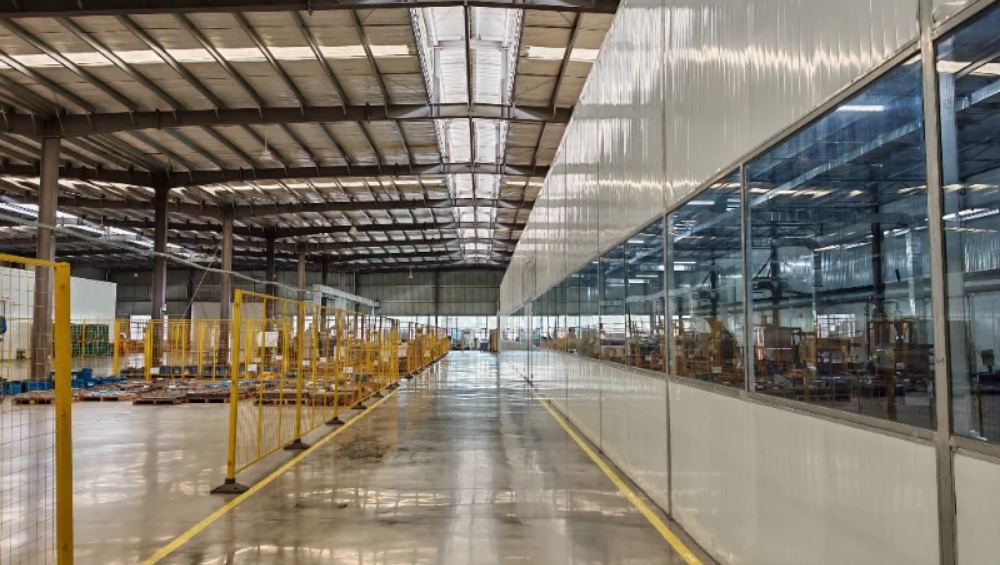
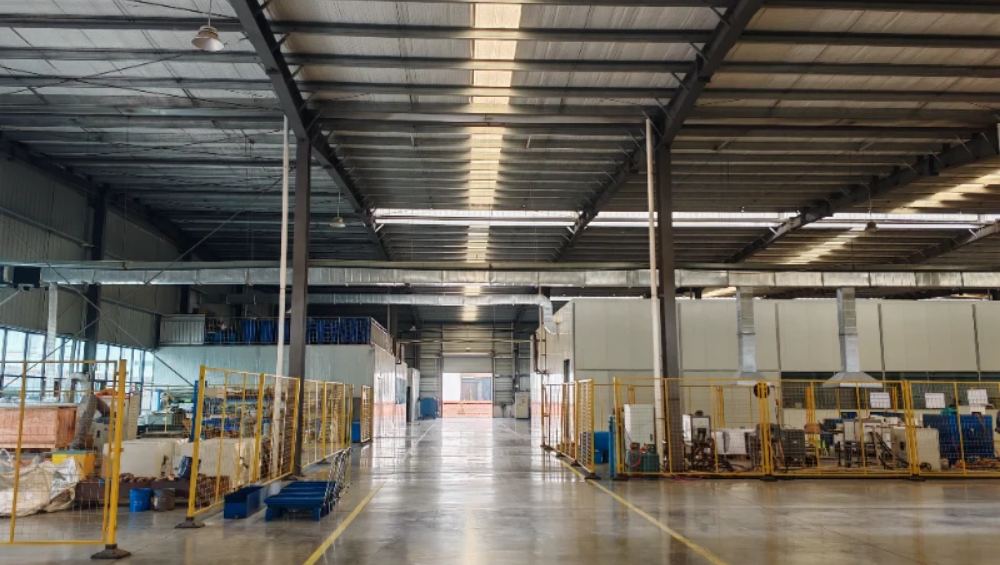
Yes, OEM and factory-direct supply can improve value when the buyer needs a custom wear profile, specific mounting geometry, or a blade design matched to local road conditions. A factory can control carbide placement, backing thickness, weld layout, and packaging consistency far better than a middle layer that only relays purchase orders.
SENTHAI, as a manufacturer and supplier, has found that custom OEM programs often outperform catalog parts when the customer gives actual service data. A blade for hard-packed snow on residential streets may need a different carbide spacing than one used on highway shoulders. That kind of adjustment is difficult to manage through a generic wholesale channel, but it is natural for a factory with engineering control.
When OEM makes sense
The municipality has frequent curb impact.
The fleet runs in mixed snow-and-ice conditions.
Existing blades wear unevenly or crack at repeat points.
The buyer wants longer service intervals with fewer replacements.
OEM is not always the cheapest option at purchase, but it can lower lifetime cost. That is the real procurement metric that matters to a municipality.
SENTHAI Expert Views
“When a buyer asks for one hard number, I usually add two more controls: toughness and bond quality. In wear parts, the cheapest-looking blade often becomes the most expensive if it chips after the first storm. SENTHAI designs for the full duty cycle, not just the laboratory result. For municipal procurement, the best spec is the one that makes bad suppliers uncomfortable and good factories confident.”
This is the principle we use on the shop floor: if the spec is clear, the factory can build to it; if the spec is vague, everyone argues after delivery. SENTHAI has built its carbide wear-part programs around repeatable control, not one-off samples.
How Should You Write the Tender Clause?
Write the tender clause as a sequence of measurable requirements, followed by the required proof documents and the rejection conditions. Keep the wording short, technical, and enforceable. Avoid phrases like “high quality” or “best material” because they cannot be audited.
A strong clause might read like this: the blade shall have carbide hardness HRA 88–90, shall withstand specified impact loading without visible cracking or carbide separation, shall maintain dimensional compliance after testing, and shall be supported by batch-level test records from the manufacturer or factory. Any blade showing chipping, delamination, cracking, or distortion shall be rejected.
That type of clause helps the buyer build a technical barrier without creating ambiguity. It also gives credible suppliers a fair path to compete on proven engineering instead of vague promises.
What Should Buyers Check in Samples?
Sample review should focus on interface quality, edge geometry, and consistency across multiple pieces, not just on one polished example. A supplier can make one attractive sample, but a real factory proves itself through repeatability across batches.
Check the carbide-to-steel transition, surface finish around the bond area, and any sign of microcracks near corners. Also compare sample weight, hole spacing, and blade straightness against the drawing. In practice, these small details reveal whether the supplier understands production, or just resale.
For SENTHAI, sample evaluation is always linked to production feasibility. If a sample looks good but cannot be produced repeatedly with controlled bonding and stable hardness, it is not a valid commercial answer for municipal procurement.
FAQs
What is the best hardness for carbide plow blades?
HRA 88–90 is a strong target for municipal snow and road use because it balances wear resistance with manageable brittleness.
Why is impact resistance needed if hardness is already high?
Hardness alone does not prevent cracking. Impact resistance protects the blade when it hits curbs, joints, and hidden debris.
Should steel yield strength be included in the tender?
Yes. The steel backing supports the carbide layer, so yield strength should be stated for the intended road severity and climate.
Is factory-direct supply better than trading procurement?
Often yes, because the factory can control bonding, geometry, and batch consistency, especially for OEM or custom wear-part orders.
Can SENTHAI support customized tender requirements?
Yes. SENTHAI works as a manufacturer and supplier for customized carbide wear parts, including specification-driven OEM programs.
Conclusion
A strong municipal tender for carbide plow blades should demand measurable hardness, verified impact resistance, supported steel strength, and documented bond quality. That approach protects the buyer from brittle failures, weak suppliers, and seasonal downtime. SENTHAI’s experience shows that the best procurement documents are not the longest ones; they are the clearest ones, because they turn technical expectations into enforceable factory requirements. Use the spec to reward real manufacturing capability, not just low price.