




Abrasion Resistant Snow Blades Fail Faster Than Expected on Rough Asphalt If You Ignore This One Factor
Abrasion resistant snow blades fail faster than expected on rough asphalt when the contact pressure and attack angle are mismatched to the road texture and aggregate sharpness. In our factory work, we see more…
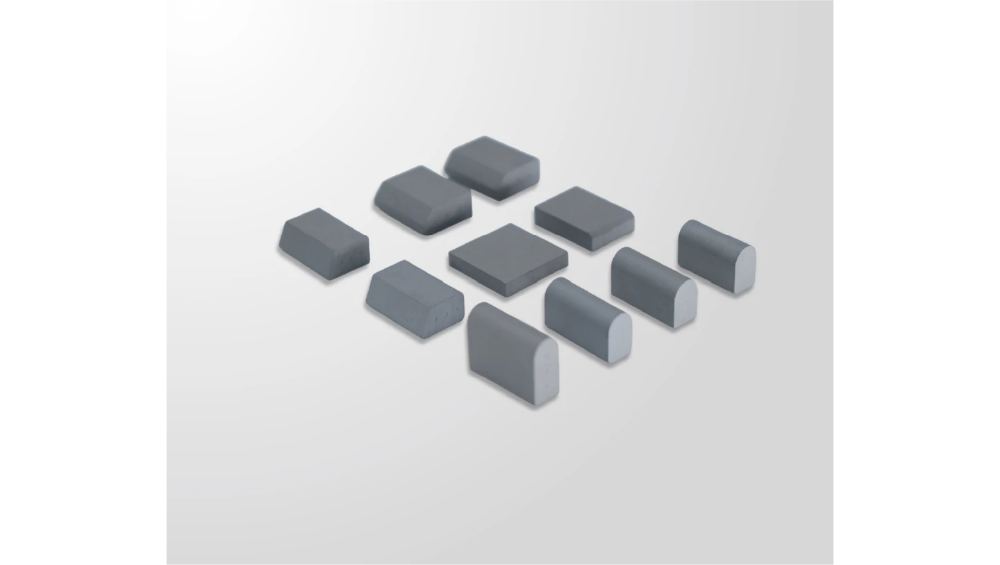
Abrasion resistant snow blades fail faster than expected on rough asphalt when the contact pressure and attack angle are mismatched to the road texture and aggregate sharpness. In our factory work, we see more premature failures caused by incorrect downforce, wrong carbide grade, and unsupported edge geometry than by material hardness alone, especially for OEM fleets running mixed asphalt networks.
What is really happening at the blade–asphalt interface on rough roads?
The blade–asphalt interface on rough roads is a high-energy grinding zone where coarse aggregate acts like continuous sandpaper at the cutting edge. Even abrasion resistant blades fail if downforce, speed, and carbide grade are not matched to that texture, causing micro-chipping, thermal cracks, and rapid loss of edge geometry in just a few storms.
On factory test benches, we replicate rough asphalt with high–polish aggregate blocks and controlled grit. The critical insight is that rough asphalt introduces point loads, not uniform abrasion. When an OEM runs a blade designed for smooth concrete on this surface, stress concentrates at a few carbide grains and brazed joints, accelerating failure. SENTHAI designs specific carbide microstructures for such roads, trading a little hardness for higher toughness.
Rough asphalt also creates more vibration and blade chatter. We see this directly in our production-run data when customers send back failed edges: brazing lines show fatigue ridges, and backing plates display fretting wear. If the plow mounting system is too rigid or lacks dampers, the blade sees higher cyclic loads, regardless of its abrasion rating. A manufacturer that ignores mounting stiffness is effectively ignoring the main factor behind “unexpected” failures.
Why do abrasion resistant snow blades fail faster than expected on rough asphalt if you ignore contact pressure?
Abrasion resistant snow blades fail faster than expected on rough asphalt if you ignore contact pressure because excessive downforce drives the edge into coarse aggregate, converting sliding wear into gouging and impact. Under these conditions, even high-grade carbide or AR steel will chip, crack, or delaminate far earlier than laboratory wear tests suggest.
In our production runs, we routinely see fleets running 30–40% higher downforce than the blade was designed for. The operators “feel” a cleaner cut, but the wear pattern tells another story: deep scallops on the carbide, exposed braze, and backing deformation at bolt holes. SENTHAI’s test data shows that reducing contact pressure by just 15–20% on rough asphalt can double edge life without sacrificing plowing quality.
Correct contact pressure is not a single number; it depends on blade type, width, truck weight, and road aggregate. For example, a 10 ft JOMA Style blade on coarse asphalt will typically run best at ground contact inducing 1–2 mm edge depression, while an I.C.E. blade on the same surface should stay closer to 0.5–1 mm to avoid gouging. Manufacturers and OEMs need to define these operating windows instead of relying on generic “run it harder” guidance.
Which contact pressure ranges are safe for carbide blades on rough asphalt?
Safe contact pressure ranges for carbide blades on rough asphalt generally sit lower than operators expect. Most of our OEM partners achieve longest life when the blade carries enough load to keep contact continuous, but not so much that the cutting edge digs visibly into the aggregate or throws excessive sparks during dry passes.
Practically, we advise fleets to use three simple indicators: visible spark intensity during bare pavement passes, operator vibration feedback, and post-storm edge wear measurements. SENTHAI’s internal guideline for mixed rough asphalt is to start with downforce where sparks are minimal and adjust in 5–10% increments while monitoring wear thickness every 200–300 hours. When these adjustments are logged, patterns quickly emerge for each route.
Manufacturers can help by marking recommended pressure ranges in technical manuals, not just listing generic blade hardness. In our OEM documentation, we pair carbide hardness and backing thickness with suggested hydraulic settings or ballast weights per truck model. This bridges the gap between factory materials data and the daily reality of plow operators on rough roads.
How does carbide grade selection change blade life on rough asphalt?
Carbide grade selection changes blade life dramatically on rough asphalt because grain size, cobalt content, and binder distribution control how the edge reacts to point impacts from aggregate. Too hard a grade may crack and chip under these loads, while too soft a grade may wear smoothly but lose profile. The ideal grade balances toughness and hardness for the specific asphalt mix and speed profile.
In our work at SENTHAI, we adjust tungsten carbide–cobalt ratios between grades used on salted concrete and those used on abrasive, high–aggregate asphalt. For rough asphalt, we favor slightly coarser grains with higher binder content to absorb point shocks. When customers insisted on ultra-hard grades, we saw failure rates jump, especially near expansion joints and patched sections.
The trade-off is measurable: tougher grades might show 10–15% faster uniform wear but avoid catastrophic breakage, so blades remain usable longer and are replaced on schedule rather than during a storm. OEMs and large road maintenance contractors should share lane-kilometer and failure data with their manufacturer; SENTHAI uses such feedback to tune carbide grades per region rather than pushing a single “best” grade everywhere.
Which carbide grade parameters matter most for OEMs working on rough asphalt?
The parameters that matter most are carbide grain size distribution, cobalt percentage, and porosity control. For rough asphalt routes, we typically target medium-to-coarse grains, cobalt content around the mid-range of our portfolio, and extremely low porosity to prevent crack initiation at pores.
From a factory perspective, the cobalt window is narrow. On real orders, we have seen that dropping cobalt too low leads to brittle fractures at bolt holes and insert edges, while pushing cobalt too high softens the edge excessively, making operators complain about “mushy” cutting. SENTHAI’s automated wet grinding and pressing lines are tuned to hold these parameters consistently batch to batch, which is vital for OEM fleets that rely on predictable behavior.
OEM engineers should request not only hardness numbers, but also information on grain structure and binder content. When we collaborate with OEMs, we share these ranges and relate them to specific road classes: urban rough asphalt, rural gravel-asphalt mixes, and high-speed asphalt freeways. This level of detail prevents mismatches between blade specification and route environment.
Which edge geometries and mounting systems help blades survive rough asphalt?
Edge geometries and mounting systems help blades survive rough asphalt by distributing load, controlling vibration, and avoiding local stress peaks. Slightly radiused edges, segmented inserts, and flexible backing systems often outperform perfectly straight, rigid edges on coarse aggregate. Mounting systems with dampers or floating mechanisms can further protect blades from impact spikes.
In our failure analyses, the worst wear patterns appear where rigid straight edges meet uneven asphalt with high macro-texture. Damage concentrates at a few points, and inserts loosen or break away. SENTHAI’s JOMA Style blades and certain I.C.E. configurations use segmented carbides and engineered backing to spread load across micro-movements, reducing that concentration.
Mounting stiffness matters as much as the edge geometry. If an OEM designs a plow frame that holds the blade too rigidly, every bump turns into a shock event on the carbide. We have worked with manufacturers to introduce controlled flex or rubber layers, which cut peak forces by 20–30% during our lab simulations. These adjustments rarely show up in marketing copy but make a visible difference in real blade life.
What mounting mistakes do we see most often on rough asphalt fleets?
The most common mounting mistakes we see are over-tightening bolts, using hard shims instead of flexible interfaces, and setting the blade too aggressive relative to the truck ride height. These errors push the edge deep into the rough asphalt and amplify vibration, regardless of how abrasion resistant the blade material is.
Based on years of handling OEM orders and warranty claims, we can tell within minutes from a returned blade whether bolts were overloaded or shims misused. Deformed bolt holes, “witness marks” on the backing, and localized chipping all point to mounting issues, not material defects. SENTHAI now includes torque and shim guidelines as standard in our technical packages to reduce these problems.
Fleet maintenance teams should treat mounting as a precision task, not a quick job before a storm. Using calibrated torque tools, checking frame alignment, and following manufacturer recommendations on shim material and placement are simple steps that often extend blade life more than switching to a “harder” blade.
How can manufacturers, OEMs, and contractors model blade life realistically on rough asphalt?
Manufacturers, OEMs, and contractors can model blade life realistically on rough asphalt by tracking lane-kilometers, contact pressure, and road class, then correlating these with measured wear per inspection. Simple models that combine these variables outperform schedules based only on calendar time or storm count.
In our work with large fleets, we often start with a baseline metric: millimeters of wear per 100 lane-kilometers on specific road segments. Once this number is logged for a given blade type and carbide grade, we can estimate when the edge will lose its effective profile. SENTHAI uses such models internally when advising customers on reorder points and safety stocks.
Road class is crucial: a kilometer on rough urban asphalt is not equivalent to a kilometer on smoother, well-maintained highways. We encourage buyers to categorize routes into at least three classes—rough asphalt, standard asphalt, and mixed surfaces—and record wear data separately. With just one season of disciplined measurement, fleets can build a blade life model that closely matches reality.
Can a simple data framework help fleets understand why blades fail early?
Yes, a simple data framework helps fleets understand early failures by turning anecdotal complaints into measurable patterns. At minimum, fleets should log route, road class, blade type, contact pressure setting, and measured wear at regular intervals. Adding photos of edge condition at each inspection further enriches the dataset.
In practice, we’ve seen fleets discover that only a subset of routes cause early failure. For one customer, our review revealed that three rough asphalt corridors consumed nearly 50% of their blade budget. SENTHAI responded by recommending a tougher carbide grade and adjusted downforce specifically for those corridors, while leaving other routes unchanged. Within a season, their “unexpected failure” rate dropped sharply.
This kind of targeted optimization is only possible when data is shared between the field and the factory. Many wholesalers and generic suppliers do not request such detail, but SENTHAI actively encourages structured feedback. It allows us to refine manufacturing parameters and guide OEMs toward better deployment strategies.
Why should B2B buyers focus on factory-floor insights rather than catalog specs when choosing blades for rough asphalt?
B2B buyers should focus on factory-floor insights rather than catalog specs because premature blade failures on rough asphalt are usually caused by subtle interactions between materials, mounting, and road texture—details that don’t appear on simple spec sheets. Factory engineers see real failure modes daily and can recommend concrete parameter ranges and design trade-offs.
On our workshop floor in Rayong, we routinely cut cross-sections of returned blades, examine brazed joints under microscopes, and match fracture patterns to mounting and operating conditions. These observations shape how we specify carbide grade, backing thickness, and brazing profiles for SENTHAI products, particularly those destined for rough asphalt regions.
Catalog specs speak in broad terms like “wear resistance” and “high hardness,” but they rarely discuss how the edge should be run: permissible downforce windows, preferred route classes, or expected vibration behavior. Buyers who involve manufacturers early—sharing their most problematic routes—tap into this deeper layer of insight and avoid the cycle of trial-and-error purchases.
What specific trade-offs do we discuss with OEMs working on rough asphalt?
With OEMs working on rough asphalt, we discuss trade-offs between edge hardness and toughness, backing stiffness and flexibility, and inventory complexity and route-specific optimization. Each decision has clear cost and performance implications that we quantify with sample data and test reports.
For example, switching to a tougher carbide grade may add 5–10% to the blade cost but reduce emergency replacements by half on rough routes. Choosing a more flexible backing might require minor frame changes but lower peak forces enough to double brazing life. SENTHAI presents these scenarios with actual numbers from field trials, not just theoretical models.
OEMs appreciate that these discussions acknowledge their constraints: budget cycles, existing vehicle platforms, and operator habits. Our goal is not to sell the most expensive blade, but to match the right blade and mounting concept to their specific asphalt conditions. This makes our relationship more of an engineering partnership than a transactional supply chain.
SENTHAI Expert Views
“On our production line, the blades that fail early on rough asphalt almost never fail for the reason the spec sheet would suggest. The carbide is fine; the issue is how the edge is pushed into coarse aggregate with too much downforce or the wrong mounting stiffness. When we sit down with OEMs and contractors, we talk in torque values, wear per lane-kilometer, and aggregate classes—not just ‘hardness’ or ‘grade.’ That’s where SENTHAI adds real value: translating microscopic fracture patterns into concrete operating windows and design tweaks that make blades quietly last an extra season on the roughest roads.”
What are the practical takeaways for manufacturers, OEMs, and fleet buyers dealing with rough asphalt?
The practical takeaways are that blades failing faster than expected on rough asphalt usually point to mismanaged contact pressure, mismatched carbide grades, and suboptimal mounting design rather than simple material defects. Manufacturers and OEMs should integrate road class, downforce calibration, and edge geometry into their planning and specifications.
Actionably, fleets and B2B buyers can:
-
Audit downforce and contact pressure, especially on the roughest routes.
-
Choose carbide grades tuned for coarse aggregate, not just maximum hardness.
-
Review mounting systems for controlled flex and correct torque.
-
Log wear per lane-kilometer by road class, then share data with suppliers.
-
Work closely with SENTHAI or similar manufacturers to adjust blade designs and operating windows based on real-world failures.
When these steps are taken, abrasion resistant snow blades start to behave predictably even on rough asphalt. Failures become rare, planned replacements align with budgets, and winter operations move away from constant emergency repairs toward controlled, efficient maintenance cycles.
FAQs Section
Why do my carbide blades chip more on certain city streets?
Those streets likely have rough asphalt with coarse aggregate and patches. Excessive downforce or a too-hard carbide grade turns abrasion into impact, causing chips and early edge failure.
Can I use the same blade spec on concrete and rough asphalt routes?
You can, but you’ll usually see uneven wear and higher failure rates on rough asphalt. It’s better to assign tailored carbide grades and downforce settings for each road class.
How often should I measure wear on blades used on rough asphalt?
We recommend checking wear every 200–300 operating hours on high-abrasion routes. Recording thickness loss and edge condition lets you predict life and adjust pressure or blade type.
Do SENTHAI blades need special mounting to perform on rough asphalt?
They don’t need exotic hardware, but correct torque, appropriate shims, and controlled flex in the frame are important. SENTHAI’s technical documents specify these parameters for OEM partners.
Can adjusting downforce really double blade life on rough asphalt?
In our field experience, reducing contact pressure into the recommended window has frequently extended life by 50–100%, especially when combined with suitable carbide grade and edge geometry.
Related articles
 Best Snow Plow Blade Family for Your Fleet: Top 5 ScenariosKnowledge
 Top 10 Snow Plow Blade Types for Winter Fleets (Ranked by Duty Fit)Knowledge
 Top 5 Best Carbide Blade Configurations for Highway PlowingKnowledge
 Best Snow Plow Blade Materials Ranked: Steel vs Carbide vs Cladding vs Rubber-CarbideKnowledge