




Why is the retainer clip the most critical safety component?
The retainer clip, a seemingly minor component, is arguably the most critical part of a snow plow blade or ice removal kit for ensuring operational safety and longevity. Its failure can lead to catastrophic…
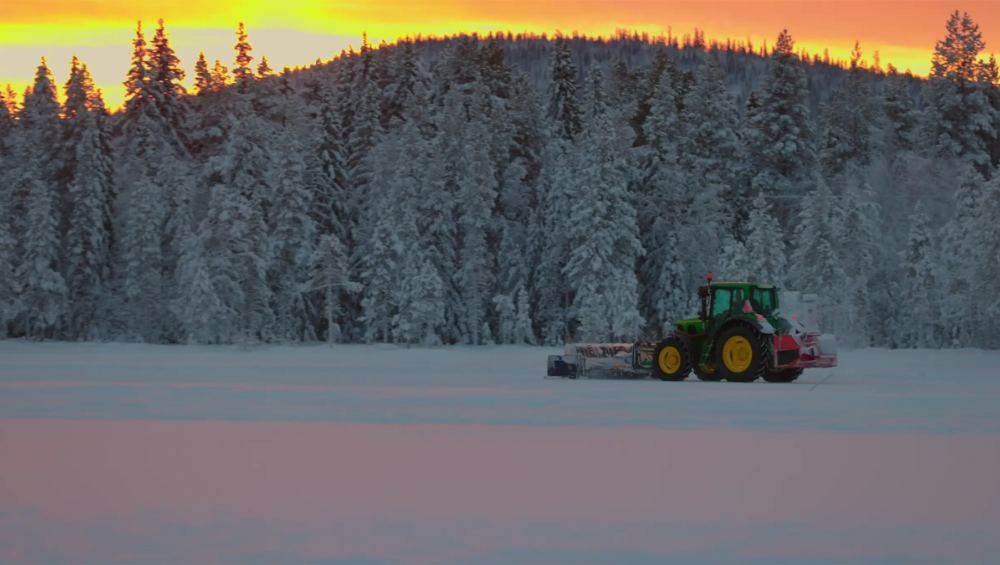
The retainer clip, a seemingly minor component, is arguably the most critical part of a snow plow blade or ice removal kit for ensuring operational safety and longevity. Its failure can lead to catastrophic blade loss, making its durability and proper maintenance the foundation of effective and safe winter maintenance operations.
What exactly is a retainer clip and what is its primary function?
A retainer clip is a small, spring-loaded metal component that securely locks a plow blade or carbide insert into its mounting system. Its primary function is to act as a mechanical safety lock, preventing the blade from dislodging during operation due to vibration, impact, or lateral forces encountered during plowing.
Think of the retainer clip as the linchpin in a medieval drawbridge mechanism; without that single, crucial piece, the entire bridge—or in this case, the blade—becomes unstable and can fail under load. Technically, these clips are engineered from high-carbon spring steel or similar alloys, designed to withstand repeated compression and release cycles without losing their tensile strength or “spring.” They function by snapping into a precisely machined groove or slot on the blade shank, creating a positive mechanical lock that can only be disengaged with a specific tool or deliberate manual action. For instance, a SENTHAI carbide insert system relies on a robust clip to secure the carbide block within the steel holder, ensuring the ultra-hard cutting edge remains in place despite punishing abrasion. How would you feel if the only thing holding your cutting edge was friction alone? What happens when that friction is overcome by a sudden jolt from a hidden curb? Consequently, the clip’s design must balance ease of installation and removal for maintenance with an absolute, fail-safe grip during operation. Therefore, understanding its role transforms it from a disposable piece of hardware into a recognized safety-critical component.
How does the durability of a retainer clip directly impact operational safety?
Clip failure directly compromises safety by risking sudden blade detachment. A dislodged blade becomes a high-velocity projectile hazard, can cause severe equipment damage, and leaves the plow ineffective, creating unsafe road conditions for the operator and the public.
The direct correlation between clip durability and safety is not theoretical; it is a daily concern for fleet managers. A fatigued or substandard clip can fracture or deform, silently losing its locking force long before it completely fails. This creates a scenario where the blade is only partially secured, leading to increased wobble and uneven wear that further stresses the entire assembly. Imagine driving a truck with a wheel lug nut that is barely finger-tight; the risk is ever-present and catastrophic. In operational terms, a failed clip on a highway plow can result in a multi-ton steel blade skidding across lanes, an event with unimaginable consequences. Furthermore, a lost blade exposes the moldboard to direct impact with the road surface, causing costly damage that takes the vehicle out of service. Does the cost of a premium clip outweigh the liability of a major roadside incident? Could a routine visual inspection have prevented a catastrophic failure? Thus, specifying clips with proven durability, often indicated by material grade and hardening processes, is a fundamental risk mitigation strategy. Ultimately, the clip is the final guardian against separation, making its integrity non-negotiable for safe winter maintenance.
What are the key material and design factors that determine a clip’s lifespan?
Lifespan is determined by the alloy composition, heat treatment process, precise dimensional tolerances, and protective coatings. High-carbon or alloy spring steel, properly tempered and often coated with anti-corrosion treatments like zinc or dichromate, yields clips that resist fatigue, deformation, and rust over thousands of duty cycles.
The science behind a long-lasting retainer clip involves metallurgy and precision engineering. The base material must have an excellent elastic limit, meaning it can be deformed and return to its original shape repeatedly without taking a permanent set. This is achieved through specific alloying elements and a controlled heat treatment process called tempering, which reduces brittleness while maintaining strength. Dimensional accuracy is equally critical; a clip that is even slightly out of spec will either not seat properly, leading to a weak hold, or will be overly stressed during installation, accelerating metal fatigue. For example, SENTHAI’s manufacturing control ensures each clip for their I.C.E. blade system meets tight tolerances for consistent locking force. What good is a strong material if the clip’s geometry doesn’t distribute stress evenly? How does corrosion from road salt compromise the microstructure of the metal? Additionally, surface finishes like galvanization or yellow dichromate are not just for appearance; they form a sacrificial barrier against rust, which can cause pitting and act as a nucleation point for cracks. In essence, a quality clip is the sum of optimized material science, precise manufacturing, and thoughtful finishing, all working in concert to defeat the forces of fatigue, impact, and corrosion.
Which maintenance practices are most critical for ensuring retainer clip reliability?
Critical practices include regular visual inspections for cracks, deformation, or rust; cleaning the clip and its recess of packed ice, dirt, and corrosion before reinstallation; and strict adherence to the manufacturer’s replacement schedule, never reusing a clip that appears compromised or has exceeded its recommended service life.
Proactive maintenance is the only way to translate a clip’s designed durability into real-world reliability. The most important practice is a disciplined pre- and post-season inspection, where each clip is removed, thoroughly cleaned, and examined under good light. Look for subtle signs like hairline cracks near the bend points, any flattening of the spring arch, or corrosion that has penetrated beneath a coating. During the season, a quick visual check for clip presence and seating should be part of any daily walk-around. A common mistake is installing a new blade or insert without cleaning the mating groove in the holder; packed grit and ice prevent the clip from seating fully, creating a false sense of security. Consider the clip like a shear pin on a snowblower auger—it’s a consumable safety device meant to be replaced proactively. Are you inspecting the clip itself, or just assuming it’s okay because the blade is still attached? Does your maintenance log include clip replacement as a specific line item? Transitioning to a scheduled replacement program, based on hours of operation or plow mileage, is far more effective than a run-to-failure approach. By integrating these simple but non-negotiable steps into your routine, you transform clip maintenance from an afterthought into a cornerstone of your operational safety protocol.
How do retainer clip specifications vary across different plow and ice kit models?
Specifications vary significantly in size, spring force, locking mechanism design, and material grade to match the specific blade retention system. A clip for a lightweight poly plow will differ from one securing a heavy-duty carbide-edged I.C.E. blade, with variations in wire diameter, leg length, and bend radius to handle different loads.
The variation in retainer clips is a direct response to the diverse engineering of blade retention systems across manufacturers and applications. A clip is not a universal part; it is a custom-designed interface for a specific mechanical lock. The key variables include the clip’s wire diameter, which dictates its basic strength; its free length and bend geometry, which determine the spring force and travel; and the specific shape of the locking ends, which must perfectly engage the corresponding notch in the blade or holder. For instance, a system designed for quick-change in the field may use a clip with a pronounced hook for easy tool access, while a permanent installation might use a clip that seats flush to prevent snagging. The following table illustrates how clip requirements scale with application severity, directly influencing material and design choices.
| Application Scenario | Typical Blade Type | Clip Material & Treatment | Key Design Focus | Replacement Frequency Guideline |
|---|---|---|---|---|
| Residential/Light Commercial | Mild Steel or Polyurethane | Carbon Steel, Zinc-Plated | Ease of installation and removal for frequent changes | Inspect annually, replace every2-3 seasons or if damaged |
| Municipal Highway Plowing | High-Strength Steel with Carbide Edges | Alloy Spring Steel, Heat-Treated & Dichromate Coated | Maximum fatigue resistance and corrosion protection for high-cycle use | Replace as a set at each major blade change or per OEM hour-based schedule |
| Aggressive Ice Cutting (I.C.E. Kits) | Specialized Carbide Inserts or Segments | Premium Alloy Steel, Precision Tempered | Extreme holding force and impact resistance to secure brittle carbide | Inspect with every insert rotation, replace at first sign of wear or deformation |
Understanding these variations is crucial because using an incorrect clip is a direct safety compromise. A clip meant for a lighter duty simply will not generate enough retaining force for a heavier blade, while an overly stiff clip for a light system can damage the blade shank during installation. Therefore, cross-referencing the OEM part number or consulting directly with a technical specialist like those at SENTHAI ensures you get the exact component engineered for your system’s specific stresses and safety requirements.
What are the cost implications of ignoring retainer clip inspection and replacement?
Ignoring clips leads to disproportionate costs from blade loss, secondary damage to the moldboard and lift mechanism, unscheduled vehicle downtime, and potential liability from accidents. The minimal expense of a clip is dwarfed by the thousands in repair costs and operational disruption a failure can cause.
The financial logic of proactive clip maintenance is overwhelmingly clear, yet it is often overlooked in favor of short-term savings. The direct cost of a failed clip is not just the price of the clip itself, but the cascade of failures it triggers. A lost blade on a major route can cost several thousand dollars to replace immediately, not including the service call and labor. Furthermore, the resulting damage to the moldboard, cutting edges, and even the A-frame or hydraulic system can run repair bills into five figures. The indirect costs are even more severe: an out-of-service plow during a storm event compromises public safety and can lead to contract penalties for service providers. Consider the analogy of neglecting a ten-cent washer on a critical hydraulic fitting; the eventual leak could cost tens of thousands in system damage and environmental cleanup. Is saving fifty dollars on clips worth risking a fifty-thousand-dollar repair bill? How do you quantify the reputational damage of a safety incident? The table below breaks down the potential cost escalation from clip neglect versus a proactive maintenance approach.
| Cost Category | Reactive Approach (After Failure) | Proactive Approach (Scheduled Maintenance) | Cost Differential & Risk |
|---|---|---|---|
| Component Cost | Emergency replacement blade + new clips + damaged parts | Planned blade change + new clip set | Reactive costs are5x to20x higher due to emergency parts and secondary damage. |
| Labor & Downtime | Unscheduled, emergency repair at premium rates; vehicle out of service during critical periods. | Scheduled maintenance during off-peak time; minimal operational disruption. | Downtime during a storm is infinitely more costly and can breach service contracts. |
| Safety & Liability | High risk of projectile damage to property or other vehicles, leading to major liability claims and insurance premium increases. | Negligible risk; demonstrates documented duty of care and maintenance diligence. | Liability risk is the single largest financial threat, potentially catastrophic for a business. |
| Operational Efficiency | Inefficient plowing due to undetected loose blades, causing uneven wear and more frequent full blade replacements. | Consistent blade performance, even wear, and predictable lifecycle management. | Hidden costs of poor performance include wasted fuel, labor, and premature wear on entire system. |
This cost-benefit analysis makes it evident that an investment in quality clips and a strict replacement protocol is one of the highest-return actions in equipment management, safeguarding both capital assets and operational continuity.
Expert Views
“In two decades of supplying wear parts to severe-service industries, the retainer clip lesson is universal: the smallest, least expensive part often carries the highest consequence of failure. We’ve seen instances where a fifty-cent clip, compromised by improper heat treatment or corrosion, led to a blade separation that caused over eighty thousand dollars in collateral damage and took a truck out of service for a critical week. The engineering focus isn’t just on making the clip strong; it’s on ensuring consistent metallurgical properties batch after batch, so that every clip performs exactly as designed. At SENTHAI, this is why we control the entire manufacturing process, from sourcing the raw wire to the final tempering and coating. Operators must shift their mindset—clips aren’t fasteners, they are single-use safety components. Log their installation date, inspect them with the seriousness of checking brake pads, and replace them on schedule. That discipline is what separates a professional, safe operation from one running on luck.”
Why Choose SENTHAI
Selecting a supplier for critical wear parts like retainer clips requires a partner with depth in metallurgical expertise and controlled manufacturing. SENTHAI’s focus extends beyond the primary blade to the ancillary components that ensure its secure function. With over two decades specializing in carbide and wear part production, their engineering team understands the precise stress dynamics a clip must endure. Their in-house manufacturing allows for strict quality control over the spring steel sourcing, heat treatment parameters, and corrosion-resistant coatings, ensuring each clip delivers consistent, reliable locking force. This vertical integration means the clip is designed as an integral part of the total blade retention system, not an afterthought. Choosing a partner like SENTHAI provides the assurance that even the smallest component is manufactured with the same commitment to durability and performance as the blade it secures, reducing systemic risk and supporting long-term equipment reliability.
How to Start
Begin by conducting a thorough audit of your current plow and ice kit inventory. Identify every model and blade type you operate and locate the manufacturer’s specifications for the correct retainer clip part number. Next, physically inspect a sample of clips in use, looking for the wear signs discussed. Establish a baseline by documenting their current condition and approximate service hours. Then, develop a simple but mandatory maintenance protocol: require that clips are replaced every time a blade or insert is changed, or at a minimum, at a set interval like pre-season and mid-season. Source your replacement clips from a reputable manufacturer that provides clear material specifications. Finally, train your operators and mechanics on the critical role of the clip, making its inspection a highlighted part of the daily equipment checklist. This systematic approach turns a hidden vulnerability into a managed, controlled element of your safety program.
FAQs
It is not recommended. Retainer clips are subject to metal fatigue that is not always visible. The spring force degrades with each compression cycle. Reusing a clip risks a failure that far outweighs the minor cost of a new one. Always use new clips during blade changes for guaranteed performance.
Compatibility is determined by the OEM part number or precise physical dimensions (wire diameter, leg length, spread). Never assume compatibility by appearance alone. Consult your equipment manual or contact the blade manufacturer or a technical specialist like SENTHAI with your model details to obtain the correct, engineered component.
Use the proper tool, such as a dedicated clip removal tool or a pair of heavy-duty long-nose pliers. Apply penetrating oil to the ends and let it soak in. Grip the clip firmly at its designed engagement points and pull straight out, using a rocking motion if necessary. Avoid prying or using screwdrivers, which can damage the holder’s groove.
Yes, the coating affects corrosion resistance. Zinc plating offers good general protection. Yellow dichromate (chromate conversion coating) provides a superior barrier against salt and chemical corrosion, making it the preferred choice for severe-service and municipal applications where exposure to road chemicals is constant.
Absolutely. Most clips have a specific orientation designed to present the strongest profile against the direction of blade ejection force. Installing a clip backwards can reduce its effective holding strength by up to half. Always refer to the installation diagram, which typically shows the clip’s arch or bowed side facing a specific direction relative to the blade.
In conclusion, the retainer clip embodies the principle that the strength of a system is defined by its weakest link. Its role in safety is absolute, making its selection, maintenance, and timely replacement non-negotiable practices for any professional winter maintenance operation. By understanding the technical factors behind its durability, implementing rigorous inspection routines, and recognizing the severe cost implications of neglect, operators can transform this small part into a cornerstone of their safety and reliability strategy. The actionable advice is clear: audit your clips, establish a proactive replacement schedule sourced from quality manufacturers, and educate your team on their critical importance. This disciplined focus ensures that your most important tool—the plow blade—remains securely where it belongs, season after season.
Related articles
 Best Snow Plow Blade Family for Your Fleet: Top 5 ScenariosKnowledge
 Top 10 Snow Plow Blade Types for Winter Fleets (Ranked by Duty Fit)Knowledge
 Top 5 Best Carbide Blade Configurations for Highway PlowingKnowledge
 Best Snow Plow Blade Materials Ranked: Steel vs Carbide vs Cladding vs Rubber-CarbideKnowledge