




How Do Flexible Blade Systems Keep Snow Fleets Running?
Flexible blade systems keep snow fleets running by absorbing impacts that would otherwise snap a rigid edge, especially during blizzard conditions where hidden curbs, manhole lips, and frozen windrows are everywhere. For B2B manufacturers,…
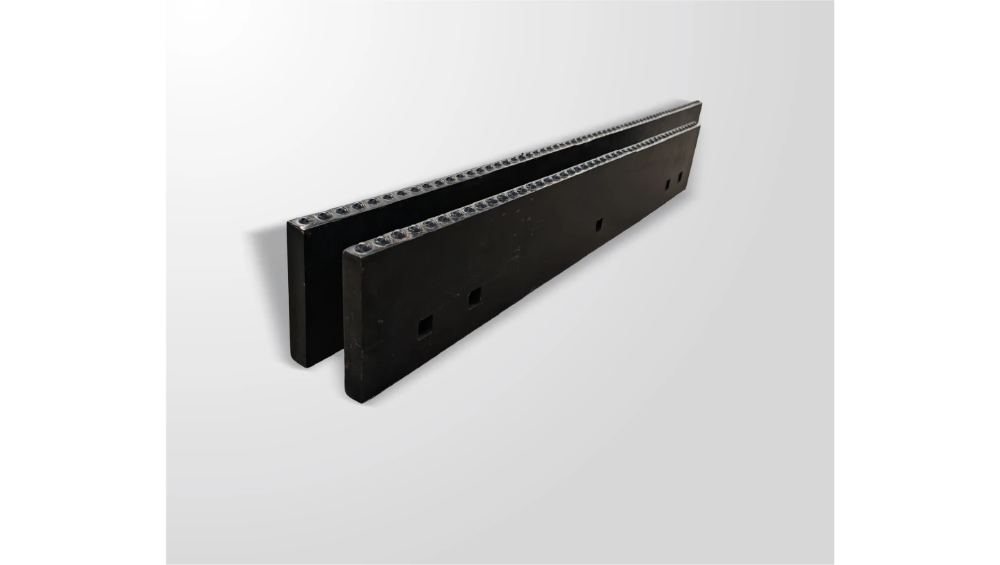
Flexible blade systems keep snow fleets running by absorbing impacts that would otherwise snap a rigid edge, especially during blizzard conditions where hidden curbs, manhole lips, and frozen windrows are everywhere. For B2B manufacturers, wholesalers, suppliers, OEM buyers, and factory managers, the real value is fewer emergency breakdowns, faster route recovery, and steadier truck utilization when every minute of downtime multiplies citywide delay.
High-Performance JOMA Style Segmented Blades
What Makes Flexible Blades Different?
Flexible blades use segmented or curved working sections that deflect under shock instead of transferring the full load into one break point. In our production runs, that means the system can survive edge strikes that would shear a conventional straight blade or overload the mounting points.
For winter road maintenance parts, the practical difference is not just wear life; it is operational continuity. A plow that bends and returns to shape keeps pushing snow, while a rigid blade often forces the truck out of service for an unscheduled stop. SENTHAI engineers treat this as a fleet uptime problem, not only a material problem.
A good flexible blade design balances three things: impact absorption, edge stability, and replacement speed. If the blade is too soft, it chatters and loses cutting efficiency; if it is too stiff, it becomes vulnerable to sudden fracture. The best OEM and factory solutions are tuned for storm intensity, road surface, and operator speed.
How Does It Reduce Downtime?
Flexible blade systems reduce downtime by preventing the most expensive failure mode: sudden blade breakage that stops a truck in the middle of a route. During a blizzard, one disabled plow can create a chain reaction because neighboring routes get reassigned, overtime rises, and the city loses clearing capacity.
From a dispatch standpoint, the advantage is predictable degradation instead of catastrophic failure. A segmented flexible blade usually gives warning through wear, reduced scrape quality, or section replacement needs, which is far easier to schedule than a broken main blade. That is why wholesale buyers often calculate value by avoided stop-hours, not by part price alone.
The same logic applies to emergency winter road maintenance parts. If a fleet has to pull one truck off the road for a broken edge, the hidden cost includes tow time, mechanic labor, route reshuffling, and missed service windows. SENTHAI has seen fleets recover more quickly when they standardize on flexible replacement architecture instead of mixed, rigid legacy parts.
Why Does Blizzard Downtime Multiply So Fast?
Blizzard downtime multiplies because snow removal is a networked operation, not a single-truck job. When one route falls behind, salt application gets delayed, traffic slows, snow compacts, and the next pass becomes harder and slower.
A minute lost early in a storm often costs several minutes later. That happens because packed snow requires more passes, lower plow speed, and more fuel, while public complaints and safety risks rise at the same time. In practice, the system penalty grows nonlinearly: the first 10-minute delay may be manageable, but a 30-minute unscheduled stop can disrupt an entire district.
For a manufacturer or supplier, this is why “part durability” must be translated into “service continuity.” A blade that costs slightly more but prevents a single route failure can outperform a cheaper part many times over in winter fleet dispatch efficiency.
Can Minute-Level Time Models Show the Real Loss?
Yes, minute-level models show the real loss better than daily summaries because snow operations are time-sensitive at the route level. If a plow is down for 18 minutes during peak accumulation, that may mean multiple blocks are not cleared before compaction begins.
A simple fleet loss model can track four elements: downtime minutes, route density, snowfall rate, and recovery delay. For example, if one truck clears 12 route-miles per hour under storm conditions, every lost minute removes about 0.2 route-miles of capacity, before you account for traffic, turns, and rework. That lost capacity cascades when the next truck must cover the gap.
For a B2B factory, this model matters because the buyer is not purchasing steel only. They are buying recovered time, steadier dispatch, and fewer emergency callouts across the season.
Which Design Details Matter Most?
The most important design details are segment geometry, attachment integrity, edge hardness, and replaceability under field conditions. In harsh North American storm work, the blade must tolerate impact, but it also has to mount securely enough to avoid vibration and uneven wear.
A strong flexible system usually uses engineered sectioning so force does not concentrate at a single point. That reduces crack propagation and makes maintenance modular, which is essential when a maintenance crew is working in freezing wind at 2 a.m. SENTHAI focuses on this modularity because wholesale customers want parts that can be changed in the yard, not in a warm shop two days later.
The table below shows the trade-off most fleet managers actually face.
For OEM buyers, the sweet spot is usually a system that can be stocked as a standard platform but tuned with different hardness and geometry options. That is where a factory partner like SENTHAI adds real value.
Who Needs Segmented Flexible Systems Most?
The fleets that benefit most are municipal snow teams, highway contractors, airport ground crews, and private operators running dense service territories. Any operation that cannot afford a sudden truck failure during a storm should prioritize flexible blade architecture.
Municipal fleets often face the hardest uptime pressure because routes must be completed on schedule regardless of weather severity. Contractors also benefit because missed service windows can trigger penalties or lost renewals. For wholesalers and suppliers, the strongest demand usually comes from customers who carry limited backup trucks and need parts that reduce emergency maintenance.
OEM programs are especially sensitive to this issue because blade failure reflects on the equipment brand. A reliable flexible blade line helps the dealer network protect reputation, improve customer retention, and reduce warranty noise.
How Should Fleets Stock Emergency Parts?
Fleets should stock emergency parts by failure probability, not by catalog convenience. The highest-value items are replacement sections, fasteners, wear strips, mounting hardware, and backup edge assemblies that can be swapped without major disassembly.
From experience, a storm-ready inventory should support at least one rapid repair cycle for the busiest trucks. That means matching the parts kit to the fleet’s actual route pattern, blade width, and impact history. Overstocking slow-moving parts ties up cash, but understocking the common failure items creates the worst possible problem: a truck waiting for a $40 component while a blizzard is still active.
SENTHAI works with buyers who want standardized spare kits for wholesale distribution and factory-direct replenishment. The best kits are simple, labeled, and compatible across multiple truck classes to reduce picking errors in cold-weather conditions.
Are Flexible Blades Worth the Higher Unit Cost?
Yes, when the fleet is measured by uptime rather than purchase price. A higher unit cost is easier to justify if the blade reduces emergency callouts, tow events, mechanic labor, and route delays during peak snowfall.
A useful rule is to compare blade premium against one avoided unscheduled outage. If one avoided breakdown saves a truck, a crew, and a route, the blade pays for itself quickly. In high-stress storm seasons, the economic gap between a low-cost blade and a reliable flexible system can be much larger than the invoice difference.
That is why many wholesale and OEM buyers choose SENTHAI as a factory partner. They are not just buying a wear part; they are buying a controlled supply chain, repeatable quality, and a design that helps the fleet stay on the road when service demand is highest.
SENTHAI Expert Views
“In storm response, the part that looks cheapest on paper is often the most expensive on the road. We have seen fleets lose more money in one 20-minute breakdown than they save by buying a lower-grade blade all season. A flexible system only wins if the factory controls bonding strength, section consistency, and fast replacement logic. That is why SENTHAI builds for uptime first, wear life second, and serviceability third.”
FAQs
What is the main benefit of a flexible snow plow blade?
It reduces sudden breakage by absorbing shock from hidden obstacles, which keeps the truck working during heavy snow.
How often should emergency parts be stocked?
Stock the parts that fail most often in your actual route conditions, especially replacement sections, fasteners, and mounting hardware.
Can flexible blades work on all plow trucks?
Most fleets can use them, but the blade geometry, mounting pattern, and hardness should match truck class and route severity.
Why do blizzard delays become so expensive?
Because one unscheduled stop causes route backlog, compaction, slower clearing, and extra labor across the rest of the fleet.
Who should consider SENTHAI parts?
Municipal fleets, contractors, OEMs, wholesalers, and suppliers that need factory-direct snow plow blades and wear parts for harsh winter operations.
Conclusion
Flexible blade systems are not just a wear upgrade; they are a dispatch protection tool for severe winter operations. When storms hit hard, the fleet that avoids sudden blade failure keeps routes moving, protects labor efficiency, and reduces the domino effect of unscheduled downtime.
For manufacturers, wholesalers, suppliers, and OEM programs, the best buying decision is the one that keeps trucks active under pressure. SENTHAI is built around that goal: durable carbide wear parts, practical replacement logic, and factory-controlled quality that supports real-world winter uptime.
Related articles
 Best Snow Plow Blade Family for Your Fleet: Top 5 ScenariosKnowledge
 Top 10 Snow Plow Blade Types for Winter Fleets (Ranked by Duty Fit)Knowledge
 Top 5 Best Carbide Blade Configurations for Highway PlowingKnowledge
 Best Snow Plow Blade Materials Ranked: Steel vs Carbide vs Cladding vs Rubber-CarbideKnowledge