


Building a Wear Parts Distributor Programme: From Terms to Support
A distributor that joins a wear parts distributor programme and finds the support stops at the price list has bought a discount, not a partnership. The differences that separate a programme worth carrying from…

A distributor that joins a wear parts distributor programme and finds the support stops at the price list has bought a discount, not a partnership. The differences that separate a programme worth carrying from a catalogue with a trade login appear in four places: how terms scale with volume, who holds stock and who carries the risk on it, how fast fitment data reaches the counter, and what happens when a part comes back.
All four are testable before signature, and the clauses that answer them are the ones still in use three seasons later.
What a Distributor Should Get From a Programme
Terms, stock support, fitment data, defined cover.
A programme should deliver four things: pricing that scales with annual volume, replenishment that matches the selling season, fitment data accurate enough to sell from, and a written process for warranty and returns. Anything less is a trade discount with a name attached.
A price list answers one question — unit cost at a given quantity. A programme answers the questions that decide a year: how unit cost changes as volume grows, how quickly a fast-moving line is replenished mid-season, who pays freight when a shipment must move early, and what technical support exists when a counter customer arrives with a photograph of a worn blade instead of a part number. Distribution associations such as the AED treat equipment distribution as a support business rather than a resale business, and wear parts follow the same logic.
That support has measurable content. Ask what happens on a Monday morning in January when a municipal fleet calls for a cutting edge pattern the distributor has never stocked. If the answer is a drawn part number and a confirmed fitment, the programme works. If the answer is a week of email and a shipped sample, the distributor is carrying the supplier’s fitment risk instead of the supplier carrying it.
Four clauses carry the most weight: term and territory, the price schedule and what changes it, the replenishment process, and the returns and warranty route. A programme that leaves any of those to memory will be renegotiated under pressure, and that renegotiation rarely favours the distributor.
Tiered Pricing and Rebate Structures
Pricing in a wear parts programme normally has three moving parts: a base schedule, volume tiers, and a rebate or growth mechanism. The structure matters more than any single figure, because it determines what happens when the distributor’s mix changes or when a raw material movement forces a schedule revision.
A tier is a commitment in both directions. The distributor commits to an annual purchasing level; the supplier commits to holding that price for the period the schedule covers, subject to the conditions written into it. Rebates return value after the period has closed, which suits genuinely uncertain volumes.
| Mechanism | How it works | Distributor exposure | Confirm in writing |
|---|---|---|---|
| Flat schedule | One price per part regardless of volume | Highest — no reward for growth | The period the schedule is fixed for |
| Volume tiers | Price steps down as annual volume crosses set points | Moderate — needs a volume forecast | Tier measurement basis and review date |
| Growth rebate | Percentage returned after a review period | Cash-flow timing | Rebate basis and settlement route |
| Project pricing | Quoted per opportunity against a specification | Low volume certainty | Validity period and quantity basis |
Public-sector buying adds a constraint, because agencies commonly procure against published specifications rather than brands, and the mechanics of that process are documented through GSA procurement practice. A distributor bidding into a municipal tender needs a schedule that survives the tender’s validity period, which is a different requirement from an open-market trade list.
Whatever the mechanism, the schedule should state what it does and does not cover. Freight, packaging, tooling for a new pattern and first-run samples are the items that appear late and surprise the buyer. The applicable terms are stated in the written quotation or order documents; anything not stated there is not agreed.
Stock Holding and Replenishment Rules
Stock is where a programme either earns its margin or ties up the distributor’s cash. The question is not whether the distributor holds inventory — it will — but which lines it holds, who sets the level, and what happens when the level is wrong.
Carry lines are the high-turn patterns that fit the largest share of a territory’s fleet, and they should be held locally at a level the distributor sets from its own sales history. Slow patterns belong at the manufacturer, quoted per order. New patterns should be sampled and validated before any stock commitment is made.
Freight terms decide who pays when replenishment has to move quickly, so delivery terms should be named rather than described in prose. Trade terms of this kind are standardised through the ICC Incoterms rules, and a programme that cites a rule is far easier to administer when a shipment is delayed or re-routed.
A practical test of any replenishment clause is to walk through a specific week: the distributor sells through its carry stock three weeks early and the customer needs parts by Friday. Who ships, at whose cost, and what response is committed? If the programme cannot answer without a meeting, it will fail at the moment it is needed.
Technical Support and Fitment Data
Fitment is the technical heart of a programme and the area where a distributor’s reputation is most easily damaged. An edge that does not seat flat, a bolt pattern a few millimetres out, or an insert pocket outside tolerance will be blamed on the distributor long before it is blamed on the manufacturer.
The programme should therefore specify what fitment data arrives and in what form: drawings with bolt hole spacing and countersink detail, machine-class coverage, and confirmation of AASHTO or DIN bolt pattern fitment against a drawing or a physical sample. Machine and attachment interface conventions are published through bodies such as SAE, so coverage should be stated in those terms rather than in model years.
Tolerance language matters as much as the drawing. Machine insert pockets held to ±0.02 mm are a stated manufacturing capability, not an aspiration, and the programme should record which dimensions are held to which tolerance so a repeat order behaves like the first one.
Training belongs in the same clause. Counter staff who can read a wear pattern and match it to a grade and profile sell fewer wrong parts, and the manufacturer is the only party with the process knowledge to deliver that training. A short annual session, a written wear-pattern guide and a named technical contact are the three items that make the difference.
Marketing and Catalogue Assets
A distributor sells what it can describe, so catalogue and marketing assets are a deliverable rather than a courtesy. The supplier should provide product photography at usable resolution, dimensioned drawings, grade and hardness data, and application notes that connect a part to a machine and a surface.
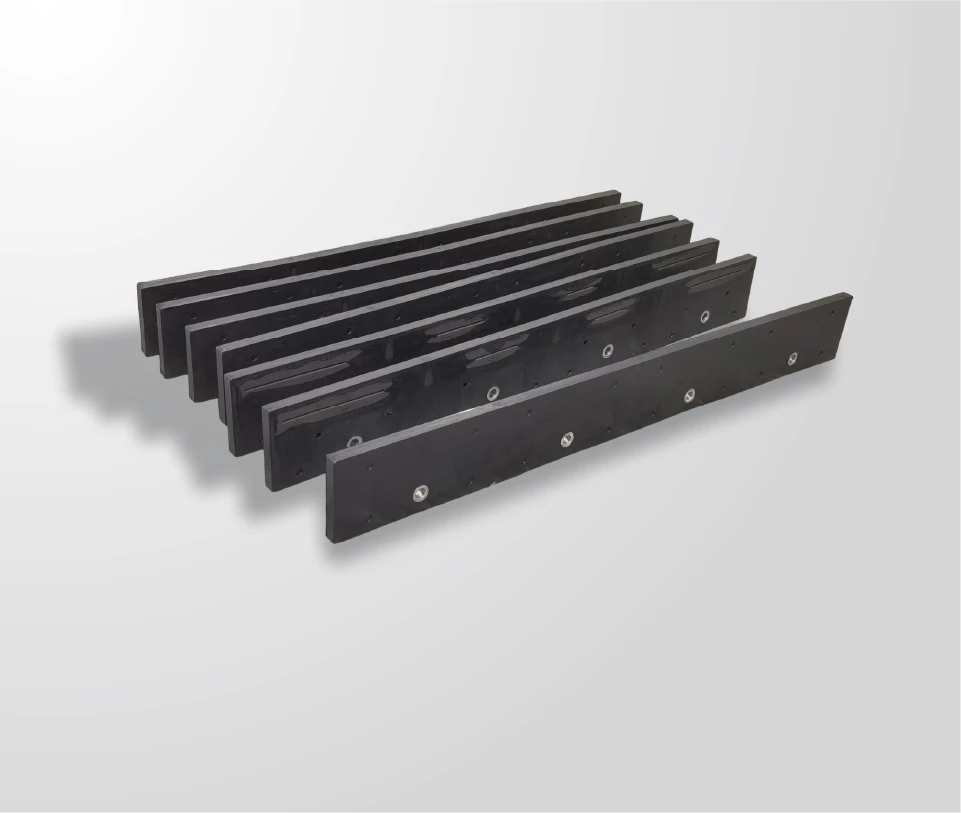
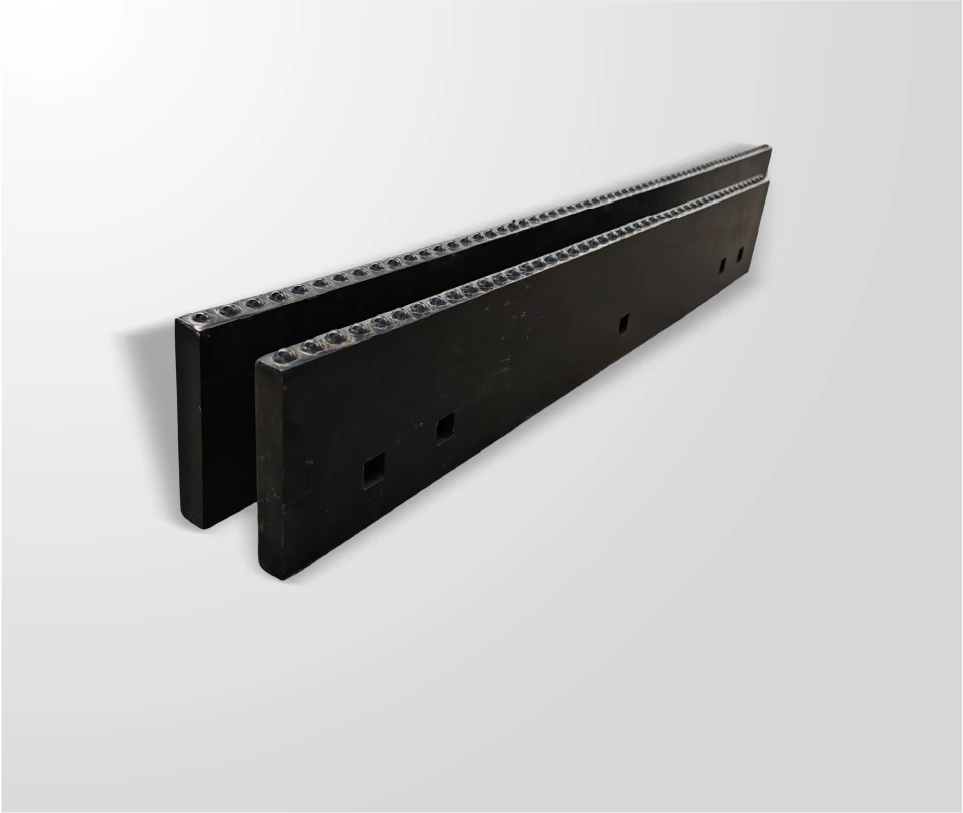
Those assets carry the technical claim as well as the product. A photograph of a blade with brazed carbide inserts, a drawing showing the insert pocket and a data sheet naming the grade, grain size and hardness band give the counter something to work from when a customer questions the price, because the value sits in the carbide and the joint rather than in the steel body.
The programme should also state how the manufacturer’s name, marks and part numbers may be used. Most agreements permit descriptive use — the distributor sells the manufacturer’s parts and says so — and restrict anything implying a dealership the distributor does not hold. That protects both sides when a distributor advertises in a regional trade directory.
Finally, the asset package should be versioned. A part number that changes, a drawing that is superseded or a grade that is replaced without notice creates returns and disputes. A programme that commits to notifying the distributor before a catalogue change is worth more than one that commits to a larger discount.
Warranty Handling Between Parties
Wear parts fail for reasons that are sometimes manufacturing and sometimes application, and a clause that does not separate the two will spend its first dispute arguing about terminology. It should define a single entry point for a claim, the evidence required, the inspection step and the timescale for a decision.
Evidence is the practical starting point: part number, batch or lot reference, purchase date, operating hours, machine, surface worked, and photographs of the failed part in place and removed. Lot-level traceability on the manufacturer’s side is what makes the next step possible, because a batch reference connects the failed part to the inspection record of the run it came from.

The inspection method should be named rather than left to opinion. Hardness and material verification are carried out against published test methods, and the standards describing those methods are maintained by bodies such as ASTM. Naming the test that will settle a disputed claim removes most of the argument before it starts.
Commercially, the clause should say who bears freight on a returned part, whether credit, replacement or repair is the remedy, and how a claim is handled when the failure is application-related — worn through on abrasive material or run long past a dulled profile. Warranty periods and conditions are quotation-based, so the applicable terms are stated in the written quotation or order documents.
Performance Review and Exit Terms
The last section of a programme document is the one most often left blank, and it determines whether a disagreement becomes a conversation or a termination. A review cadence, a small set of measures both sides accept, and a defined exit are what make an arrangement durable.
Useful measures are few: sell-through by line, stock turns on carry lines, claim rate, replenishment response against the stated target and catalogue accuracy. Each is available from records both parties already keep, which matters because a review built on data one side cannot verify becomes an argument rather than a review.
The exit clause should cover termination notice, outstanding orders, treatment of stock held, warranty obligations that outlive the agreement, and the point at which the distributor stops using the manufacturer’s marks. Where stock is held, the arrangement for it — sold through, transferred or bought back — belongs in the agreement, with the applicable terms stated in the written quotation or order documents.
There is a practical reason to settle this at the start rather than at the end. Distributors bidding into agency work need continuity they can point to, and the registration and contracting framework used for that work in the United States is administered through SAM.gov. A programme with a written exit is easier to represent to an agency than one that depends on a personal relationship.
A wear parts distributor programme is worth joining when it names four things in writing: how pricing scales and what changes it, who holds stock and who pays to move it quickly, what fitment data arrives and in what form, and how a returned part is resolved. The technical clauses matter more than the commercial ones, because a discount cannot repair a bolt pattern that does not fit, and the tolerance and fitment language is what a distributor’s reputation actually rests on. Read the exit clause before the price schedule, and treat any obligation not stated in writing as absent.
Send SENTHAI your territory, the machine classes and patterns your customers actually ask for, and the technical team will review the programme structure, fitment data and documentation set against that mix.
Related reading: wholesale snow plow blades for distributors and how SENTHAI manufactures.
Frequently Asked Questions
How is a distributor programme different from a trade price list?
A price list answers only what a part costs at a given quantity. A programme also covers replenishment response, fitment data, warranty handling, catalogue assets and a review cadence, so the distributor can promise a customer a delivery date and a fitment rather than just a number. The distinction shows up in the written agreement, not in the discount level, and it is the support clauses that decide whether the arrangement survives a hard season.
What should a distributor ask for before opening an account?
Ask for the programme document itself: term and territory, price schedule and what changes it, the replenishment process, the warranty and returns route, and the fitment data package with drawings and bolt pattern coverage. Then ask what happens in a specific week when a fast-moving pattern sells out early. Answers that require a second meeting are the clauses that need writing, and the applicable terms should be stated in the written quotation or order documents.
Can a programme include stock rotation or returns?
Stock rotation, buy-back and return rights are negotiable programme terms rather than standard practice, so they must appear in the agreement to exist. Where they are granted, the document should state which lines qualify, the condition parts must be in, who pays freight, and how long the right lasts. Without those details a rotation clause is unusable, and the applicable terms are stated in the written quotation or order documents.
What documentation should arrive with a distributor shipment?
A usable shipment carries the packing list with part numbers and quantities, lot or batch references that tie the parts to production inspection records, and the drawings or data sheets needed to sell the line. Batch traceability is what converts a later warranty claim into a checkable question rather than an argument, so it belongs on every shipment rather than only on request.
How is territory handled in a distributor programme?
Territory is either exclusive, selective or open, and the difference must be written rather than assumed from a sales conversation. An exclusive clause should define the boundary and any volume condition attached to it; an open arrangement should say so plainly, because distributors who believe they hold exclusivity they do not have will price and stock accordingly. The applicable terms are stated in the written quotation or order documents.
{
“@context”: “https://schema.org”,
“@type”: “FAQPage”,
“mainEntity”: [
{
“@type”: “Question”,
“name”: “How is a distributor programme different from a trade price list?”,
“acceptedAnswer”: {
“@type”: “Answer”,
“text”: “A price list answers only what a part costs at a given quantity. A programme also covers replenishment response, fitment data, warranty handling, catalogue assets and a review cadence, so the distributor can promise a customer a delivery date and a fitment rather than just a number. The distinction shows up in the written agreement, not in the discount level, and it is the support clauses that decide whether the arrangement survives a hard season.”
}
},
{
“@type”: “Question”,
“name”: “What should a distributor ask for before opening an account?”,
“acceptedAnswer”: {
“@type”: “Answer”,
“text”: “Ask for the programme document itself: term and territory, price schedule and what changes it, the replenishment process, the warranty and returns route, and the fitment data package with drawings and bolt pattern coverage. Then ask what happens in a specific week when a fast-moving pattern sells out early. Answers that require a second meeting are the clauses that need writing, and the applicable terms should be stated in the written quotation or order documents.”
}
},
{
“@type”: “Question”,
“name”: “Can a programme include stock rotation or returns?”,
“acceptedAnswer”: {
“@type”: “Answer”,
“text”: “Stock rotation, buy-back and return rights are negotiable programme terms rather than standard practice, so they must appear in the agreement to exist. Where they are granted, the document should state which lines qualify, the condition parts must be in, who pays freight, and how long the right lasts. Without those details a rotation clause is unusable, and the applicable terms are stated in the written quotation or order documents.”
}
},
{
“@type”: “Question”,
“name”: “What documentation should arrive with a distributor shipment?”,
“acceptedAnswer”: {
“@type”: “Answer”,
“text”: “A usable shipment carries the packing list with part numbers and quantities, lot or batch references that tie the parts to production inspection records, and the drawings or data sheets needed to sell the line. Batch traceability is what converts a later warranty claim into a checkable question rather than an argument, so it belongs on every shipment rather than only on request.”
}
},
{
“@type”: “Question”,
“name”: “How is territory handled in a distributor programme?”,
“acceptedAnswer”: {
“@type”: “Answer”,
“text”: “Territory is either exclusive, selective or open, and the difference must be written rather than assumed from a sales conversation. An exclusive clause should define the boundary and any volume condition attached to it; an open arrangement should say so plainly, because distributors who believe they hold exclusivity they do not have will price and stock accordingly. The applicable terms are stated in the written quotation or order documents.”
}
}
]
}
Related articles
 Why Carbide Prices Move: Raw Material and Energy DriversDistributor, wholesale and supply-chain sourcingSupply Chain Options Beyond China for Carbide Wear PartsDistributor, wholesale and supply-chain sourcingWholesale Cutting Edges: A Distributor Buyer ChecklistDistributor, wholesale and supply-chain sourcing