
Wholesale Cutting Edges: A Distributor Buyer Checklist
Buying wholesale cutting edges is a specification exercise that a price comparison cannot complete. Two suppliers can quote the same section, the same length and the same hole pattern and still deliver parts that…

Buying wholesale cutting edges is a specification exercise that a price comparison cannot complete. Two suppliers can quote the same section, the same length and the same hole pattern and still deliver parts that behave very differently on a county road or a gravel haul road, because the difference sits in the steel grade, the heat treatment, the countersink detail and the paperwork that proves each of them. The checklist below covers what a buyer controls before award rather than what it argues about afterwards.
It is written for the distributor placing a stocking order rather than for a fleet buying a single edge, so the emphasis falls on repeatability: an order that arrives correctly is worth more than an offer that reads well.
What the Buyer Actually Controls
Specification, documents, test gates.
Before an order is placed a buyer controls three things: the written specification it buys against, the documents it demands with the offer, and the acceptance test applied to the first delivery. Almost every expensive cutting edge problem traces back to one of those three being left open.
Specification is the lever with the widest effect. An award written as a part number and a thickness lifted from a catalogue imports that supplier’s assumptions about hardness, tolerance and hole detail without importing any of the evidence behind them. An award written against section, length, hole pattern, countersink, hardness band and straightness limit gives the buyer something to inspect on arrival and something to point at when a delivery is not what was quoted.
Documentation is the second lever, and it is the one that separates a manufacturer from a trader. A quotation that arrives without a dimensioned drawing, a grade or hardness statement and a marking convention is a price, not an offer. Machine and attachment interface conventions are published by bodies such as SAE, and an offer that describes fitment in those terms is easier to check than one that describes it in model years.
The third lever is the gate on the first delivery. A buyer who measures bolt hole spacing, edge straightness and section thickness on a sample from the first container, and records the result against the purchase order, has converted a promise into a verified baseline for every later order.
Specification Versus Brand
Buying by brand is a shortcut for buying by specification, and it works well when the brand publishes its grade data and the buyer’s requirement is genuinely covered by it. It works badly when a specification is written so narrowly around one product that equal alternatives are excluded on paper rather than on performance, because the buyer then pays for the brand’s pricing power instead of the part.
The practical approach is to keep the brand as one acceptable option and write the underlying specification so that any supplier can be measured against it. That means naming the points rather than the product, and stating each one in a way that can be verified rather than asserted. A specification a supplier cannot inspect against is a specification the buyer cannot enforce.
| Point | What to state | How to verify | Cost of leaving it open |
|---|---|---|---|
| Section and thickness | Nominal section, thickness with tolerance | Micrometer or caliper on a sample edge | Thin material wears and bends early |
| Hardness as supplied | Hardness band and the test used to quote it | Hardness check against the named method | Soft edges dull quickly; hard edges crack |
| Hole pattern and spacing | Spacing, diameter and edge distance to the drawing | Tape or jig check on a sample | Edges will not seat on the moldboard or plow |
| Countersink and bolt detail | Countersink angle, depth and seat quality | Visual and gauge check at the holes | Proud bolt heads wear, snag or shear |
| Straightness and camber | Limit on bow and twist over the full length | Straight edge and feeler check | Poor contact, uneven wear, cracked ends |
| Marking and identification | Heat, lot or part reference on each piece | Match marking to the delivery paperwork | No traceability when a claim arises |
None of the six points requires a laboratory. They require a drawing, a tape, a caliper and a decision about which ones matter for the machine classes the distributor actually serves.
Documentation to Demand Before Award
Documentation is the cheapest risk control available to a buyer, because it is requested rather than paid for. Ask for it with the offer, not with the first shipment, and hold the comparison to it: a supplier that cannot produce a dimensioned drawing before the order usually cannot produce one after it.
Cutting edge specifications in North America are commonly written around documents that state departments of transport adopt and maintain, and the AASHTO publications store is where those material and edge specifications are listed. A buyer who knows which of those the end customer’s tender references can ask the supplier to confirm the point in writing rather than infer it from a sample.
Where a hardness or material claim is made, the test behind it should be named. Hardness and material verification are carried out against published methods maintained by bodies such as ASTM, and a claim without a named method is not checkable. Delivery terms belong in the same conversation: trade terms are standardised through the ICC Incoterms rules, and a quotation that cites a rule rather than describing an arrangement avoids the most common freight argument in wholesale trade.
Pricing Structure and What Drives It
Cutting edge cost is driven by a short list of physical facts. Steel grade and heat treatment sit at the top, followed by section mass, hole count and countersink work, then packaging, order pattern and freight. A buyer who understands that order can read a quotation in the way the supplier built it.
The strongest discount in a wholesale comparison is rarely the largest saving. An offer that is materially cheaper almost always differs in one of four places: the hardness band, the countersink detail, the straightness limit, or the marking and traceability package. Those are exactly the points that generate premature wear, fitment rework and unanswerable claims, so the comparison should be made point by point rather than on the total.
Order pattern drives cost as much as material does. A single pattern bought in depth is cheaper to make, pack and ship than the same tonnage split across many short runs,. Distributors who consolidate their season into fewer, larger pattern runs generally get better terms than those who order reactively in small quantities, and the difference is structural rather than negotiable.
Commercial terms themselves remain quotation-based. Volumes, tiers and any minimum order value the supplier applies are stated in the written quotation or order documents, so the buyer’s job is to make sure the offer describes what will actually be delivered rather than a headline unit figure.
Container Logic, MOQ and Continuity
Long, heavy, relatively low-value-per-kilogram parts make freight the dominant variable in a wholesale order, so the load should be planned before the quantity is fixed. A container filled with a mix of sellable patterns costs less per part landed than the same total weight shipped in whatever combination happened to be ordered.
Three practical rules follow. First, combine fast-moving patterns into one load rather than releasing them as separate shipments. Second, keep enough depth on the two or three patterns that actually turn so that mid-season replenishment is not forced. Third, confirm that the packaging chosen will survive the transit and the handling at the receiving end, because a bent edge that was straight at despatch is a dispute about packaging rather than about quality.
Import documentation belongs in the plan rather than in a panic. Customs requirements, importer responsibilities and the classification of the goods are published by the destination country’s authority, and in the United States that guidance is maintained by CBP. Knowing which documents the broker will need, and when, is what keeps a container moving.
Minimum order quantities are a commercial term rather than a fixed rule, so the applicable minimum is stated in the written quotation or order documents and agreed per order. A distributor planning a season should ask early how a combined order affects the minimum, because consolidation and continuity usually pull in the same direction.
Quality Gates and Acceptance Testing
The first delivery is the only delivery a buyer can test exhaustively at no pressure, so it should be treated as a qualification rather than a shipment. Sampling a few edges from different bundles, measuring hole spacing and thickness, checking straightness against a straight edge and confirming hardness against the named method establishes whether the offer was accurate.
Measurement is only useful if the instruments are sound, and the framework that keeps measurement comparable across suppliers is maintained by bodies such as NIST. Calibration and record-keeping are not bureaucratic extras in a wholesale comparison; they are what make a rejection defensible when a supplier disputes it.
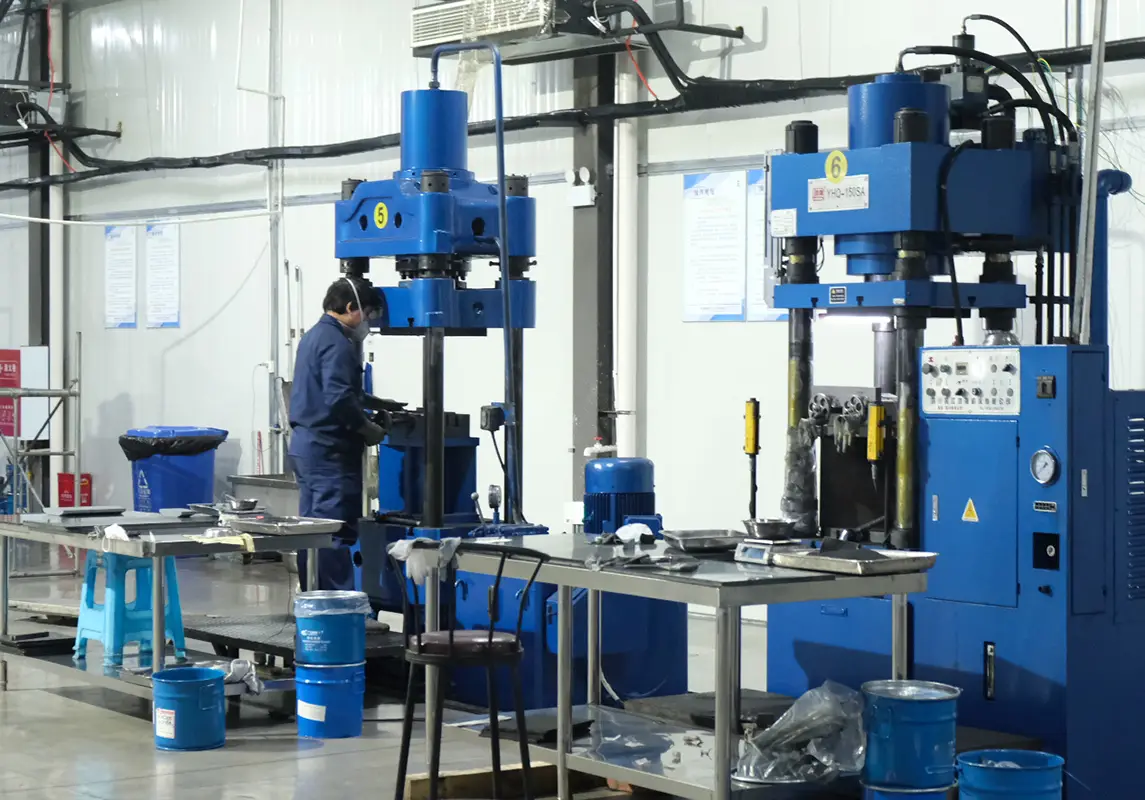
Evidence of in-process control should also be requested, because acceptance testing samples a delivery while process control covers the whole run. Manufacturers with lot-level traceability keep an inspection record for each batch and can connect a delivered part to the run it came from. A distributor who asks for that link before award is buying a route to resolution rather than a promise.
Finally, the purchase order should state the rejection criteria and the remedy. Section thickness outside tolerance, hole spacing outside the drawing, hardness outside the band or straightness outside the limit are objective failures; writing them into the order removes the need to argue about degrees of acceptability later.
Risk, Warranty and Dispute Handling
Risk allocation is a drafting exercise, and it costs nothing when it is done before the order. The purchase order should say who owns the goods in transit, what evidence is needed to reject a delivery, how quickly a rejection must be raised, and who pays freight on a returned part.
Warranty handling follows the same pattern. A usable claim carries the part reference or lot marking, the delivery paperwork, the application, the hours in service and photographs of the failure. Manufacturers holding lot-level traceability can then check the failed part against the inspection record of its production run, which turns a claim into an investigation with an end rather than a correspondence.
Where a supplier and buyer cannot agree on cause, the process should be settled by a named test rather than by opinion, which is the practical reason for writing a hardness method into the specification at the start. Application failures — edges worn through on abrasive material or damaged by impact — are separated from manufacturing failures by that test, and the result is a decision rather than a negotiation.
Warranty periods, remedies and any limitation of liability are quotation-based, so the applicable terms are stated in the written quotation or order documents.
A wholesale cutting edges order is decided by three things a buyer writes down: the specification, the documents requested with the offer, and the acceptance test applied to the first delivery. Brand shortcuts are useful until they exclude equal alternatives, and discount comparisons are useful until they are read point by point against hardness band, countersink detail, straightness limit and traceability. Consolidating volume into fewer, larger pattern runs and planning the load before the quantity is fixed will do more for landed cost than any single negotiated figure.
Send SENTHAI the drawings, machine classes and pattern list behind your next wholesale cutting edge order, and the technical team will review the specification points, fitment data and inspection documentation against them.
Related reading: wholesale snow plow blades for distributors and quality control and batch traceability.
Frequently Asked Questions
What is the first thing a buyer should check on a wholesale cutting edge offer?
Check the specification points before the price. Section and thickness with tolerance, hardness band and the test used to quote it, hole spacing to the drawing, countersink detail and a straightness limit are the five items that decide whether the part works. An offer that states none of them is a price rather than a specification, and comparing it with a fully specified alternative on total cost is not a like-for-like decision.
Is it better to buy cutting edges by brand or by specification?
Brand buying works where the brand publishes usable grade and dimension data and the requirement is genuinely inside that data. Specification buying works everywhere else, and it keeps equal alternatives eligible instead of excluding them on paper. The practical middle ground is to name the brand as one acceptable option and write the specification in terms any qualified supplier can be measured against, so the comparison stays on performance rather than on label.
How should a distributor compare two wholesale quotations on cost?
Compare point by point rather than on the headline figure, because a materially cheaper offer usually differs in hardness band, countersink detail, straightness limit or traceability. Then add the costs the price does not show: freight per part landed, packaging that survives transit, and the labour absorbed by fitment rework or a rejected delivery. Consolidating a season into fewer, larger pattern runs normally reduces unit cost more than any discount negotiation.
What documents should arrive with a wholesale cutting edge shipment?
A packing list with part numbers and quantities, lot or batch markings that tie the parts to their inspection records, the dimensioned drawing the order was placed against, and any hardness or grade statement that was quoted. Delivery documents should match the terms agreed in the order. Without lot marking the parts cannot be traced, and a later warranty claim becomes a correspondence rather than an investigation.
Do cutting edges have a minimum order quantity?
Minimum order quantities are commercial terms rather than fixed rules, so the applicable minimum is stated in the written quotation or order documents and agreed per order. Because long, heavy edges are dominated by freight and handling cost, consolidating several patterns into one load is usually the most effective way to reach a sensible order size. Ask how a combined order affects the minimum before releasing purchase orders pattern by pattern.
{
“@context”: “https://schema.org”,
“@type”: “FAQPage”,
“mainEntity”: [
{
“@type”: “Question”,
“name”: “What is the first thing a buyer should check on a wholesale cutting edge offer?”,
“acceptedAnswer”: {
“@type”: “Answer”,
“text”: “Check the specification points before the price. Section and thickness with tolerance, hardness band and the test used to quote it, hole spacing to the drawing, countersink detail and a straightness limit are the five items that decide whether the part works. An offer that states none of them is a price rather than a specification, and comparing it with a fully specified alternative on total cost is not a like-for-like decision.”
}
},
{
“@type”: “Question”,
“name”: “Is it better to buy cutting edges by brand or by specification?”,
“acceptedAnswer”: {
“@type”: “Answer”,
“text”: “Brand buying works where the brand publishes usable grade and dimension data and the requirement is genuinely inside that data. Specification buying works everywhere else, and it keeps equal alternatives eligible instead of excluding them on paper. The practical middle ground is to name the brand as one acceptable option and write the specification in terms any qualified supplier can be measured against, so the comparison stays on performance rather than on label.”
}
},
{
“@type”: “Question”,
“name”: “How should a distributor compare two wholesale quotations on cost?”,
“acceptedAnswer”: {
“@type”: “Answer”,
“text”: “Compare point by point rather than on the headline figure, because a materially cheaper offer usually differs in hardness band, countersink detail, straightness limit or traceability. Then add the costs the price does not show: freight per part landed, packaging that survives transit, and the labour absorbed by fitment rework or a rejected delivery. Consolidating a season into fewer, larger pattern runs normally reduces unit cost more than any discount negotiation.”
}
},
{
“@type”: “Question”,
“name”: “What documents should arrive with a wholesale cutting edge shipment?”,
“acceptedAnswer”: {
“@type”: “Answer”,
“text”: “A packing list with part numbers and quantities, lot or batch markings that tie the parts to their inspection records, the dimensioned drawing the order was placed against, and any hardness or grade statement that was quoted. Delivery documents should match the terms agreed in the order. Without lot marking the parts cannot be traced, and a later warranty claim becomes a correspondence rather than an investigation.”
}
},
{
“@type”: “Question”,
“name”: “Do cutting edges have a minimum order quantity?”,
“acceptedAnswer”: {
“@type”: “Answer”,
“text”: “Minimum order quantities are commercial terms rather than fixed rules, so the applicable minimum is stated in the written quotation or order documents and agreed per order. Because long, heavy edges are dominated by freight and handling cost, consolidating several patterns into one load is usually the most effective way to reach a sensible order size. Ask how a combined order affects the minimum before releasing purchase orders pattern by pattern.”
}
}
]
}
Related articles
 Why Carbide Prices Move: Raw Material and Energy DriversDistributor, wholesale and supply-chain sourcingSupply Chain Options Beyond China for Carbide Wear PartsDistributor, wholesale and supply-chain sourcingBuilding a Wear Parts Distributor Programme: From Terms to SupportDistributor, wholesale and supply-chain sourcing