




Replaceable Carbide Inserts vs Full-Length Edges
Fleets can buy a full-length carbide edge or a replaceable insert system, and the choice affects maintenance cost, downtime, and inventory. Replaceable inserts are swapped individually as they wear; full-length edges are replaced as…
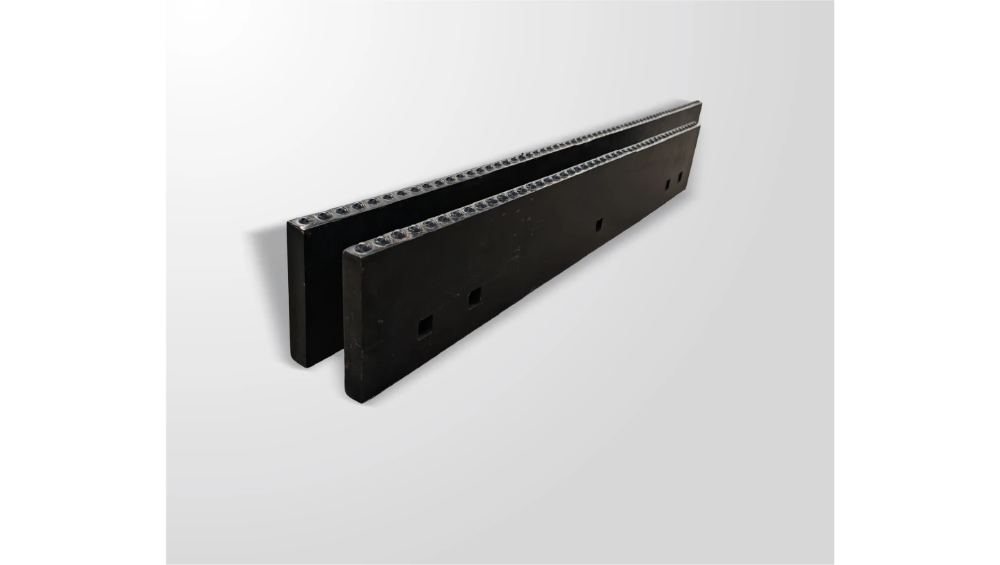
Fleets can buy a full-length carbide edge or a replaceable insert system, and the choice affects maintenance cost, downtime, and inventory. Replaceable inserts are swapped individually as they wear; full-length edges are replaced as a section. This guide compares the economics and the fit considerations. The SENTHAI carbide insert specifications covers the insert option.
Replaceable Inserts vs Full-Length Edges
A full-length edge is a one-piece cutting edge replaced as a unit. A replaceable insert system mounts individual inserts that can be swapped when worn. The difference matters most at replacement time: whole section vs individual teeth.
Cost Comparison
Replaceable systems can lower long-term cost by replacing only worn inserts. Full-length edges are simpler but replace the whole section, including healthy material. Compare over several seasons, not per purchase.
Maintenance
Insert systems allow targeted maintenance — swap the worn tooth, keep the rest. Full-length edges require a full changeout. For fleets with variable wear across the blade, inserts reduce waste and downtime.
Durability
Both approaches use the same premium carbide, so durability depends on grade, bond, and duty. The difference is in how wear is managed, not in the material itself.
Which Is Better
For fleets with localized wear and maintenance capacity: replaceable inserts. For fleets that want the simplest changeout: full-length edges. The answer depends on your operation.
Replacement Economics of Inserts
Replaceable inserts change the economics of wear: instead of buying a whole section, you buy individual teeth. The saving grows when wear is uneven — only the worn inserts need replacing. Model it with your change data.
Fit and Retention Considerations
Inserts must fit the blade’s milled slots with tight tolerances and stay retained under impact. SENTHAI holds ±0.02mm tolerances for reliable fit, and brazing quality determines retention. Fit and bond are the two specifications that matter.
When Inserts Win
Inserts win when wear is localized, when inventory flexibility matters, and when the fleet can handle more frequent but smaller maintenance actions. They also suit OEM blade designs built around insert systems.
When Full-Length Edges Win
Full-length edges win when simplicity and changeout speed matter most, and when wear is even across the blade. One part, one changeout, minimal training.
Building a Cost Comparison Table
| Factor | Replaceable Inserts | Full-Length Edge |
|---|---|---|
| Replacement unit | Individual inserts | Whole section |
| Wear management | Targeted | Full changeout |
| Inventory | Insert sizes | Section sizes |
| Labor per change | Smaller, more frequent | Larger, less frequent |
Frequently Asked Questions
Are replaceable inserts cheaper than full-length edges?
Over time, often yes — you replace only worn inserts instead of the whole section. Model it with your change data.
Do insert systems fit my current blades?
Inserts must match the blade’s milled slots. Confirm dimensions and tolerances with the supplier.
Which approach lasts longer?
Both use premium carbide. Durability depends on grade, bond, and duty — the difference is in how wear is managed.
Can I switch between systems?
Switching requires a compatible blade design. For new blades, specify the system you want from the start.
Choose the wear strategy that fits your fleet. Compare options on the carbide insert range and ask SENTHAI which system suits your operation.


