




Manholes, Curb Heads, and Rumble Strips: Protecting Carbide Edges from Impact
Obstacles are part of the job. The manholes, the curb heads, the rumble strips, and the buried objects are not anomalies; they are fixtures of the routes, and every one of them delivers a…
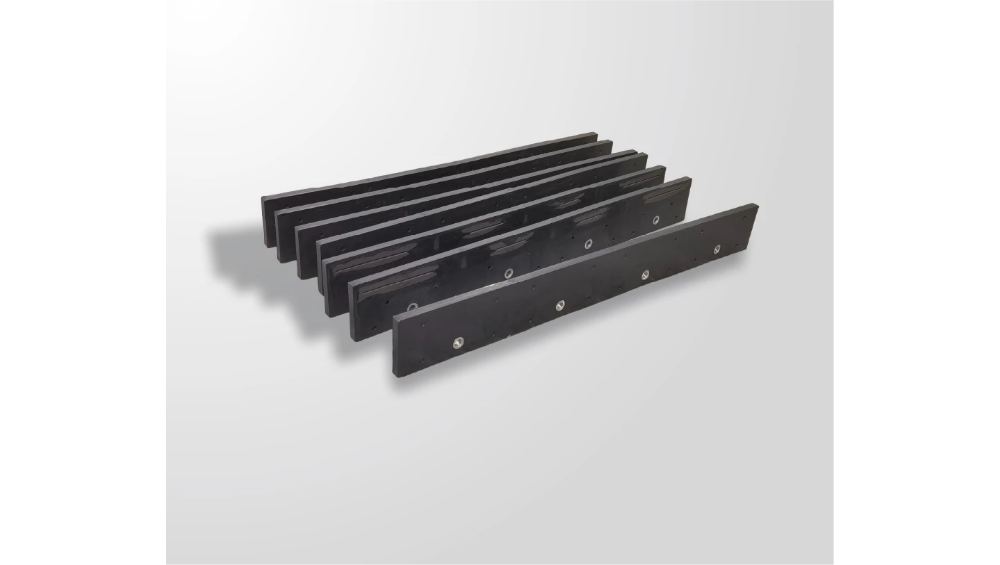
Obstacles are part of the job. The manholes, the curb heads, the rumble strips, and the buried objects are not anomalies; they are fixtures of the routes, and every one of them delivers a sharp load to the blade. The blade that survives the season is the blade whose design and operation manage the impacts.
This article covers protecting carbide edges from impact: mapping the impact risks, how the blade design absorbs them, the operator habits that reduce the hits, and the inspection after the major strikes.
Obstacles are part of the job
The obstacle list is long and predictable: the manhole covers, the curb heads, the bridge joints, the rumble strips, the driveway aprons, and the buried objects at the road’s edge. Each one is a repeated impact point on the routes that carry them.
The impacts are the blade’s hardest test: the energy of the strike concentrates on the carbide and the bond, and the repeated hits fatigue the edge even when no single strike looks dramatic.
The blade that manages the impacts is the blade that survives the season, and the management starts with knowing where the impacts are.
The management also includes the data: the strikes, the zones, and the findings, recorded per route, are the impact history that the specification and the training use. The fleet that records the impacts owns the impact problem; one that ignores them repeats it.
The same history connects to the cost: the impact-damaged blades, the premature changeouts, and the mid-storm failures are the cost the impact-tough specification avoids.
How do I know if my route is impact-heavy? Count the impact points per mile and the impact-damaged changeouts per season. The density and the failure history are the impact map’s evidence.
How do you map impact risks on your routes?
The impact map is the operational tool:
| Map step | What it produces |
|---|---|
| List the impact points | The manholes, curbs, joints, and rumble strips on each route |
| Mark the density | The routes with the most points per mile |
| Note the severity | The sharpest loads, such as curb heads and buried objects |
| Map the timing | The points that hit hardest at plowing speed |
| Assign the blade | The impact-tough configuration for the heavy corridors |
The map is the input to the specification: the corridor with the impact density gets the tougher grade, the isolation, and the stronger bond, and the corridor without it gets the standard configuration.
How blade design absorbs impacts
The design is the first defense:
- Tough carbide: the grade balances wear resistance with the toughness to survive the impacts;
- Secure bonding: the braze holds the inserts under the high-velocity strikes, which SENTHAI describes as the purpose of its brazing technology;
- Stress relief: the process that reduces the residual stress, so the blade does not crack at the impact point;
- Isolation: the separated inserts contain the damage from a single strike;
- Segmented construction: the rubber-encased segments absorb the impact energy that a rigid edge would transmit.
SENTHAI describes its blades as engineered to withstand high-velocity impacts against manholes and road obstructions, with the stress-relief and brazing technology behind the claim. The carbide snow plow blade page and the segmented rubber-carbide blade are the references for the constructions.
Operator habits that reduce hits
The operator is the second defense:
- Route awareness: the operator who knows the impact points adjusts the approach;
- Speed control: the lower speed at the impact points reduces the energy;
- Lift timing: the blade lift over the severe points, where the operation allows;
- Pressure matching: the down-pressure that matches the surface, avoiding the forced contact;
- Observation: the operator reports the strikes, so the inspection happens at the right time.
The habits are trained and standard, and the training is the difference between the blade that takes the hits and the blade that avoids them.
What should you inspect after major strikes?
The post-strike inspection is the third defense:
- The impact zone: the carbide and the bond at the strike point;
- The inserts: the chipped, cracked, or proud inserts in the zone;
- The rubber: the cuts and the separations on the segmented blades;
- The steel: the bends and the cracks in the carrier;
- The hardware: the loosened bolts and the shifted mounts;
- The record: the strike, the zone, and the finding, logged for the pattern.
The inspection after the major strikes catches the damage while it is contained, and the record shows the impact patterns that the next specification and the training address.
The inspection timing matters: the immediate check after the strike catches the fresh damage, and the follow-up check after the next run catches the damage that grew. The two checks are the impact inspection routine.
The same routine should be trained: the operator reports the strike, and the crew runs the check. The reporting and the checking are the loop that turns the impact from a surprise into a finding.
The training should also cover the strike categories: the curb strike, the manhole hit, and the rumble strip contact each have their damage signature, and the crew that knows the signatures knows what to inspect. The training is the inspection’s skill.
The same skill feeds the record: the strike, the zone, and the finding, logged consistently, are the data that the impact map and the specification use.
The record, reviewed each season, is the impact program’s memory, and the memory is the next specification’s and the next training’s basis.
The memory should also include the countermeasure results: the impact-tough specification’s changeouts and failures, compared with the standard, are the evidence the specification earned its place. The comparison is the impact program’s proof.
The same proof feeds the fleet’s blade mix: the impact-heavy corridors get the impact-tough blade, and the mix is reviewed with the data each season.
The review, run with the records, is the impact management’s cycle, and the cycle is the obstacles’ answer.
The answer should also be shared with the supplier: the impact map and the failure data are the input to the impact-tough specification, and the sharing turns the obstacles’ history into the order’s basis.
The basis, confirmed on the drawing, is the impact-tough blade’s specification, and the specification is the obstacles’ long-term answer.
The answer, reviewed each season, is the impact program’s continuation.
The continuation, kept with the records, is the obstacles’ long-term management.
The management, applied to every route, is the impact map’s reward.
The reward, kept in the changeout data, is the impact program’s proof.
How do I prove the impact-tough spec works? Compare the changeouts and the failures between the impact-tough and the standard blades on the same impact-heavy routes. The comparison is the proof.
What should the operator report after a strike? The location, the force, and the zone of the strike. The report is what directs the inspection and builds the impact map.
What is the most common impact damage? The chipped or cracked insert at the strike zone, followed by the bond and the rubber damage. The damage is contained if the inspection catches it early.
Choose blades engineered for impacts
The impact-tough specification is chosen where the map says the impacts live: the corridor density, the severity, and the failure history decide the grade, the bond, the isolation, and the construction. The carbide blade construction reference and the JOMA-style blade page are the references, and the contact page is where the configuration is confirmed.
Send the impact map, the failure history, and the equipment details through the contact page and ask for the impact-tough configuration. The obstacles are part of the job; the blade that manages them is part of the fleet’s plan.
Expert view — SENTHAI engineering team: “The obstacles are on the drawing; the impact plan is on the fleet. Map the hits and the blade survives them.”
Frequently Asked Questions
Why are impacts the blade’s hardest test? The strike energy concentrates on the carbide and the bond, and the repeated hits fatigue the edge even when no single strike looks dramatic.
How do I map the impact risks? List the impact points per route, mark the density and the severity, note the timing, and assign the blade by the corridor’s impact profile.
How does the design absorb impacts? Through tough carbide, secure bonding, stress relief, isolation, and the segmented construction that absorbs the energy.
What operator habits reduce the hits? Route awareness, speed control, lift timing, pressure matching, and the reporting of the strikes.
What should I inspect after a major strike? The impact zone, the inserts, the rubber, the steel, the hardware, and the record of the strike and the finding.
Does SENTHAI engineer for impacts? SENTHAI describes its brazing and stress-relief technology as engineered for high-velocity impacts; verify with the batch and the field data.
What should I send for the impact specification? The impact map, the failure history, and the equipment details. The impact-tough configuration follows.
Sources
Related articles
 Best Snow Plow Blade Family for Your Fleet: Top 5 ScenariosKnowledge
 Top 10 Snow Plow Blade Types for Winter Fleets (Ranked by Duty Fit)Knowledge
 Top 5 Best Carbide Blade Configurations for Highway PlowingKnowledgeBest Snow Plow Blade Materials Ranked: Steel vs Carbide vs Cladding vs Rubber-CarbideKnowledge