




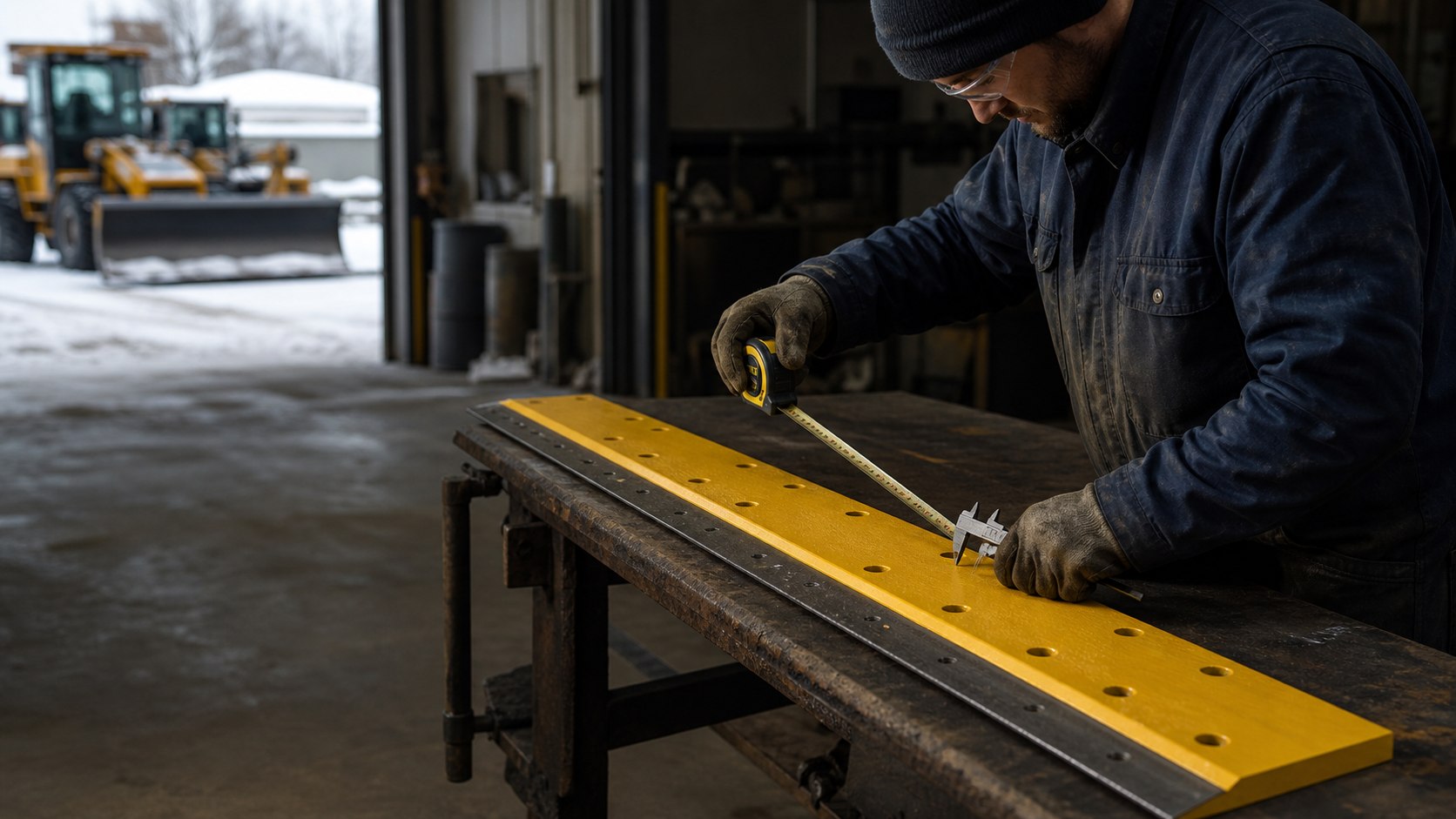
A steel edge at a third of the price that lasts a fifth as long is the more expensive edge. Run the arithmetic over a season, not over one purchase order.
Surface abrasiveness, route length, down-pressure, operating speed and the labour cost of a blade change. Fleets that track these five numbers usually find the switch point is nowhere near where they assumed it was.
Cutting blade changes from four a season to one is worth more than the material saving on most fleets, because the change happens during a storm rather than between them. Count the hours, not just the parts.
Steel wears away; carbide breaks. Those are different failure modes and they demand different responses from the operator and the maintenance plan.
Steel loses toughness in deep cold and starts to crack from the edges inward. Carbide keeps its shape but tolerates far less shock, so manhole covers, curb heads and rail crossings decide the outcome on both sides of the comparison.
A dull steel edge generates friction heat that accelerates its own wear and scuffs the surface underneath. Carbide holds a sharper profile longer, which reduces both effects — and is part of why the surface damage complaints tend to fall after a switch.
Long route, abrasive surface, expensive blade change: carbide. Short route, light machine, delicate surface: steel or a flexible edge.
The common mistake is buying one edge class for the whole fleet to simplify purchasing. The result is carbide spent on driveways and steel wearing out on highways. Splitting the fleet by route class usually lowers total spend.
The cheapest way to settle the question locally is to fit carbide to two or three machines on representative routes, log hours and wear, and compare at season end. The numbers from your own routes beat any published comparison.
On abrasive, high-mileage routes carbide is usually cheaper once change-out labour is counted. On short, light-duty routes steel often wins. There is no fleet-wide answer.
Less, generally, because it stays sharper and generates less friction heat. Surface complaints usually come from edge geometry and down-pressure rather than from the material.
Yes, and it is usually correct to. Match the edge to the route class and standardise the mounting pattern so spares stay interchangeable.
It depends on the surface and duty. The useful measurement is lane-kilometres per edge, and the only reliable figure is the one from your own routes.
Not necessarily. Steel becomes brittle in deep cold and cracks; carbide holds its shape and fails through impact instead. The right answer depends on whether your failures come from cold or from obstacles.
Isolated carbide edges built for ice rather than snow.
The full TCO model behind the comparison.
Wear measurement and changeout thresholds.
Give us the route length, surface and current blade life and we will model the switch for your duty.
✓ Route length and surface type
✓ Current edge life and change frequency
✓ Machine class and down-pressure
✓ Quantity per season
Email: [email protected]