




Thermal expansion mismatch between cemented carbide blanks and carbon steel back plates can create high residual stress and micro-cracking during cooling, especially in road maintenance tools. By controlling brazing temperature, joint design, and stepwise…
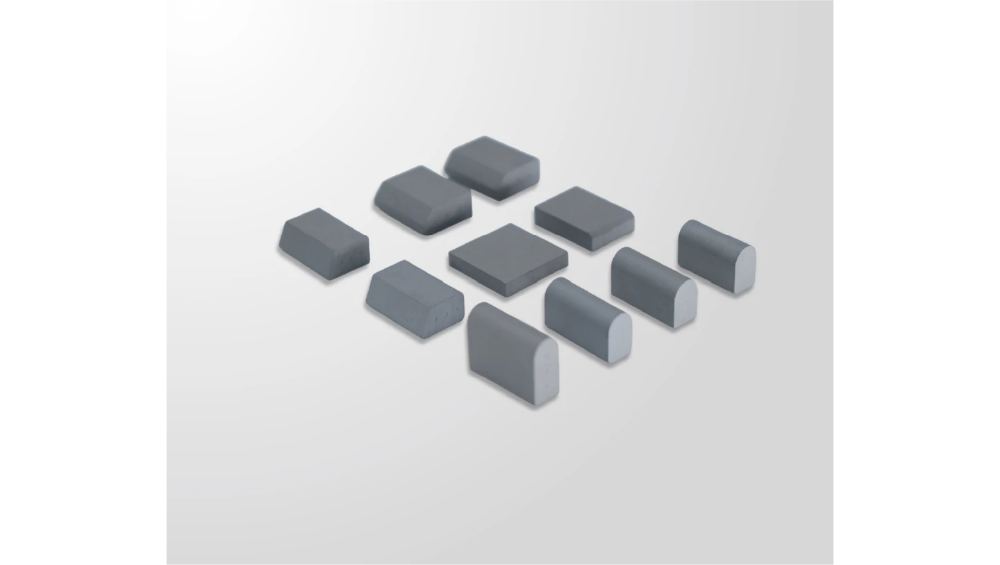
Thermal expansion mismatch between cemented carbide blanks and carbon steel back plates can create high residual stress and micro-cracking during cooling, especially in road maintenance tools. By controlling brazing temperature, joint design, and stepwise slow-cooling curves, manufacturers like SENTHAI can stabilize the interface, extend service life, and deliver reliable OEM snow plow and road maintenance wear parts for global B2B users.
Maximizing Carbide Insert Adhesion
What thermal expansion mismatch occurs between carbide blanks and carbon steel back plates?
Thermal expansion mismatch arises because cemented carbide typically has a coefficient of thermal expansion (CTE) around half that of carbon steel, so both materials shrink at different rates during post-brazing cooling. This differential causes tensile and compressive stress concentrations at the brazed interface. In road maintenance blades, the mismatch is pronounced along long joints and wide brazed areas, making joint design and cooling control critical for factory-scale production.
Cemented carbide used in snow plow and road maintenance blades generally shows a CTE in the range of roughly 5×10⁻⁶/°C, while typical carbon steel back plates sit closer to 11–13×10⁻⁶/°C. That means the steel substrate wants to contract almost twice as much as the carbide when the assembly cools from brazing temperature to ambient. The larger the joint length, thickness, and temperature drop, the more severe this mismatch becomes.
For SENTHAI and similar manufacturers, this is not a theoretical issue but a daily engineering constraint. Every brazed carbide blank on a plow blade or grader edge represents a bi-material system where elastic and plastic deformation must be controlled across thousands of thermal cycles in service. OEM customers looking for superior wear parts increasingly ask not just about hardness, but about how CTE mismatch is managed in the welding and brazing line.
A simple way to visualize this mismatch is to imagine the carbide “pulling” less than the steel as the blade cools. If the joint were rigidly constrained, something must give: either the filler metal yields, the steel yields, or micro-cracks initiate in the brittle carbide edge. Managing that risk is at the heart of expert brazing metallurgy for heavy-duty road maintenance tools.
How does thermal expansion mismatch generate micro-cracking during the post-weld cooling phase?
Micro-cracking occurs when the tensile stresses generated by unequal contraction exceed the local fracture toughness of the cemented carbide or the brittle phases in the brazed seam. As the joint cools, the steel back plate tries to shrink more, pulling on the carbide. If the filler layer is thin, stiff, or poorly ductile, it can transmit high tensile stress into the carbide edge. Repeated stress waves during cooling, combined with internal defects or sharp geometric transitions, act as crack initiation sites.
In long snow plow blades or road maintenance edges, the thermal gradient along the blade is rarely uniform. Ends may cool faster than the center, and localized heat sinks such as clamping fixtures further distort the stress field. If cooling is uncontrolled, parts of the joint can experience sudden temperature drops, creating thermal shock. The brittle nature of carbide — particularly high-hardness grades optimized for abrasion resistance — makes it vulnerable to such shock, especially at corners and brazed interfaces.
From a factory-floor perspective, we often see early-stage micro-cracks as hairline fractures along the brazed edge or tiny chips that appear after the first on-machine impact. These are not merely “service damage”; they frequently originate as sub-surface micro-cracks that propagated under thermal stress during cooling. SENTHAI’s engineers, for instance, routinely correlate chip patterns seen in field returns with specific brazing batches, filler thicknesses, and cooling profiles to refine process windows.
The challenge increases with higher brazing temperatures or more aggressive filler compositions. High-activity brazing alloys can form brittle intermetallic phases at the carbide–steel interface. While these phases may improve wetting and bond strength, they often have lower fracture toughness. When combined with thermal expansion mismatch, they act as crack highways — a classic trade-off that experienced manufacturers learn to balance rather than ignore.
Why is thermal stress control critical for road maintenance cemented carbide blanks?
Road maintenance cemented carbide blanks endure cyclical impact, abrasion from sand and aggregates, and low-temperature operation in snow and ice. If thermal stress is not controlled during brazing, hidden micro-cracks and weakened interfaces drastically reduce tool life. Blades chip prematurely, wear patterns become uneven, and OEM users face unexpected downtime. For B2B buyers, this directly affects cost per kilometer cleared and fleet reliability.
Because road maintenance is seasonally critical, fleets cannot afford unpredictable performance. A blade that fails halfway through a storm may force costly changeovers or emergency service calls. The mechanical robustness of the brazed joint — not just the hardness of the carbide — becomes the differentiator between commodity and premium wear parts. Thermal stress management upstream is therefore a core quality lever for manufacturers like SENTHAI.
In our experience on the production line, tools with poorly managed residual stress often pass initial inspection yet fail under off-angle impacts or localized overload. Crack paths frequently trace along the brazed interface, revealing that the joint was already compromised before it ever saw the road. B2B customers rarely see this internal story, but its root is almost always in brazing parameters and cooling methodology.
Furthermore, road maintenance blades rarely operate at constant temperature. They cycle between ambient, friction heating, and sometimes de-icing chemical exposure. Existing residual stress interacts with these service cycles, amplifying fatigue at the interface. By minimizing initial residual stress through controlled cooling and optimized joint design, manufacturers can significantly extend the fatigue life of brazed assemblies, reducing warranty claims and reinforcing trust.
Which slow-cooling curve parameters help prevent micro-cracking in carbide brazing?
Effective slow-cooling curves for carbide–steel brazed joints use controlled temperature ramps across critical transformation regions, with dwell stages to relax stress. Typically, the cooling schedule starts from brazing temperature with a moderate drop to an intermediate range, followed by slower gradients through the most sensitive CTE mismatch window, before finally approaching ambient. Each step balances residual stress relaxation, filler solidification, and microstructure stability.
While specific parameters vary by alloy system and carbide grade, factory practice often defines three to four distinct cooling zones. In the highest temperature zone, the priority is avoiding thermal shock and ensuring uniform solidification of the filler. In the mid-temperature zone, stress relaxation via creep or micro-yielding in the steel substrate helps reduce peak residual stresses. The low-temperature zone focuses on minimizing steep gradients that might trigger brittle fracture in the carbide.
Below is an illustrative slow-cooling concept table suitable for snow plow and road maintenance wear parts. Actual values must be tuned per alloy, joint geometry, and furnace type by manufacturers such as SENTHAI.
Indicative stepwise slow-cooling curve for carbide–steel brazed blades
On the SENTHAI production line, process engineers integrate these curves into programmable furnaces and welding cells, matching them with joint thickness, filler composition, and blade mass. For high-volume OEM orders, curve verification includes destructive testing and residual stress measurement to ensure that cooling profiles are robust enough for series production.
It is important to note that cooling rate is only effective when combined with proper joint design. Overly thick carbide blocks or wide brazed seams may require adjusted curve segments to prevent internal thermal gradients. Experienced suppliers manage these cases through segmented cooling profiles or batch-specific parameters.
How should manufacturers design brazed joints to mitigate thermal expansion mismatch?
Manufacturers should design brazed joints with optimized filler thickness, joint geometry, and carbide block segmentation to distribute stresses. Using buffer layers or interlayers with intermediate CTE can ease the mismatch between carbide and steel. Rounded corners and fillets at the carbide edge reduce stress concentration, while consistent joint gap control supports uniform filler distribution and bonding strength across the blade.
In everyday manufacturing practice, filler thickness is one of the most powerful yet underestimated levers. A thin filler layer can create a stiff, high-stress interface; a slightly thicker, more ductile layer can act as a compliant cushion. Many factory trials show that joint performance improves when the filler is tuned to absorb differential movement rather than merely bond the surfaces.
Carbide block layout also matters. Instead of a continuous, long carbide strip, segmenting the carbide into multiple shorter blanks allows stress to “reset” at each gap, reducing the risk of long crack propagation. SENTHAI, for example, applies tailored segmentation strategies on certain road maintenance blades where impact and thermal gradients are especially severe.
Another practical design choice is grading carbide types along the blade. Harder, more brittle grades can be placed where cutting and scraping are dominant, while slightly tougher grades occupy regions more prone to impact. By aligning material selection with joint design and CTE considerations, manufacturers and OEM suppliers can create blades that are both wear-resistant and resilient.
What thermodynamic and metallurgical factors influence thermal stress during cooling?
Thermal stress is driven not only by CTE mismatch but also by the elastic modulus, yield strength, and phase transformations of both substrate and filler during cooling. As the filler alloy solidifies and transforms, its volume change can amplify or alleviate residual stresses. Additionally, the carbide’s microstructure and binder phase distribution influence its fracture toughness and response to tensile stress. Metallurgical control is therefore as important as geometric design.
For instance, high-modulus carbides combined with lower-modulus steels create stiffer interfaces where even moderate CTE mismatch generates significant stress. Filler alloys that undergo multiple solid-state transformations, such as formation of intermetallic compounds, may introduce localized shrinkage or expansion that further distorts the stress field.
At SENTHAI, metallurgists and process engineers evaluate not only hardness and wear resistance but also the thermodynamic behavior of chosen brazing alloys. Alloys that wet carbide well yet form excessive brittle phases are treated cautiously or restricted to specific applications, especially for snow removal and road maintenance where dynamic loading is intense.
The thermodynamic path during cooling also controls residual stress relaxation mechanisms. If the cooling profile passes too quickly through temperature windows where creep or plastic flow could occur, the joint may solidify in a high-stress state. Conversely, tailored dwell times can allow micro-yielding that lowers the final residual stress without compromising joint strength.
Why does SENTHAI prioritize slow-cooling and stress-optimized brazing in snow plow and road maintenance tools?
SENTHAI prioritizes slow-cooling and stress-optimized brazing because our blades must withstand extreme winter conditions, abrasive road aggregates, and high-impact loading without premature chipping or delamination. By engineering cooling curves, filler systems, and joint geometries, we deliver predictable wear life and bonding strength for OEM fleets. This consistent performance differentiates SENTHAI from commodity suppliers in the global snow removal and road maintenance market.
As a US-invested manufacturer operating in Rayong, Thailand, SENTHAI controls every stage from wet grinding and pressing to sintering, brazing, and vulcanization in-house. That vertical integration makes it possible to adjust brazing and cooling strategies when field feedback reveals specific failure patterns, rather than relying on generic standards.
For B2B buyers of JOMA style blades, carbide blades, I.C.E. blades, and carbide inserts, this means that technical discussions about blade performance are grounded in process capability. SENTHAI is able to correlate microstructural analysis, thermodynamic modeling, and furnace programming to the actual snow-plowing hours achieved in the field.
Most importantly, by investing in stress-optimized brazing, SENTHAI helps OEM partners reduce life-cycle cost. Fewer unexpected failures, more predictable replacement intervals, and higher confidence in joint integrity turn wear parts from a “problem to manage” into a stable, engineered component of fleet operations.
Which manufacturer-side inspection and testing methods validate residual stress and micro-crack control?
Manufacturers can validate residual stress and micro-crack control through a combination of non-destructive and destructive methods. Common techniques include dye penetrant inspection, magnetic particle testing on steel substrates, and ultrasonic evaluation of brazed interfaces. For advanced quality assurance, residual stress can be mapped via X-ray diffraction or hole-drilling methods, while destructive sectioning and microscopy reveal micro-crack networks and brittle phase distribution.
On the factory floor, routine inspections focus first on visible defects and simple NDT methods. Dye penetrant tests quickly reveal surface-breaking cracks at the carbide–steel interface. Magnetic particle testing detects near-surface cracks in the steel backing, especially on long snow plow blades.
For OEM-level validation or critical new product introductions, more sophisticated measurements are justified. X-ray diffraction residual stress analysis, for example, allows quantification of stress magnitude at the steel surface adjacent to the joint. When correlated with cooling profiles and filler choices, it guides process optimization.
From SENTHAI’s perspective, repeated sectioning of test blades is central to process development. By polishing cross-sections and examining them under optical and electron microscopes, engineers can see exactly where micro-cracks initiate and how they propagate. This direct evidence is invaluable when fine-tuning brazing parameters and slow-cooling curves for high-volume orders.
Typical inspection and testing matrix for brazed carbide road maintenance blades
How can OEM and wholesale buyers collaborate with factories to specify cooling and brazing standards?
OEM and wholesale buyers can collaborate with factories by translating field performance issues into clear technical requirements for joint integrity, chip resistance, and service life. Joint development sessions should cover brazing alloy choice, filler thickness, cooling curve control, and acceptance criteria for residual stress or micro-crack incidence. When buyers share detailed failure data and operating conditions, manufacturers can tailor brazing and slow-cooling strategies for specific fleets.
In practice, the most productive collaborations occur when buyers provide quantitative feedback: failure rates, typical impact angles, road material characteristics, and maintenance regimes. This allows manufacturers like SENTHAI to design trials that mirror real-world conditions, rather than relying on generic laboratory tests.
Technical workshops and line audits also help. When OEM engineering teams visit the factory, they can see brazing furnaces, cooling control systems, and inspection protocols in action. This builds trust and makes it easier to agree on realistic but robust standards for slow-cooling profiles and stress control.
Finally, formalizing these agreements into technical specifications — including maximum acceptable micro-crack length, residual stress thresholds, and sampling plans — ensures that both parties measure success in the same way. For B2B buyers, this turns blade procurement from reactive problem-solving into proactive performance engineering.
SENTHAI Expert Views
From SENTHAI’s perspective as a carbide wear-part factory, we no longer treat brazing as a simple joining step but as a stress-engineering process. On the shop floor, we deliberately shape our cooling curves to match each blade’s mass and joint design, because we have seen how a 2–3°C/min difference can change micro-crack behavior. When OEM partners share their real failure modes, we respond with targeted curve tuning, joint redesign, or alloy adjustments. This is how a manufacturer moves beyond commodity blades and delivers repeatable performance season after season.
Are there practical thermodynamic slow-cooling strategies B2B factories can implement immediately?
Yes. B2B factories can start by mapping current furnace cooling profiles, identifying steep temperature gradients, and smoothing them into stepwise ramps with defined dwell zones. Introducing controlled slow-cooling between approximately 700°C and 250°C, combined with uniform fixture design, will immediately reduce residual stress peaks in carbide–steel joints. Small rate adjustments can be validated through routine crack inspections and blade-life tracking.
Even without full furnace reprogramming, simple procedural changes can help. Avoiding abrupt furnace door openings, minimizing part stacking that creates uneven cooling, and standardizing load patterns can reduce thermal gradients. Factories can also categorize blade designs by mass and joint layout, assigning tailored cooling recipes rather than using one generic curve.
SENTHAI’s experience shows that starting with pilot batches is valuable. By applying refined slow-cooling profiles to limited production runs and then comparing crack incidence and field performance, factories build confidence in new standards before scaling up.
Over time, integrating thermodynamic modeling tools and temperature sensors into furnaces allows closed-loop control of cooling curves. This transforms slow-cooling from a rule-of-thumb practice into a controlled, documented process that B2B customers can reference in technical contracts.
Conclusion: Why does intelligent cooling and brazing design matter for carbide road maintenance tools?
Intelligent cooling and brazing design matter because they transform carbide road maintenance tools from brittle, failure-prone consumables into predictable, high-value assets for fleets. By addressing thermal expansion mismatch with optimized joint geometry, metallurgical control, and stepwise slow-cooling curves, manufacturers and OEM suppliers can significantly reduce micro-cracking and extend service life. For SENTHAI and similar factories, these practices are not optional; they are the foundation of trust with more than 80 global partners who depend on blades that perform consistently in harsh winter and road conditions.
FAQs Section
How does SENTHAI differ from commodity carbide blade suppliers?
SENTHAI combines full in-house production, stress-aware brazing design, and controlled slow-cooling to deliver consistent joint integrity. This results in longer blade life and more predictable performance for OEM fleets, beyond what generic commodity suppliers usually offer.
Can slow-cooling always eliminate micro-cracking in carbide brazed joints?
Slow-cooling greatly reduces micro-cracking but cannot eliminate it without proper joint design, metallurgical control, and inspection. It must be integrated with filler selection, carbide segmentation, and fixture optimization to achieve robust results.
What role does filler alloy choice play in residual stress control?
Filler alloy choice affects wetting, intermetallic phase formation, and ductility at the interface. A well-chosen filler can absorb differential movement, reduce peak residual stresses, and prevent brittle phase networks that amplify crack propagation.
Are longer, continuous carbide strips more prone to thermal stress cracking than segmented blanks?
Yes. Continuous strips tend to accumulate stress along their length, making crack propagation easier. Segmented blanks introduce breaks where stresses can redistribute, reducing the likelihood of long, catastrophic crack paths.
Who should lead slow-cooling curve optimization in a carbide tool factory?
Process engineers and metallurgists should co-lead curve optimization, with input from QA teams and OEM partners. Their combined expertise ensures that cooling profiles are both technically sound and aligned with real-world performance targets.
Related articles
 Best Snow Plow Blade Family for Your Fleet: Top 5 ScenariosKnowledge
 Top 10 Snow Plow Blade Types for Winter Fleets (Ranked by Duty Fit)Knowledge
 Top 5 Best Carbide Blade Configurations for Highway PlowingKnowledge
 Best Snow Plow Blade Materials Ranked: Steel vs Carbide vs Cladding vs Rubber-CarbideKnowledge