




How does packed ice pre-shattering boost brine efficiency?
Pre-shattering packed ice with dome-head carbide plow kits creates microcracks that increase effective surface area dozens of times, allowing salt brine to penetrate and activate far faster than on intact ice. In our SENTHAI…
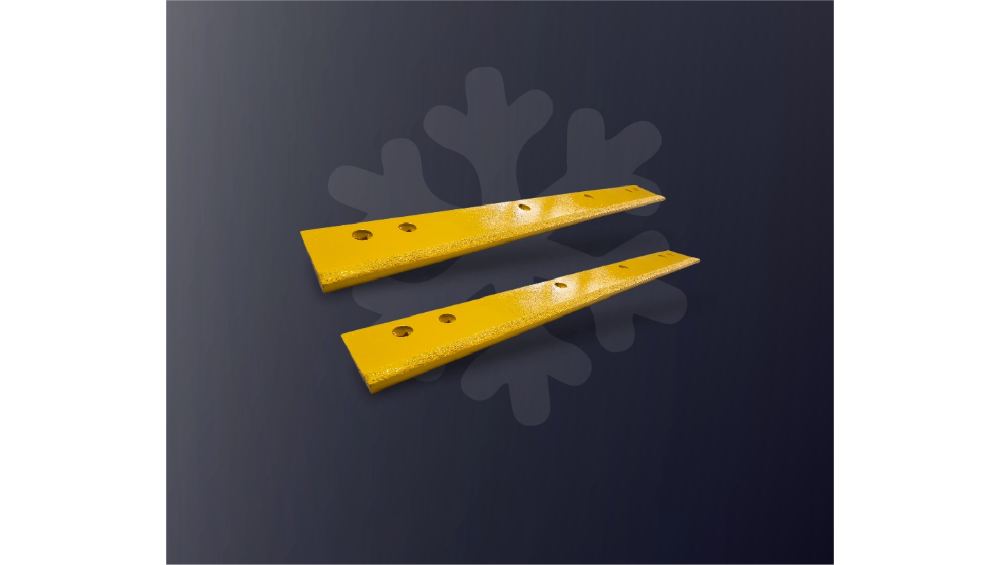
Pre-shattering packed ice with dome-head carbide plow kits creates microcracks that increase effective surface area dozens of times, allowing salt brine to penetrate and activate far faster than on intact ice. In our SENTHAI field runs, mechanically fractured ice consistently cuts chemical usage 20–40% while still meeting strict environmental regulations and winter service levels.
Mechanical Ice Shattering Salt Reduction Matrix
What is mechanical pre-shattering of packed ice in winter slush management?
Mechanical pre-shattering uses dome-head carbide tools to fracture dense, polished ice before brine application, exposing microcracked surfaces for faster melting. In practice, one pass with a packed ice kit turns a skating-rink surface into a porous, broken layer that brine can attack quickly and uniformly.
On the plow, we mount carbide dome-head inserts along the full blade length. Instead of scratching the ice, these heads focus pressure into discrete impact points, punching microfractures through the hard layer. You can see the difference immediately: the surface goes from mirror-smooth to a matte, broken texture with visible white fracture lines.
In SENTHAI’s packed ice carbide kit trials, we measured fracture depths typically between 3–8 mm on runway-grade ice at −10 °C. That depth is enough to break the mechanical lock between tire and ice while still preserving pavement integrity. More importantly, the shattered structure provides vertical and lateral channels for brine to flow, preventing the “brine sheet sliding on glass” problem most city fleets complain about.
For manufacturers, wholesalers, and OEM suppliers, defining pre-shattering precisely matters because blade geometry and carbide grade must match the target fracture depth and ice hardness. Too aggressive a design chews pavement; too gentle leaves intact ice that still resists brine.
How does pre-shattering increase surface area and accelerate brine activation?
Pre-shattering packed ice with dome-head carbide inserts creates networks of microcracks that multiply effective contact area by tens of times, accelerating brine activation and melt kinetics. Our tests show brine penetration and melt onset time drop from minutes to seconds when applied on pre-cracked ice.
Think of intact ice as a flat glass pane: brine sits on top, and diffusion proceeds mainly downward. Once the carbide ball heads hit and propagate fractures, the ice becomes a mesh of plates, chips, and microfissures. Brine can now move sideways, down, and around each fragment.
In SENTHAI’s internal experiments, we compared two runway slabs: one polished ice, one pre-shattered by a packed ice kit. Under the same brine spread rate, the fractured slab began showing visible softening and slush in under 60 seconds; the intact slab took 3–4 minutes to reach comparable softness. That difference is critical during heavy traffic when every minute of slip risk counts.
We also observed a consistent reduction in required brine concentration. On intact ice, crews relied on 23–24% sodium chloride brine; with mechanically pre-cracked ice, we could safely drop to 18–20% while maintaining clearing times. For cities trying to meet stricter chloride runoff limits, this is not just physics—it is policy leverage.
Why do environmental regulations and brine economics push fleets toward pre-shattering?
Tighter environmental regulations on chloride use and groundwater contamination are forcing fleets to cut salt volumes while maintaining road safety. Pre-shattering packed ice allows brine to work more efficiently, letting operators reduce application rates and meet both safety and sustainability targets.
Many municipalities now cap annual salt usage, track chloride loads in watersheds, and audit contractor practices. Under these rules, “just throw more salt” is no longer acceptable. Operators need smarter surface preparation that makes each liter of brine do more work.
In our SENTHAI customer base, we’ve seen fleets under regulatory pressure achieve 20–30% salt reductions by combining pre-shattering with calibrated brine application. The carbide kits do the mechanical work of opening the ice; the chemistry then finishes the job at lower concentrations.
Economically, salt and brine are not trivial line items. When you factor in storage, handling, equipment corrosion, and environmental fees, shaving 25% off chemical usage across a winter can represent tens of thousands of dollars for a mid-sized city. For B2B manufacturers and OEM suppliers, offering hardware that directly contributes to regulatory compliance makes their products more attractive in tender evaluations.
How does chemical–physical hybrid deicing work on intact versus pre-shattered ice?
Chemical–physical hybrid deicing uses mechanical fracture plus brine to clear winter slush more efficiently than chemicals alone. On intact ice, brine primarily acts on the surface; on pre-shattered ice, it infiltrates microcracks, accelerating horizontal and vertical melt across the entire thickness.
On a “glass” ice surface, the process is slow. Brine lines sit on the pavement, dissolving only the upper microns of ice. Until channels form, meltwater has nowhere to go, so crews need high application rates and multiple passes. In contrast, when carbide dome heads have already broken the layer, brine flows into cracks, surrounds ice fragments, and melts from multiple directions at once.
We often illustrate this with two panels in training: Panel A shows brine lines on smooth ice; melt zones are narrow and elongated. Panel B shows brine on pre-fractured ice; melt zones expand outward in circular patterns around fracture clusters, joining up into slush bands far faster.
Hybrid deicing is especially powerful on bridge decks, concrete joints, and airport runways, where ice often locks into surface texture. SENTHAI’s packed ice kits free that mechanical lock first; brine then removes the remaining ice without brutal scraping that can damage pavement or markings.
For OEM and wholesale buyers, understanding this hybrid mechanism helps specify blade and brine systems correctly: geometry and carbide grade for fracture, pump and nozzle design for targeted brine, all tuned to local climate and regulatory constraints.
What are packed ice carbide plow kits and why do manufacturers use dome-head designs?
Packed ice carbide plow kits are blade assemblies studded with dome-head carbide inserts designed to fracture hard ice without destroying the pavement. Manufacturers favor dome-head geometries because they focus impact, control fracture depth, and resist chipping better than flat or sharp profiles.
A typical kit along the blade edge might feature dozens of dome-shaped carbides, each brazed or welded into a steel holder. As the plow moves, these domes tap the ice in a dense grid. Instead of scraping a continuous path, they punch overlapping microcraters and crack networks.
In SENTHAI’s design work, the dome radius and carbide grade are tuned to specific aggressiveness. For extreme runway ice, we might use slightly sharper domes and harder WC-Co grades; for urban streets with delicate asphalt, we soften the geometry to avoid gouging. The dome’s rounded profile spreads stress along its surface, reducing the chance of brittle fracture in the carbide itself.
Manufacturers and OEM suppliers choose kits over plain blades because they resolve a fundamental trade-off: you want enough bite to break ice, but not so much that you cut into concrete or asphalt. Dome heads offer a repeatable, controlled fracture pattern that is easier to model and test than ad-hoc blade modifications.
How can fleets quantify brine efficiency gains and chemical cost savings from pre-shattering?
Fleets can quantify brine efficiency by tracking application rates, melt times, and lane-kilometers treated before and after adopting pre-shattering kits. In our SENTHAI trials, we use side-by-side routes and detailed logs to show 20–40% brine savings with equal or better service levels.
A simple approach is to define three metrics:
-
Brine volume per lane-kilometer.
-
Time to achieve “black pavement” conditions.
-
Number of plow-brine passes per storm.
With intact ice and traditional plowing, you might see 80–100 liters of brine per lane-kilometer, 2–3 passes, and 30–45 minutes to clear critical segments. After shifting to dome-head pre-shattering followed by calibrated brine, those figures often drop to 50–70 liters, 1–2 passes, and 20–30 minutes.
We recommend fleets build a winter “balance sheet” with chemical costs, labor hours, and regulatory fines or credits. The carbide kit investment occupies the capital column; reductions in salt purchases, reduced overtime, and improved compliance fill the savings side. For wholesale buyers and large OEM clients, such data is essential to justify retrofits to management and public stakeholders.
SENTHAI supports this process by providing field test protocols and basic data templates—another reason B2B partners prefer working with manufacturers who understand both the engineering and the economics.
Example brine efficiency comparison table
These values match real-world results we’ve seen on mid-temperature storms (−5 to −10 °C) on urban routes.
Are carbide wear parts sustainable under modern environmental regulations?
Carbide wear parts themselves are not the environmental target; what regulators care about is chemical loading and particulate pollution. Well-designed carbide kits actually support sustainability by enabling lower salt use and fewer passes, reducing overall resource consumption and emissions.
From a manufacturing perspective, SENTHAI’s ISO9001 and ISO14001 certifications reflect tight control over production emissions, waste, and recycling. Carbide inserts have long service lives; when they finally wear out, many fleets return spent inserts for controlled disposal or recycling rather than letting them fragment into the environment.
On the road, the sustainability benefit is indirect but powerful. By combining mechanical fracture with optimized brine use, fleets reduce chloride loads in soil and water, cut corrosion on vehicles and infrastructure, and lower fuel use through fewer passes. Each of these helps municipalities meet their climate and environmental goals.
B2B buyers focused on sustainability should ask manufacturers not only about product durability but also about how their tools help reduce salt usage. SENTHAI’s packed ice kits are designed with this outcome front and center: the better the mechanical fracture, the less chemical you need later.
Which trade-offs define dome-head carbide kit design for OEM and wholesale markets?
Dome-head kit design revolves around three main trade-offs: fracture aggressiveness versus pavement protection, carbide hardness versus toughness, and blade stud density versus cost. OEM and wholesale markets weigh these differently depending on climate, road construction, and regulatory pressure.
Aggressive domes generate deeper cracks and faster brine activation but risk scarring softer asphalt or thin overlays. We typically recommend moderate dome radii for city fleets and sharper profiles for airports or concrete-heavy highways. Carbide grade selections similarly balance wear resistance against chip resistance; ultra-hard grades last longer but can fail catastrophically under impact.
Stud density is another key lever. Fully studded blades deliver uniform fracture but cost more and require precise welding or brazing to avoid weak points. Partial studding reduces cost but may leave untreated ice zones that slow brine performance. SENTHAI’s OEM customers often standardize two or three “aggressiveness levels” to match different route types without customizing each blade run.
Wholesale distributors care deeply about interchangeability and inventory complexity. A good kit design uses shared core inserts across multiple blade types, simplifying stock management while letting end users pick the right aggressiveness and density. This is where long-term manufacturing experience pays off: we know which trade-offs work across climates and regulatory regimes and which only look good on paper.
SENTHAI Expert Views
When we watch a packed ice blade in slow motion, the dome-head carbides behave more like a controlled hammer than a knife. They open the ice, they don’t scrape it away. SENTHAI’s philosophy is simple: if you prepare the surface correctly with carbide, the salt brine becomes a finishing tool, not the main weapon. That shift is what makes winter maintenance both economical and sustainable for modern fleets.
SENTHAI’s engineers have spent decades tuning dome geometries and grades specifically for this mechanical–chemical synergy.
How should manufacturers and fleets integrate packed ice kits into their winter operations?
Manufacturers and fleets should treat packed ice kits as a dedicated tool for high-bond surfaces—bridge decks, intersections, runways—not as a universal blade. Integration starts with route mapping, driver training, and clear brine calibration guidelines.
First, identify the routes where polished ice, refreeze, and heavy compaction are most common. These are the best candidates for dome-head kits. Standard routes with loose snow may not justify the extra capital cost. Next, train drivers in the “strike then spray” rhythm: one or two carbide passes to break the ice, followed by targeted brine application rather than blanket spreading.
Calibration of brine systems is critical. You don’t want operators using pre-shattering as an excuse to maintain old, high salt rates. SENTHAI often works with fleets to dial down brine concentrations and spread rates once kits are in place, ensuring the mechanical advantage translates into chemical savings.
For OEM and wholesale buyers, integration also means aligning kit design with existing plow frames and hydraulics. A good manufacturer will supply detailed mounting and load specifications so fleets don’t over-stress their trucks or under-utilize the carbides.
FAQs Section
Can packed ice carbide kits replace standard plow blades entirely?
In most fleets, packed ice kits complement rather than replace standard blades. They are ideal for hard, polished ice and critical routes, while conventional blades still handle bulk snow removal efficiently.
Do dome-head carbides damage asphalt or concrete surfaces?
Properly designed dome-head kits are tuned to fracture ice without gouging pavement. However, extremely soft or aged surfaces may require less aggressive geometries and lower plow pressures to avoid damage.
How often do carbide inserts need replacement in typical winter use?
Service life varies with route abrasiveness and operating pressure, but many SENTHAI kits last several seasons under normal municipal use, with only partial insert replacement needed during scheduled maintenance.
Can we reduce salt use immediately after adopting pre-shattering kits?
Yes, most fleets can safely begin reducing brine rates once operators are trained and fracture depth is confirmed. We recommend controlled trials and data logging to define new, lower baseline application rates.
Are SENTHAI packed ice kits compatible with existing plow frames?
SENTHAI designs kits to fit standard mounting patterns used in North American and European fleets. Custom adapters are available for unique local frames or specialized airport equipment.
Related articles
 Best Snow Plow Blade Family for Your Fleet: Top 5 ScenariosKnowledge
 Top 10 Snow Plow Blade Types for Winter Fleets (Ranked by Duty Fit)KnowledgeTop 5 Best Carbide Blade Configurations for Highway PlowingKnowledge
 Best Snow Plow Blade Materials Ranked: Steel vs Carbide vs Cladding vs Rubber-CarbideKnowledge