




Front, Underbody, or Wing: Choosing Carbide Edges by Mounting Position
The same truck can carry three different cutting edges, and they do not have to match. Front blades, underbody scrapers, and wing blades work different surfaces under different loads, and each position wears edges…
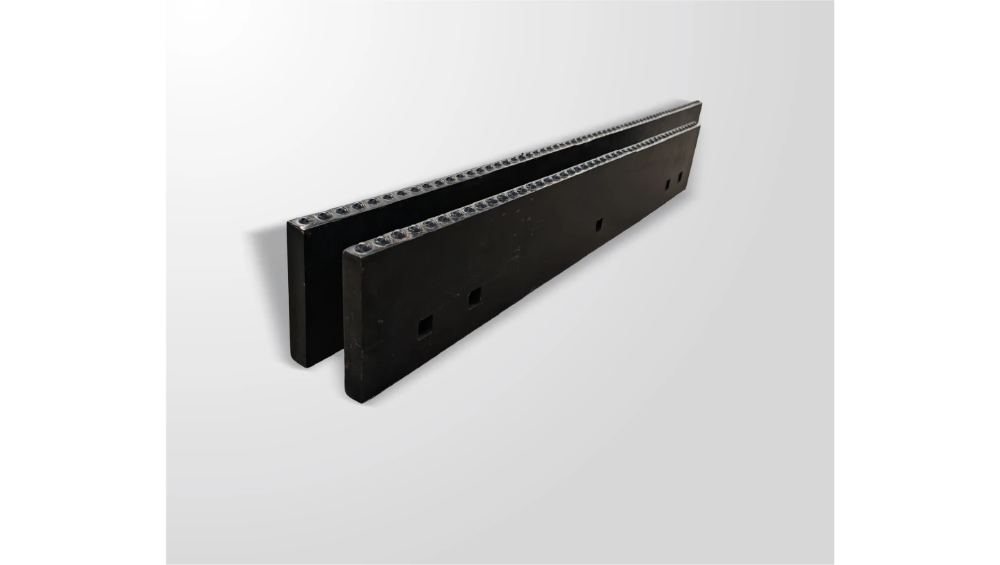
The same truck can carry three different cutting edges, and they do not have to match. Front blades, underbody scrapers, and wing blades work different surfaces under different loads, and each position wears edges differently. Specifying by position, rather than by truck model, is how a fleet gets the right blade on every mount.
This article explains how the three mounting positions differ, what each one demands from a carbide edge, and how to build a position-based blade matrix that turns the fleet’s equipment list into a specification.
Mounting position changes everything
A plow position is not just a location on the truck; it is a different operating environment. The front blade sees high speed and full-width contact. The underbody scraper works close to the ground under constant pressure. The wing blade works at an angle on the shoulder, where the load is asymmetric.
Those differences change the wear pattern, the impact exposure, and the edge specification. A blade that serves well on the front can be wrong on the wing, not because it is a bad blade, but because it is the wrong shape of duty.
SENTHAI describes its carbide snow plow blades as mountable on the front, underbody, or wing of a plow, which means the product family covers all three positions. The carbide snow plow blade page is the reference for the family; the position is the input for the specific choice.
What makes front blades different?
The front blade is the workhorse. It clears the main path at plowing speed, takes the first impact with the snowpack, and covers the full width of the road. Its edge needs strong wear resistance for high mileage and enough toughness for the impacts that come with road debris and obstacles.
The front position is where the carbide edge’s economics show up most clearly: high abrasion, high changeout cost, and the biggest savings from an edge that lasts. It is also where the blade’s cutting angle and edge profile matter most, because the front edge sets the scraping quality for the whole pass.
For front blades, the specification priority is wear life under abrasive, high-speed duty, with the carbide configuration matched to the route surface.
The front edge is also the one operators notice first. When it loses its profile, the pass quality drops, the cab fills with chatter, and the crew starts planning a changeout. Tracking the front edge’s wear against route mileage gives the fleet the changeout data that justifies the carbide investment, because the front position is where the wear economics are largest.
Underbody blades: scraping and pack
The underbody scraper works beneath the truck, close to the pavement, and its job is full-width scraping of the material the front blade left behind. The edge operates under constant downward pressure and spends more time in contact with packed snow and ice.
The underbody position has its own wear character: steady, continuous abrasion rather than high-speed impact. The edge needs carbide that holds a profile under constant contact, and the mounting needs to handle the loads of scraping against the road surface.
For underbody blades, the specification priority is abrasion resistance and predictable wear, with the edge profile matched to the scraping duty. The position is also where edge thickness and the ability to hold a flat contact line matter most.
The underbody position is often the forgotten one in maintenance planning, because it is less visible than the front edge. But a worn underbody scraper leaves the pack behind and forces the chemical spreader to compensate, so the position deserves its own inspection schedule and its own changeout record, separate from the front blade.
Wing blades: shoulder and berm duty
The wing blade works at an angle on the shoulder, clearing the berm and the edge of the road. Its load is asymmetric: one end of the edge carries more contact than the other, and the blade takes impacts from curb heads, guardrails, and the transition between pavement and shoulder.
The wing position wears edges unevenly, which is why the specification should account for the angle and the impact exposure. A carbide edge on a wing needs toughness for the shoulder impacts and enough abrasion resistance for the material it pushes, with the profile chosen for the angle of attack.
For wing blades, the specification priority is impact toughness and the ability to survive asymmetric loading, with the edge profile matched to the shoulder duty.
Wing edges also benefit from a dedicated inspection habit, because the asymmetric wear is easy to miss from the cab. Checking the wing edge at the end of a heavy shift catches the shoulder impacts before they turn into a section failure, and the inspection record builds the route data that refines the wing specification over seasons.
What goes into a position-based blade matrix?
The position-based matrix is the practical tool for fleet-wide specification. Build it per truck:
| Plow position | Duty profile | Specification priority |
|---|---|---|
| Front | High speed, full-width clearing | Wear life, cutting angle, edge profile |
| Underbody | Constant-pressure scraping | Abrasion resistance, flat contact |
| Wing | Angled shoulder work | Impact toughness, asymmetric load |
For each truck, record the position, the edge length and hole pattern, the carbide configuration, and the route group it serves. The matrix turns the fleet’s equipment list into a per-position specification that the buyer can hand to the manufacturer.
The matrix should be reviewed whenever the fleet changes: a new truck model, a route reassignment, or a duty change on a corridor. The review is quick because the matrix is a table, and it prevents the slow drift where the fleet keeps ordering by truck model long after the routes have changed. Keeping the matrix current is a small maintenance task that protects every later buying decision.
Specify by position, not by truck
The rule that makes the matrix work is simple: specify by position, not by truck model. Two trucks of the same model can run different edges on the same position if their routes differ, and two positions on the same truck can run different edges without conflict.
The matrix also protects the order. When the buyer sends the per-position list instead of a truck count, the manufacturer can confirm the length, hole pattern, and configuration for each mount, and the receiving team can check the delivery against the position assignments.
The matrix has one more benefit: it makes the spare parts plan position-aware. A fleet that stocks edges by position, rather than by truck model, keeps the right lengths and patterns on the shelf for the mounts that fail most often. The inventory matches the duty, and the changeout crew finds the right part without a hunt through the warehouse.
The receiving check follows the same logic: the delivery is checked against the position assignments, so a wrong edge is caught at the dock instead of at the truck.
That small habit protects the whole matrix, because a wrong part discovered at the dock is a return; the same part discovered on a truck is a service failure.
The dock check takes minutes and is worth the price of every wrong edge it catches.
To build the matrix for your fleet, gather the plow models, position data, and route groups, and send them through the contact page with a request for a position-based confirmation. The mounting-position blade reference is the family reference; the position matrix is the order.
Expert view — SENTHAI engineering team: “Front, underbody, and wing are three jobs, not one blade. Specify by position and the wear tells the truth.”
Frequently Asked Questions
Do front, underbody, and wing blades need different specs? Yes. Each position has a different duty profile, wear pattern, and impact exposure, so the edge specification should follow the position.
Which position wears edges fastest? It depends on the fleet, but front blades see the highest mileage and abrasion, underbody blades face constant scraping, and wing blades take asymmetric shoulder loads. Track wear per position to find the fleet’s own answer.
Can the same blade model run on all three positions? Only if the length, hole pattern, and duty match. Specify per position and confirm the configuration against the mounting.
What should the front blade specification prioritize? Wear life under high-speed, abrasive duty, plus the cutting angle and edge profile that set scraping quality.
What is special about underbody edge selection? Constant-pressure scraping favors abrasion resistance and a flat contact profile, with edge thickness matched to the scraping duty.
Why do wing blades wear unevenly? The angled shoulder work loads one end of the edge more than the other. The specification should account for the asymmetry and the impact exposure.
How do I build the position matrix? Record per truck the position, edge length and hole pattern, carbide configuration, and route group, then use the matrix for ordering and receiving checks.
Should the maintenance schedule differ by position? Yes. Front edges follow route mileage, underbody scrapers need their own inspection rhythm, and wing edges should be checked after heavy shoulder work. Each position wears on its own clock.
Sources
Related articles
 Best Snow Plow Blade Family for Your Fleet: Top 5 ScenariosKnowledge
 Top 10 Snow Plow Blade Types for Winter Fleets (Ranked by Duty Fit)Knowledge
 Top 5 Best Carbide Blade Configurations for Highway PlowingKnowledge
 Best Snow Plow Blade Materials Ranked: Steel vs Carbide vs Cladding vs Rubber-CarbideKnowledge