




Carbide Inserts for Snow Plow Blades: Types, Specs, and Selection
The carbide insert is where a snow plow blade's wear life lives. The steel carrier holds the blade together, but the inserts are the teeth that scrape asphalt, fracture ice, and absorb the impacts…
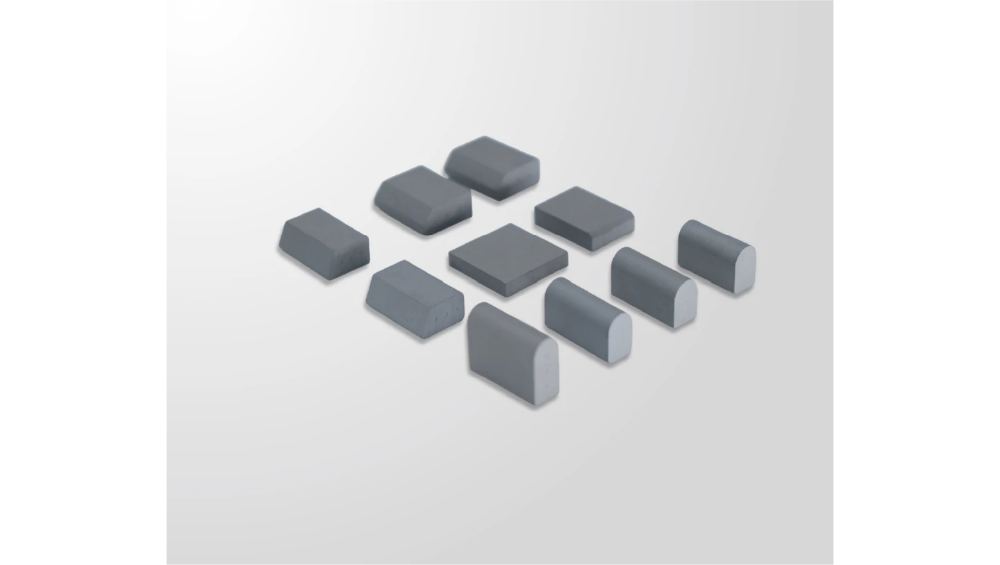
The carbide insert is where a snow plow blade’s wear life lives. The steel carrier holds the blade together, but the inserts are the teeth that scrape asphalt, fracture ice, and absorb the impacts that decide whether a blade lasts a season or a week. An order that says “carbide inserts” without shape, size, angle, or material information cannot be manufactured correctly, because the supplier will make the choice and the choice will be made without your route data.
This guide explains the two insert shape families used in snow plow blades, walks through the standard specification table published by SENTHAI, a Thailand-based manufacturer of carbide wear parts, and gives buyers and OEMs a selection workflow that turns equipment and route information into a correct order. It also lists the material and quality fields you should confirm with the supplier, because a size table alone is not a complete specification.
The insert is where wear life lives
Think of a snow plow blade as a system with two jobs. The steel carrier provides structure, mounting, and the transfer of downward force to the road. The carbide inserts provide the working edge: the small, extremely hard pieces that actually scrape and cut. When the inserts wear down or fracture, the blade stops performing even if the carrier is in perfect condition.
SENTHAI, which manufactures both carbide snow plow blades and the inserts that go into them, describes its inserts as made from 100% virgin micro-grain tungsten carbide for hardness, wear resistance, and impact strength, produced with compression molding and vacuum sintering and monitored for grain size and hardness during production. Those process statements matter because they affect consistency, but they should be verified with the material documentation for your specific order.
Insert life is not decided by one dimension. It is decided by the combination of exposed height, insert orientation, blade attack angle, carbide grade, cobalt content, grain size, the balance between hardness and toughness, brazing quality, and the abrasiveness and impact exposure of the route. Keep that full picture in mind when comparing specifications.
What are the two insert shape families?
SENTHAI’s snow plow insert range is organized around two shape families: trapezoid and bullnose.
Trapezoid inserts use an angled cutting face that presents a defined edge to the pavement. As a general selection principle, this shape suits aggressive scraping of packed snow and ice and produces a more defined wear pattern. Bullnose inserts use a rounded nose that spreads contact over a larger area, which as a general principle favors impact resistance and steadier wear on routes with joints, manholes, and embedded debris.
These are general principles, not engineering guarantees. The right family for a given blade depends on the carbide grade, the carrier slot design, and the operating conditions, so the final choice should be confirmed with the manufacturer’s engineering data rather than assumed from the shape alone. A supplier that offers both families, as SENTHAI does, lets the selection be made on application rather than on whatever shape is in stock.
Standard sizes straight from the spec sheet
SENTHAI publishes the following standard insert specifications for snow plow blades. The table is reproduced from the company’s carbide inserts product page.
| Shape | Size (mm) | Angle | Radian |
|---|---|---|---|
| Trapezoid | 25.4 x 16.14 x 9.27 | 25° | R1.95 |
| Trapezoid | 25.15 x 20.0 x 9.27 | 40° | R2.8 |
| Trapezoid | 3.175 x 15.95 x 9.22 | 25° | R1.59 |
| Trapezoid | 6.35 x 15.95 x 9.22 | 25° | R1.59 |
| Trapezoid | 3.175 x 20.06 x 9.22 | 40° | R3.07 |
| Trapezoid | 6.35 x 20.06 x 9.22 | 40° | R3.07 |
| Bullnose | 3.175 x 19.05 x 9.22 | None | R4.61 |
| Bullnose | 6.35 x 19.05 x 9.22 | None | R4.61 |
| Bullnose | 3.175 x 13.56 x 9.22 | None | R4.61 |
| Bullnose | 6.35 x 13.56 x 9.22 | None | R4.61 |
Two reading notes. First, SENTHAI publishes each size as three numerical fields but does not label the orientation of each field in the table. Do not assume the order is length-width-thickness: confirm the drawing and dimension order with the manufacturer before using the values for tooling, slot design, or inspection. Second, the angle and radian define the cutting geometry, and “None” on the bullnose rows means the published spec has no defined cutting angle, consistent with the rounded-nose design.
SENTHAI states it can hold dimensional tolerances within ±0.02 mm, which the company describes as supporting high-speed robotic pick-and-place and automated induction brazing. That tolerance is an insert-level specification; blade-level length and hole positions are separate specifications and should be confirmed on the blade drawing.
How do you run a practical selection workflow?
Selection does not require a laboratory, but it does require a sequence.
Step 1: Define the application. Write down the equipment, blade type, plow position, route surface, operating speed, and the failure mode you are trying to solve: fast wear, chipping, or insert loss.
Step 2: Measure the existing insert or slot. Measure length, width, thickness, and shape, or work from the carrier drawing. Compare against the standard table before considering a custom shape.
Step 3: Match against the standard spec sheet. Identify the standard sizes that fit the slot, then choose within that set based on the application and the manufacturer’s engineering guidance. If a standard size fits, order the standard rather than a custom part.
Step 4: Confirm manufacturing requirements. For OEM assembly, confirm the insert tolerance, the surface preparation for brazing, and batch consistency requirements. SENTHAI describes a specialized surface conditioning process, including precision sandblasting, that exposes a clean, cobalt-rich surface for stronger brazing bonds.
Expert view — SENTHAI engineering team: “The most common order error is the dimension order. The spec table gives three numbers, and before anyone cuts tooling the drawing has to settle which number is length. Confirming that one point saves an entire batch, and it is a question any buyer should feel comfortable asking.”
Step 5: Verify with a sample lot. Run a sample lot through your assembly or field trial and check dimensional fit, brazing behavior, and wear performance. SENTHAI states that sample availability depends on the product and specification, with terms confirmed in writing.
Specification fields to request
A complete insert specification is more than a size. Request these fields from the supplier and record the confirmed values:
| Specification field | What to confirm |
|---|---|
| Carbide grade | Designation and applicable material standard |
| Grain size | Micron range or grade classification |
| Cobalt content | Percentage or binder specification |
| Density | g/cm³, per material certificate |
| Hardness | HRA range measured and recorded |
| Toughness / TRS | Transverse rupture strength or fracture-toughness data if available |
| Surface preparation | Brazing surface condition and cleaning method |
| Dimensional inspection | Measuring method and acceptance tolerance |
| Brazing acceptance | Criteria for bond integrity and inspection method |
| Batch documentation | Batch number, material records, and test results |
If a supplier cannot provide these fields with values or a clear “to be confirmed” status, the specification is incomplete.
When to go custom
Standard inserts cover a large share of snow plow blade production, but not every design. Custom inserts are justified when the blade geometry, carrier slot, or operating conditions fall outside the standard table.
The custom path is a drawing process, not a conversation. Define the shape, dimensions, angle, and radius in a drawing or CAD model, specify the tolerance and material requirements, and confirm surface preparation and brazing behavior with the manufacturer. SENTHAI states that it offers customization based on drawings, samples, or specifications, using 100% virgin micro-grain tungsten carbide with controlled sintering.
Before requesting a custom part, check two things. First, confirm that no standard size actually fits, because custom parts carry tooling and development costs. Second, confirm that the custom geometry addresses the failure mode identified in Step 1 rather than just looking different.
Find the right insert for your blade
Insert selection is the sum of small decisions: shape, size, angle, tolerance, surface preparation, material, and batch consistency. Each one is specifiable and verifiable. The manufacturers that make the process easy are those that publish real specifications and confirm details in writing, which is what SENTHAI’s carbide inserts page does with its published size table and process descriptions.
To move forward, gather your blade drawing or existing insert sample, measure the slot, note your route and failure conditions, and submit the insert drawing through the contact page for a confirmed match against the standard range or a drawing-based custom proposal. If the supplier is not yet qualified, work through the quality-control and documentation requirements first, so the insert order sits inside a verified supply relationship.
Frequently Asked Questions
What is the difference between trapezoid and bullnose inserts? As a general principle, trapezoid inserts use an angled cutting face for aggressive scraping, while bullnose inserts use a rounded nose that favors impact resistance. The final choice depends on carbide grade, carrier design, and route conditions.
How do I know which insert size my blade needs? Measure the existing insert or the carrier slot, or work from the drawing, and compare against the standard specification table. Confirm the dimension order and drawing with the manufacturer before using the values.
Does the size table show length, width, and thickness? SENTHAI publishes three numerical fields per size but does not label their orientation in the table. Confirm the dimension order on the drawing before using the values for tooling or inspection.
Why does tolerance matter for inserts? If inserts do not fit the carrier slot consistently, automated assembly jams and manual assembly slows down. SENTHAI states it holds insert tolerances within ±0.02 mm; blade-level dimensions and hole positions are separate specifications.
Can inserts be made in custom shapes? Yes. SENTHAI offers customization based on drawings, samples, or specifications. Custom parts should be justified by a real fit or performance gap, not preference.
What is HRA hardness, and why does it matter? HRA is a hardness scale used for cemented carbides, and SENTHAI states it monitors hardness and grain size during production. Hardness matters for wear resistance, but inserts also need toughness for impact, so the full material profile matters more than a single number.
What material information should I request? Grade, grain size, cobalt content, density, hardness range, toughness data if available, surface preparation, dimensional inspection method, brazing acceptance criteria, and batch documentation.
How should I test inserts before a large order? Run a sample lot through your assembly or field application, check dimensional fit, brazing behavior, and wear performance, and confirm sample terms in writing before shipping anything.
Sources
Related articles
 Best Snow Plow Blade Family for Your Fleet: Top 5 ScenariosKnowledge
 Top 10 Snow Plow Blade Types for Winter Fleets (Ranked by Duty Fit)Knowledge
 Top 5 Best Carbide Blade Configurations for Highway PlowingKnowledge
 Best Snow Plow Blade Materials Ranked: Steel vs Carbide vs Cladding vs Rubber-CarbideKnowledge