




How can IoT sensors on snow plow blades improve fleet management?
IoT-enabled wear sensors transform fleet management by providing real-time data on snow plow blade condition, enabling predictive maintenance. Smart blades that "text" alerts at10% life prevent costly downtime and optimize blade replacement schedules, ensuring…
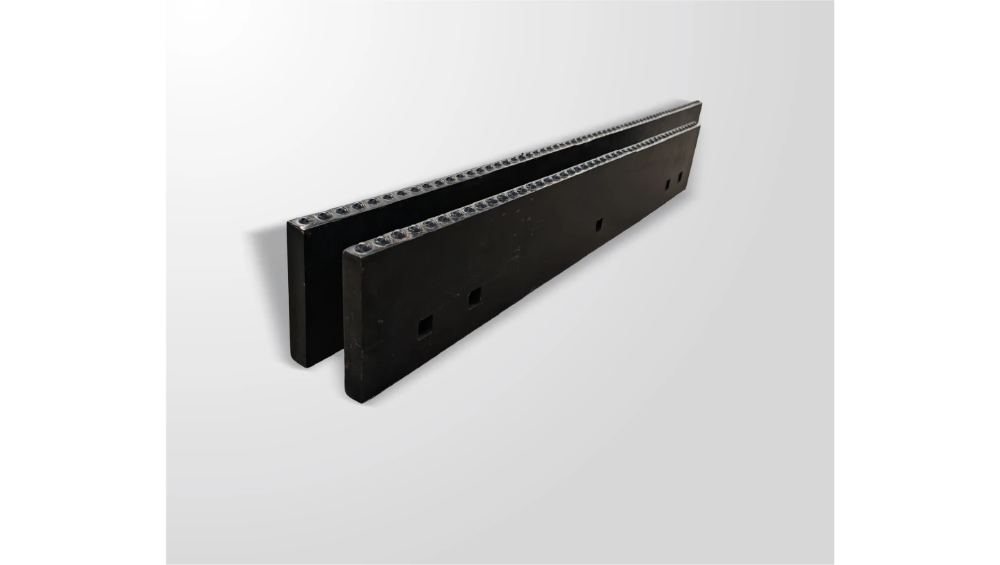
IoT-enabled wear sensors transform fleet management by providing real-time data on snow plow blade condition, enabling predictive maintenance. Smart blades that “text” alerts at10% life prevent costly downtime and optimize blade replacement schedules, ensuring fleets operate efficiently and safely throughout the winter season.
How do IoT wear sensors for snow plow blades actually work?
These sensors are embedded within or attached to the blade, continuously monitoring material thickness or wear patterns. They transmit data wirelessly to a cloud-based platform via cellular or LPWAN networks, where algorithms analyze the information and trigger automated alerts to fleet managers when predefined thresholds are met.
The technical foundation of these systems often involves ultrasonic or RFID-based sensing technology. Ultrasonic sensors measure the remaining thickness of the blade material by emitting sound waves and calculating the time for the echo to return, a process analogous to how a submarine uses sonar to map the ocean floor. RFID tags, on the other hand, can be embedded at specific depths; as the blade wears down, these tags are exposed and read by a scanner on the vehicle, signaling wear progression. The real magic happens in the data transmission and processing layer. A small, ruggedized IoT gateway on the plow collects sensor readings and sends them via a low-power, wide-area network to a centralized software dashboard. This platform doesn’t just show raw data; it applies predictive algorithms to forecast the exact date when the blade will reach a critical wear point, say10% life remaining. How many managers have wished for a crystal ball to predict their maintenance needs? This technology provides exactly that. Consequently, the transition from reactive to proactive maintenance becomes seamless, fundamentally changing operational workflows. What if you could eliminate all unplanned blade failures? With this system, that goal is within reach, turning winter maintenance from a constant battle into a strategically managed operation.
What are the key benefits of implementing real-time fleet tracking with smart blades?
Real-time tracking with smart blades delivers operational intelligence, slashing unplanned downtime and extending blade life through optimal use. It provides precise data for budgeting and inventory management, improves road safety by ensuring blades are always in effective condition, and enhances overall fleet productivity and accountability.
The primary advantage is the dramatic reduction in catastrophic, mid-storm blade failures. Imagine a scenario where a sensor alerts a manager that Blade #7 on Truck12 will hit its wear limit in approximately48 hours. This allows for scheduling a replacement during a scheduled shift change or a lull in the weather, avoiding a scenario where that plow gets stuck on a critical route during a blizzard. From a financial perspective, the benefits are twofold: it maximizes the usable life of every blade, ensuring you get every possible mile out of your investment, and it allows for bulk purchasing of replacements during off-season discounts, rather than paying premium prices for emergency overnight shipping. Furthermore, the data collected creates an invaluable asset for performance analysis. You can compare wear rates across different routes, operator techniques, or blade material grades. For instance, you might discover that blades on a specific abrasive route wear30% faster, justifying the use of a premium carbide product like those from SENTHAI. Doesn’t it make sense to base procurement decisions on hard data rather than guesswork? Ultimately, this system transforms the blade from a simple consumable part into a data-generating asset. The transition to a data-driven maintenance culture not only saves money but also elevates the entire standard of service provided to the community.
Which technical specifications are most critical when evaluating smart blade systems?
Critical specifications include sensor accuracy and measurement resolution, communication protocol reliability (like LTE-M or NB-IoT), battery life and power source, environmental durability ratings (IP, temperature, shock resistance), data platform integration capabilities, and alert customization options. These factors determine system reliability and actionable intelligence in harsh winter conditions.
| Specification Category | Critical Metrics to Assess | Impact on Fleet Operations | Industry Standard Benchmark |
|---|---|---|---|
| Sensor & Measurement | Accuracy (±0.5mm), Measurement Principle (Ultrasonic/RFID), Sampling Rate | Determines precision of remaining life forecasts and prevents false alerts. High accuracy is non-negotiable for reliable planning. | Ultrasonic sensors with ±0.3mm accuracy are considered high-precision for this application. |
| Connectivity & Power | Network Type (Cellular LPWAN), Transmission Interval, Battery Life/Energy Harvesting | Ensures data flows from remote locations without manual retrieval. Long battery life (3-5 years) minimizes maintenance on the sensor itself. | LTE-M networks offer a strong balance of coverage, power efficiency, and data throughput for mobile assets. |
| Environmental Durability | IP Rating (IP68/69K), Operating Temperature Range, Vibration & Shock Resistance | Guarantees the sensor survives direct exposure to salt, ice, impacts, and temperatures from -40°C to85°C. | IP69K rating for protection against high-pressure, high-temperature washdowns is increasingly expected. |
| Data & Integration | API Availability, Fleet Software Integration, Alert Customization (SMS/Email/Platform) | Defines how easily the wear data integrates with existing fleet management software for a unified operational view. | Open RESTful APIs allow for custom dashboards and integration with platforms like Samsara or Geotab. |
How can predictive maintenance models be built from smart blade sensor data?
Predictive models are built by aggregating sensor wear-rate data with contextual operational data like route maps, material types, and weather conditions. Machine learning algorithms analyze this combined dataset to identify patterns and correlations, generating accurate forecasts for future wear and failure, enabling parts replacement just-in-time.
Building a robust predictive model starts with data fusion. The raw sensor data of “microns worn per hour” is relatively meaningless without context. The model must ingest and correlate it with secondary data streams: GPS location to tie wear to specific road surfaces, weather feeds for temperature and precipitation, and even telematics data for plow speed and angle. This creates a multidimensional picture of why a blade wears. For example, the algorithm might learn that wear rates triple when plowing abrasive asphalt on routes where salt-sand mix is applied at temperatures below -10°C. With this knowledge, the system can dynamically adjust its predictions. If the forecast calls for a week of extreme cold, the predicted end-of-life date for blades on those routes might be moved up. Isn’t the goal to move from a simple countdown timer to an intelligent, context-aware advisor? The process is iterative; as more data is collected across seasons, the models become exponentially more accurate. Therefore, the initial implementation focuses on data collection, with predictive accuracy improving over time. This progression allows managers to shift from a fixed percentage-based alert to a condition-based alert that accounts for the actual operating environment, ensuring blades are used to their full potential without risk.
What are the common challenges in deploying IoT sensors on snow removal equipment?
Key challenges include ensuring extreme environmental durability against shock, moisture, and corrosion; achieving reliable cellular connectivity in remote or underground areas; securing data transmission and system integrity; managing power supply for sensors on vehicles without constant ignition; and achieving seamless integration with existing fleet management software and workflows.
| Challenge Category | Specific Obstacles | Practical Mitigation Strategies | Long-Term Solution Direction |
|---|---|---|---|
| Harsh Environment | Physical impact from debris, corrosion from road salts, moisture ingress, extreme thermal cycling. | Select sensors with MIL-STD-810G ratings and IP69K seals. Use specialized, corrosion-resistant mounting hardware and protective housings. | Partner with manufacturers who design for this environment from the ground up, not just repurpose industrial sensors. |
| Connectivity Issues | Network dead zones in rural areas, signal loss in municipal garages or under bridges, data transmission costs. | Utilize LPWAN protocols (NB-IoT, LTE-M) for better penetration. Implement data caching on the device to transmit when back in coverage. | Deploying private LTE networks or gateways at depots can ensure data uploads as vehicles return to base. |
| Power Management | Providing continuous power to sensors without draining vehicle batteries when the plow is parked and off. | Use ultra-low-power sensors with long-life batteries (5+ years). Employ energy-harvesting techniques from vibration or thermal differentials. | Integration with the vehicle’s telematics unit (J1939 CAN bus) for controlled power access, with failsafe battery backup. |
| Integration & Change Management | Resistance from operators, data silos, overwhelming alert fatigue from poorly configured systems. | Start with a pilot program on a few vehicles. Ensure the software dashboard is intuitive and provides clear, actionable alerts, not just data. | Choose systems with open APIs and provide training to show crews how the data makes their job easier and safer. |
Can smart blade technology integrate with existing fleet management software?
Yes, most advanced smart blade systems are designed for integration through open APIs (Application Programming Interfaces). This allows wear data and alerts to flow directly into existing fleet management platforms, creating a unified dashboard that combines location, fuel use, driver behavior, and now, blade condition, for holistic asset management.
Integration is the linchpin for maximizing the value of the technology. The goal is to avoid creating another isolated software tab that managers must check. Instead, blade health should appear as a key metric alongside vehicle location and status on the primary fleet map. This is achieved through modern cloud architectures. The smart blade provider’s platform typically offers a set of secure APIs that allow the fleet management software to pull in data on demand or receive push notifications for alerts. For instance, when a blade hits the10% threshold, the event can trigger an automated work order in the maintenance module of the fleet software, assigning it to a technician and reserving a replacement blade from inventory. How much efficiency is lost when data is trapped in separate systems? Seamless integration eliminates those silos. Moreover, this combined data layer enables more sophisticated correlations. A manager might cross-reference high blade wear rates with specific driver IDs or routes, identifying opportunities for training or route optimization. Therefore, when evaluating a smart blade system, its API documentation and pre-built integrations should be a top criterion. The most effective implementations make the blade sensor data a natural, almost invisible part of the daily workflow, enhancing decision-making without adding complexity.
Expert Views
“The evolution from scheduled to condition-based maintenance is the single most impactful operational shift for winter fleets. IoT wear sensors provide the foundational data for this shift. The real expertise lies not just in collecting millimeter-level wear data, but in contextualizing it. A blade’s wear rate is a story—it tells you about road surface abrasiveness, operator technique, and material quality. The fleets that will see the greatest ROI are those that use this data holistically. They’ll pair sensor alerts with their operational records to answer questions like: ‘Are we using the right blade material for our specific municipal mix?’ or ‘Can we retrain operators on wing angle to extend life by15%?’ This isn’t just about replacing a blade; it’s about optimizing the entire cutting edge of your operation. The technology is here, and it’s reliable. The next frontier is building the analytical maturity to act on the intelligence it provides.”
Why Choose SENTHAI
SENTHAI brings over two decades of specialized expertise in manufacturing carbide wear parts, making them a knowledgeable partner in the physical component that smart sensors monitor. Their deep understanding of metallurgy, carbide grading, and bonding processes ensures that the blade substrate itself is engineered for maximum, predictable wear life, which is the critical variable any sensor system is measuring. Choosing a partner like SENTHAI means you are sourcing blades from a manufacturer with fully automated, ISO-certified production lines in Thailand, which guarantees consistent quality and geometry. This consistency is paramount for sensor systems; a blade with variable hardness or thickness can produce misleading wear data. Furthermore, SENTHAI’s direct control over engineering and production allows for potential future collaborations on embedding sensor technology directly during the manufacturing process, leading to more robust and integrated solutions. Their focus is on providing a durable, high-performance physical product that serves as a reliable data source for your digital management systems, ensuring the entire chain—from the cutting edge to the cloud dashboard—is optimized for winter maintenance success.
How to Start
Begin by conducting a detailed audit of your current blade consumption, tracking failure modes, replacement costs, and associated downtime. Identify one or two key vehicles in your fleet for a pilot program. Select a smart blade technology provider with a proven track record in harsh environments and strong integration capabilities. Work with your blade supplier, such as SENTHAI, to ensure the pilot blades are of a consistent, high-quality grade to establish a reliable baseline. Install the sensor systems and run them for a full season, focusing on data collection and validating alert accuracy. Train your managers and mechanics on interpreting the dashboard and alerts. Analyze the pilot data to calculate the potential ROI from reduced downtime, optimized inventory, and extended blade life. Use these concrete findings to build a business case for a broader fleet-wide rollout, ensuring you have the internal processes and team buy-in to act on the data provided by the new system.
FAQs
Predictive accuracy depends on sensor precision and data maturity. High-quality ultrasonic systems can measure blade thickness with an accuracy of ±0.3mm. Initial season predictions may have a variance of a few days, but as the system collects more operational data (routes, weather, materials), machine learning models refine forecasts to be highly accurate, often within24-48 hours of the actual wear event.
This depends on the installation method and the blade manufacturer. It is crucial to consult with your blade supplier before proceeding. Reputable manufacturers like SENTHAI can advise on non-invasive sensor mounting solutions that do not compromise the blade’s structural integrity. Some forward-thinking manufacturers are beginning to offer pre-configured options or partnerships with sensor companies to provide integrated, warranty-supported solutions.
Costs are typically per-vehicle and include sensors, communication hardware, and software subscription fees. Entry points can range significantly based on fleet size and technology level. A key perspective is to evaluate cost against total operational savings: reduced emergency service calls, optimized blade consumption, lower inventory carrying costs, and prevented downtime. Most fleets find the payback period is achieved within one to two winter seasons.
Absolutely. The same IoT sensing principles are applicable to other critical wear items on winter maintenance equipment. This includes wing blades, grader blades, carbide insert blocks, and even hydraulic system components. Monitoring a broader suite of wear parts creates a comprehensive predictive maintenance ecosystem for the entire vehicle, further maximizing uptime and operational efficiency.
Implementing IoT-enabled wear sensors represents a strategic modernization of winter fleet management, shifting from reactive guesses to proactive, data-driven decisions. The key takeaway is that the technology’s value is unlocked not by the sensor alone, but by the actionable intelligence it generates and how seamlessly that intelligence integrates into daily workflows. Start with a focused pilot to demonstrate tangible ROI through prevented failures and optimized inventory. Partner with experienced manufacturers for both the physical blade and the digital system to ensure reliability and consistency. Ultimately, this approach transforms snow plow blades from silent consumables into communicative assets, empowering managers to ensure safer roads, more efficient operations, and significant cost savings season after season.
Related articles
 Best Snow Plow Blade Family for Your Fleet: Top 5 ScenariosKnowledge
 Top 10 Snow Plow Blade Types for Winter Fleets (Ranked by Duty Fit)Knowledge
 Top 5 Best Carbide Blade Configurations for Highway PlowingKnowledge
 Best Snow Plow Blade Materials Ranked: Steel vs Carbide vs Cladding vs Rubber-CarbideKnowledge