
Sampling a Wear Part Order: First Article, Pilot and Production
A sampling programme is the last point at which a wear part can be changed cheaply. Once a batch is sitting in a warehouse, the only remedies left are rework, concession or a claim.…
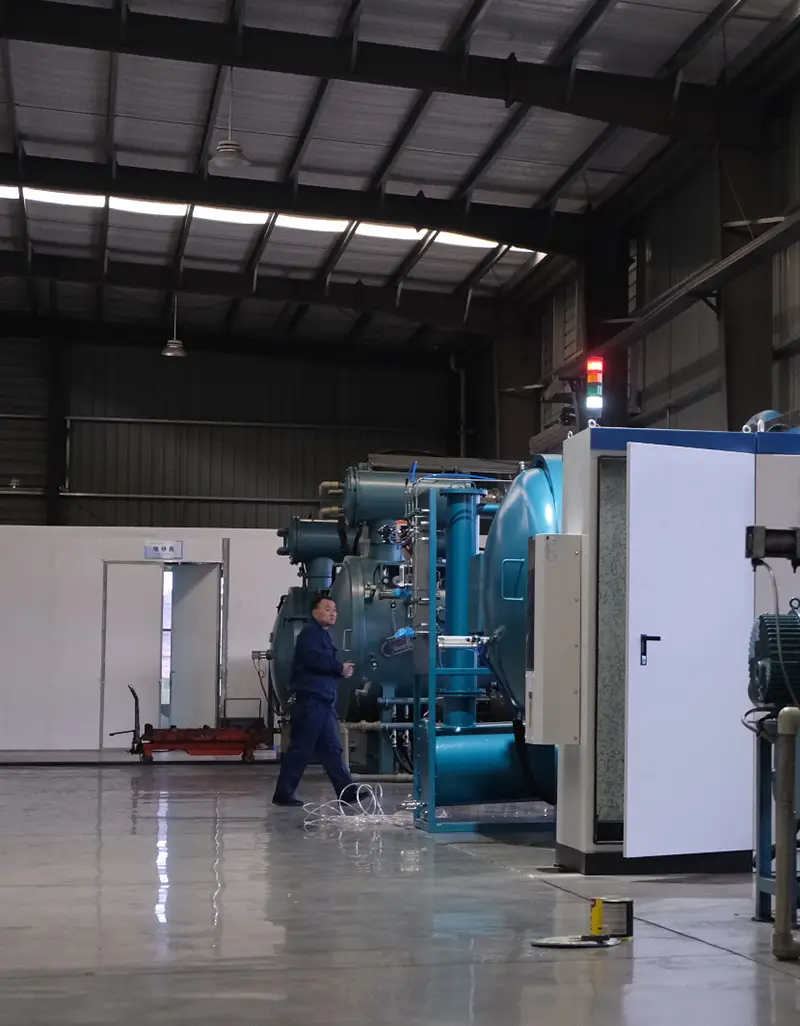
A sampling programme is the last point at which a wear part can be changed cheaply. Once a batch is sitting in a warehouse, the only remedies left are rework, concession or a claim. A wear parts sampling process exists to move the decision forward from the delivery to the drawing, and it works only when each stage has a defined purpose, a defined evidence pack and a named approver.
Three stages matter: the first article, the pilot batch and the production run. They are often conflated into a single concept called the sample, which is how a programme ends up approving a part that the production process cannot reproduce at volume.
What Each Stage Is For
Proof, then confidence, then control.
The first article proves the drawing is buildable and dimensionally right, the pilot batch proves the process repeats and the packing works, and production proves the control plan holds at volume.
The first article answers a design question. It is usually one piece, or a small number, produced to the released drawing and inspected feature by feature. Its job is to catch the errors that exist in the drawing and the set-up, when correcting them costs a revision rather than a batch.
The pilot batch answers a process question. It runs through the same route as production, in the same fixtures, and shows whether the geometry that worked once still works on the tenth piece. That is also where packaging, marking and handling get tested, because those are process steps too.
Not every order needs all three stages. A repeat order against a frozen specification and unchanged tooling does not need a new first article, but any change to the interface, the grade or an acceptance criterion does, because those are the three things a dimensional and fitment check is actually testing.
Production answers a control question. At that point the issue is no longer whether a part can be made but whether the variation stays inside the limits order after order, which is what the sampling plan and the inspection records exist to demonstrate.
What to Check on a First Article
Interface, dimensions, material, marking, fitment.
Check the interface against the mating part, every dimension that governs fitment, the grade and hardness record, the marking and packing, and the result of a physical fitment trial.
Start with the interface, because a fitment failure makes every other measurement academic. Bolt pattern, hole diameter, countersink, section shape and the distance from the hole line to the cutting edge should be measured and recorded against the drawing rather than eyeballed against the old part.
Then the material record. A grade sheet with hardness on a defined scale and an indication of grain size makes the material clause checkable, and the test methods that underpin those values are published in the standards issued through ASTM. Where an insert is brazed or welded into a body, the joint is part of the part and should be inspected as such.
Finish with the checks that are easy to forget: marking legibility and position, the pack the part arrives in, and whether the lot number travels with it. Measurement values reported without the method behind them are hard to rely on; traceability of measurement is the reason national measurement infrastructure such as that maintained by NIST matters even to a shop-floor check.
Who Signs Off and on What Evidence
One named approver and one evidence pack.
Sign-off should rest on a defined pack — dimensional report, grade sheet, fitment result and photographs — and it should carry the name and date of one accountable person on the buyer side.
Distributed approval is where sampling programmes fail quietly. When purchasing, engineering and the workshop each assume someone else has checked the fitment data, the approval becomes a formality and the exception on the report is never read. One accountable approver, with the authority to reject, is worth more than three signatures.
The evidence pack should be agreed before the first article is made, so the supplier knows what to record and the buyer knows what to expect. On brazed assemblies the pack should also cover the joint, since the technical literature on joining processes, including the brazing explainer published by TWI, treats joint quality as a process variable rather than a cosmetic one.
Approval changes that matter should also be limited to the approver. Cosmetic tweaks agreed by phone during a visit, without a revised drawing, are the most common source of a later batch that matches nothing in the file.
Recording Deviations and Concessions
A deviation and a concession are two different records, and both belong in a register. A deviation is written permission to supply something outside the drawing before it is made; a concession is a decision to accept it after the fact. Collapsing the two loses the information that would prevent a repeat.
Each entry needs four things: what is outside the drawing, why it happened, what the functional effect is and who accepted it. On a wear part the functional question is usually narrow — does the deviation touch the interface, the thickness or the working face, or is it confined to marking and finish.
Keep the register where the buyer can see it, not only in the manufacturer’s file. A concession accepted in month one and forgotten in month six tends to reappear as an unexplained variation in a later batch, and the record is what allows the pattern to be spotted before it becomes a claim.
The register is also a signal. A deviation that appears once is an event; the same deviation on three consecutive batches means the drawing is wrong and should be revised. Material and hardness records from the same period are worth cross-checking against it, and the reference material on wear-resistant materials published by ASM International is a reasonable place to start when the effect of a deviation is not obvious.
Pilot Batch Size and Field Trial Design
Pilot size follows what has to be learned, not a fixed rule. If the question is whether the process repeats, a batch large enough to show variation is sufficient. If the question is whether the part survives a season, the batch has to be large enough to fit a machine set and to leave a spare for inspection.
A field trial is worth designing with the same discipline as a laboratory test. Use the same machine and the same road type where possible, record the service conditions and the hours, and define the end point in measurable terms — remaining thickness at the hole line, edge profile, or insert loss — before the trial starts.

Retain the trial parts after the run. A worn pilot part measured against a worn reference part gives a comparison that a verbal report cannot, and programme-level evaluation practice of the kind published through the Transportation Research Board consistently treats recorded conditions and measured end points as the basis of a defensible result.
Handover to Production
Handover is the moment the approved state has to be frozen into documents. The released drawing with its revision number, the approved first article, the reference sample, the process route as actually run and the inspection plan all belong in one place, accessible to whoever handles the next order.
The process route deserves to be recorded in the same detail as the geometry, because the powder preparation, pressing and sintering steps set the properties that the approved part demonstrated. The technical material published by the Metal Powder Industries Federation describes the route in the terms a supplier and a buyer can share.
A handover that lasts also names what would trigger a new first article. Tooling replacement, a grade change, a move to a different press or an unannounced change to the process route all belong on that list, and writing the list down removes the debate about whether a particular change was significant enough to test.
Two habits make handover stick. First, check the first production batch against the approved first article even when nothing has changed, because nothing may have changed in the drawing while something changed on the floor. Second, record who holds the tooling and how long it will be kept, so a repeat order is not quietly re-engineered from scratch.
Common Approval Mistakes
Approving by eye is the most expensive of the common mistakes. A part that looks right next to a worn original is not evidence, because the original encodes the wear the new part is supposed to avoid.
Approving from photographs is almost as weak. A photograph can show that a hole exists; it cannot show that the pitch, the countersink angle or the section within it meet the drawing, and those are the features that decide whether the part mounts.
Other recurring failures: no fitment trial because the machine was busy; a sampling plan left undefined until a shipment is questioned; approval recorded by email without the measured values attached; and documentation arriving after the first production batch has already been released. Each of them is fixed by naming the evidence pack before the first article is made, which is the single highest-value decision in a sampling programme.
Sampling is a decision sequence, and each stage earns the next. The first article establishes that the drawing can be built and that the part mounts; the pilot establishes that the process and the packing repeat; production establishes that the control plan holds. The evidence pack, the single named approver and the deviation register are what make those stages auditable rather than ceremonial, and a field trial designed with recorded conditions and a measured end point is what turns a pilot into knowledge the next order can use.
Send SENTHAI the drawing or sample, the machine interface details and the service conditions, and the technical team will propose the first article checks, the sample quantity and the evidence pack for your approval.
Frequently Asked Questions
What is a first article in a wear parts order?
The first article is the first part or small group produced to the released drawing and inspected feature by feature, before any production quantity is made. It combines a dimensional report against the drawing with a physical fitment trial and a material record. Its purpose is to catch drawing and set-up errors while correcting them costs a revision, rather than catching the same errors after a batch has been produced and packed.
How large should a pilot batch be?
It depends on the question the pilot is meant to answer. If the aim is to show that the process repeats, a batch large enough to reveal variation is enough. If the aim is to test service life, the batch has to fit a machine set and leave a spare for inspection. Pilot quantities are agreed per order and the applicable figures are stated in the written quotation or order documents.
Who should approve a sample?
One named person on the buyer side, holding the authority to reject and working from a defined evidence pack: dimensional report, grade and hardness record, fitment result, marking and packing check, and photographs. Distributed approval between purchasing, engineering and the workshop is the common failure mode, because each party assumes another has read the fitment data and the exception is never resolved.
Does a sample order carry the same terms as production?
Not necessarily. Sample quantities are usually handled separately from production because the setup is carried by a smaller number of parts, and any price, credit or documentation differences are agreed in advance. What matters is that the sample is built to the released drawing and inspected to the same acceptance criteria as production. The applicable terms are stated in the written quotation or order documents.
Related articles
 Developing a Custom Blade Profile: Field Data to DrawingCustom/OEM and private-label manufacturing
 Tooling, Lead Time and Changeover for Custom Wear PartsCustom/OEM and private-label manufacturing
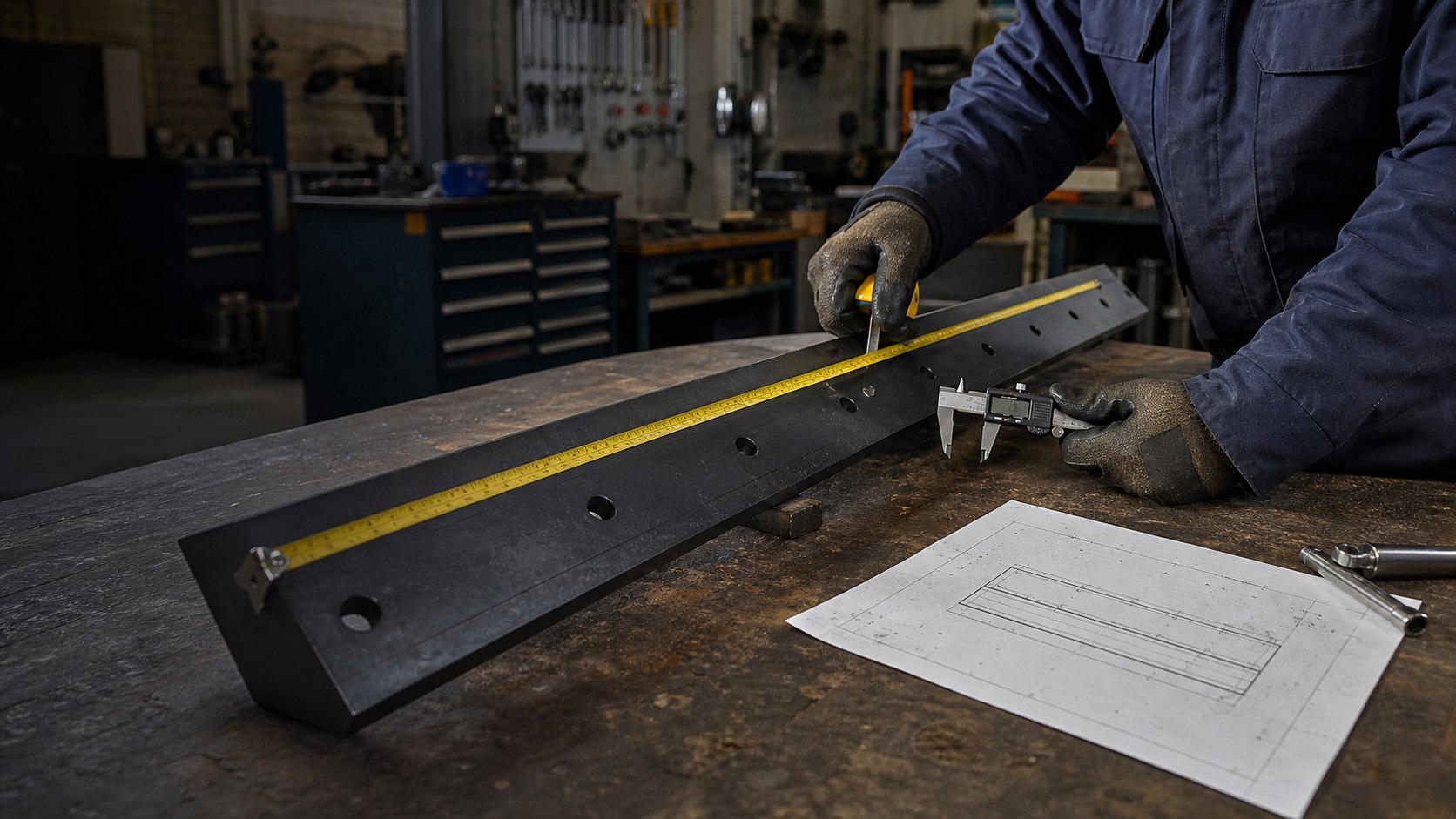 Dimensional Tolerances for Wear Parts: Which Ones Actually MatterCustom/OEM and private-label manufacturing
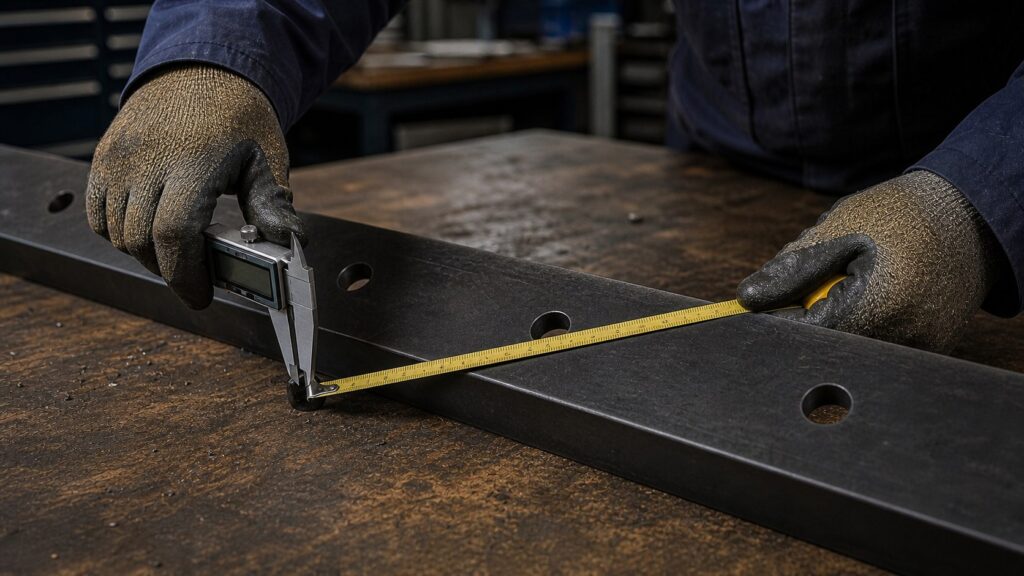 Reverse Engineering a Worn Part: Measuring and Documenting ItCustom/OEM and private-label manufacturing