
Private Label Wear Parts: Branding, Packaging and MOQ
A distributor that puts its own name on a wear part is buying three things at once: the part, the brand on it, and the way it arrives on a customer's loading dock. Private…

A distributor that puts its own name on a wear part is buying three things at once: the part, the brand on it, and the way it arrives on a customer’s loading dock. Private label wear parts fail commercially far more often on the second and third of those than on the first, because branding and packaging each carry a setup cost that has to be earned back over the order. Get those two right and the part is the easy part.
The decision facing an aftermarket distributor is bounded. Either take a supplier’s branded part, or have the part marked and packed as your own line, and the difference comes down to volume, artwork control and how much inventory risk the distributor is prepared to hold.
What Private Label Actually Covers
Brand, packaging, part numbers and paperwork.
Private label covers the mark on the part, the pack it ships in, the part numbers behind it and the documentation supplied with it. The part itself is built to the same drawing, grade and tolerance as the unbranded equivalent.
The scope is worth writing down item by item, because distributors and suppliers often assume different boundaries. On the product side the list is the brand mark or part number on the part, the pack configuration, the label content and the paperwork. On the supply side the drawing, the grade and the acceptance criteria stay as they are unless the distributor changes the specification deliberately.
A private label programme is therefore not the same as an OEM programme. In an OEM arrangement the buyer owns the drawing and the supplier builds to it. In a private label arrangement the part is usually an existing design that the distributor rebrands, which means the supplier keeps the engineering responsibility and the distributor keeps the brand and the market.
White label is the same mechanism with a different degree of exclusivity, and the terms a supplier attaches to exclusivity, territory or price protection for a rebranded line are stated in the written quotation or order documents rather than assumed from the general market.
Branding Options on Metal Parts
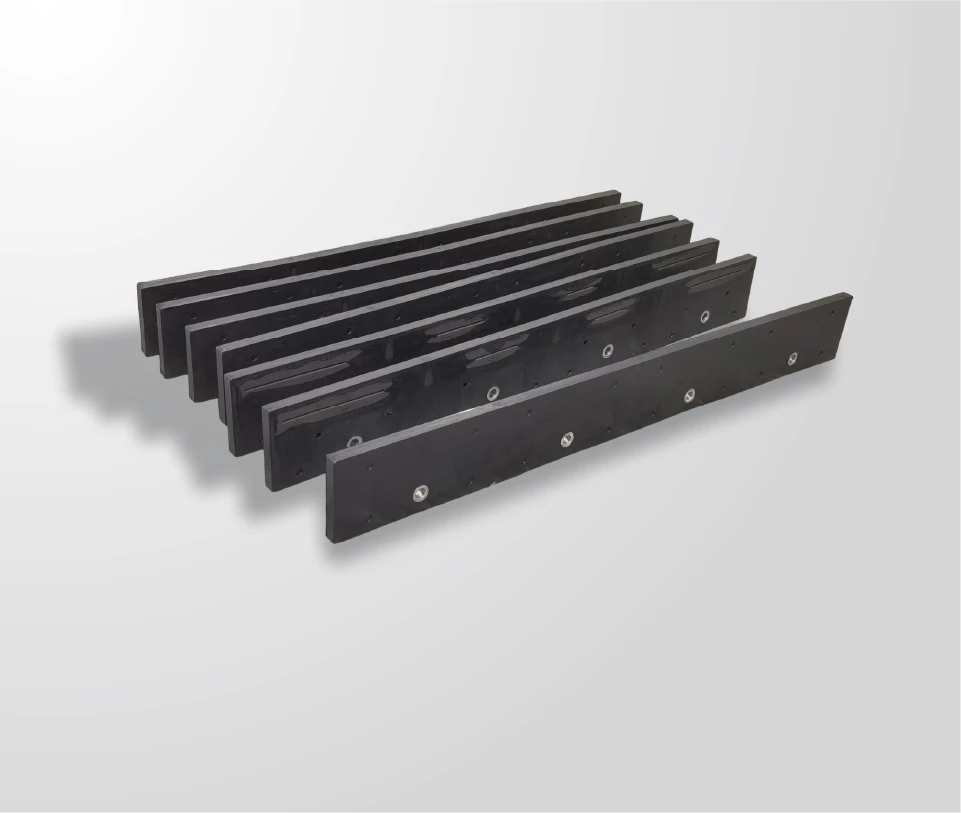
Marking a wear part is not the same as marking a housing, because the part exists to be worn away. The mark has to survive handling and storage, identify the part after a season of use, and stay clear of any face that is designed to abrade.
Three families of marking are used in the industry: a mark formed into the metal, a mark etched or burnt into the surface, and an applied label or tag. The choice is driven by legibility after service, by whether the mark can be placed on a non-wearing surface, and by cost at the order quantity. A deeper formed mark survives longer but is limited to areas where the metal section is thick enough.
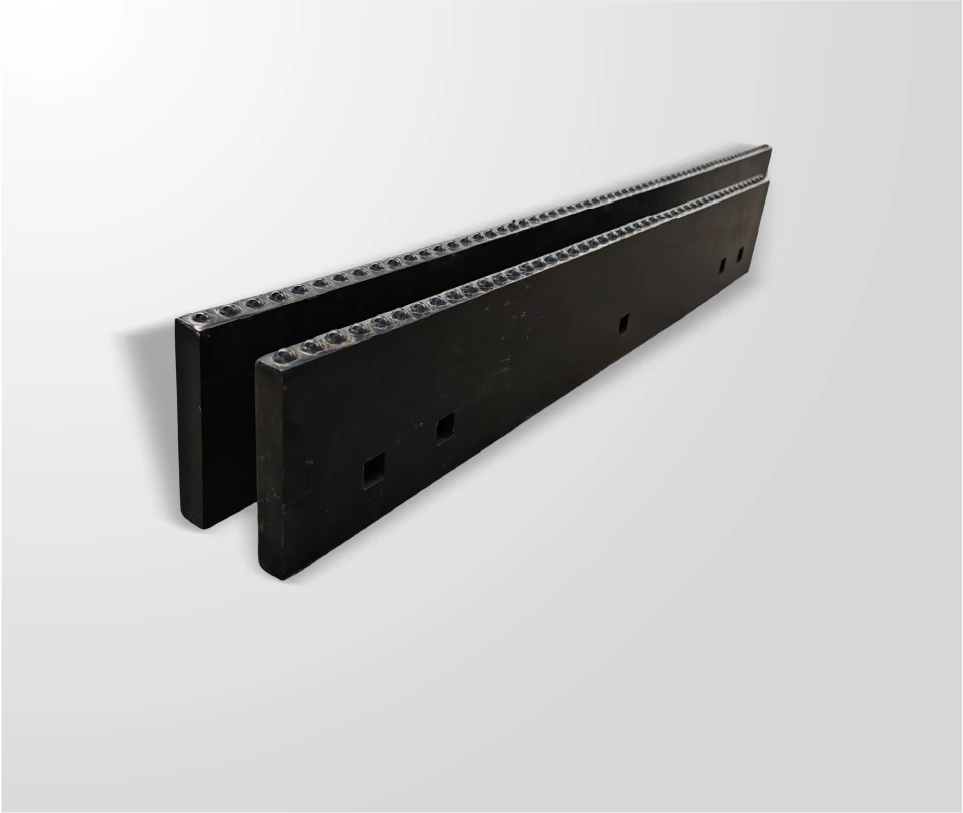
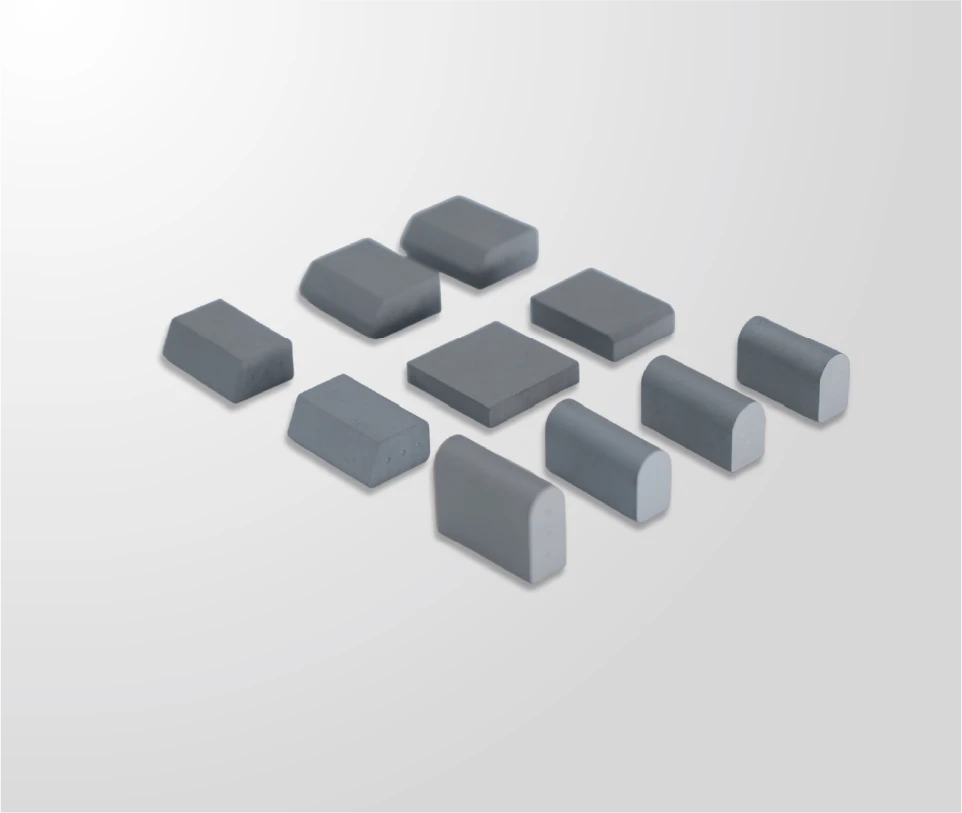
Placement matters more than method. A brand mark on a wear face is a mark that disappears, and in a carbide-tipped part it can interfere with insert seating if it is pressed into a machined pocket. Marks belong on the body, near the bolt line or on a non-engaging end, where they remain readable when the part comes back for inspection.
There is also a tension between branding and traceability. The stronger the private label, the easier it is to lose the link between a delivered part and a production batch, so the lot number should stay on the part or the pack even where the brand replaces the supplier name.
Packaging and Labelling Requirements
Packaging carries most of the hidden cost in a private label line, and it is also where a distributor’s brand is most visible. The requirement is easiest to express as a hierarchy, with a decision at each level: the unit pack, the bundle or inner, and the pallet or outer.
| Level | Decision to fix | Why it matters |
|---|---|---|
| Unit and inner pack | Quantity per box or bundle, box style, printed or plain | Inventory handling and shelf presentation |
| Label content | Part number, description, quantity, lot number, barcode | Traceability and correct picking |
| Literature | Fitting instructions or warning sheet included or not | Installation errors and liability clarity |
| Pallet and outer | Pallet pattern, weight limits, mixed-SKU pallets | Freight cost and goods-in handling |
Artwork has to arrive in a usable form: a print-ready file for the carton or label, a colour reference, and the exact part number or description text. Where the pack is printed rather than labelled, the print run is what sets the practical minimum order, not the part itself.
Two rules keep a private label line out of trouble. The lot number stays on the pack even when the supplier name does not, because it is the only route back to the production record. And the label text should match the invoice description exactly, since a mismatch creates delays at goods-in and at customs.
MOQ and How It Is Set
Minimum order quantity on a private label part is a sum of setups rather than a policy. Each element that is specific to the distributor carries a fixed cost that has to be recovered over the order, and the elements add up quickly.
| Element | Fixed cost it carries |
|---|---|
| Part tooling or form | One-time preparation if the profile is not already produced |
| Marking setup | Making and setting the brand mark or part number |
| Pack printing | Print run for cartons or labels carrying the distributor brand |
| Approval samples | First packed sample for the distributor to sign off |
The practical way to reduce the floor is to separate the parts of the order that can be shared from those that cannot. A pack that carries an applied label rather than printed packaging usually needs a much smaller run, and a mark that is added to an existing part number avoids new tooling altogether.
A first order followed by scheduled call-offs against a frozen specification is the standard structure for a distributor line, and it spreads the setup without holding the full volume at once. Applicable quantities, price steps and any stocking arrangement are stated in the written quotation or order documents.
Documentation and Regulatory Notes
Private label does not change what the goods are, only how they are presented, and the presentation has to stay consistent with the documents. Country of origin, description and value on the commercial invoice have to match what the pack and the part say, and the entry requirements applied by U.S. Customs and Border Protection are the reference point for a distributor importing into the United States.
Origin statements deserve particular care where a line is marketed as made in a specific country. SENTHAI manufactures wholly in Thailand from non-China tungsten raw materials, which is the statement of origin that belongs on the documents; a distributor that repacks does not change where the part was made.
Delivery terms and the point at which risk and cost transfer are set by the Incoterms rules published by the International Chamber of Commerce, and export formalities are covered by the guidance published through Trade.gov. Where a distributor sells into public fleets, specification compliance is a separate matter: the material and hardness clauses in the pack should reference published standards such as those issued through ASTM rather than resting on a brand promise.

Lead Time From Artwork to Delivery
The clock on a private label order starts at artwork approval rather than at the purchase order, and that is the single most common reason a first delivery slips. Two approval steps sit in front of production: sign-off of the artwork itself, and sign-off of a packed sample or mock-up.
Each step has a waiting period that belongs to the distributor, not the supplier. A carton file with an unresolved colour reference, or a part number that changes after the proof has been signed, resets the work. Freezing the artwork with a revision number and naming one approver on the distributor side removes most of that delay.
After approval the sequence is familiar: moulding or machining of the packed part, printing or labelling, packing, then freight. Market seasonality sits on top of that timeline, and a line sold into winter maintenance is better ordered once the season it served has been reviewed. The applicable schedule is stated in the written quotation or order documents.
Risk Sharing in the First Order
The first private label order is where the risk sits unevenly. The distributor is committing to a brand and a pack before any of it has sold, while the supplier is committing to print and tooling before the part has been paid for. A short written understanding at the start prevents both sides from carrying a cost they did not expect.
Four items are worth agreeing in writing: who owns the artwork, whether the packaging inventory is held by the supplier or shipped in full, what happens to the mark and the packaging if the line is discontinued, and which side carries the cost of a defect found after packing. None of these needs to be complicated, but each is expensive when it is settled after a problem rather than before one.
The commercial context for the line is worth reviewing too. Distributor demand in a seasonal market is tracked by industry bodies such as the Snow and Ice Management Association, and a programme built on a realistic annual view of that demand is easier to structure than one built on a single large first order. A distributor building a wider line can also start from a supplier’s established programme, for example the wholesale arrangement for snow plow blades that most private label conversations begin with.
Private label works when the three costs that sit outside the part — marking, packaging and the minimum order those two create — are planned together. The part can be an existing design; the mark has to survive service; the pack has to carry the lot number as well as the brand; and the order floor is a sum of setups that a distributor can reduce by choosing an applied label over printed packaging and a shared profile over new tooling. Documentation has to stay consistent with the presentation, origin included, and the first order should be structured with the artwork ownership, packaging inventory and defect responsibility already agreed.
Send SENTHAI the part number or sample, the brand mark and the way you want the pack to look, and the technical team will review the marking position, the packaging options and what the order structure would look like.
Frequently Asked Questions
What are private label wear parts?
They are wear parts built to a supplier’s own design and marked, packed and documented under the distributor’s brand. The part is the same as the unbranded equivalent in drawing, grade and tolerance; what changes is the brand mark, the part numbering, the packaging and the paperwork. Ownership of the design stays with the supplier unless the distributor commissions a change, which would move the programme towards an OEM arrangement.
Who owns the artwork and the packaging tooling?
Ownership should be agreed in writing before the first pack is printed, because both an artwork file and a packaging print set up cost money. The usual split is that the distributor owns the artwork and the supplier owns the process used to apply it, but the point that actually matters commercially is what happens to the packaging inventory and the mark if the line is discontinued. Any such terms are stated in the written quotation or order documents.
Can a private label part still be traced to its production batch?
Yes, and it should be. The brand mark can replace the supplier name on the part, but the lot number has to remain on the part or the pack so that a delivered item can be tied back to a production batch and an inspection record. SENTHAI inspects every batch and archives the records, which is what makes a question about one shipment answerable from the file rather than from memory.
What minimum order applies to a private label wear part?
The minimum is a sum of the setups the order has to carry: part tooling if the profile is not already produced, marking setup, packaging print run and an approval sample. It falls when those elements are shared, for example by applying a label to plain packaging or by marking an existing part number. Quantities, price steps and stocking arrangements are stated in the written quotation or order documents.
Related articles
Developing a Custom Blade Profile: Field Data to DrawingCustom/OEM and private-label manufacturing Tooling, Lead Time and Changeover for Custom Wear PartsCustom/OEM and private-label manufacturing
 Dimensional Tolerances for Wear Parts: Which Ones Actually MatterCustom/OEM and private-label manufacturing
 Sampling a Wear Part Order: First Article, Pilot and ProductionCustom/OEM and private-label manufacturing