
Wear Liner Plate Selection: Hardness, Thickness and Fixing Method
Most liner plate decisions are made twice: once when the plant is built and again when the first plate fails in a place nobody expected. A chute that runs fine on dry screened stone…

Most liner plate decisions are made twice: once when the plant is built and again when the first plate fails in a place nobody expected. A chute that runs fine on dry screened stone can destroy a light liner in weeks when the feed turns wet, and a plate that was chosen for a crusher feed point often ends up being run on a transfer point where it was never suited. Material family, thickness and fixing method have to be chosen together for a specific wear surface, not carried over from another part of the plant.
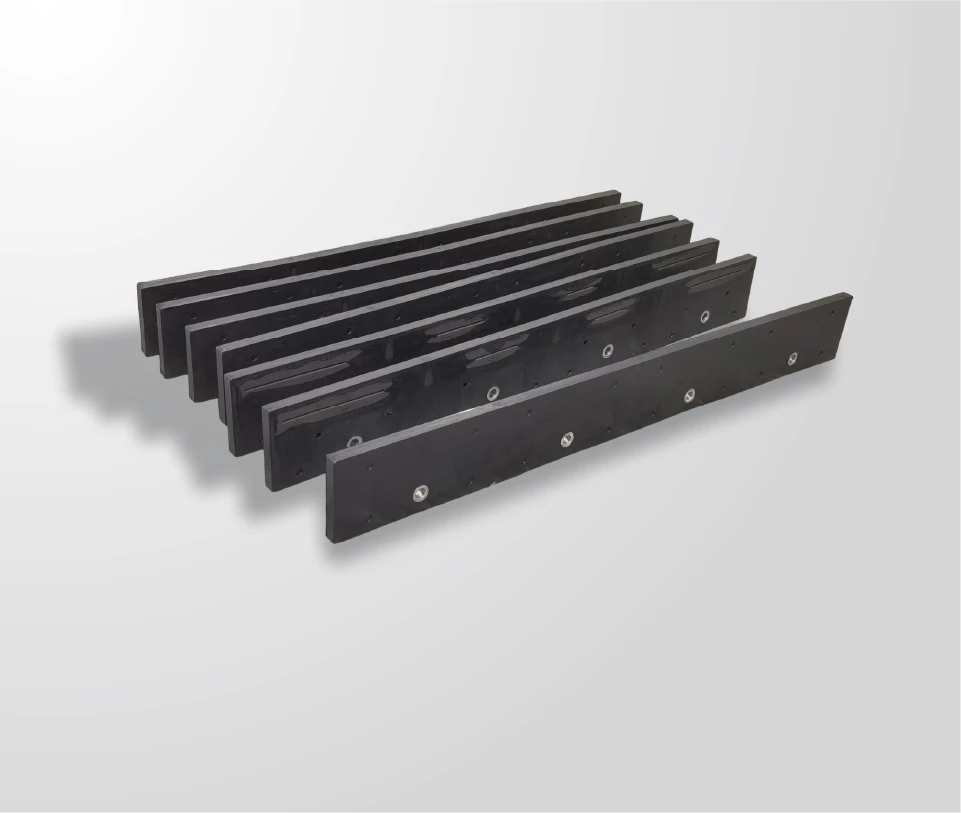
A wear liner plate is a sacrificial steel, carbide or ceramic surface bolted, welded or bonded to plant that material slides against, so that the liner wears instead of the structure. Thickness is set by measured metal loss across a service interval, and the material family is chosen from the wear mechanism and the impact loading at that point.
Where Liners Earn Their Cost
A liner earns its cost where sliding abrasion is steady.
Liners pay back fastest on chutes and hoppers that see continuous sliding flow at moderate impact, and slowest where heavy lumps strike a flat surface or where material builds up a protective layer.
The first question is not which liner but whether the wear is sliding, impact or a combination. Sliding abrasion removes metal at a rate proportional to the flow and the abrasiveness of the material, and the wear is spread across the surface in a predictable pattern. Impact wear, by contrast, concentrates at the point where lumps land, and it damages the surface in a different way — chipping, cracking and deformation rather than smooth material loss.
The second question is whether the surface can be protected at all. Where a dead bed of material can be maintained in a chute, the bed protects the plate and a liner may last far longer than the wear calculation suggests; where flow keeps the surface swept clean, the liner takes the full abrasive load. That single difference explains why two chutes of the same design in one plant can consume liners at very different rates.
The third question is access. A liner is a consumable, so it has to be replaceable. A plate fitted where a crane cannot reach, or where the only access is through a confined space with a hot work permit, will be run past its limit because the change is too disruptive. That is an argument for choosing the fixing method and the plate size for the access available, not only for the abrasion resistance.
Hardness and Material Families
Material families are usually grouped into four practical classes, and each has a range in which it is the sensible choice.
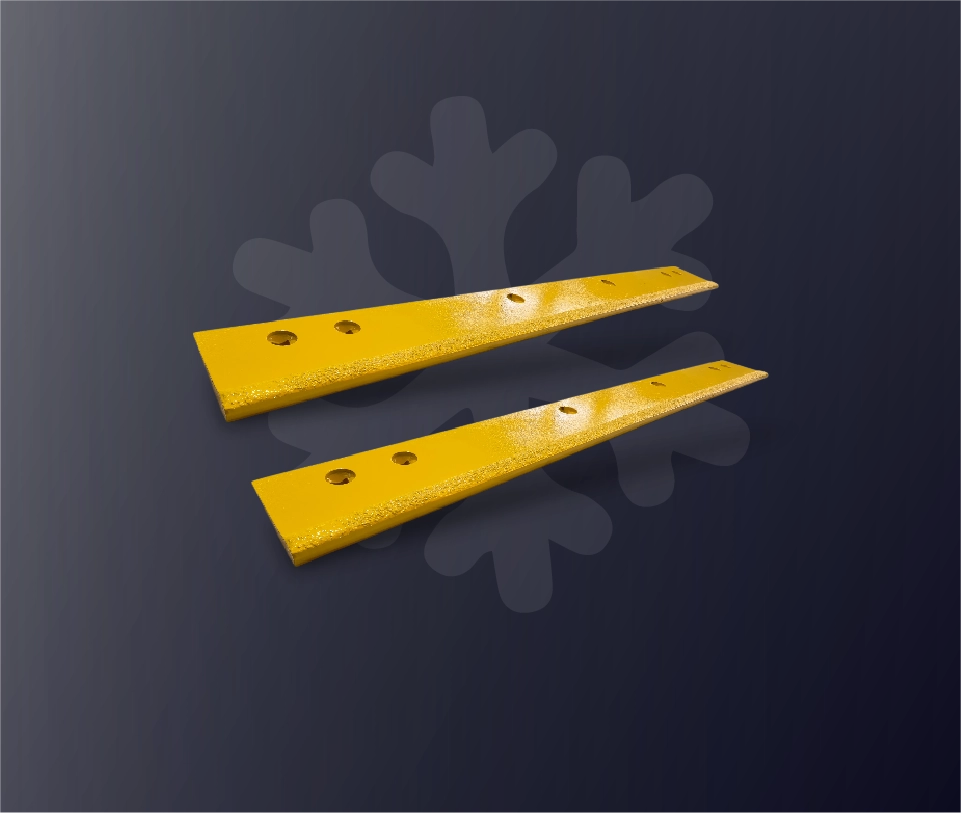
Hardened carbon and low-alloy steel plate is the baseline. It is weldable, formable and forgiving, and producers publish abrasion data for wear steels by grade — SSAB being one, with design guidance from others such as voestalpine. It handles coarse material and impact well, and it is the usual choice for crusher feed and heavy transfer points where a harder plate would crack.
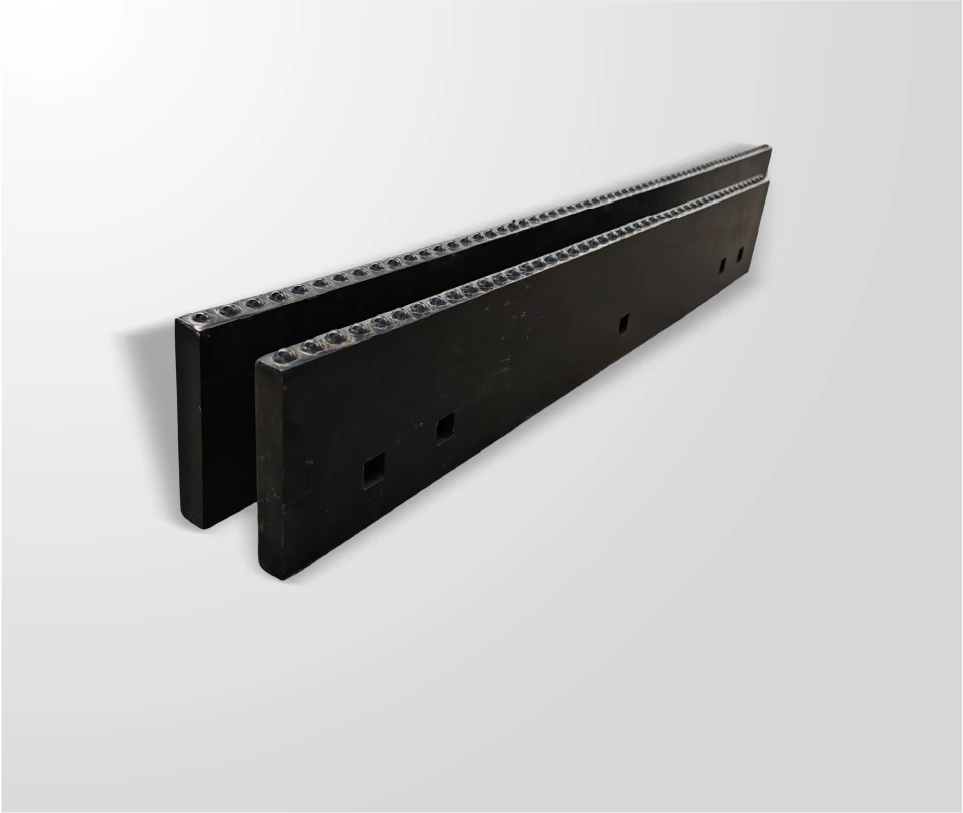
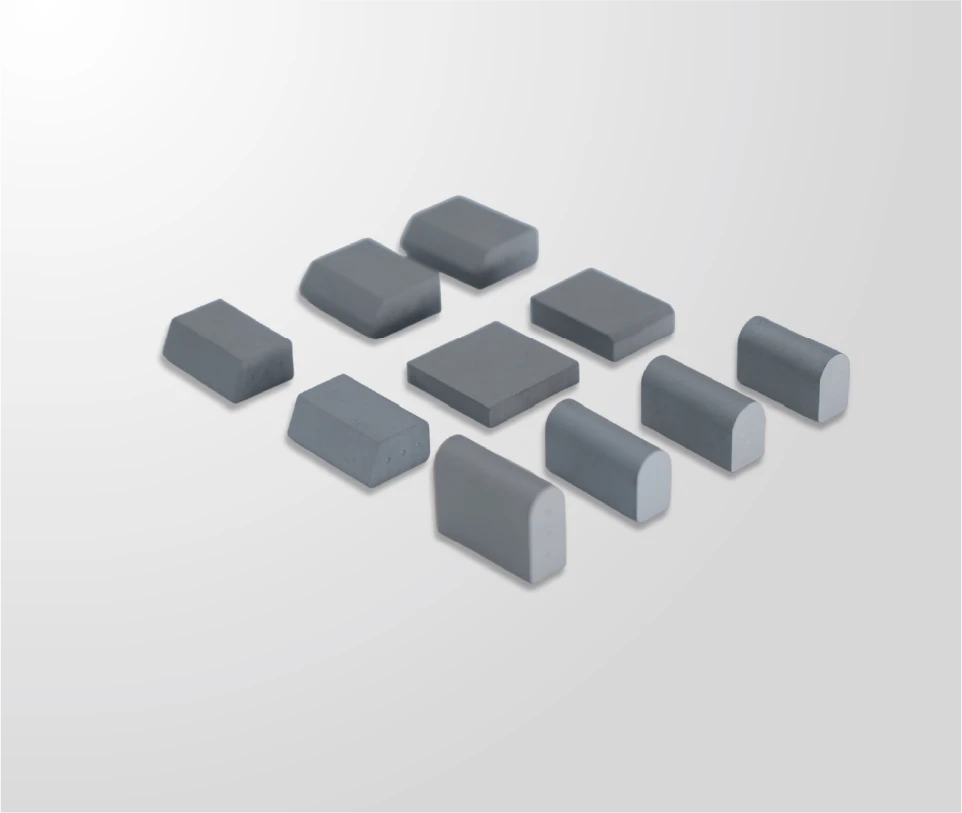
Cemented tungsten carbide wear surfaces are used where abrasion is severe and impact is moderate. Carbide resists material loss far beyond steel, so the working surface remains intact for a long interval, and the limiting features become the base plate, the joint or the fixing rather than the wear surface itself. Grade data for cemented carbides is published by material suppliers such as Hyperion Materials & Technologies, and materials references such as those from ASM International describe how a hard surface behaves under load.
Ceramic tiles and polymer or urethane liners fill the remaining niches. Ceramic suits fine, fast-moving abrasive material with low impact, and fails quickly under lump impact. Polymer and urethane liners suit fine dry material and are often chosen where noise, weight or material build-up matters more than raw abrasion resistance. None of these families is a general answer, and the hardness values quoted for steel should always be tied to a test method from ASTM rather than accepted as a headline figure.
Thickness and Loss Allowance Calculation
Thickness is a lost allowance calculation. The plate must carry enough section to survive from one planned inspection to the next, with the fixing still sound when the inspection arrives.
Measure the plate you are replacing at two or three known points, record the hours or tonnes it has seen, and the loss rate per period follows. Adding the section needed for the fixing — countersink depth, stud or weld allowance — gives the minimum workable thickness for the replacement. Where no history exists, a thinner liner checked more often is a lower-risk first step than a thick plate that changes the weight and the clearance of the equipment.
Weight belongs in the calculation as well. Liners are often replaced on structures that were not designed for extra mass, and a heavier plate on a vibrating screen, a mobile chute or a hopper support changes the load path. Where weight is constrained, the answer is usually a harder or combined surface at the same section, or a smaller plate area concentrated on the zone that actually wears.
Fixing: Welded, Bolted or Ceramic-Tiled
Fixing decides whether the liner can be renewed in a shift or becomes a project. The three methods in common use each impose their own discipline.
Welded liners are permanent and low profile, which suits surfaces where material must slide without interruption. Renewal is a cutting job, and the heat input goes into the base structure every time, so the parent plate has to be sound enough to accept weld repeatedly. Countersunk bolted liners are removable and can be renewed from the outside where access allows, but the bolt heads have to be protected or they wear away and the plate loosens; in practice bolted liners are often fitted so the heads sit in a recess or behind a lip.
Ceramic tiles and carbide wear pieces are usually bonded with adhesive or fixed mechanically with studs, and the joint is the critical feature. A tiled surface loses its advantage the moment a tile releases, because the exposed bond line then wears quickly and the neighbouring tiles are undermined. Where a tiled liner is fitted, the base must be clean, flat and prepared to the adhesive system used, and the plate should be checked after the first operating period to confirm that no tile has moved.
Fitment and Access Constraints
Fitment constraints on a liner are usually about the structure rather than the liner. The base plate must be flat enough for the fixing to seat, the hole positions must avoid the structure behind the plate, and the plate edges must not present a lip that catches material.
Holes are the most common problem. A bolted liner on a curved or deformed chute wall will sit proud, and the fastener will then be loaded in bending rather than in tension and will fail early. Where the base is not flat, a bolted plate should be pulled down with matched shims or fitted as smaller panels that conform. Where the base is badly deformed, welded repair of the base is the prerequisite, not more liner.
Panel size is a fitment decision as much as a handling one. Smaller panels suit access and let a worn area be renewed alone; larger panels reduce the number of fixings and the number of joints that can loosen. In new installations it is worth planning the panel layout around the access route and the lifting equipment that will be available, because that layout will be repeated for the life of the plant. Fitment data should be confirmed against a drawing or a physical sample, which is the same practice SENTHAI applies to bolted wear parts, with machined insert pockets held to plus or minus 0.02 mm.
Wear Measurement and Change-Out Planning
Wear measurement on liners is about knowing when a plate stops being safe rather than when it is aesthetically worn. Two numbers matter: remaining section at the thinnest point, and the condition of the fixings.
Mark the measurement points on the structure rather than on the plate, so that readings are taken in the same place after every change-out. Then record thickness against hours or tonnes. The trigger for renewal is the point at which the remaining section will not hold the fixing safely until the next planned stop, which is a calculation the fleet or plant can make from its own history rather than from a general rule.
Feeding change-out planning from those readings converts liner replacement into scheduled work: plates are ordered and cut before the stop, access and permits are arranged, and the change is completed in a planned window. Plant maintenance practice in aggregate operations is shared through the NSSGA, and the difference between a planned plate change and an unplanned one is usually the availability of that measurement record.
Specifying a Liner Package
A liner specification is a short document when it is written from measurements, and it should be written per wear surface rather than per plant.
- Surface description. Material, size range, moisture, throughput and whether the surface runs swept clean or holds a dead bed.
- Wear mechanism. Sliding, impact or mixed, with the impact energy estimated from the largest lump handled.
- Material family and section. Steel, carbide-faced, ceramic or polymer, with thickness set from measured loss plus fixing allowance.
- Fixing and panel layout. Welded, bolted or bonded, with panel sizes chosen for the access and lifting available.
- Measurement points and renewal trigger. Where thickness is read, and the section at which the plate is replaced.
Written that way, the specification can be reused when the feed changes or when a chute is rebuilt, and it gives a plant a defensible basis for deciding between a more expensive liner and a cheaper one replaced more often.
Liner selection comes down to three decisions that this article has separated: what the wear mechanism is at that specific surface, what material family and section will survive to the next planned stop, and how the plate can be fixed and renewed with the access that exists. Sliding abrasion at moderate impact is where liners pay back fastest; heavy lump impact usually argues against the hardest available surface; and a plate that cannot be replaced easily will be run past its limit. Thickness belongs in the specification as a calculated allowance, and the measurement points belong on the structure.
Send SENTHAI the surface drawings, the material and lump size handled, and the thickness readings from the plate currently in service, and the technical team will review material family, section and fixing for each wear surface.
Related reading: wear parts beyond plows.
Frequently Asked Questions
What is a liner plate?
A liner plate is a replaceable wear surface fixed over a structural plate so that the liner is consumed instead of the equipment. It is used on chutes, hoppers, transfer points, truck beds and bucket floors, and it is fixed by welding, countersunk bolting or bonding, depending on how the material flows across the surface and how the plate will be renewed. The liner is sacrificial by design.
What are the different types of wear plates?
They group into four practical families: hardened carbon and low-alloy steel plate for coarse material and impact, cemented tungsten carbide surfaces for severe sliding abrasion, ceramic tiles for fine fast-moving abrasive material with low impact, and polymer or urethane liners where weight, noise or material build-up matter more than abrasion resistance. Each family suits a range of conditions rather than being a general answer.
Which wear plate material suits a high-abrasion chute?
Look at impact first, because it decides how hard the surface can safely be. A chute handling fine, fast-moving abrasive material with limited lump impact is where a carbide-faced or ceramic-lined surface is justified, since the working surface stays intact and the joint or fixing becomes the limit. Where larger lumps strike the same chute, a steel plate with documented abrasion data is usually the more durable choice.
What are the commercial terms for ordering wear liners?
SENTHAI quotes from the surface drawings, the material and lump size handled, the plate layout and the quantity required, so no standing figures are published. The applicable terms, including cutting, packing, quantity break points and delivery arrangements, are stated in the written quotation or order documents, and fitment details are confirmed against drawings before release. Send the surface drawings and the thickness readings and the layout can be reviewed with the material choice.
{
“@context”: “https://schema.org”,
“@type”: “FAQPage”,
“mainEntity”: [
{
“@type”: “Question”,
“name”: “What is a liner plate?”,
“acceptedAnswer”: {
“@type”: “Answer”,
“text”: “A liner plate is a replaceable wear surface fixed over a structural plate so that the liner is consumed instead of the equipment. It is used on chutes, hoppers, transfer points, truck beds and bucket floors, and it is fixed by welding, countersunk bolting or bonding, depending on how the material flows across the surface and how the plate will be renewed. The liner is sacrificial by design.”
}
},
{
“@type”: “Question”,
“name”: “What are the different types of wear plates?”,
“acceptedAnswer”: {
“@type”: “Answer”,
“text”: “They group into four practical families: hardened carbon and low-alloy steel plate for coarse material and impact, cemented tungsten carbide surfaces for severe sliding abrasion, ceramic tiles for fine fast-moving abrasive material with low impact, and polymer or urethane liners where weight, noise or material build-up matter more than abrasion resistance. Each family suits a range of conditions rather than being a general answer.”
}
},
{
“@type”: “Question”,
“name”: “Which wear plate material suits a high-abrasion chute?”,
“acceptedAnswer”: {
“@type”: “Answer”,
“text”: “Look at impact first, because it decides how hard the surface can safely be. A chute handling fine, fast-moving abrasive material with limited lump impact is where a carbide-faced or ceramic-lined surface is justified, since the working surface stays intact and the joint or fixing becomes the limit. Where larger lumps strike the same chute, a steel plate with documented abrasion data is usually the more durable choice.”
}
},
{
“@type”: “Question”,
“name”: “What are the commercial terms for ordering wear liners?”,
“acceptedAnswer”: {
“@type”: “Answer”,
“text”: “SENTHAI quotes from the surface drawings, the material and lump size handled, the plate layout and the quantity required, so no standing figures are published. The applicable terms, including cutting, packing, quantity break points and delivery arrangements, are stated in the written quotation or order documents, and fitment details are confirmed against drawings before release.”
}
}
]
}
Related articles
Bucket Wear Inspection: Field Checklist and IntervalsLoader bucket edges, teeth and wear liners Loader Wear Parts Cost Per Operating Hour: The Inputs to RecordLoader bucket edges, teeth and wear liners
 Excavator Bucket Wear Parts: Edge, Teeth, Side Cutters and HeelLoader bucket edges, teeth and wear liners
 Skid Steer Bucket Edge Selection for Abrasive MaterialsLoader bucket edges, teeth and wear liners