




Top 8 Motor Grader Manufacturers in 2026: From Municipal Roads to Mining
Motor graders are the precision machines of road construction, site preparation, and mine haul-road maintenance: they finish grade, cut ditches, mix aggregate, and clear snow, all through one moldboard and one replaceable cutting edge.…

Motor graders are the precision machines of road construction, site preparation, and mine haul-road maintenance: they finish grade, cut ditches, mix aggregate, and clear snow, all through one moldboard and one replaceable cutting edge. The motor grader manufacturers below were selected for product range, global reach, technology, and dealer support. The list covers the two sides of the category — the full-line OEMs that build the machine, and the cutting edge specialists whose blades and carbide edges the grader actually wears.
If you are researching “who makes motor graders,” “best motor grader brands,” or “motor grader blade manufacturers,” this guide gives you the shortlist, the facts behind each company, and the questions to ask before you compare quotes.
How this list was compiled. Companies were evaluated on four publicly verifiable criteria: (1) motor grader product range across size classes; (2) global dealer and parts network; (3) technology such as grade control, transmission, and blade systems; and (4) cutting edge options, including carbide, that affect blade life and changeout cost. Rankings reflect these criteria, not paid placement. SENTHAI is a manufacturer of carbide wear parts and cutting edges and has a commercial interest in the grader edge category; this is disclosed at the end of the article.
What Is a Motor Grader Manufacturer?
A motor grader manufacturer designs and builds the complete machine — frame, engine, transmission, moldboard, and circle assembly — and supports it with dealers, parts, and service. The category also includes cutting edge manufacturers, because the edge that touches the ground is the most consumable part of the grader. The best motor grader manufacturers pair machine reliability with a supply of blades and carbide edges that keep the machine grading instead of sitting in the shop.
The Two Types of Motor Grader Manufacturers
- Global full-line OEMs. Caterpillar, John Deere, Komatsu, Volvo CE, and Case build complete graders in multiple size classes and sell through worldwide dealer networks.
- Major regional players. XCMG, SANY, and LiuGong offer competitive grader lines with strong exports from China and aggressive pricing in emerging markets.
Alongside both sit cutting edge specialists — companies such as Winter Equipment, Kenco, and SENTHAI — that supply the steel and carbide edges the OEMs do not manufacture themselves. Municipalities and contractors typically buy the machine from one manufacturer and replacement edges from a specialist, which is why both sides appear on this list.
The 2026 Ranking: 8 Motor Grader Manufacturers to Know
1. Caterpillar
Headquarters: Irving, Texas, USA | Founded: 1925
What they make: The world’s broadest motor grader line, from the 120 through the mining-class 24, with next-generation 140, 150, and 160 models.
Why they rank here: Caterpillar is the reference point for the category — the largest construction and mining equipment maker by revenue, with grader technology such as Cat Grade with 3D and the largest dealer network in the industry. For fleets that standardize on one brand, Cat’s grader range covers municipal, road-building, and mining duty from one dealer. https://www.cat.com/en_US/products/new/equipment/motor-graders.html
2. John Deere
Headquarters: Moline, Illinois, USA | Founded: 1837
What they make: Motor graders across the 670G, 672G, 770G, and 772G size range, plus a full construction equipment line.
Why they rank here: John Deere brings the reliability and dealer density of North America’s biggest agricultural equipment maker to construction. Its graders are strong in municipal and county fleets, where the same dealer that supports the tractor fleet often supports the grader fleet — a real advantage for public works departments. https://www.deere.com/en/construction/motor-graders/
3. Komatsu
Headquarters: Tokyo, Japan | Founded: 1921
What they make: The GD series motor graders, from municipal models to mining-class machines, alongside excavators, dozers, and haul trucks.
Why they rank here: Komatsu is the number-two full-line equipment manufacturer globally and one of the few companies whose grader range reaches mining size classes. Its Smart Construction technology and global parts network make it a default bidder on major road and mine projects worldwide. https://www.komatsu.jp/en
4. Volvo Construction Equipment
Headquarters: Sweden | Roots: 1832 (Munktell)
What they make: The G series motor graders — from the G910 through the G990 — built on the former Champion grader platform.
Why they rank here: Volvo CE traces its grader line to Champion, one of the historic names in grading, and the current G series is respected for cab comfort, fuel efficiency, and precision. Its strength is concentrated in North America and Europe, where municipal and contractor demand for high-comfort, high-tech graders is strongest. https://www.volvoce.com/
5. Case Construction Equipment
Headquarters: Racine, Wisconsin, USA | Founded: 1842 | Ownership: CNH Industrial
What they make: The B Series 2 motor graders — 845B, 865B, and 885 — covering road construction and mining applications.
Why they rank here: Case brings the dealer scale of CNH Industrial to the grader category, with a focused three-model line that keeps parts and service simple for municipal and contractor fleets. Its 865B is positioned for mining and heavy haul-road work, giving buyers a direct alternative to the big three. https://www.casece.com/en-us/products/motor-graders
6. XCMG
Headquarters: Xuzhou, China | Founded: 1943
What they make: The GR series motor graders, from compact municipal models to heavy road-building classes.
Why they rank here: XCMG is China’s largest construction machinery maker and one of the most aggressive global exporters of motor graders. Its pricing and expanding dealer footprint make it the value leader in emerging markets and a growing presence in North American and European rental fleets. https://www.xcmgglobal.com/
7. SANY
Headquarters: Changsha, China | Founded: 1989
What they make: A growing motor grader line plus excavators, cranes, and mining trucks, sold through SANY’s global network.
Why they rank here: SANY has scaled from a welding-materials workshop in 1989 to one of the world’s largest equipment manufacturers by revenue. Its graders compete on price and parts availability in emerging markets, and its service centers are expanding quickly across Africa, the Middle East, and Latin America. https://www.sanyglobal.com/
8. LiuGong
Headquarters: Liuzhou, China | Founded: 1958
What they make: Motor graders and wheel loaders, with one of China’s longest equipment manufacturing histories.
Why they rank here: LiuGong launched China’s first modern wheel loader in 1966 and has grown into a global player with manufacturing and distribution beyond China. Its graders are common in mining and road projects across Southeast Asia, Africa, and South America, where price-performance and durability matter most. https://www.liugong.com/en/
Honorable Mentions
Shantui (China): grader and dozer manufacturer with strong export volumes. https://en.shantui.com/ | Galion (USA): a historic grader brand still referenced by fleets evaluating heritage and parts. | SEM (XCMG brand): XCMG’s international equipment brand with a grader line for export markets.
Comparison at a Glance
| Manufacturer | HQ | Founded | Grader Range | Strength |
|---|---|---|---|---|
| Caterpillar | Irving, TX | 1925 | 120 to 24 | Broadest line, largest dealer network |
| John Deere | Moline, IL | 1837 | 670G to 772G | North American dealer density |
| Komatsu | Tokyo, Japan | 1921 | GD series | Mining-class graders, global support |
| Volvo CE | Sweden | 1832 roots | G910 to G990 | Comfort, fuel efficiency, precision |
| Case (CNH) | Racine, WI | 1842 | 845B to 885 | Focused line, CNH dealer scale |
| XCMG | Xuzhou, China | 1943 | GR series | Value leader in exports |
| SANY | Changsha, China | 1989 | Full line | Fast-growing global network |
| LiuGong | Liuzhou, China | 1958 | Full line | Strong in emerging markets |
Motor Grader Technology Trends to Watch in 2026
Motor grader buyers in 2026 are weighing three technologies that change both purchase price and operating cost. The first is machine-integrated grade control: factory-installed GNSS and laser systems that automate blade elevation and slope, which cut rework and material waste on road-building and site-prep jobs. The second is telematics and service analytics: remote monitoring of fuel burn, idle time, and blade wear that lets fleets schedule maintenance before a machine fails mid-project. The third is powertrain efficiency — engine downsizing, eco modes, and hybrid or electric pilots aimed at municipal noise and emissions rules. None of these replace the cutting edge, but they change how fleets budget: a grader with excellent telematics still costs money every time the edge wears out, so edge life and changeout logistics remain a line item in every tender.
The practical takeaway: ask each manufacturer which of these technologies is standard, which is optional, and which changes the dealer’s maintenance plan. A quoted price without the technology package is not a comparable price.
Who Makes the Best Motor Graders in the USA?
For US buyers, the practical shortlist is Caterpillar, John Deere, Case, and Volvo CE — the brands with dense North American dealer networks and parts support. Caterpillar leads in range and technology, John Deere leads in municipal and county fleet penetration, Case competes on a focused line with CNH scale, and Volvo CE leads on operator comfort and precision. For budget-sensitive projects, XCMG and SANY offer competitive machines with growing US parts and service footprints. “Best” in 2026 is decided by your local dealer’s parts stock and response time as much as by the machine itself.
What to Know About Grader Blades and Cutting Edges
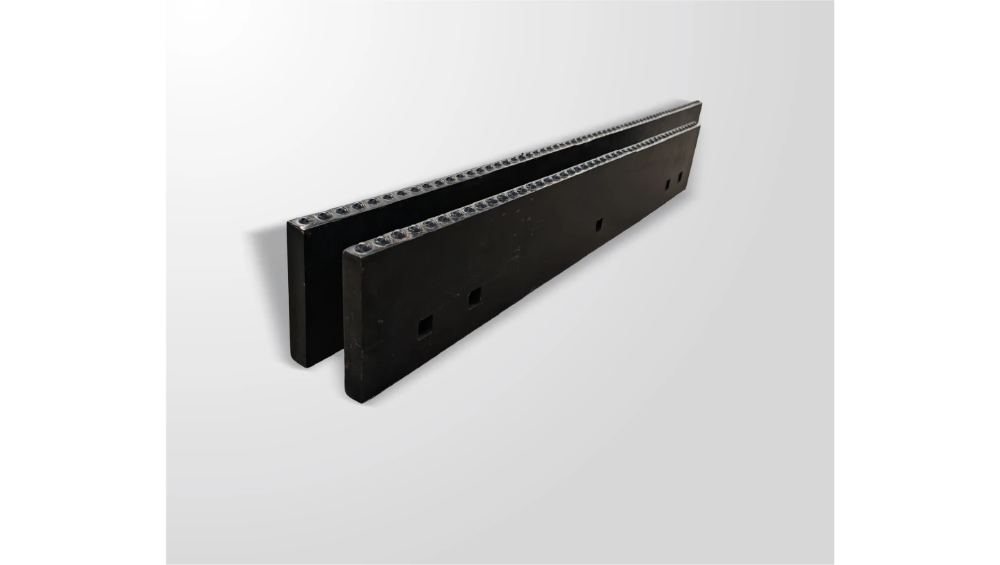
The moldboard is the part that does the work, but the cutting edge is the part that wears. Grader edges are mounted as segmented lengths — typically four-to-six-foot sections with standard bolt patterns — and are available in three families: high-carbon steel, heat-treated alloy steel, and carbide-tipped or carbide-insert versions. In abrasive soil, haul-road, and snow-ditch service, carbide edges last multiples of steel, which is why fleets that track cost per operating hour almost always evaluate them.
What separates a good carbide edge from a poor one is not the carbide grade alone — it is how the tips are bonded to the steel. Brazing quality determines whether tips survive impact loads, and inspection records (braze coverage, tip alignment, lot traceability) determine whether the product is consistent from batch to batch. When you compare cutting edge suppliers, ask the same questions you would ask of any safety-critical supplier: what carbide grade, what braze process, what inspection, what traceability. For the full technical explanation, see High Temperature Automated Brazing for Plow Edges. Replacement tips and inserts are covered separately in SENTHAI’s carbide inserts range.
OEM Machines vs. Cutting Edge Specialists: Who Supplies What
The companies above split into two supply chains, and it helps to understand which one you are buying from. Machine OEMs — Caterpillar, John Deere, Komatsu, Volvo CE, Case, and the Chinese majors — engineer the grader and sell replacement blades through their dealers, but most source cutting edges from specialists. Specialist manufacturers such as Winter Equipment, Kenco, and SENTHAI produce steel and carbide edges engineered for specific moldboard sizes, bolt patterns, and wear conditions.
That split matters at procurement time. If you buy edges from the machine dealer, you get convenience and fitment certainty. If you buy from a specialist, you usually get a wider choice of carbide grades and price competition, but you must verify hole patterns and moldboard curvature yourself. Many fleets standardize the machine from one OEM and the edges from a specialist, running a pilot set before committing a full fleet order.
How to Choose a Motor Grader Manufacturer
- Match the size class to the work. Municipal and light road maintenance can run on compact models; mine haul roads and heavy road building need mining-class machines. Confirm the manufacturer covers your size range.
- Check dealer proximity and parts stock. A grader down for a blade or hydraulic part is a stopped project. Ask about dealer distance, stocked parts, and response time.
- Evaluate grade control and technology. Machine-integrated grade control saves material and rework; decide whether you need it before comparing prices.
- Specify the cutting edge program. Ask each manufacturer for blade and carbide edge options, delivery lead times, and documented quality — edge cost drives a large share of operating cost.
- Model lifecycle cost. Include fuel, maintenance intervals, resale, and edge consumption, not just purchase price.
How to Compare Quotes from Motor Grader Manufacturers
Build a spec sheet before you ask for pricing: size class, blade length, grade control, attachments, and expected annual hours. Then ask every motor grader manufacturer for the same package — delivered price, dealer proximity, parts availability, service response time, operator training, warranty terms, and cutting edge options. A quote that includes local support details is worth more than one that lists only machine price.
Frequently Asked Questions
Which motor grader brand is best?
For North American fleets, Caterpillar, John Deere, Case, and Volvo CE lead on dealer support; for mining-class work, Caterpillar and Komatsu dominate; for value-sensitive projects, XCMG and SANY are the fastest-growing alternatives. The best brand is the one with the closest, best-stocked dealer.
What size motor grader do I need?
Match the blade length and operating weight to the work: compact graders for municipal and light maintenance, mid-size for general road construction, and large mining-class machines for haul roads. Ask each manufacturer to spec the machine for your application.
Do motor grader manufacturers make the blades too?
Most build the machine and sell replacement blades through dealers, but cutting edges are usually sourced from specialists. Steel and carbide grader edges are available from wear part manufacturers, which is where carbide edge options and braze quality come in.
Are carbide grader blades worth the higher price?
On abrasive soils and haul roads, carbide edges last multiples of steel and reduce changeout labor, which usually more than pays for the price difference. The caveat is bond quality: carbide tips must be properly brazed or they detach under impact. Ask suppliers for braze process documentation.
Should I buy a Chinese motor grader?
XCMG, SANY, and LiuGong offer competitive pricing and improving quality, but evaluate parts availability and dealer support in your region first. In emerging markets they are often the best value; in North America, compare their local service commitment against the established brands.
How long does a grader cutting edge last?
It depends on material, speed, and edge type. Steel edges may last days on abrasive haul roads; carbide edges last multiples of steel when matched correctly. Ask suppliers for reference cases in your application and run a small pilot before standardizing.
How much does a motor grader cutting edge cost?
Price depends on length, width, thickness, and material. Steel edges are the low-cost entry point; carbide-tipped and carbide-insert edges carry a higher upfront price but a lower cost per hour in abrasive service. Ask every supplier for a cost-per-hour estimate based on your annual hours, not just a per-edge price.
Can I retrofit carbide edges on any motor grader?
Most moldboards accept standard segmented edges, but you must match the bolt pattern, segment length, and moldboard curvature. Give the supplier your grader model and moldboard dimensions; a reputable cutting edge manufacturer will confirm fitment before quoting.
Ready to Compare Grader Cutting Edge Options?
Whatever machine you choose, the cutting edge decides your operating cost. Review the technical guide High Temperature Automated Brazing for Plow Edges, then contact the SENTHAI team with your grader models and material conditions for a carbide edge recommendation with lot-level traceability.
Related articles
 How to Source Snow Plow Blades: OEM, Distributor, or Direct2026NewsTop 10 Agricultural Equipment Manufacturers in 2026: Tractors, Harvesters & Precision Farming2026News
 Carbide Cutting Edge Industry Report 2026: Materials, Manufacturing & Supply Chain2026News
 Snow Removal Contracting Industry Report 2026: Margins, Equipment & the El Niño Winter2026News