




Top 10 Agricultural Equipment Manufacturers in 2026: Tractors, Harvesters & Precision Farming
Agricultural equipment is a scale business: a handful of global groups supply most of the tractors and harvesters sold in North America and Europe, while regional champions dominate Asia, South America, and Africa. The…
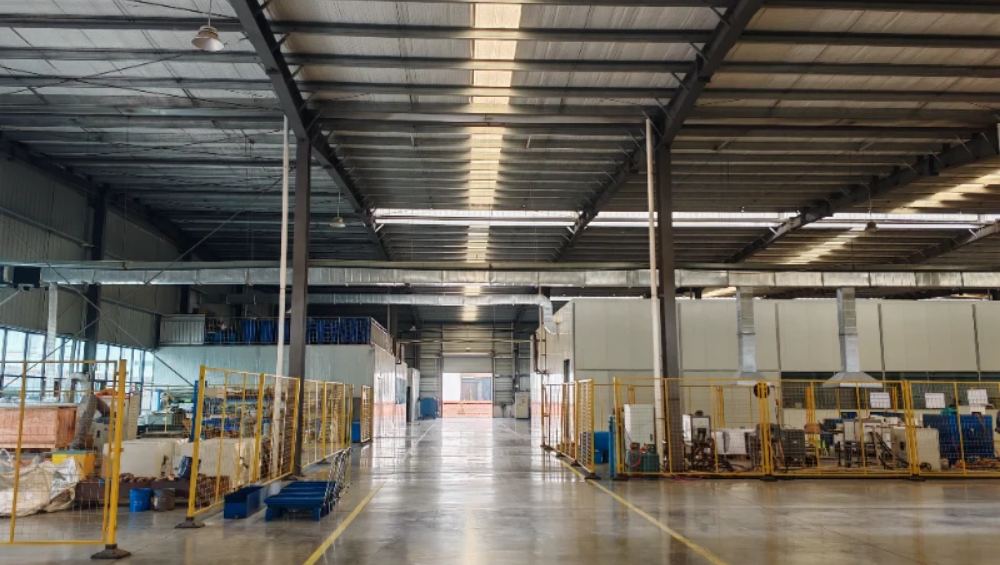
Agricultural equipment is a scale business: a handful of global groups supply most of the tractors and harvesters sold in North America and Europe, while regional champions dominate Asia, South America, and Africa. The manufacturers below were selected on publicly verifiable criteria — tractor and machine range, dealer network, technology, and financial scale. If you are researching “who makes tractors,” “best tractor brands,” or “largest agricultural equipment manufacturers,” this guide gives you the shortlist and the facts behind each company.
Farmers buy machines once and consumables continuously. Ground-engaging tools — tillage points, sweeps, bucket edges, and cutting parts — are replaced season after season, which is why equipment decisions and wear part programs go together in any well-run farm budget.
How this list was compiled. Companies were evaluated on four publicly verifiable criteria: (1) tractor and implement range across horsepower classes; (2) global dealer and parts network; (3) technology such as precision farming, autonomy, and telematics; and (4) financial scale and ownership stability. Rankings reflect these criteria, not paid placement. SENTHAI is a manufacturer of carbide wear parts and cutting edges and has a commercial interest in the wear part category; this is disclosed at the end of the article.
What Is an Agricultural Equipment Manufacturer?
An agricultural equipment manufacturer designs, builds, and supports the machines used to grow and harvest crops: tractors from compact utility to 600+ horsepower row-crop and track models, combines and harvesters, planters, sprayers, and hay tools. The category is led by four global groups — John Deere, CNH Industrial, AGCO, and Kubota — with strong regional champions in Europe (CLAAS, SDF, Yanmar), India (Mahindra, Sonalika), and Korea (LS, TYM). Dealer density and parts availability decide most brand choices, because a tractor down at planting time is a lost season, not just a lost day.
The Two Types of Agricultural Equipment Manufacturers
- Global full-line groups. John Deere, CNH Industrial (Case IH and New Holland), AGCO, and Kubota cover tractors, harvesters, and implements across markets, with the R&D budgets that drive precision farming.
- Regional specialists. CLAAS, Mahindra, SDF, Yanmar, Sonalika, and JCB focus on specific regions or machine types, with exceptional depth in their home markets.
Around both sit wear part and ground-engaging tool suppliers such as ESCO, Kennametal, and SENTHAI, whose carbide edges and wear parts keep tillage and material handling consumables under control.
The 2026 Ranking: 10 Agricultural Equipment Manufacturers to Know
1. John Deere
Headquarters: Moline, Illinois, USA | Founded: 1837
What they make: The world’s broadest agricultural line — tractors from compact to 600+ horsepower, combines, planters, sprayers, and precision farming technology.
Why they rank here: John Deere is the largest agricultural equipment manufacturer by revenue and the reference point for dealer density in North America. Its precision farming ecosystem — guidance, telematics, and machine data — is the deepest in the industry, and its dealer network supports farms from the Corn Belt to Australia. https://www.deere.com/
2. CNH Industrial
Headquarters: Basildon, England (registered in the Netherlands) | Formed: 2013 (Fiat Industrial + CNH Global merger)
What they make: Tractors and combines under Case IH and New Holland, plus hay and forage equipment.
Why they rank here: CNH Industrial is the second-largest agricultural equipment group in the world, with two heritage brands that date to the late 19th century. Case IH leads in row-crop and high-horsepower tractors; New Holland leads in hay tools and medium-horsepower tractors; together they cover nearly every farm size. https://www.cnhindustrial.com/
3. AGCO
Headquarters: Duluth, Georgia, USA | Founded: 1990
What they make: Tractors under Massey Ferguson, Fendt, and Valtra, plus combines under Fendt and Gleaner.
Why they rank here: AGCO is a top-three global group built by acquiring heritage brands: Massey Ferguson for volume, Fendt for premium precision, and Valtra for Nordic durability. Fendt’s momentum in Europe and Massey Ferguson’s global dealer reach make AGCO a bidder on every shortlist. https://www.agcocorp.com/
4. Kubota
Headquarters: Osaka, Japan | Founded: 1890
What they make: Compact and utility tractors, mid-size tractors, and construction equipment, plus engines and water infrastructure products.
Why they rank here: Kubota dominates the compact tractor segment globally — the machines that run small farms, estates, and grounds crews — and has moved aggressively into mid-horsepower models in North America and Europe. Its dealer network in the US is one of the densest in the industry. https://www.kubota.com/
5. CLAAS
Headquarters: Harsewinkel, Germany | Founded: 1913
What they make: Combines, forage harvesters, balers, and tractors, with a strong position in European arable farming.
Why they rank here: CLAAS is Europe’s agricultural equipment champion and the world leader in forage harvesters. Its combines are the reference for European arable farms, and its family-owned structure and R&D investment make it a stable long-term partner. https://www.claas.com/
6. Mahindra & Mahindra
Headquarters: Mumbai, India | Founded: 1945
What they make: Tractors from compact to heavy-duty, with the world’s largest tractor manufacturing volume.
Why they rank here: Mahindra is the largest tractor manufacturer in the world by volume, selling in India, the US, Africa, and Southeast Asia. Its compact tractor line is a major player in North America, and its scale gives it exceptional control of cost and distribution in emerging markets. https://www.mahindratractors.com/
7. SDF (Same Deutz-Fahr)
Headquarters: Treviglio, Italy | Founded: 1927 (Cassani brothers)
What they make: Tractors under the SAME, Deutz-Fahr, Lamborghini, and Hürlimann brands.
Why they rank here: SDF is the largest Italian-owned agricultural machinery group and a major European tractor manufacturer. Its Deutz-Fahr brand is strong in central and eastern Europe, and its four-brand strategy covers a wide range of horsepower classes and regional preferences. https://www.sdfgroup.com/
8. Yanmar
Headquarters: Osaka, Japan | Founded: 1912
What they make: Compact tractors, engines, and agricultural machinery, plus marine and industrial power systems.
Why they rank here: Yanmar built its name on diesel engines — it produced one of Japan’s first practical small diesels in the 1930s — and pairs that engine expertise with a strong compact tractor line. It is a leading supplier of sub-compact and compact tractors in North America, Europe, and Asia. https://www.yanmar.com/
9. Sonalika
Headquarters: Hoshiarpur, Punjab, India | Founded: 1996
What they make: Tractors from 20 to 120 horsepower, exported to more than 100 countries.
Why they rank here: Sonalika has grown into one of India’s top tractor manufacturers in three decades and positions itself as India’s largest tractor exporter. Its value positioning and export network make it a serious player in Africa, Southeast Asia, and South America. https://www.sonalika.com/
10. JCB
Headquarters: Rocester, England | Founded: 1945
What they make: The Fastrac high-speed tractor line, plus construction equipment and telehandlers used on farms.
Why they rank here: JCB invented the Fastrac — a tractor with full suspension that travels at road speeds — and it remains the category reference for transport-intensive farming operations. For farms that move machinery and implements between sites, the Fastrac is a niche but essential option. https://www.jcb.com/
Honorable Mentions
Valtra (Suolahti, Finland; roots 1951): Nordic-focused tractor brand within AGCO, known for cold-climate durability and customization. https://www.valtra.com/ | LS Mtron (South Korea): tractors from compact to large utility classes with a growing North American network. https://www.lsmtron.com/ | McCormick (Fabbrico, Italy; Argo Tractors): heritage brand with a solid European mid-range line. https://www.mccormick.it/
Comparison at a Glance
| Manufacturer | HQ | Founded | Core Range | Strength |
|---|---|---|---|---|
| John Deere | Moline, IL | 1837 | Full line + precision ag | Dealer density, technology |
| CNH Industrial | Basildon, UK / NL | 2013 | Case IH + New Holland | Two heritage brands |
| AGCO | Duluth, GA | 1990 | Massey Ferguson, Fendt, Valtra | Premium precision brands |
| Kubota | Osaka, Japan | 1890 | Compact to mid-size | Compact segment leader |
| CLAAS | Harsewinkel, Germany | 1913 | Combines, forage harvesters | European champion |
| Mahindra | Mumbai, India | 1945 | All tractor classes | Largest tractor volume |
| SDF | Treviglio, Italy | 1927 | SAME, Deutz-Fahr | Italian group, EU reach |
| Yanmar | Osaka, Japan | 1912 | Compact tractors, engines | Engine + compact synergy |
| Sonalika | Hoshiarpur, India | 1996 | 20–120 hp tractors | Export value leader |
| JCB | Rocester, UK | 1945 | Fastrac, telehandlers | High-speed tractor niche |
Who Makes the Best Agricultural Equipment in the USA?
For US farms, the practical shortlist is John Deere, Case IH, New Holland, Kubota, Massey Ferguson, and Fendt — the brands with dense North American dealer networks. John Deere leads in row-crop and precision farming, Case IH in high-horsepower and track tractors, New Holland in hay tools, Kubota in compact and utility, Massey Ferguson in value, and Fendt in premium precision. “Best” in 2026 is decided by dealer distance, parts stock, and how the dealer supports your specific operation at planting and harvest.
Agricultural Equipment Technology Trends to Watch in 2026
Farm equipment in 2026 is defined by precision and autonomy. Auto-guidance is now standard on row-crop tractors, and machine data flows continuously between field and office. Autonomy is moving from pilot to production for tillage, spraying, and harvesting, with several manufacturers offering supervised autonomous operation on specific models. Electrification is arriving first in small machines and implements, while large tractors move toward hybrid powertrains. Finally, equipment-as-a-service models — subscription access to machines and data — are growing, especially for specialty implements with seasonal use. None of this changes the wear side of the equation: ground-engaging tools still wear, and wear part quality still sets the cost of every acre.
How Carbide Wear Parts Fit Into Farm Equipment
Every farm operation converts power into wear. Tillage points and sweeps, bucket edges on loader tractors, and cutting parts on implements all contact abrasive soil continuously. Steel parts are the baseline; carbide-tipped and carbide-insert versions extend service life by multiples in abrasive conditions, which is why high-use operations evaluate them even at a higher upfront price.
Two applications matter most. Tillage tools — points, sweeps, and shovels — run buried in soil that varies from loam to rock, and a carbide-faced point can outlast several steel points before it needs changing, which matters when a planter is waiting on the headland. Loader buckets and material handling attachments wear on cutting edges, and a carbide edge keeps the bucket cutting square instead of rounding off, protecting both productivity and the bucket itself. In both cases the question is the same: how much downtime and labor does a longer-wearing part save per season?
The difference between a good and a poor carbide wear part is material consistency and bonding quality. Ask suppliers for the carbide grade, the attachment process, inspection records, and lot traceability, and run a pilot before standardizing. For an example of carbide edge engineering and automated brazing, see High Temperature Automated Brazing for Plow Edges and SENTHAI’s carbide inserts range.
OEM Machines vs. Wear Part Specialists: Who Supplies What
Equipment groups build the machines and sell replacement parts through dealers, but most source ground-engaging tools from specialists. Wear part specialists such as ESCO, Kennametal, and SENTHAI produce tillage points, sweeps, and cutting edges engineered for specific implements and soil conditions, and they compete on material options and price.
Most farms buy machines from one dealer but purchase consumables from specialists to control cost per acre. Fitment must be verified against implement models and bolt patterns, and quality documentation matters for parts under load. Pilot before you standardize is the industry rule.
How to Choose an Agricultural Equipment Manufacturer
- Match the machine to the operation. Define acreage, crop mix, and horsepower needs before approaching any manufacturer; row-crop, dairy, and grain operations need different equipment.
- Check dealer proximity and parts stock. At planting and harvest, a part must arrive within hours. Ask about dealer distance, stocked parts, and seasonal response.
- Evaluate precision and data features. Decide which guidance, telematics, and automation features are worth the premium before comparing prices.
- Specify the wear part program. Ask for ground-engaging tool options, carbide availability, and documented quality for every implement.
- Model lifecycle cost. Include fuel, maintenance, resale value, and wear part consumption — not just purchase price.
How to Compare Quotes from Agricultural Equipment Manufacturers
Build a spec sheet before requesting pricing: machine type, horsepower, implements, precision features, and expected annual hours. Then ask every manufacturer for the same package — delivered price, dealer proximity, parts availability, service response time, operator training, warranty terms, and wear part programs. A quote with local support details is worth more than one that lists only machine price, and the difference shows up at planting time.
Frequently Asked Questions
Which tractor brand is best?
For North American operations, John Deere, Case IH, New Holland, Kubota, Massey Ferguson, and Fendt lead on dealer support; for value-sensitive markets, Mahindra and Sonalika dominate; for European arable farming, CLAAS and Deutz-Fahr are strong. The best brand is the one with the closest, best-stocked dealer.
What is the difference between compact and row-crop tractors?
Compact tractors (under about 60 horsepower) handle utility, mowing, and loader work; row-crop tractors (100–600+ horsepower) are built for tillage, planting, and harvesting with precision technology. Farms usually run a mix of both.
Do agricultural equipment manufacturers make their own wear parts?
Most sell replacement points and cutting parts through dealers but source them from specialists. Wear part specialists supply steel and carbide options, which is where carbide grades and braze quality come in.
Are carbide tillage points and cutting edges worth the price?
In abrasive soil, carbide-tipped parts last multiples of steel and reduce field downtime, which usually more than pays for the difference. The caveat is bond quality: carbide must be properly attached or it detaches under load. Ask suppliers for process documentation.
Should I buy a compact tractor from a volume manufacturer?
Kubota, Mahindra, Yanmar, and LS all offer strong compact lines with different dealer footprints. Compare dealer distance, parts stock, and warranty support in your region before choosing — the machine is similar, the support is not.
How do I reduce cost per acre on my farm?
The biggest levers are precision farming (seed, fertilizer, and fuel savings), maintenance discipline, and wear part management. Track cost per acre, pilot carbide wear parts in your most abrasive fields, and standardize only with your own reference data.
How much tractor horsepower do I need?
Match horsepower to the implements you run: compact tractors under about 60 horsepower handle mowing, loader, and light tillage; utility models from 60 to 100 horsepower cover general chores; row-crop models from 100 to 250+ horsepower run planters, sprayers, and large tillage. Ask your dealer to size the machine to your implement list, not your neighbor’s.
Ready to Pilot Carbide Wear Parts?
Whatever equipment your operation runs, wear parts decide a large share of cost per acre. Review SENTHAI’s carbide inserts for replaceable edge technology, and contact the SENTHAI team with your implement models and soil conditions for a carbide wear part recommendation with lot-level traceability.
Related articles
 How to Source Snow Plow Blades: OEM, Distributor, or Direct2026News
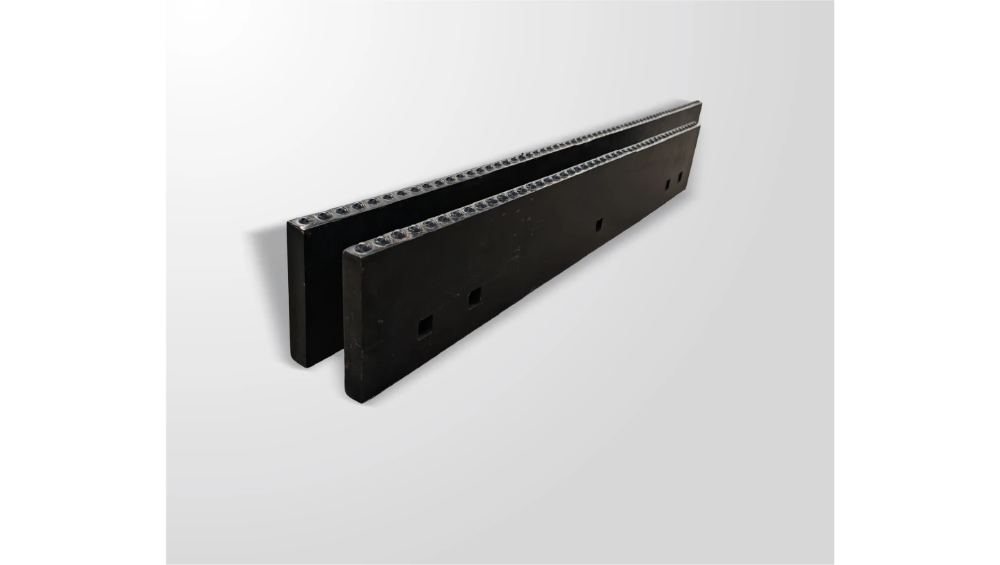 Carbide Cutting Edge Industry Report 2026: Materials, Manufacturing & Supply Chain2026News
 Snow Removal Contracting Industry Report 2026: Margins, Equipment & the El Niño Winter2026News
 Top 5 Snow Plow Cutting Edge Brands for Winter 2026–272026News