




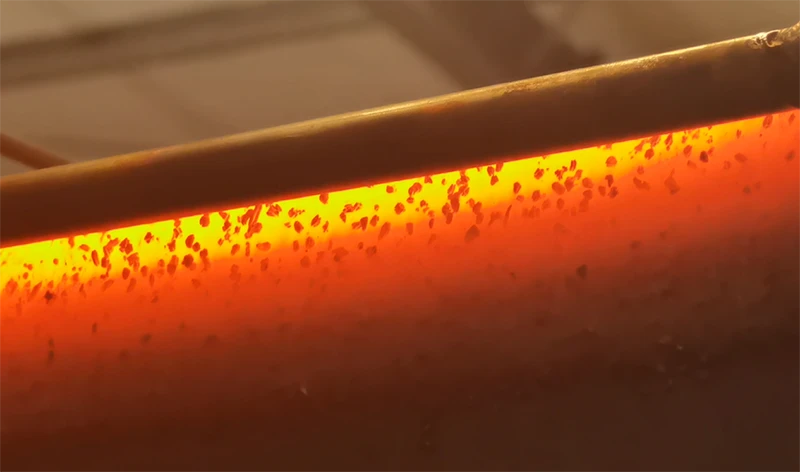
The duty is abrasion with heat
Continuous contact with abrasive material generates temperature that accelerates wear and changes how the binder behaves. Grades that suit snow work are usually too soft here.
Thermal and abrasive load
Continuous cutting keeps the tool hot, and heat softens the cobalt binder that holds the carbide together. Wear therefore accelerates in a way that a plow edge, running cold and intermittently, never experiences.
- ice Resurfacer Edges vs. Road Plow Blades: Two Different Wear Worlds
- which Road Milling Bits Last Longest? Carbide vs. Steel Comparison for Asphalt
- underbody scraper carbide blades built for sustained high pressure…
- can Carbide Blades Protect OGFC Asphalt
- how Do Scarifier Grooves Boost Tire Grip
- what Is the North American Carbide Grading System (C-1 to C-8)
- what Are the Health Risks of Traditional Gas-Powered Ice Resurfacers
Grade and geometry for planing
Harder grades with finer grain resist abrasion better at temperature. Geometry follows the machine and the cutting depth rather than the surface finish, and the two together decide the tool’s life more than either does alone.
- dome-Head Geometry: Fracturing Ice Without Damaging Asphalt
- snow Plow Blades for Trucks, Graders, and Loaders
- dome-Head Geometry: How Carbide Fractures Ice Without Damaging Pavement
- mining Haul Road Grader Blades Reliability Report 2026
- top 8 Motor Grader Manufacturers in 2026: From Municipal Roads to Mining
- earthmoving Motor Grader Blades Reliability Report 2026
- grader Blades with Carbide Edges: Surviving Grading Duty
- protecting Pavement and Road Markings: Why Flexible Edges Matter
- gravel Road vs Asphalt Road Snow Plowing Blades for Better Surface Protection
- how Can Flexible Ice Kits Protect Porous Asphalt OGFC Without Damage
Cost per metre, and the cost of a tool change
A milling tool that lasts longer but costs more is often cheaper, because a tool change stops a machine that costs far more per hour than the tool does.
Tool-change economics
The dominant cost in planing is machine downtime, not tool cost. Measure tool life in metres and multiply by the machine’s hourly rate, then compare the total. The ranking rarely matches the price list.
- the Arena Logistics Blueprint Crucial Olympia Ice Resurfacing Machine…
- abrasion Resistant Snow Blades Fail Faster Than Expected on Rough Asphalt…
- what Are “Clean‑to‑Pavement” Environmental Mandates
- is your snow plow really scraping ice or just grinding asphalt
- why Do Scarifier Teeth Beat Flat Edges on Ice? The Physics Behind Superior…
- how Are Cities Implementing Electric Ice Resurfacers
Inspection and grade control
Hardness and density checks at goods-in catch most grade substitution before it reaches a machine. For planing work, where a soft batch shows up as rapid wear on a large project, that check is worth more than it is on plow edges.
- heavy Duty Scarifier Boards for Grader-Mounted Frozen Ground and…
- how to Control Vibration During Heavy-Duty Ice Scarification
- what Are the Best Road Grader Blades for Heavy-Duty Road Leveling
- how To Upgrade John Deere Snow Plow Blade for Ice and Asphalt Durability
- why Does Plowing Dry Pavement Damage Snow Plow Blades More Than Ice
- does Clear Asphalt Reduce Winter Driving Anxiety
- what Is the White Pavement Standard for Clean Scrape Snow Removal
- how Do Carbide Scarifier Kits Reduce Winter Road Accidents
Planing and milling questions
Why do planing tools wear differently from plow edges?
Because the cutting is continuous and hot, which softens the binder and accelerates abrasion. Cold, intermittent scraping does not create the same conditions.
Which grade should planing tooling use?
Generally a harder, finer-grain grade than a plow edge, because abrasion dominates and impact is lower. The exact choice depends on the material being cut.
How should tooling be evaluated?
On cost per metre including machine downtime for tool changes. Machine time is usually the largest part of the number.
Is goods-in inspection worth it?
For planing work, yes. A soft batch discovered at goods-in costs a phone call; discovered on a large project it costs a schedule.
Can you match an existing tool geometry?
Yes, from a drawing or a sample. Feasibility, tooling and terms are confirmed by quotation.
Wear parts beyond plows
Buckets, augers and attachment tooling.
Tungsten carbide grades
Choosing hardness and toughness.
Quality control and testing
Batch inspection and traceability.
OEM and custom manufacturing
Custom tooling from a drawing.
Send us the tooling requirement
Give us the machine, the cutting depth and the material, and we will suggest a grade and geometry.
✓ Machine and tool type
✓ Material and cutting depth
✓ Current tool life in metres
✓ Quantity and delivery destination
Email: [email protected]