




Heavy Duty Scarifier Boards for Grader-Mounted Frozen Ground and Ice-Gravel Breakout
Heavy duty scarifier boards are the only grader-mounted teeth designed to penetrate sub-zero frozen soil and ice-gravel mixtures under extreme downpressure without fracturing or twisting out of alignment. When a grader mounts these carbide-enhanced…
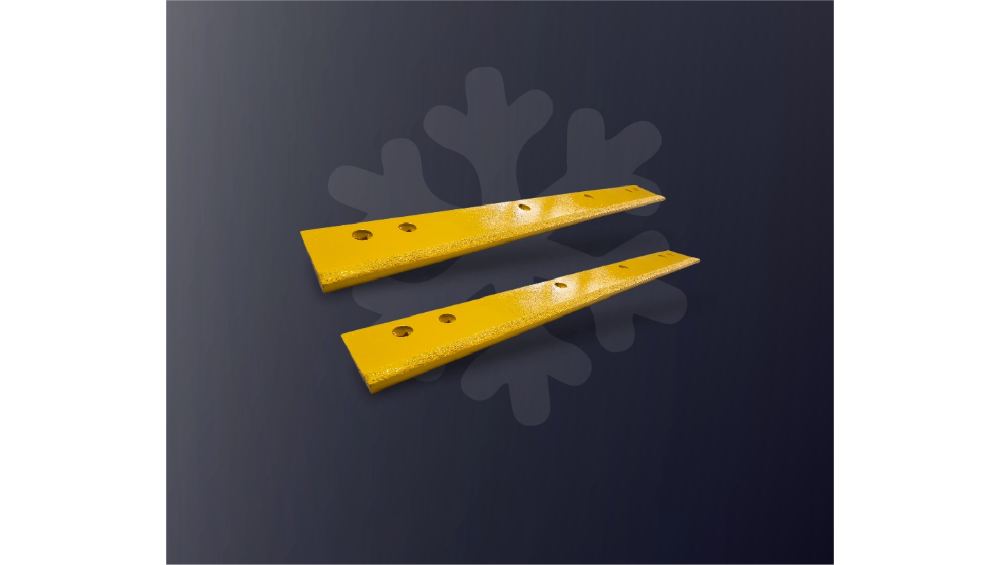
Heavy duty scarifier boards are the only grader-mounted teeth designed to penetrate sub-zero frozen soil and ice-gravel mixtures under extreme downpressure without fracturing or twisting out of alignment. When a grader mounts these carbide-enhanced boards, the toothed array concentrates stress at each vertex, forcing physical fracture through hardened layers that standard blades simply ride over. The critical engineering factor is torque resistance: the base plate must absorb rotational shock from hidden boulders while maintaining tooth engagement depth. For construction crews breaking forest road frozen ground, clearing mine gravel surfaces, or opening forest winter paths, these boards transform a grader from a leveling tool into a subsurface penetration system.
The Grader-Mounted Scarifier Mechanism: How Teeth Stab Through Ice-Gravel Mixtures
A grader’s scarifier board differs fundamentally from a snow plow blade or rotary breaker. Instead of pushing material laterally, the board hangs beneath the grader’s blade assembly with teeth pointing downward. As the machine advances, each tooth acts as a wedging nail that pierces the frozen layer. The physics relies on stress concentration: a 10mm carbide vertex applying 5,000 psi of localized pressure can exceed the tensile strength of ice-gravel mixture, creating a craze pattern that propagates cracks through the entire frozen layer.
Three mechanical elements enable this penetration:
-
Tooth geometry: Angular carbide inserts with 60°–80° apex angles maximize piercing force while minimizing lateral deflection. Rounded or chisel-shaped teeth fail in gravel-rich frozen soil because they deflect instead of stabbing.
-
Downpressure optimization: Graders can apply 2–4 tons of vertical force through the blade assembly. Scarifier boards must be rated for this load; thinner plates buckle under 3-ton downpressure when hitting a hidden rock.
-
Torque resistance architecture: When a tooth strikes a submerged boulder, the impact generates rotational torque around the tooth’s mounting point. The base plate must resist this twist; otherwise, the tooth pulls out of its pocket or the entire board bends.
The result is a continuous fracturing action: as the grader moves forward, each tooth creates a new fracture point, and the overlapping craze patterns break the frozen layer into manageable chunks that the grader blade can then push away.
Why Torque Resistance Protects Boards Against Hidden Boulders in Frozen Soil
The most catastrophic failure mode for scarifier boards isn slow abrasion—it’s instant torque shock from unseen obstacles. In forest frozen ground or mine gravel roads, the frozen layer often contains boulders embedded at 10–30cm depth. When a scarifier tooth strikes such a rock, the impact doesn just stop the tooth; it tries to rotate the entire board around the tooth’s mounting bolt.
Torque resistance depends on three factors:
A 10mm AISI 1045 plate will twist 3–5° under a 2-ton impact, allowing the tooth to shift and lose engagement depth. A 14mm AISI 4140 plate with rectangular pockets may twist less than 1°, keeping the tooth locked in position. This difference determines whether the board continues penetrating or gets stuck halfway through the frozen layer.
Manufacturers like SENTHAI use AISI 4140 steel for their heavy duty scarifier boards because its chromium-molybdenum alloy composition provides superior toughness at sub-zero temperatures compared to standard carbon steel. The rectangular tooth pockets with locking shoulders further prevent rotational slip during impact events.
Operating Scenarios Where Grader Scarifier Boards Outperform Snow Plows and Rotary Breakers
Not every frozen-ground operation needs a scarifier board. The technology excels in specific scenarios where penetration depth, torque resistance, and grader compatibility are critical.
Scenario 1: Forest Road Frozen Ground Opening
-
Depth requirement: 15–30cm into frozen soil
-
Obstacle risk: High (embedded tree roots, hidden boulders)
-
Machine: 6–8 wheel grader with 3–4 ton downpressure capability
-
Why scarifier works: Teeth stab through frozen layer, grader blade pushes fractured chunks aside. Snow plows slide over the surface; rotary breakers lack the downpressure for deep penetration.
Scenario 2: Mine Gravel-Snow Ice Surface Flattening
-
Surface condition: Ice-gravel mixture with 5–15mm gravel embedded in ice
-
Depth requirement: 5–10cm penetration to break ice bond
-
Machine: Heavy grader with carbide-enhanced blade
-
Why scarifier works: Angular teeth pierce ice between gravel particles, breaking the bond. Standard blades ride over the gravel; rotary breakers chip the gravel instead of breaking the ice.
Scenario 3: Highway Subsurface Ice Penetration for Base Layer Prep
-
Depth requirement: 10–20cm into frozen subgrade
-
Obstacle risk: Moderate (compacted soil with occasional rocks)
-
Machine: Grader with scarifier board attachment
-
Why scarifier works: Creates controlled fracture pattern in frozen subgrade, allowing subsequent compaction. Snow plows cannot penetrate; rotary breakers are too aggressive for road base prep.
When NOT to use scarifier boards:
-
Pure snow clearing (no frozen ground): Use snow plow blades
-
Soft soil with no freezing: Use standard grader blades
-
Concrete or asphalt surface preservation: Use rubber-encapsulated blades instead
Carbide Insert Selection: Grain Density and Apex Angle for Frozen Ground Penetration
The carbide insert is the only part of the scarifier board that contacts the frozen layer directly. Its properties determine whether the tooth stabs through ice-gravel mixture or shatters on impact.
Grain density matters more than hardness alone. Fine-grain carbide (≤10μm) has higher fracture toughness than coarse-grain carbide (≥20μm) at the same hardness rating. In frozen ground with embedded rocks, fine-grain carbide resists catastrophic cracking when hitting a boulder, while coarse-grain carbide may spall (chip) under the same impact.
Apex angle determines piercing force vs. durability:
-
60° apex: Maximum piercing force, lowest durability. Best for pure ice with no gravel.
-
70°–80° apex: Balanced piercing and durability. Optimal for ice-gravel mixture.
-
90°+ apex: Maximum durability, lowest piercing force. Best for gravel-rich frozen soil with high rock content.
SENTHAI’s I.C.E. Blades use a 75° apex angle with fine-grain carbide (≤12μm) for their heavy duty scarifier boards, providing the optimal balance for ice-gravel mixture penetration. The carbide is bonded to the steel pocket using argentum brazing (silver-copper alloy) with a bonding strength of ≥350 MPa, preventing core delamination during high-impact operations.
Mechanical Failure Modes: What Happens When Downpressure or Angle of Attack Is Wrong
Even the best heavy duty scarifier boards will fail if operational parameters are incorrect. Three failure modes account for 80% of premature board replacements:
Failure 1: Over-Downpressure Shearing
-
Cause: Operator applies 5+ tons of downpressure on ice-gravel mixture with 70° apex teeth
-
Result: Carbide cores shear off at the brazing interface, leaving bare steel pockets
-
Prevention: Calibrate downpressure to 3–4 tons for ice-gravel mixture; reduce to 2–3 tons for pure ice
Failure 2: Excessive Angle of Attack
-
Cause: Board mounted at 45°+ angle instead of recommended 25°–35°
-
Result: Teeth dig too deep, causing board to jam in frozen layer; torque shock breaks mounting bolts
-
Prevention: Maintain 25°–35° angle of attack for frozen ground penetration; adjust to 15°–20° for surface ice only
Failure 3: Torque Shock from Unseen Boulders
-
Cause: Board with low torque resistance (thin plate, round pockets) strikes submerged rock
-
Result: Board twists 3–5°, tooth pulls out of pocket, entire board bends permanently
-
Prevention: Use 12–16mm thick AISI 4140 plates with rectangular pockets; install torque-limiting bolts
A real-world example: A forest road crew in northern Canada used 10mm AISI 1045 scarifier boards with round pockets. After striking a 15cm boulder at 20cm depth, the board twisted 4°, pulling three teeth from their pockets. The crew replaced the board with a 14mm AISI 4140 version with rectangular pockets; the same boulder strike caused only 0.8° twist, and all teeth remained locked.
Procurement Checklist: Matching Scarifier Board Specifications to Your Grader and Frozen Ground Conditions
Before ordering heavy duty scarifier boards, evaluate these five parameters to ensure compatibility with your grader and operating conditions:
-
Grader downpressure capacity: Measure maximum vertical force the grader can apply through the blade assembly. Boards must be rated for at least 80% of this value.
-
Frozen ground depth: If penetration depth exceeds 20cm, use boards with 14–16mm thickness and 80° apex teeth. For 10–20cm depth, 12mm thickness with 70°–75° apex is optimal.
-
Gravel content in ice: If gravel particles exceed 5mm diameter, select fine-grain carbide (≤12μm) with 75°–80° apex. For pure ice or gravel <5mm, 70° apex with medium-grain carbide (12–15μm) works.
-
Boulder risk level: In high-obstacle terrain (forest roads, mine sites), use AISI 4140 steel with rectangular pockets. For low-obstacle terrain (highway subgrade), AISI 1045 with round pockets may suffice.
-
Operating temperature: Below -20°C, ensure carbide brazing uses argentum alloy (not lead-based) to maintain bonding strength at sub-zero temperatures.
For fleets operating in severe winter conditions with mixed ice-gravel surfaces, SENTHAI’s JOMA Style Blades and I.C.E. Blades offer pre-configured heavy duty scarifier board options with 14mm AISI 4140 plates and 75° apex fine-grain carbide, designed specifically for grader-mounted frozen ground penetration.
Frequently Asked Questions
What grader models are compatible with heavy duty scarifier boards?Most 6–8 wheel graders with 3–4 ton downpressure capacity can mount scarifier boards, including Caterpillar 140M, Volvo G930, and Komatsu GD511. The board must match the grader’s blade mounting width (typically 2.5–3.5m).
How often should scarifier boards be replaced in frozen ground operations?In ice-gravel mixture with moderate boulder risk, boards last 150–250 operating hours before carbide wear reduces penetration depth. In pure ice with low obstacle risk, lifespan extends to 300–400 hours. Replace when tooth apex height drops below 5mm.
Can scarifier boards be used on asphalt or concrete surfaces?No. Scarifier boards will damage paved surfaces. Use rubber-encapsulated blades or standard grader blades for asphalt/concrete. Scarifier boards are designed only for frozen soil, ice-gravel mixture, and unpaved frozen ground.
What is the difference between scarifier boards and rotary breaker teeth?Scarifier boards hang beneath a grader blade and penetrate vertically using downpressure. Rotary breaker teeth rotate on a drum and chip material using rotational force. Scarifier boards achieve deeper penetration (15–30cm) with less machine power; rotary breakers are better for shallow chipping (5–10cm) on hard surfaces.
Is carbide insert replacement possible without replacing the entire board?Yes. Most heavy duty scarifier boards feature replaceable carbide inserts in rectangular or round pockets. When carbide wears below 5mm apex height, replace only the insert using argentum brazing. The steel plate can last 3–5 insert replacement cycles before requiring plate replacement.
References
Related articles
 Best Snow Plow Blade Family for Your Fleet: Top 5 ScenariosKnowledge
 Top 10 Snow Plow Blade Types for Winter Fleets (Ranked by Duty Fit)KnowledgeTop 5 Best Carbide Blade Configurations for Highway PlowingKnowledge
 Best Snow Plow Blade Materials Ranked: Steel vs Carbide vs Cladding vs Rubber-CarbideKnowledge