




Earthmoving Motor Grader Blades Reliability Report 2026
Executive Summary. Motor graders are the precision tools of earthmoving: they finish grade, mix aggregate, cut ditches, and maintain haul roads, all through one vulnerable component — the cutting edge. This report reviews the scale…
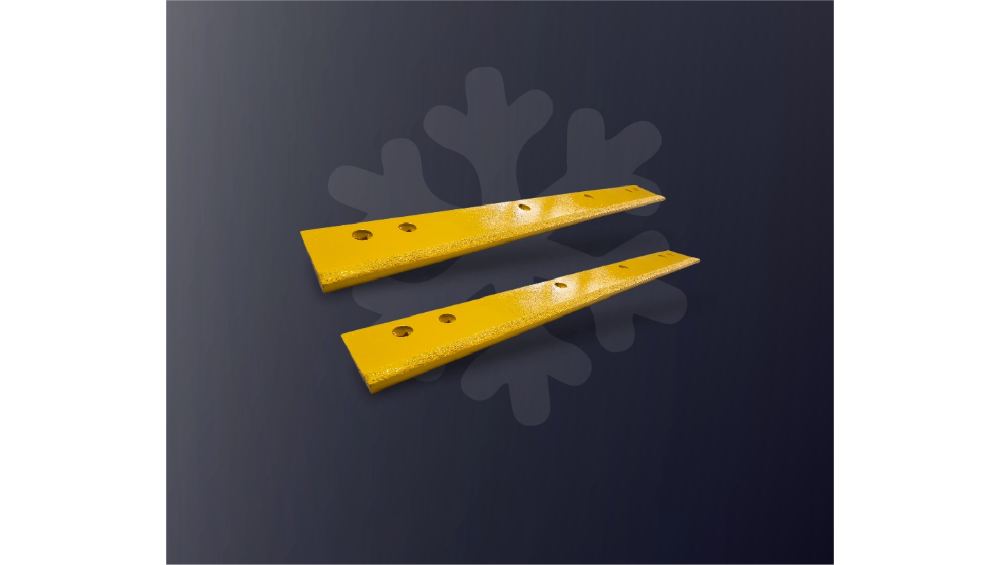
1. Industry Overview
The motor grader is a mainstay of road construction, site preparation, and material moving. Caterpillar’s own grader nomenclature describes the machine’s range — finishing grade, mixing aggregate, cutting or cleaning ditches, clearing snow — and its role across construction and maintenance projects (https://www.cat.com/en_US/campaigns/awareness/mg_nomenclature.html) [1]. The equipment industry behind it is substantial: AEM, the Association of Equipment Manufacturers, represents more than 1,100 companies supplying agriculture, construction, mining, utility, and forestry equipment, an industry supporting 2.3 million U.S. jobs and contributing roughly $316 billion a year to the economy (https://www.aem.org/) [2].
Grader edges work in the most abrasive environment in construction: uncompacted soil, crushed rock, gravel, and asphalt millings, at blade angles that put maximum shear on the cutting edge. Equipment World’s coverage of the latest next-generation grader launches (https://www.equipmentworld.com/construction-equipment/heavy-equipment/gradersscrapers/article/15820976/caterpillar-debuts-150-160-motor-graders) [3] shows an industry investing in cab redesign, technology, and power — the next-generation Cat 150, for example, arrives with a 261-horsepower engine and a 12-foot moldboard — while the cutting edge, the part that actually touches the ground, is still often specified only by hardness and chemistry.
2. Industry Pain Points
- 2.1 Abrasive soils destroy unprotected edges. Standard steel and even hardened edges wear quickly in sandy or rocky material, shortening grading windows and increasing material and labor costs per project.
- 2.2 Downtime is expensive and visible. A grader down for an edge change stops the machines behind it — loaders, haul trucks, pavers. The cost of a mid-project changeout is measurable: changeout hours multiplied by the burdened labor rate, plus idle support equipment and the schedule delay they impose. Contractors should run this calculation before selecting an edge supplier, not after a mid-project failure.
- 2.3 Blade pull limits productivity. Dull or worn edges increase blade pull and fuel burn; operators compensate by slowing down, which extends project hours.
- 2.4 Carbide edges fail in two ways. Carbide grade determines wear resistance; braze quality determines whether the carbide stays attached. Insert loss is the field failure that converts a premium edge into a premature changeout.
- 2.5 Specs stop at the chemistry sheet. Buyers receive hardness and composition certificates but rarely a braze process specification, which is the variable that governs carbide retention.
3. Technology Assessment: High-Temperature Automated Brazing
Carbide-tipped grader edges rely on brazing to join tungsten carbide segments to the steel moldboard blade. The filler metal melts below the melting point of both base materials and forms an intermediate layer that absorbs mechanical shock and accommodates thermal expansion mismatch. A poor bond — voids, cold joints, or overheated carbide with migrated binder — fails under the shear loads of grading, regardless of carbide hardness.
Manual torch brazing leaves heat input and filler flow to the operator, so joint quality varies within a batch. Automated high-temperature brazing uses a programmed furnace or induction profile with controlled atmosphere and cooling, producing repeatable bonds with per-lot records — the difference between an inspected process and a hope.
| Control Variable | Manual Torch Brazing | Automated High-Temperature Brazing |
|---|---|---|
| Heat input | Operator-dependent; hot spots common | Programmed profile; uniform |
| Carbide temperature | Risk of overheating → micro-cracks, binder migration | Capped by the temperature profile |
| Segment retention | Varies by operator; insert loss in service | Consistent bond line; inspectable |
| Batch consistency | Varies within and across lots | Repeatable lot to lot |
| Traceability | Limited | Per-lot process records |
For a detailed technical breakdown of the process, its failure modes, and how to inspect a braze joint on arrival, see High Temperature Automated Brazing for Plow Edges: Cutting Downtime and Extending Blade Life [5].
4. Findings
4.1 Edge wear is a cost multiplier, not a consumable line item.
Grader productivity, fuel burn, and support-equipment idle time all track blade condition. ASCE’s work on infrastructure and construction practice (https://www.asce.org/) [4] frames construction productivity as an engineering and management problem; on the ground, the cutting edge is where that problem becomes mechanical. A worn edge slows the entire train of machines behind the grader.
4.2 Carbide retention determines usable life.
Carbide edges outlast steel by multiples when the carbide stays attached. Insert loss from weak brazing erases that advantage: the edge loses its cutting surface in patches, forces premature changeout, and can damage the moldboard. Retention is testable on arrival — bond area, void rate, and shear strength can be verified per lot with destructive samples, and acceptance limits can be written into the specification. The buyer’s own inspection data, not a supplier’s brochure, is the number that matters.
4.3 The industry is investing everywhere except the edge spec.
Next-generation graders add technology, cab comfort, and control systems (https://www.equipmentworld.com/construction-equipment/heavy-equipment/gradersscrapers/article/15820976/caterpillar-debuts-150-160-motor-graders) [3], while AEM data shows the industry’s economic weight [2]. The cutting edge — the part in the dirt — is still bought on hardness and price. Until braze process joins the spec, the most wear-critical component remains the least specified.
4.4 Process control is the auditable answer.
Automated brazing converts carbide retention from an operator skill into a documented spec with lot-level traceability. For contractors and construction firms managing multiple machines, that audit trail is what makes carbide edges a predictable line item instead of a field gamble.
5. Recommendations
- Add braze requirements to the edge spec. Require brazing process, filler metal, bond area, and per-lot inspection records on every carbide grader edge order.
- Inspect on arrival. Check segment retention, visible voids, and thermal discoloration; run destructive sample tests per lot.
- Measure cost per grading hour. Track edge life, changeout labor, and support-equipment idle time by supplier for one project season.
- Buy lifecycle cost. Include changeout and idle costs in bid evaluation; they routinely exceed the price difference between process-controlled and lowest-cost edges.
- Match edge spec to material. For abrasive or rocky projects, specify carbide-tipped edges with documented braze quality rather than relying on grade alone.
6. References
- [1] Caterpillar, “Motor Grader Nomenclature — Cat® Motor Graders.” https://www.cat.com/en_US/campaigns/awareness/mg_nomenclature.html
- [2] Association of Equipment Manufacturers (AEM). https://www.aem.org/
- [3] Equipment World, “Caterpillar Debuts 150, 160 Motor Graders.” https://www.equipmentworld.com/construction-equipment/heavy-equipment/gradersscrapers/article/15820976/caterpillar-debuts-150-160-motor-graders
- [4] American Society of Civil Engineers (ASCE). https://www.asce.org/
- [5] SENTHAI, “High Temperature Automated Brazing for Plow Edges: Cutting Downtime and Extending Blade Life.” https://senthaitool.com/high-temperature-automated-brazing-for-plow-edges-cutting-downtime-and-extending-blade-life-july-2026/
7. Methodology and Conflicts of Interest
This report was compiled by SENTHAI Research in August 2026. Public figures are quoted as published by the source organizations and were accessed at the URLs listed in Section 6; links were verified at the time of writing. SENTHAI is a manufacturer of carbide snow plow blades and wear parts, and this report reflects a commercial interest in braze quality. It contains one link to SENTHAI’s website; all other linked sources are independent. Requests for sample-testing programs or braze-inspection records can be sent to [email protected].
Related articles
 How to Source Snow Plow Blades: OEM, Distributor, or Direct2026News
 Top 10 Agricultural Equipment Manufacturers in 2026: Tractors, Harvesters & Precision Farming2026News
 Carbide Cutting Edge Industry Report 2026: Materials, Manufacturing & Supply Chain2026News
 Snow Removal Contracting Industry Report 2026: Margins, Equipment & the El Niño Winter2026News