




Is Virgin Tungsten Powder Essential for High-Impact Carbide Blades?
Virgin tungsten powder is essential for high-impact carbide plow blades and wear parts because it delivers uniform grain size, low porosity, and high purity that delay micro-crack initiation under repeated impact. By contrast, recycled…
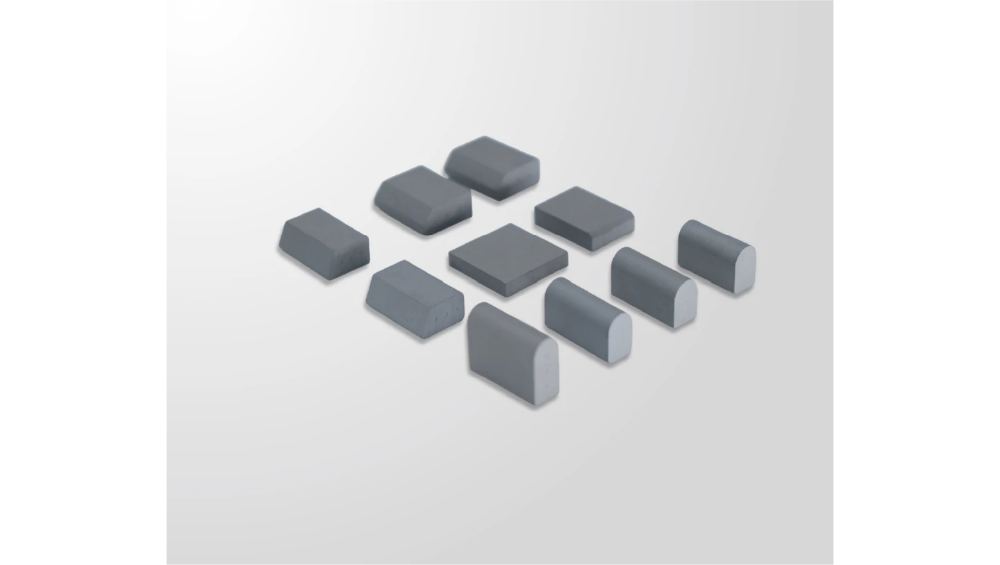
Virgin tungsten powder is essential for high-impact carbide plow blades and wear parts because it delivers uniform grain size, low porosity, and high purity that delay micro-crack initiation under repeated impact. By contrast, recycled scraps introduce inclusions and uneven grains that accelerate micro-cracking and brittle failure. For OEM manufacturers and factories, virgin powder stabilizes performance, extends service life, and improves cost predictability.
Severe-Duty Carbide Cutting Edges Engineering
What Is Virgin Tungsten Powder in Powder Metallurgy for Carbide Blades?
Virgin tungsten powder is primary powder produced from ore-based APT routes, then carbonized to WC with tightly controlled grain size, purity, and porosity. It becomes the base for high-impact resistant carbide plow blades and virgin tungsten carbide wear parts in B2B manufacturing. For SENTHAI and other OEM factories, this powder is the starting point for predictable hardness, toughness, and impact resistance.
In powder metallurgy for snow plow blades and road maintenance tools, virgin tungsten powder determines the microstructure of the final WC–Co composite. Uniform sub-micron to fine-micron grains distribute stress evenly when the blade hits packed snow, ice, or gravel at speed. For manufacturers, this means fewer unexpected failures in the field and more stable warranty costs.
How Does Virgin Tungsten Powder Prevent Micro-Cracking Under High-Speed Impact?
Virgin tungsten powder prevents micro-cracking primarily through controlled grain size, low porosity, and minimal impurities in the sintered carbide matrix. These features reduce stress concentrations where cracks can initiate under high-speed impact. Compared with recycled scraps, virgin powder creates a tougher, more homogeneous microstructure that resists crack propagation in plow blades and wear parts.
At the metallurgical level, micro-cracks in WC–Co begin at voids, inclusions, or coarse-grain clusters where local stress exceeds the material’s transverse rupture strength. Virgin powder, processed with strict hydrogen reduction and carbonization parameters, yields WC grains that are closely packed and evenly distributed within the cobalt binder. When a blade edge encounters frozen asphalt or embedded stones, the impact energy spreads through the network instead of focusing at weak points.
In Manufacturer, Wholesale, and Supplier environments, this translates directly into performance stability. A factory using virgin tungsten powder can design for known impact energy ranges and specify WC grade and Co content with confidence. Plow blades for municipal fleets and highway maintenance crews see repeated shocks; virgin-based carbides keep micro-cracks “short” and non-catastrophic, postponing macroscopic chipping and edge loss.
Why Are Micro-Crack Initiation and Propagation Different Between Virgin and Recycled Tungsten Carbide?
Micro-crack initiation differs because recycled tungsten scrap often carries residual coatings, mixed grain histories, and contamination that increase porosity and microstructural heterogeneity. This creates more “launch pads” for micro-cracking under impact. Virgin tungsten carbide, built from controlled powder lots, offers fewer defect sites and more uniform grain boundaries, slowing crack initiation and propagation in high-impact blades.
Propagation behavior also diverges. In low-quality recycled mixes, crack paths can link multiple voids and brittle phases quickly, triggering sudden chipping. Virgin material maintains continuous WC–Co bridges that act as crack stoppers. On the factory floor, this is visible in failed parts: recycled-based inserts show large brittle chips with little plastic deformation; virgin-based parts show localized wear and minor corner fractures.
For OEM manufacturers supplying snow plow blades and road wear parts, understanding this initiation–propagation difference is crucial. It informs grade selection, impact testing protocols, and warranty terms. SENTHAI leverages virgin-focused metallurgy to reduce the probability of catastrophic blade failures that can halt road operations in severe winter conditions.
What Micro-Photo Differences Are Seen Between Virgin and Recycled Tungsten Carbide?
Under high-magnification metallographic microscopes, virgin tungsten carbide shows uniform WC grain size, clean grain boundaries, and low porosity, while recycled material often reveals mixed grain populations, residual inclusions, and larger pores. These micro-photo differences directly correlate with impact resistance and micro-cracking behavior in wear-resistant plow blades and virgin tungsten carbide wear parts.
A typical micro-photo of virgin WC–Co at 1000–2000× exhibits tightly packed, similarly sized grains surrounded by a continuous cobalt binder. Porosity appears as small, isolated dark spots. In recycled material, grain sizes vary widely, binder pools are uneven, and pores may cluster along segregated regions. Such clustered defects become crack nucleation zones under cyclic impact loads.
Microstructure Indicators for Blade Manufacturers
For manufacturers, wholesalers, and OEM suppliers, insisting on micro-photo inspection at incoming powder and sintered blank stages is a practical way to enforce quality. SENTHAI uses such microscopic audits as part of its ISO-backed quality assurance to ensure blades delivered to global partners perform reliably.
How Does Virgin Tungsten Powder Improve High-Impact Resistant Carbide Plow Blades?
Virgin tungsten powder improves high-impact resistant carbide plow blades by delivering consistent hardness and toughness balance, allowing blade OEMs to optimize edge geometry and WC–Co grade for repeated shock loading. With virgin powder, blades retain sharpness under abrasive snow and gravel while resisting catastrophic edge chipping, keeping road maintenance equipment operational longer.
On the design side, factories can select WC grades (for example, fine-grain WC with 10–12% Co) and confidently predict fracture behavior. This enables precise edge chamfering and insert placement on JOMA-style and ICE-style blades. Virgin-based inserts tolerate aggressive cutting angles and higher plowing speeds without fragmenting.
For B2B Buyers—municipal fleets, highway maintenance contractors, and distribution partners—the benefit is fewer unplanned blade changes and reduced downtime during storms. SENTHAI plow blade systems, built on virgin tungsten carbide wear parts, show a more gradual wear curve instead of sudden failure, which simplifies maintenance scheduling and reduces total lifetime cost per kilometer plowed.
Performance Impact in Plow Blade Applications
Why Should Manufacturers Prefer Virgin Tungsten Carbide Wear Parts for OEM and Wholesale?
Manufacturers should prefer virgin tungsten carbide wear parts because they offer predictable mechanical properties, batch-to-batch consistency, and lower risk of catastrophic failure under impact. For OEM, Wholesale, and Factory-level contracts, this predictability stabilizes warranty claims, supports standardized testing, and strengthens long-term customer trust.
Virgin-based wear parts allow technical sales teams to commit to clear performance metrics—expected service life, maximum impact energy, and acceptable wear rates. Engineers can qualify grades once and reuse them across product lines without recalibrating for each batch of recycled scrap. This streamlines R&D and reduces hidden costs.
How Do Powder Metallurgy Process Steps Influence Micro-Cracking Performance?
Powder metallurgy steps—wet grinding, pressing, sintering, and post-processing—strongly influence micro-cracking performance by shaping grain size, binder distribution, and residual stress. When virgin tungsten powder is processed with tight control at each step, the resulting carbide parts show lower residual stresses and fewer micro-defects, improving impact resistance in blades and inserts.
During wet grinding, over-milling can create excessively fine WC grains that increase hardness but reduce toughness; under-milling leaves oversized grains that become crack nuclei. In pressing, uneven pressure introduces density gradients that later translate into porosity differences. Controlled sintering cycles manage grain growth and binder wetting, minimizing internal stresses that encourage micro-cracking.
A factory that manages these stages holistically can fine-tune the trade-off between hardness and toughness for specific applications. SENTHAI’s automated lines in Thailand integrate these powder metallurgy steps with in-line inspection, ensuring that the advantages of virgin powder are not lost through poor processing. This is where factory-floor experience converts raw material potential into reliable field performance.
Which Trade-Offs Matter Most When Choosing Virgin vs. Recycled Tungsten Sources?
The key trade-offs when choosing virgin versus recycled tungsten sources are cost vs. consistency, impact toughness vs. static hardness, and warranty risk vs. unit price. Virgin tungsten powder typically costs more but offers consistent microstructure and impact resistance, while recycled sources may lower upfront cost but introduce variability and higher failure risk in high-impact applications.
For Manufacturer and OEM decisions, the question is: what is the cost of a field failure? In snow plow blades and road maintenance carbide wear parts, unexpected blade breakage can halt operations, damage equipment, or compromise safety. Thus, many high-duty applications justify virgin-based grades, especially for leading edge inserts.
Recycled high-quality powder can work for lower-impact or primarily abrasive wear environments where micro-cracking risk is lower. However, mixed-scrap sources should be reserved for non-critical components. SENTHAI’s approach is to use virgin tungsten carbide in impact-critical parts, while applying design and material differentiation for less demanding locations to balance performance and cost.
Who Benefits Most from Virgin Tungsten Carbide in Snow Plow and Road Maintenance Tools?
The primary beneficiaries of virgin tungsten carbide in snow plow and road maintenance tools are municipal fleets, highway agencies, contractors, and distributors who need reliable uptime. Factories and OEM suppliers also benefit from lower warranty risk and stronger long-term relationships with these users.
Fleet managers gain blades that wear in a controlled, predictable way. Maintenance planners can schedule replacements based on mileage and conditions rather than on unexpected failures. Distributors supplying SENTHAI carbides can confidently recommend blade systems to clients knowing the underlying microstructure is robust.
For the Manufacturer and Factory side, virgin carbide reduces variability in production. Welders, machinists, and quality engineers see fewer anomalies, enabling smoother throughput. These practical shop-floor advantages reinforce the business case for premium powder selection.
SENTHAI Expert Views
“After twenty-plus winters watching blades fail in real conditions, I can say that microstructure uniformity matters more than any single hardness number. When we design SENTHAI plow blades, we start from virgin tungsten powder because it gives us a stable WC–Co network to work with. That stability lets us tune edge geometry, brazing, and rubber-metal interfaces for real highway snow load patterns—not just lab tests. In our Rayong factory, every automated step is built around preserving that uniformity so our partners see predictable, safe performance on the road.”
When Does It Make Sense to Use High-Quality Recycled Tungsten Instead of Virgin?
High-quality recycled tungsten may make sense for applications dominated by abrasive wear with lower impact loads, such as some scraper inserts or non-leading edges. In these cases, cost savings can be attractive without dramatically increasing failure risk, provided the recycler controls grain size and contamination.
For OEM and Wholesale strategies, factories may segment their product portfolio. Premium lines like SENTHAI’s high-impact plow blades use virgin tungsten carbide wear parts, while secondary products for lighter duty may incorporate carefully qualified recycled powders. This tiered approach keeps the brand competitive without diluting performance promises.
The key is honest application mapping. If a component will see high-speed impact, embedded rocks, or freeze–thaw cycles, virgin powder remains the safer choice. Recycled sources belong in controlled environments with known, limited shock loads.
Are Virgin Tungsten Carbide Grades Always Better Than Recycled Options for B2B Buyers?
Virgin tungsten carbide grades are generally better for high-impact, safety-critical applications, but high-quality recycled options can be acceptable in less demanding scenarios. B2B buyers should not assume all recycled material is poor; instead, they should require clear data on porosity, impurity levels, and impact test results.
For a Manufacturer or Supplier, the decision should be based on the blade’s duty cycle and failure mode analysis. SENTHAI, for example, anchors its flagship snow plow and road maintenance products in virgin tungsten carbide to ensure maximum impact resistance. Any use of recycled material is carefully confined to non-critical components and backed by detailed quality control.
Ultimately, “better” means matching metallurgy to field conditions. Virgin powder gives the widest safety margin; recycled material must be proven fit-for-purpose before being trusted in demanding environments.
What Are Practical Takeaways for B2B Buyers Choosing Carbide Plow Blades and Wear Parts?
For B2B buyers, the practical takeaway is to prioritize microstructure and impact performance over unit price. Specify virgin tungsten carbide for leading-edge and high-impact wear parts, require micro-photo evidence of grain uniformity, and partner with manufacturers like SENTHAI who control the entire powder metallurgy and assembly chain.
Actionable steps include:
-
Request WC–Co grade data, including grain size distribution and porosity.
-
Ask for typical impact test results and failure mode descriptions.
-
Require factory-level process descriptions for grinding, pressing, sintering, and brazing.
-
Align blade selection with real operating conditions—speed, substrate, and climate.
By treating carbide blades as engineered systems rather than commodity parts, OEM, Wholesale, and Factory buyers can extend service life, reduce downtime, and improve safety. SENTHAI’s virgin tungsten carbide plow blades exemplify how microstructure-focused design pays off in demanding road maintenance operations.
FAQs
How can I tell if a blade uses virgin or recycled tungsten carbide?
Request material certificates, WC–Co grade data, and micro-photo samples. Virgin-based parts usually show uniform grains, low porosity, and documented ore-based powder routes.
Does virgin tungsten carbide always last longer than recycled in plow blades?
In high-impact snow and gravel conditions, virgin carbide typically offers more predictable, longer service life because it resists micro-crack initiation and catastrophic chipping.
Can recycled tungsten carbide be used safely in road maintenance tools?
Yes, but mainly in lower-impact components. It must come from controlled recycling processes with verified purity, grain control, and impact testing.
Why do some blades chip suddenly instead of wearing gradually?
Sudden chipping often results from heterogeneous microstructures with pores and inclusions that act as crack launch pads, common in low-quality recycled material.
What should OEM buyers ask SENTHAI or similar factories before placing bulk orders?
Ask for detailed WC–Co grade specifications, micro-photo images, impact test data, and descriptions of powder metallurgy and brazing processes to ensure the blades match your operating environment.
Related articles
 Best Snow Plow Blade Family for Your Fleet: Top 5 ScenariosKnowledge
 Top 10 Snow Plow Blade Types for Winter Fleets (Ranked by Duty Fit)Knowledge
 Top 5 Best Carbide Blade Configurations for Highway PlowingKnowledge
 Best Snow Plow Blade Materials Ranked: Steel vs Carbide vs Cladding vs Rubber-CarbideKnowledge