




Is cobalt leaching silently destroying winter road carbide tools?
In corrosive winter road environments, chloride brines aggressively attack the cobalt binder in tungsten carbide, causing cobalt leaching that degrades bonding strength, opens grain boundaries, and accelerates cracking and spalling of snow plow blades…
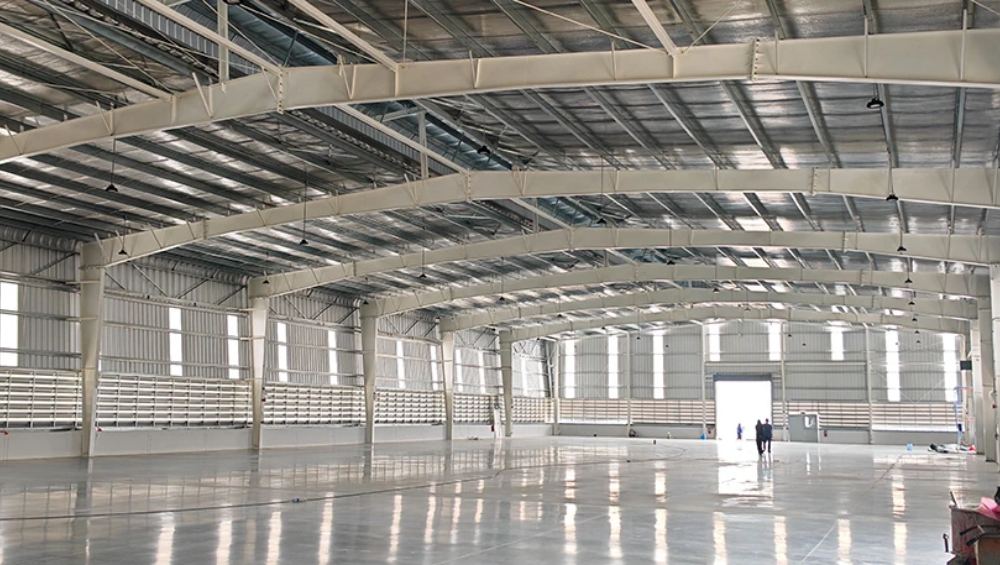
In corrosive winter road environments, chloride brines aggressively attack the cobalt binder in tungsten carbide, causing cobalt leaching that degrades bonding strength, opens grain boundaries, and accelerates cracking and spalling of snow plow blades and wear parts. For B2B buyers, choosing corrosion‑resistant cemented carbide from a specialized manufacturer like SENTHAI is the most reliable way to block this hidden chemical damage and extend service life.
Tungsten Carbide QA Testing Standards
What is cobalt leaching in tungsten carbide road tools?
Cobalt leaching is the selective chemical dissolution of the cobalt binder phase from WC–Co cemented carbide when exposed to chloride-rich, oxygenated brine or deicing salts. Once cobalt is removed from the grain boundaries, the tungsten carbide skeleton loses cohesion, surfaces become porous, and edges chip prematurely. For snow plow blades and inserts, this is a failure mode driven more by chemistry and electrochemistry than by pure mechanical wear.
In factory failure analysis, we see the typical pattern: a blade that still has enough carbide thickness but shows matte, gray, “chalky” surfaces where cobalt has depleted. Under a microscope, the cobalt phase around WC grains is etched away along crystal boundaries. That microstructural attack changes fracture behavior from tough, transgranular breakage to brittle, intergranular cracking. From a manufacturer’s perspective, that’s a clear signal that the matrix design and environment are mismatched.
Why are winter road chemicals so aggressive to cemented carbide?
Winter road maintenance in North America and Northern Europe increasingly relies on large‑scale spraying of calcium chloride solution, magnesium chloride, and mixed brines designed to stay liquid down to very low temperatures. These fluids are not just salty; they are often slightly acidic or near-neutral pH, with dissolved oxygen and cyclic wet–dry exposure on the blade surface. Under these conditions, cobalt behaves like a sacrificial anode.
On the blade, you effectively create a galvanic micro‑cell: cobalt binder is more electrochemically active than tungsten carbide, so it preferentially dissolves. When vehicles pass, splashing and turbulence constantly refresh the electrolyte, removing any protective salt film that might slow down the reaction. In our SENTHAI lab tests, we see a strong correlation between chloride concentration, oxygen content, and cobalt depletion depth, even at low temperatures around freezing.
How does cobalt leaching loosen the sintered matrix and cause structural failure?
In a properly sintered WC–Co matrix, cobalt wets and fills the intergranular space, creating a continuous metallic network that holds carbide grains together and transfers stress. When cobalt leaches out along grain boundaries, you go from a dense composite to a skeleton with air- or fluid‑filled voids. Mechanically, that turns a tough material into a brittle, “ceramic‑like” surface layer with poor impact resistance.
The failure sequence we measure in production returns is consistent: first, you get surface roughening and micro‑pitting; then edges start to chip under impact; finally, chunks spall off along the depleted zone. Interestingly, the wear rate often spikes just after the leaching front reaches 50–200 µm depth, because contact stress concentrates in the damaged layer. For fleets, this shows up as blades that “fall apart all at once” after apparently normal early wear.
Which sintered matrix design can resist chloride brine cobalt leaching?
To resist chloride brine corrosion, manufacturers must treat the sintered matrix as an electrochemical system, not just a mechanical one. The most effective strategies involve modifying binder chemistry (e.g., adding Ni, Cr, Mo), refining grain size distribution, densifying grain boundaries, and controlling residual porosity below 0.5%. For road tools, the sweet spot is a matrix that keeps toughness but shifts the corrosion potential away from aggressive cobalt behavior.
In SENTHAI, we use multi‑component binders and tailored pressing curves to pack WC grains tightly and minimize continuous leaching paths. For blades destined for high‑chloride states or provinces, we typically specify a corrosion‑resistant grade with mixed binder and slightly finer WC grain size to shorten diffusion paths. The trade‑off is a modest increase in grinding difficulty and raw material cost, but the field life gain often exceeds 30–50% in heavy salt applications.
Typical carbide matrix options for winter road tools
How can manufacturers test cobalt leaching and corrosion resistance realistically?
In our experience, generic lab corrosion tests (simple immersion in NaCl) rarely predict real road performance. For meaningful quality assurance, a manufacturer or OEM supplier needs a protocol that mimics winter cycles: chloride solution of defined composition, low temperature, oxygenated conditions, mechanical agitation, and wet–dry alternation. Without this, the matrix design may look good on paper but fail on highways.
At SENTHAI, we run 5% chloride brine immersion at controlled temperature, combined with electrochemical measurements and periodic mass loss checks. We then cross‑section test coupons to measure cobalt depletion depth and relate it to blade wear. When we design new grades, we routinely compare cobalt loss versus competitor blocks in exactly the same brine, so purchasing teams see data, not marketing claims. As a B2B factory, such disciplined testing is the backbone of our OEM support.
Example QA comparison: cobalt loss in 5% road brine (illustrative)
Why do B2B buyers need factory‑grade failure analysis for snow plow blades?
In B2B procurement, failures are often labeled simply “wear‑out,” but in carbide road tools, chemical modes like cobalt leaching can be the real driver. Without metallographic and electrochemical failure analysis, fleets may switch blade designs or suppliers based on incomplete diagnosis. That leads to repeated problems and higher whole‑life cost. Factory‑level analysis reveals whether the root cause is design, material choice, or operating environment.
On our SENTHAI factory floor, we routinely receive returned blades from municipalities and contractors. We cut samples, etch cross sections, check binder depletion around WC, examine braze interfaces, and correlate wear patterns with route chemistry (salt type, application rate). The results often overturn assumptions—for example, blades that “felt too soft” actually suffered from corrosion‑induced matrix loosening rather than low hardness. OEM and wholesale customers use these findings to refine specifications instead of just changing vendors.
What QA standards and protocols can factories adopt for corrosion‑resistant carbide?
Robust quality assurance for corrosion‑resistant cemented carbide starts with powder metallurgy control: binder chemistry verification, grain size monitoring, pressing density mapping, and sintering atmosphere control. But to catch cobalt leaching risks, QA must add corrosion‑specific checkpoints: pH‑dependent immersion tests, potential–current scans, and microstructural inspection of grain boundaries after exposure to brine.
For large OEM orders, we often agree on a corrosion performance spec alongside mechanical properties—e.g., maximum cobalt depletion depth after 300 h immersion and minimum retained transverse rupture strength. In SENTHAI’s system, batch‑wise process control charts track parameters like sintering vacuum level, binder content, and post‑grinding condition. This gives municipal buyers and distributors confidence that every lot of snow plow blades or carbide inserts meets the same corrosion resistance curve, not just hardness or dimensional tolerances.
How should manufacturers balance corrosion resistance, toughness, and cost?
From a factory perspective, there is no free upgrade: every step toward higher corrosion resistance affects toughness, processing difficulty, and cost. Nickel‑rich binders, for example, improve chloride resistance but reduce brazeability and may lower transverse rupture strength. Finer WC grains enhance compactness but increase grinding time and tooling wear. The optimal grade depends on the customer’s route chemistry, impact severity, and budget.
In practice, when working with a new highway department or contractor, we map their conditions: salt type and concentration, blade carrier design, typical impact load, and replacement intervals. For low‑salt, high‑impact routes, we may keep a more traditional WC–Co grade, optimized for toughness. For heavy salt belts with moderate impact, we move to mixed binders and add a corrosion‑resistant matrix. SENTHAI’s role as a manufacturer and OEM partner is to present these trade‑offs transparently so wholesalers and end users can match grade selection with real‑world cost per lane‑mile.
Who benefits most from corrosion‑optimized carbide blades and inserts?
The biggest gains from corrosion‑optimized carbide are seen by operators with high salt usage, long blade runs, and tight budgets for downtime. Municipal snow fleets, state DOTs, and large contractors typically run dozens or hundreds of plow trucks; one unscheduled blade change in a storm can cost more than the premium for corrosion‑resistant grades. For them, smoother wear and fewer sudden spalls are worth the upfront investment.
Distributors and wholesalers also benefit. When a returned blade shows clear cobalt leaching damage instead of simple wear, they are exposed to claims and reputation risk. By sourcing from manufacturers that design against leaching—such as SENTHAI—they reduce the frequency of unexplained failures. That stability makes contract pricing and stock planning easier, especially in regions with unpredictable winter severity.
Where in the sintered structure does winter road brine attack first?
In most WC–Co blades we examine, attack initiates at exposed micro‑porosity and binder‑rich zones near the outer surface. These regions have slightly lower local density and more continuous cobalt paths, which act as corrosion highways when brine accumulates. Grinding marks and micro‑cracks from brazing can also serve as initiation sites if they break protective films.
Once attack starts, leaching progresses inward along preferential grain boundaries and binder pools. Areas near welds, brazed joints, and sharp corners are particularly vulnerable because stress raises local dissolution rates. Our SENTHAI boundary‑engineering approach tries to minimize these “easy paths” by homogenizing binder distribution and reducing local excess cobalt. In repeated salt‑bath testing, we see much slower penetration in uniform matrices compared with older designs that showed coarse, binder‑rich islands.
Does cobalt leaching interact with mechanical impact and fatigue in blades?
Yes. Cobalt leaching rarely acts alone; it interacts strongly with mechanical impact, vibration, and fatigue. As the surface matrix loses binder and stiffness, impact loads from pavement defects or hidden obstacles concentrate in the depleted layer. Micro‑cracks form and propagate, eventually creating chipping and delamination. This is why some blades look fine early in the season but suddenly start shedding carbide chunks after a few storm cycles.
In SENTHAI’s production data, blades used under identical traffic and impact conditions but with different corrosion resistance show dramatically different failure timing. Standard grades fail through mixed mechanical and chemical modes, while corrosion‑optimized grades retain matrix integrity and display more predictable, gradual wear. For B2B buyers, recognizing this coupling between chemistry and impact is essential when setting replacement schedules and performance guarantees.
Can OEM and wholesale buyers specify cobalt‑safe operating practices?
OEM and wholesale buyers can influence cobalt leaching by setting recommendations for operating practices and ancillary materials, not just blade design. For example, certain highly acidic liquid deicers or additives may accelerate binder dissolution beyond what any practical matrix can withstand. Similarly, aggressive grinding or re‑sharpening procedures on blades can open up fresh, binder‑rich surfaces that leach faster.
In our technical support work with fleets, we often propose practical limits: avoid overly acidic additives, keep deicer pH near neutral when possible, and follow blade re‑sharpening guidelines that preserve factory‑engineered surface conditions. SENTHAI’s field engineers work directly with maintenance managers to align chemical usage with the selected carbide grade. For large tenders, this “operational spec” becomes part of the contract, ensuring that corrosion resistance is supported, not undermined, in daily use.
SENTHAI Expert Views
“On our Rayong factory floor, cobalt leaching stopped being a theoretical topic years ago. Each winter, returned blades from high‑salt U.S. states tell the same story: the carbide thickness is there, but the binder has been eaten away. That’s why we now design every corrosion‑resistant grade as an electrochemical system, not just a wear‑part. In practice, that means multi‑component binders, tight grain boundary control, and test cycles that mimic real brine exposure at sub‑zero temperatures. For OEM and wholesale clients, the result is blades that wear out predictably instead of failing suddenly, and that’s where the true cost savings lie.”
FAQs Section
What visual signs indicate cobalt leaching on a snow plow blade?
Look for dull, chalky gray patches, fine surface pitting, and unusual edge chipping even when substantial carbide thickness remains. Under magnification, grain boundaries appear etched and porous rather than smooth and metallic.
Are corrosion‑resistant grades always more expensive for B2B buyers?
They usually carry a moderate premium due to more complex binder systems and tighter process control. However, reduced emergency replacements and longer service windows often make total cost per lane‑mile lower over a season.
Can standard WC–Co blades be safely used in high‑chloride regions?
They can function, but you should expect faster matrix degradation and more unpredictable failures. If your operation uses concentrated brine or runs long shifts, corrosion‑optimized grades are strongly recommended.
How should I work with a manufacturer to choose the right carbide grade?
Provide detailed information: salt type, concentration, average shift length, impact severity, and replacement policy. A manufacturer like SENTHAI can then match binder chemistry and grain design to your real‑world conditions.
Does winter temperature reduce cobalt leaching enough to ignore it?
Lower temperatures slow reactions but do not eliminate them, especially when brine stays liquid and oxygenated. Over many cycles, even cold brine can cause significant cobalt loss and structural weakening.
Conclusion: Key takeaways and actionable advice
For B2B buyers of snow plow blades and road maintenance wear parts, cobalt leaching is a hidden chemical failure that can destroy carbide tools long before the carbide itself is worn away. It is driven by chloride brine, electrochemical attack on the cobalt binder, and the interaction of corrosion with impact and fatigue. The most effective way to prevent it is to choose sintered matrices engineered specifically for corrosion resistance, with mixed binders, refined grain boundaries, and robust QA testing that reflects real winter conditions.
Actionable advice for manufacturers, OEMs, and wholesalers is clear: treat carbide selection as a chemistry and microstructure decision, not just a hardness number. Work with experienced factories like SENTHAI to analyze failure modes, map route chemistry, and specify corrosion performance alongside mechanical properties. Align operating practices—deicer choice, re‑sharpening methods, and replacement schedules—with the selected grade. By doing so, fleets gain predictable blade life, fewer emergency changes, and lower overall cost, while suppliers build long‑term trust on the strength of truly durable, corrosion‑aware carbide solutions.
Related articles
 Best Snow Plow Blade Family for Your Fleet: Top 5 ScenariosKnowledge
 Top 10 Snow Plow Blade Types for Winter Fleets (Ranked by Duty Fit)Knowledge
 Top 5 Best Carbide Blade Configurations for Highway PlowingKnowledge
 Best Snow Plow Blade Materials Ranked: Steel vs Carbide vs Cladding vs Rubber-CarbideKnowledge