




How to Qualify a Carbide Snow Plow Blade Supplier: 9-Point Audit
Winter maintenance budgets are decided long before the first storm, and the supplier you approve in August determines how many blade changeouts your crews make in January. Yet most purchasing decisions still come down…
Winter maintenance budgets are decided long before the first storm, and the supplier you approve in August determines how many blade changeouts your crews make in January. Yet most purchasing decisions still come down to a unit price on a quote sheet.
A structured carbide snow plow blade supplier audit replaces that guesswork with evidence. The framework below is deliberately vendor-neutral: nine criteria, grouped into five audit steps, that any buyer can apply to any manufacturer — domestic, overseas, OEM, or aftermarket. Where a concrete example helps, we reference SENTHAI’s own practices and note plainly that this is SENTHAI’s site; apply the same scrutiny to us that you apply to everyone else.
Step 1: Verify Manufacturing Capability
The first question in any manufacturer due diligence exercise is simple: does this company actually make the product, or does it buy and rebrand?
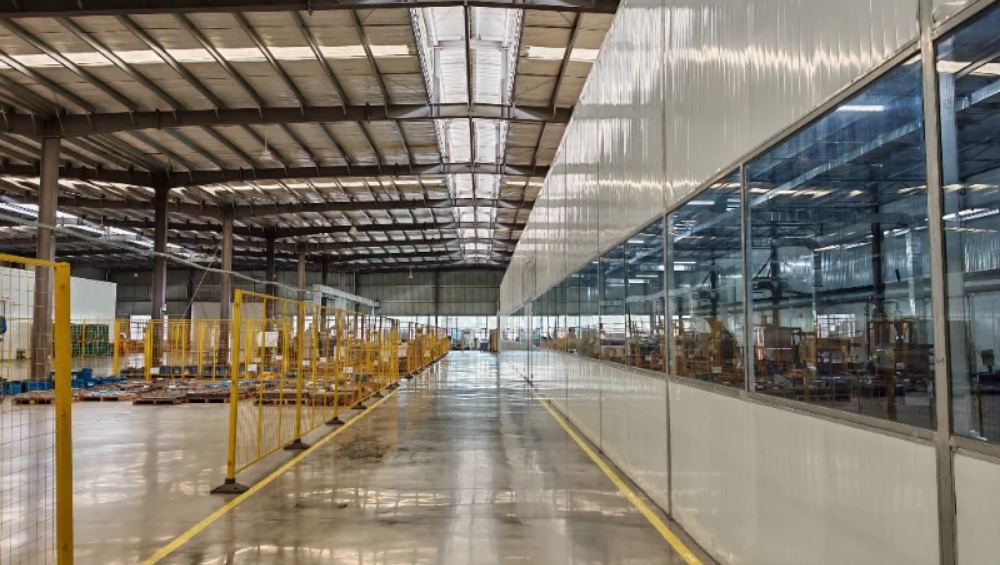
Audit point 1 — In-house process chain. Carbide cutting edges involve several distinct operations: carbide powder preparation and pressing, vacuum sintering, brazing of carbide segments to a steel holder, welding, and finishing. Ask which of these steps happen under the supplier’s own roof and which are subcontracted. Every handoff between vendors is a point where grade substitution or braze inconsistency can enter without anyone owning the defect. A supplier that presses and sinters its own carbide, then brazes in-house, can trace a failure back to a specific operation. A trading company cannot.
Audit point 2 — Process control on brazing. Braze quality is where most plow edges fail in service — not by wearing out, but by losing carbide segments under impact. Ask whether brazing is manual or automated, what temperature control exists, and how bond integrity is verified. Automated high-temperature brazing (technical detail here) produces a more repeatable bond line than hand torching, which matters when a blade takes thousands of impacts per shift on frozen expansion joints. SENTHAI runs automated high-temperature brazing for this reason; your job as an auditor is to ask any supplier to show the equipment and the process record, not just the claim.
How to verify: request a factory video walkthrough naming each station, ask for equipment lists, and where volume justifies it, schedule a virtual or on-site audit. Compare what you see against what the website claims.
Step 2: Check Material Sourcing and Traceability
Two blades can look identical and behave completely differently in the field. The difference is in the carbide itself.
Audit point 3 — Documented carbide grade. “Tungsten carbide” is a material family, not a specification. Ask for the grade designation, cobalt binder percentage, grain size classification, and the hardness and transverse rupture strength values the supplier works to. Fine or micro-grain carbide insert grades generally offer a different hardness-to-toughness balance than coarse grades — which matters because a winter blade needs abrasion resistance for pavement contact and fracture toughness for impact. A supplier who cannot name a grade is a supplier who may change it between orders.
Audit point 4 — Lot-level traceability. Ask what identifier ties a delivered blade back to its carbide lot, sinter batch, and braze run. Without that link, a field failure becomes an argument instead of an investigation. With it, you can isolate one bad lot rather than condemning an entire product line. Lot-level traceability is standard practice at SENTHAI and should be a baseline requirement of any carbide supplier checklist, regardless of whose name is on the blade.
Step 3: Audit Quality Systems and Certifications
Audit point 5 — Certification, verified at the source. Quality management certifications such as ISO 9001, and environmental standards such as ISO 14001, indicate that documented procedures exist and are audited. Do not accept a logo on a PDF. Ask for the certificate number, issuing body, and expiry date, then verify it directly with the certification body or accreditation registry. Certificates lapse, and scope statements sometimes cover a product line other than the one you are buying.
Audit point 6 — Inspection and test records. Certification proves a system exists; test data proves it was used. Ask what is measured on each lot — dimensional tolerances, hardness readings, braze shear or bond-strength checks, visual inspection criteria — and whether you receive that documentation with the shipment. Ask what the internal reject rate is and what happens to rejected parts. A supplier who reports a reject rate honestly is usually measuring; one who reports zero usually is not.
Audit point 7 — Warranty terms in writing. Clarify what is covered, what evidence is required for a claim, who pays freight on replacements, and the resolution window. Vague goodwill promises are worth nothing at 4 a.m. in February.
Step 4: Evaluate Sampling and Communication
Audit point 8 — Sampling and fitment validation. Never move from quote to full order without a validated sample. Provide your moldboard drawings, bolt pattern, hole spacing, and blade profile, and require the supplier to confirm fitment before tooling. Then run the sample through a real season on a representative route, alongside your incumbent blade, and log lane miles and wear. Fitment validation and technical support on custom and OEM profiles is a service SENTHAI provides, and it is a reasonable expectation to place on any manufacturer bidding for your business.
Audit point 9 — Technical responsiveness. Time the response to a genuinely technical question — a grade comparison, a braze process question, a tolerance query. Note whether the answer comes from someone who understands metallurgy or from a sales script. Response quality during quoting is the best available predictor of response quality during a warranty dispute. Also confirm language coverage, time-zone overlap, and who your named contact is.
Step 5: Compare Total Cost, Not Unit Price
Unit price is the least useful number on a quote. The metric that governs your winter budget is cost per lane mile of service, plus the labor and downtime of every changeout.
Build the comparison this way: divide the delivered cost of a blade — unit price plus freight, duties, and any tooling amortization — by the lane miles it actually delivers in your conditions. Then add the fully loaded cost of each changeout: mechanic hours, truck downtime, and any route left uncovered while the plow is in the shop. A blade that costs 30% more and lasts 60% longer wins twice, once on material and again on labor.
Also price in the variables buyers routinely forget: minimum order quantities and the working capital they tie up, lead time against your storm calendar, safety stock you must carry to cover a long supply line, and the cost of a mid-season stockout. Ask for a landed-cost quotation with Incoterms stated explicitly so you are comparing like with like.
Scoring Card for Final Selection
Score each audit point 1–5 (1 = no evidence, 3 = claimed but unverified, 5 = documented and independently verified), multiply by the weight, and total. Use the same card for every bidder, including incumbents.
Interpreting the total: 4.0 and above indicates a supplier ready for production volume. 3.0 to 3.9 indicates a conditional approval — proceed with a trial order and close monitoring. Below 3.0 indicates a supplier that has not yet demonstrated the evidence required to carry your winter operation.
FAQ
What is a carbide snow plow blade supplier audit?
It is a structured evaluation of a manufacturer’s capability, materials, quality systems, service, and total cost — scored against fixed criteria rather than assessed by impression. It is the same discipline used for any critical-spare supplier, applied to wear parts.
How long does qualifying blade suppliers usually take?
Document review and technical Q&A typically take two to four weeks. Meaningful fitment and wear validation requires a winter season, so start manufacturer due diligence in spring or summer for the following winter.
Is manufacturer due diligence different for overseas suppliers?
The criteria are identical; the verification effort is higher. Weight lead time, landed cost with Incoterms, safety stock, and communication overlap more heavily, and rely more on documented traceability and third-party certificate verification in place of frequent site visits.
Can I skip sampling if the supplier is certified?
No. Certification covers process consistency, not fitment to your specific moldboards or performance on your pavement and route profile. Sampling is the only audit point that tests both.
Should the lowest quote ever win?
Only if it also wins on cost per lane mile after changeout labor, freight, duties, and downtime are included. Unit price and total cost rank bidders differently more often than not.
Talk to Us — and Audit Us
Use this carbide supplier checklist on every vendor on your list, including SENTHAI. We manufacture carbide snow plow blades, JOMA style blades, carbide inserts, packed ice carbide kits, grader blades, and custom OEM wear parts, with an in-house process chain from pressing and vacuum sintering through automated high-temperature brazing and finishing, and lot-level traceability on delivered goods.
Send us your moldboard drawings, blade profiles, and annual volumes, and we will return grade documentation, a landed-cost quotation with Incoterms stated, and a sampling plan for fitment validation.
Contact our technical sales team at [email protected] or submit a quote request through our contact page. Bring your scoring card — we would rather be measured than described.
Related articles
Best Snow Plow Blade Family for Your Fleet: Top 5 ScenariosKnowledge Top 10 Snow Plow Blade Types for Winter Fleets (Ranked by Duty Fit)Knowledge
 Top 5 Best Carbide Blade Configurations for Highway PlowingKnowledge
 Best Snow Plow Blade Materials Ranked: Steel vs Carbide vs Cladding vs Rubber-CarbideKnowledge