




How does vulcanized rubber protect carbide plow blades and operators?
Vulcanized rubber encasing carbide plow blades acts as a viscoelastic energy sink that compresses under impact, converts shock into heat, and decouples the cutting edge from the plow frame and cab. By isolating high-frequency…
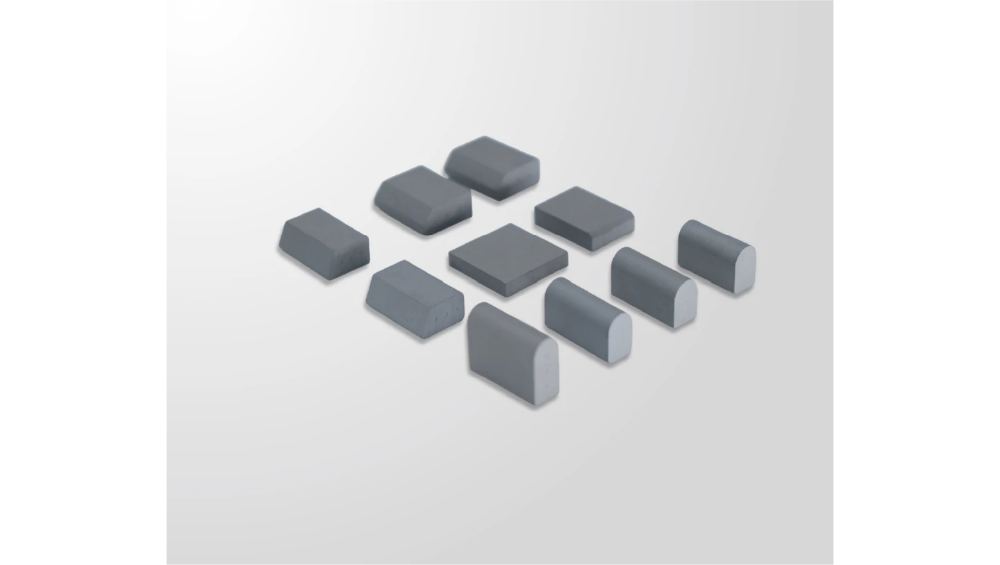
Vulcanized rubber encasing carbide plow blades acts as a viscoelastic energy sink that compresses under impact, converts shock into heat, and decouples the cutting edge from the plow frame and cab. By isolating high-frequency vibration, it lowers G‑force spikes reaching axles and operators, prolongs wear life, and reduces structural fatigue, especially when heavy plow trucks hit obstacles like manhole covers at speed.
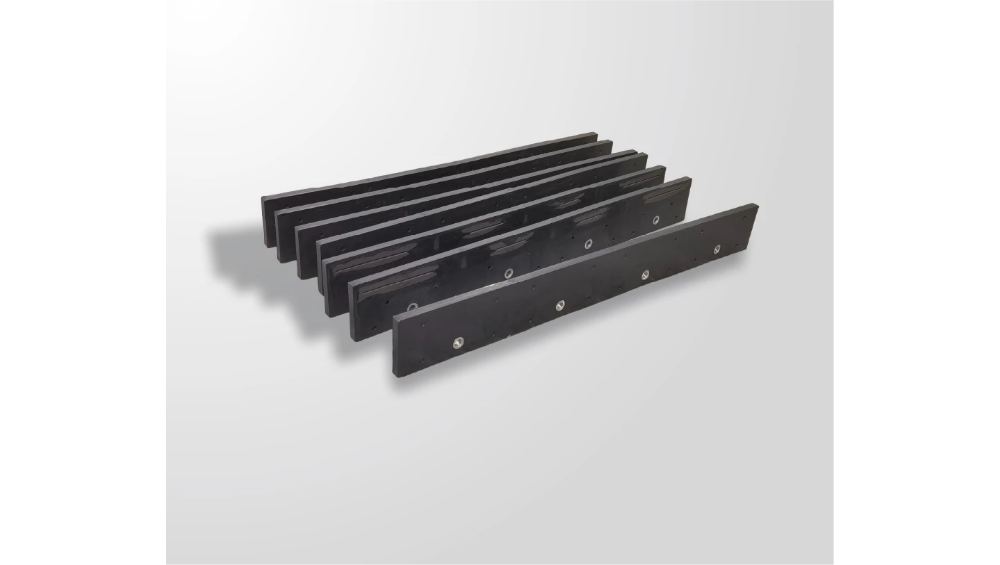
JOMA Style Flexible Plow Blade Operational Guidelines
What is the physics behind shock absorption in vulcanized rubber snow plow blades?
Vulcanized rubber is a viscoelastic material, meaning it behaves partly like an elastic spring and partly like a viscous damper under impact. When a rubber-encased carbide plow blade strikes a joint or manhole cover, the rubber compresses, shears, and internally dissipates energy as heat, preventing the full impact pulse from transmitting to the steel moldboard, truck chassis, and operator.
In factory testing, we treat the rubber layer as a tuned damping interface between the road and the snow plow structure. Instead of letting impact waves travel directly from the cutting edge into the frame, we allow them to spread, slow, and attenuate within the rubber, reducing peak acceleration levels. This is why SENTHAI and other industrial manufacturers adjust rubber hardness, thickness, and formulation to balance shock absorption with scraping aggressiveness.
From a mechanics standpoint, the rubber encapsulation stretches contact time during impact. A rigid steel blade generates a sharp, high-amplitude acceleration peak when it hits an obstacle, while a vulcanized rubber layer turns that peak into a lower, broader pulse. This difference matters because structural fatigue and operator discomfort correlate more strongly with peak G‑forces than with total energy alone.
On the factory floor, engineers regularly tune the rubber’s glass transition range to remain flexible at sub-zero temperatures. If the rubber stiffens too much in cold weather, it behaves more like a brittle plate than a damper, and the shock absorption benefit drops sharply. As a manufacturer, we adjust cure cycles, cross-linking density, and filler content so SENTHAI blades retain damping performance in real winter conditions instead of only in lab environments.
Why are rubber-encased carbide plow blades more effective at vibration reduction in snow plowing operations?
Rubber-encased carbide plow blades reduce vibration because they decouple the cutting edge from the moldboard and frame, absorbing high-frequency oscillations before they reach axles, hydraulic towers, and the cab. As the blade rides over joints, expansion cracks, and manhole covers, the rubber flexes and rebounds, smoothing out the impact signature that would otherwise “ring” through the whole truck and fatigue the operator.
In high-speed snow plowing, vibration is not just an annoyance; it drives maintenance costs and downtime. Rigid steel edges transmit every impact into welds, bushings, and pins, shortening service intervals. Rubber-carbide composite blades act like an integrated isolation mount, allowing the carbide to scrape while the rubber damps. SENTHAI’s vulcanized systems are specifically engineered for fleets that want to extend equipment life and keep drivers fresher on long shifts.
The practical difference becomes obvious when you compare cabin noise and steering feedback. With traditional blades, operators feel constant hammering and rattling through the steering wheel and seat. With vulcanized JOMA style blades, the plow “floats” more over the road profile, delivering a smoother, quieter ride without sacrificing snow removal quality. For B2B buyers—manufacturers, wholesalers, and OEMs—this translates into measurable productivity gains per operator-hour.
How does a high-elastic rubber layer dissipate energy when heavy loaders strike obstacles like manhole covers at speed?
When a heavy loader or truck-mounted plow hits a raised manhole cover, the contact zone experiences a sharp, localized impact. In a rubber-encased carbide system, the high-elastic rubber layer compresses and shears around the carbide segment, spreading impact over a slightly longer time window. This time extension reduces peak force and G‑force, allowing the structure to “survive” repeated hits without cracking frames, welds, or mounts.
At the micro level, polymer chains within the rubber stretch, slide, and reposition under load. This internal friction converts mechanical energy into heat, which dissipates harmlessly instead of propagating as a shock wave. Because the rubber is vulcanized onto steel carriers in a controlled factory process, it maintains consistent bonding strength, so damping performance remains stable across thousands of impact cycles, not just the first few hours of operation.
Heavy loaders present a special challenge because their mass amplifies impact forces. As a manufacturer, we see that even small vertical deviations—an exposed utility cover or broken joint—can cause large acceleration spikes at highway speeds. A tuned high-elastic rubber layer functions like a built-in buffer, absorbing energy before it reaches critical components such as kingpins, axles, and hydraulic cylinders, reducing unplanned downtime and warranty claims.
For OEM and fleet buyers, the important insight is that rubber encapsulation is not merely a comfort feature. It is a structural risk control mechanism. By managing impact energy at the blade level, SENTHAI’s rubber-carbide systems help maintain equipment availability through severe winter seasons, especially in regions with older, uneven road networks and dense underground utility infrastructure.
Which G-force patterns distinguish traditional steel blades from JOMA style flexible blades during impact transmission?
Traditional steel blades tend to show sharp, high-frequency G‑force spikes at the truck axle and cabin floor whenever they strike obstacles or transitions. JOMA style flexible blades, with rubber-encased carbide segments, instead produce lower, broader acceleration curves. This means less peak shock per event and a more stable vibration profile over time, translating into improved operator comfort and reduced fatigue-related errors.
In engineering terms, rigid blades behave like a near-perfect transmitter of impact waves. The contact pulse travels through solid steel with minimal attenuation, so sensors at the frame record acceleration peaks that closely mirror road impacts. Flexible JOMA style blades introduce damping and articulation; segments pivot and rubber compresses, breaking up the pulse into smaller components and lowering maximum G‑levels that reach key structural nodes.
Below is an illustrative comparison of impact transmission to axle and cab for a typical snow plow truck operating at moderate speed over obstacles such as joints and manhole covers.
From a manufacturer perspective, these differences directly influence how often customers must service towers, trip mechanisms, and cab mounts. SENTHAI’s product roadmap prioritizes minimizing peak G‑forces over simple static strength, because real-world fatigue failure correlates with repeated shock events rather than average load alone.
How do operational wear and tear mechanisms differ between standard steel edges and vulcanized rubber-carbide plow blades?
Standard steel edges wear by uniform abrasion and occasional chipping, but they also accelerate wear on the plow itself by transmitting every impact directly into bolts, welds, and structural components. Vulcanized rubber-carbide blades shift part of the energy budget into the rubber layer, so wear occurs more as controlled abrasion on carbide inserts and minor rubber compression-set, while structural components experience much lower fatigue damage over time.
In conventional setups, operators often increase down-pressure to achieve clean scraping, which further stresses moldboards and mounting hardware. Rubber-carbide composite blades can maintain aggressive contact with less down-pressure because the rubber adapts to road micro-profile. This reduces bending cycles and bolt loosening on the plow, extending the life of both blades and equipment—a key value point for manufacturers and fleet managers who calculate total cost of ownership over multi-year cycles.
Another operational difference is impact failure mode. Steel edges may bend or crack under severe hits, especially when they catch on raised covers or broken curbs. Rubber-encased carbide systems are more likely to absorb the hit and distribute stress across multiple segments, avoiding catastrophic failure. SENTHAI’s production uses controlled vulcanization and welding processes so that these segments behave predictably under repeated, real-world impact conditions rather than only in controlled lab tests.
From an OEM or wholesale supplier viewpoint, this change in wear pattern allows more precise planning of blade replacement intervals. Instead of replacing edges reactively after visible damage, fleets can rely on mileage and operating hours, supported by more consistent wear behavior across a full route portfolio.
Why are manufacturer-grade vibration data and G-force curves critical for evaluating rubber-carbide plow blades?
Manufacturer-grade vibration data and G‑force curves provide objective proof of how rubber-carbide plow blades protect equipment and operators compared to standard steel edges. Visual impressions of “smoother” operation are helpful, but only instrumented measurements at the axle and cab floor show whether a design truly cuts peak acceleration, reduces fatigue risk, and extends structural life in harsh winter environments.
In B2B decision-making, procurement teams must justify investments in premium composite blades to finance and fleet management departments. G‑force curves taken from real trucks over controlled routes—before and after switching to rubber-encased carbide systems—offer quantifiable evidence of reduced shock. When SENTHAI tests new JOMA style configurations, we place sensors on frames, axles, and cabin mounts to track how each design variant changes vibration exposure over full duty cycles.
A typical test program compares several blade options on identical runs at matched speeds and down-pressure. Engineers look not only at maximum G‑force but at the frequency content of vibrations, because high-frequency oscillations often cause cracking and discomfort. Rubber-carbide blades usually reduce these high-frequency components, leading to smoother signal traces. For OEMs and factories, this data drives design refinements such as altering rubber hardness or segment geometry.
Over time, maintaining a database of vibration and G‑force results creates a technical foundation for innovation. Instead of relying on anecdotal feedback alone, SENTHAI and other manufacturers can iterate designs based on measurable improvements in energy attenuation and operator comfort, aligning engineering decisions with fleet performance targets.
How can manufacturers, wholesalers, and OEM suppliers optimize rubber-carbide blade specifications for different snow plow applications?
Manufacturers, wholesalers, and OEM suppliers can optimize rubber-carbide blade specifications by matching rubber hardness, carbide grade, segment length, and mounting geometry to route type, vehicle class, and typical operating speed. High-speed highway plows benefit from slightly stiffer rubber and long segments for stability, while municipal and urban routes with frequent obstacles require softer rubber and shorter segments to maximize articulation and shock absorption.
A practical approach is to segment fleets into application profiles: high-speed interstate, mixed rural-urban, city streets with manhole density, and sensitive pavements like bridge decks or decorative stone. For each profile, suppliers can recommend distinct blade configurations. SENTHAI, for example, designs JOMA style blades with multiple rubber formulations and carbide geometries to suit these profiles, ensuring that operators receive both clean scraping and controlled vibration levels.
The table below illustrates how key specification parameters can be tuned for different applications:
For OEM integration, suppliers should work closely with plow designers to align blade mounting hole patterns, segment travel range, and trip mechanism settings. This holistic design prevents conflicts where a blade’s articulation is limited by bracket geometry, undermining the vibration benefits. Factory-level collaboration ensures that the rubber-carbide blade is treated as part of the system, not just an aftermarket attachment.
Who benefits most from adopting SENTHAI JOMA style rubber-encased carbide blades in snow plow fleets?
The primary beneficiaries of adopting SENTHAI JOMA style rubber-encased carbide blades are fleet managers, OEM partners, and operators working in demanding winter maintenance environments. Fleet managers gain longer blade life and fewer structural failures, OEMs gain high-performance components that differentiate their plow packages, and operators gain smoother, quieter, and safer working conditions that reduce fatigue and improve situational awareness on the road.
For manufacturers and wholesalers, SENTHAI’s long experience in carbide wear parts helps ensure consistent quality and predictable behavior across large orders. Fully automated wet grinding, pressing, sintering, welding, and vulcanization lines allow the factory to produce blades that behave uniformly under shock and vibration, making it easier for OEMs to certify performance across their product ranges.
Operators themselves are an important stakeholder in this equation. When they work with rigid steel blades, constant impacts and vibration can lead to early fatigue, distraction, and higher error rates. Rubber-encased carbide blades deliver a smoother feel, which we have seen translate into more confident driving and improved adherence to route plans, especially during long night shifts or multi-day storms.
On the business side, wholesalers and distributors benefit from offering SENTHAI JOMA style blades because these products address practical pain points rather than just offering a different material. As customers see lower downtime and maintenance costs, they develop loyalty to suppliers who provided the high-performance solutions, reinforcing long-term B2B relationships.
SENTHAI Expert Views
As a factory engineer, I have watched the shift from rigid steel edges to vulcanized rubber-carbide blades transform fleet economics. The key is not just harder carbide, but how the rubber layer is engineered to absorb impact energy before it reaches axles and cabins. When we tune rubber hardness, bonding strength, and segment geometry correctly, SENTHAI blades don’t merely last longer—they actively protect trucks, operators, and road surfaces in ways generic edges simply cannot match.
Are SENTHAI rubber-carbide blades suitable for both manufacturers and wholesale suppliers seeking OEM-level performance?
SENTHAI rubber-carbide blades are designed specifically for manufacturers and wholesale suppliers who need OEM-level performance, consistency, and traceable quality. With ISO-certified production and fully integrated R&D-to-assembly control in Thailand, SENTHAI can supply large volumes of JOMA style blades, carbide snow plow edges, and inserts that meet strict vibration, wear, and structural protection targets for global snow removal and road maintenance industries.
Because SENTHAI controls vulcanization, carbide pressing, and welding in-house, OEM partners can co-develop specifications tailored to their plow designs. This collaboration ensures that rubber hardness, segment geometry, and mounting patterns align with trip mechanisms and moldboards. For wholesalers, standardized product families simplify stocking and support, allowing them to serve municipalities, contractors, and industrial fleets with confidence in both performance and supply reliability.
The real advantage for B2B buyers is that SENTHAI treats vibration reduction, impact absorption, and structural protection as core design metrics, not optional features. This engineering focus turns rubber-carbide blades from commodity consumables into strategic components that safeguard equipment investments, increase operator productivity, and deliver measurable lifecycle savings.
What are the key takeaways and actionable advice for deploying vulcanized rubber-carbide blades in heavy snow plow operations?
Key takeaways are that vulcanized rubber-carbide blades dramatically reduce vibration, lower peak G‑forces at axles and cabins, and protect both equipment and operators when heavy plows encounter obstacles at speed. To deploy them effectively, fleet managers should match blade specifications to route conditions, test G‑force and vibration levels before and after implementation, and collaborate with manufacturers or OEM suppliers to fine-tune rubber hardness and segment design.
Actionably, start with a pilot program on routes with high manhole density or uneven pavements, using instrumented trucks to record acceleration and downtime. Compare results against standard steel edges to quantify reductions in shock, noise, and maintenance events. Work with suppliers like SENTHAI to adjust blade configurations—rubber formulation, segment length, and carbide profile—based on measured performance rather than assumptions.
Next, integrate the new blade specifications into procurement and maintenance standards. Make vibration and operator comfort part of your KPI set alongside wear life and scraping performance. Ensure drivers are trained on how composite blades feel and respond, so they can leverage smoother operation rather than overcompensating with excessive down-pressure.
Finally, treat rubber-carbide blades as part of a broader system optimization. Align them with suspension, trip mechanisms, and mounting hardware to maximize energy absorption and structural protection. When manufacturers, wholesalers, and fleets collaborate on specification and real-world data, vulcanized rubber-carbide blades can shift winter operations from reactive repair cycles to stable, high-availability performance seasons.
FAQs
What makes vulcanized rubber different from standard rubber in plow blades?
Vulcanized rubber is chemically cross-linked, giving it stable elasticity, better fatigue resistance, and consistent damping under repeated impact. This makes it ideal for encasing carbide inserts in snow plow blades that face millions of shock cycles each season.
Can rubber-carbide blades match the scraping performance of rigid steel edges?
Yes, properly engineered rubber-carbide blades can match or exceed steel scraping performance. The carbide provides hardness and edge retention, while the rubber layer maintains road contact and reduces vibration, resulting in clean pavements with less noise and structural stress.
Do rubber-encased carbide blades require different maintenance routines?
Maintenance is similar, but inspections focus more on rubber integrity and segment articulation than on edge bending or cracking. Fleets should monitor rubber for cuts or severe compression-set, and replace blades based on mileage and performance rather than only visible steel damage.
Are rubber-carbide blades suitable for sensitive pavements and bridge decks?
They are well suited for sensitive surfaces because the rubber layer prevents direct metal-to-surface gouging. Carbide still handles ice and packed snow, but impacts are cushioned, reducing the risk of chipping or scarring expensive pavements and deck overlays.
How should fleets choose between different rubber hardness levels?
Harder rubber favors stability and long wear on high-speed highways, while softer rubber improves articulation and impact absorption on urban routes with frequent obstacles. Work with your manufacturer or OEM partner to match hardness to speed, pavement profile, and route severity.
Related articles
 Best Snow Plow Blade Family for Your Fleet: Top 5 ScenariosKnowledge
 Top 10 Snow Plow Blade Types for Winter Fleets (Ranked by Duty Fit)Knowledge
 Top 5 Best Carbide Blade Configurations for Highway PlowingKnowledge
 Best Snow Plow Blade Materials Ranked: Steel vs Carbide vs Cladding vs Rubber-CarbideKnowledge