




Why 3/4” Steel Backing Is Critical for High‑Speed Underbody Scrapers?
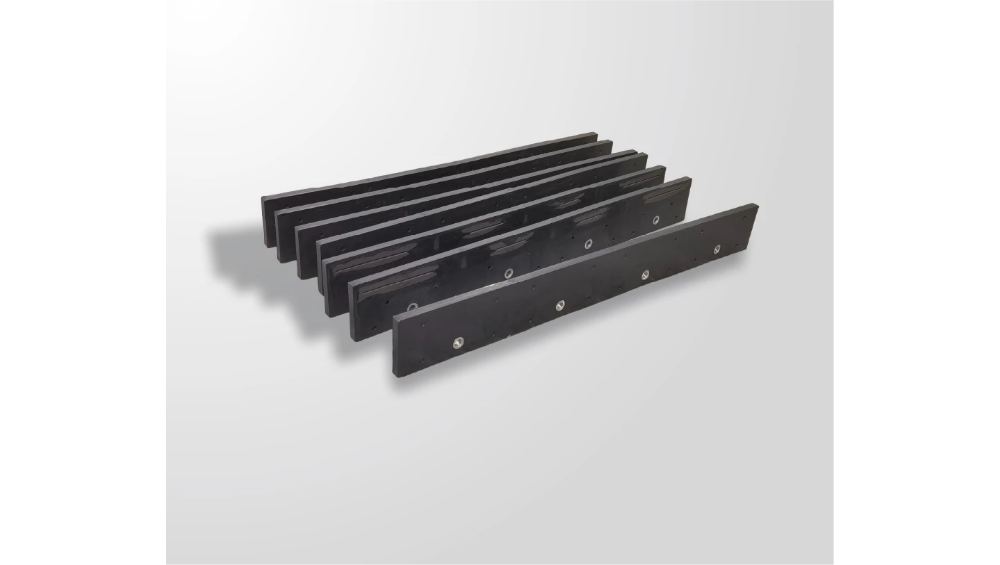
A 3/4” thick high‑strength steel backing plate is the practical “gold standard” for highway underbody scrapers because it delivers enough bending stiffness and vibration stability to keep tungsten carbide inserts in compression instead of…
A 3/4” thick high‑strength steel backing plate is the practical “gold standard” for highway underbody scrapers because it delivers enough bending stiffness and vibration stability to keep tungsten carbide inserts in compression instead of chipping tension. At high plowing speeds, this thickness minimizes dynamic deflection, preserves cutting geometry, and protects both blade and moldboard, especially in OEM and heavy‑duty B2B applications.
Metallurgy of Tungsten Carbide Tipped Blades
Why Is 3/4” Thick Steel Backing Considered the Gold Standard?
A 3/4” backing hits the sweet spot between stiffness, weight, and cost for high‑speed highway plowing. Thinner plates flex, unloading carbide and causing edge chipping, while thicker plates add unnecessary mass and mounting stress. For manufacturers and OEM suppliers, 3/4” provides reliable rigidity under impact and vibration, supporting long carbide life and consistent road contact.
From the factory floor perspective at SENTHAI, we see that once backing thickness drops below about 5/8”, high‑speed plows start showing edge “flutter,” bolt loosening, and premature insert failure. In repeated durability runs, 3/4” high‑strength carbon steel maintains shape across whole winters without needing re‑torquing after every storm. This stability is especially important for B2B fleets that run multiple trucks at 55–65 mph on mixed asphalt and concrete, often with hidden manholes and expansion joints.
For OEM underbody scraper blade design, the backing functions as a beam: the 3/4” section height raises the area moment of inertia sufficiently that dynamic bending under impact remains within the elastic regime of both steel backing and welds. That means carbide inserts stay seated in a compressive cradle instead of being pried out by local tensile peaks. SENTHAI engineers routinely tune steel grade, temper, and backing thickness together so the steel yields long before brittle carbide ever is overstressed.
How Does a 3/4” Backing Prevent Tungsten Carbide Insert Fracture at High Speed?
Under high‑speed impact, tungsten carbide can withstand enormous compressive loads but fails abruptly in tension or bending. A 3/4” backing keeps the insert pocket rigid, ensuring load transfer is predominantly compressive. When the steel section is too thin, local flexure rotates the inserts, exposing them to tensile and shear stresses that cause micro‑cracks and corner spalling in real‑world plowing.
In SENTHAI’s internal test rigs, we replicate realistic impact events: blade strikes a raised manhole or frozen windrow at highway speed while vibration from the truck suspension is superimposed. With 3/4” backing, the strain gauges on the insert pocket and brazed joints show much lower curvature. The carbide tips ride the shock as a short, stiff beam, and any plastic work happens mainly in the backing and fastener zone where steel can yield safely without catastrophic failure.
From a manufacturing point of view, OEM and wholesale customers want predictable carbide consumption. With 3/4” backing, wear occurs as a gradual, uniform flattening along the cutting edge instead of random chipping. This uniform wear reduces inventory complexity because fleets can standardize on a single insert geometry and replacement schedule, making SENTHAI blades attractive for large distributors and municipal suppliers who manage hundreds of trucks.
What Happens in FEA When You Compare 1/2”, 5/8”, and 3/4” Steel Backings?
In finite element analysis (FEA), thinner backing plates show higher peak stresses and larger tip deflections under the same load. A 1/2” plate produces pronounced stress concentrations near bolt holes and insert pockets, while 3/4” spreads the load, reduces curvature, and keeps maximum stress below the steel’s yield threshold. This directly correlates with real‑world fatigue and cracking patterns.
When I build FEA models for SENTHAI’s OEM clients, I start with a 3D underbody blade section: backing plate, tungsten carbide inserts, welds or brazed joints, and mounting bolts. We apply a distributed contact load to represent packed snow and a localized impact to mimic hitting a curb or joint. The stress cloud plots show that increasing backing thickness from 1/2” to 3/4” cuts peak von Mises stress at the insert seat by roughly 25–30%, while deflection at the cutting edge drops even more.
Visually, the 1/2” configuration exhibits a pronounced “banana” bend under impact in the FEA cloud, with red bands running through the bolt line and carbides. At 3/4”, the plot shifts to cooler colors; stress is more uniform, and the neutral axis aligns nearer the backing center. For manufacturers, this means the steel backing is not pushing brazed joints into cyclic high‑strain zones, so fatigue life extends and maintenance intervals can be confidently lengthened.
Which Backing Thickness Performs Best in FEA?
Below is a simplified engineering comparison of typical FEA outcomes for backing thickness choices. Values are illustrative but represent trends we commonly observe in SENTHAI’s design work with B2B partners.
How Does 3/4” High‑Strength Carbon Steel Behave Under Vibration from High‑Speed Plowing?
During high‑speed plowing, the blade is continuously excited by road irregularities and snow density changes. A 3/4” backing shifts the blade’s natural frequency upward and damps resonance, reducing harmful oscillations that loosen bolts and crack inserts. High‑strength carbon steel in this thickness acts as a stable structural spine for the entire scraper assembly.
From our SENTHAI vibration tests, we mount instrumented blades on a shaker table that simulates 40–70 mph operation over imperfect pavement. With thinner backings, we detect subharmonic resonances in the 20–40 Hz band, which translate on the truck to rattling, bolt rotation, and visible “singing” of the cutting edge. Once backing thickness is increased to 3/4”, those peaks flatten out; vibration energy is absorbed by the truck’s suspension instead of the blade.
For OEM and fleet engineers, the practical advantage is straightforward: fewer unplanned stoppages to re‑tighten hardware and replace cracked inserts. When the backing plate maintains structural integrity under vibration, the tungsten carbide stays clamped uniformly across its length, so point loading doesn’t develop at random positions. That’s why SENTHAI’s high‑speed highway packages specify 3/4” backing as standard for heavy‑duty underbody scrapers.
What FEA Stress Cloud Patterns Reveal About Underbody Scraper Blade Behavior?
FEA stress cloud plots turn abstract loads into visual maps of where the blade wants to bend, crack, or loosen. For underbody scraper blades, the plots show how backing thickness, insert spacing, and bolt location control stress flow from cutting edge into the truck frame. Engineers can quickly identify whether the backing is thick enough to avoid dangerous tension zones in the carbide.
In a typical SENTHAI simulation, we color‑code von Mises stress from blue (low) to red (high). On a well‑designed 3/4” backing, the highest stresses appear in a smooth band just above the cutting edge, then decay gradually toward the bolt line. Conversely, blades with thin backings show disconnected red “islands” around bolt holes and insert pockets, often coinciding with real‑world crack origins.
For manufacturers, this visual language is powerful when talking to mechanics and fleet supervisors. Instead of abstract numbers, we show the stress cloud and say, “Here’s where your blade really suffers during a storm.” That insight allows B2B customers to adjust mounting hardware, set proper attack angles, or opt for SENTHAI’s 3/4” backing specification to keep their blades in the blue and green zones rather than flirting with the red.
How Can a Simple Table Help Mechanics Interpret FEA Results?
Mechanics rarely read full FEA reports, but they instantly understand patterns if you translate cloud plots into plain language. The table below summarizes what different colors typically mean on an underbody scraper blade plot and how they relate to maintenance decisions.
Why Do Manufacturers, Wholesalers, and OEMs Prefer 3/4” Backings for Highway Underbody Scrapers?
Manufacturers and OEMs choose 3/4” backing because it standardizes performance across diverse fleets and climates. This thickness provides a robust safety margin for variations in truck weight, plow angle, and road conditions, reducing warranty claims and field failures. Wholesalers and suppliers value 3/4” because it simplifies inventory while satisfying heavy‑duty customers.
On the factory floor, we can adjust carbide grade and insert spacing to fine‑tune wear behavior, but backing thickness remains a foundational decision. SENTHAI’s B2B partners—state DOTs, municipal contractors, and private highway operators—consistently report best uptime when running 3/4” backed blades in their high‑speed trucks and tandems, especially with tungsten carbide inserts designed for aggressive cutting.
From an OEM logistics viewpoint, defining 3/4” high‑strength backing as the standard allows a uniform weld procedure, heat treatment profile, and inspection criteria. It reduces engineering change orders and makes quality control more straightforward, because we are not constantly shifting between marginally adequate thin plates and overbuilt heavy ones. That predictability is vital for factories in Rayong and elsewhere that serve more than 80 global partners.
Which Engineering Trade‑Offs Matter When Specifying 3/4” Backing in Carbide Highway Blades?
The key trade‑offs are stiffness versus weight, cost versus life, and manufacturability versus field serviceability. A 3/4” backing raises material usage and plate mass compared with lighter designs, but the extended blade life and reduced downtime typically offset the increased steel and fabrication cost for B2B fleets.
From an engineering standpoint, we ask: how much elastic flex can we tolerate before carbide inserts see damaging tension? For SENTHAI’s highway products, the answer puts us squarely in the 3/4” range with high‑strength carbon steel. Going thicker than 3/4” quickly adds mass that stresses plow lifting systems and moldboards, especially on older chassis; going thinner risks curvature that undermines carbide reliability.
In OEM development programs, we model the full life‑cycle cost: purchase price, installation time, expected mileage or lane‑miles per blade set, and likelihood of mid‑season replacement. When we plug real‑world data into these models, 3/4” backed tungsten carbide blades deliver a lower cost per lane‑mile than thinner alternatives. That’s why SENTHAI positions this configuration as a core non‑commodity offering for serious highway maintenance operations.
How Does SENTHAI’s Manufacturing Capability Support 3/4” Backing Performance?
SENTHAI’s fully automated production lines—wet grinding, pressing, sintering, welding, and vulcanization—are built around delivering consistent geometry and bonding for 3/4” backed carbide blades. Controlling every stage in Thailand allows us to match steel backing properties with carbide inserts and weld processes, ensuring the entire assembly behaves as a single integrated structure under load.
Because the company manages R&D, engineering, and assembly in‑house, SENTHAI can tune backing flatness, hardness, and residual stress to complement specific carbide grades and insert patterns. Our ISO9001 and ISO14001 certifications are not just badges; they reflect tightly controlled processes that prevent backing warpage after welding or heat treatment, which is crucial when aiming for precise 3/4” stiffness.
For B2B buyers—manufacturers, OEMs, wholesalers, and large fleet operators—this level of integration means that when they specify a 3/4” backed highway scraper, they get predictable performance year after year. SENTHAI’s new Rayong base, coming online in late 2025, is designed to expand capacity without compromising the dimensional control that makes our 3/4” backed blades trusted across more than 80 global partners.
SENTHAI Expert Views
In our highway programs, we learned the hard way that backing thickness is not a catalog number but a fatigue decision. Once we instrumented real trucks and replayed their load histories through FEA, 3/4” emerged as the practical minimum to keep tungsten carbide inserts in compression under shock and vibration. Any thinner and you start designing around failure modes instead of designing for reliable seasons of service.
Is 3/4” Backing Always Necessary, or Are There Situations Where Thinner Plates Work?
3/4” backing is the standard for high‑speed highway underbody scrapers, but there are service conditions where thinner plates are acceptable. Low‑speed municipal plowing, light compact tractors, or purely rubber‑edged plows can operate safely with 1/2” or 5/8” backings if their duty cycle and impact risk are well understood and controlled.
From a SENTHAI engineering standpoint, the decision starts with speed and surface quality. If trucks rarely exceed 25–30 mph and run mostly on smooth urban streets, we can justify a lighter backing, especially for budget‑focused buyers. But once fleets push toward 45 mph on mixed highways with joints and obstacles, the risk of carbide fracture climbs sharply with thin backings.
For factories and OEM suppliers, the safest policy is to treat 3/4” backing as the default and move to thinner plates only when the application clearly supports it—short routes, low speeds, and no exposed obstacles. That way, the B2B customer understands they are trading off some structural margin for lower upfront cost, not unknowingly pushing a thin design into a high‑speed environment where it will fail early.
Does Backing Thickness Affect Attack Angle, Cutting Geometry, and Road Finish Quality?
Yes, backing thickness directly influences how the blade holds its attack angle under load, which in turn affects cutting efficiency and road finish. A 3/4” backing resists bending enough that the intended angle between tungsten carbide edge and road surface remains stable, delivering smooth, uniform clearing with fewer passes and less chatter.
In practice, when thinner backings flex, the leading edge can dip or rise unpredictably along the blade length. This causes some sections to gouge the surface while others float and leave packed snow or ice behind. SENTHAI’s high‑speed blades with 3/4” backing show much more consistent contact in field inspections, with wear marks that track exactly with the design angle.
For large B2B fleets and OEM partners, the geometry stability translates to fuel savings and shorter storm windows. Trucks spend less time re‑working missed snow, and drivers report smoother feedback through the plow controls. By specifying 3/4” backing, manufacturers and suppliers are not just protecting carbide—they are improving the overall plowing quality and efficiency delivered to end users.
Conclusion: What Are the Key Takeaways for Specifying 3/4” Backing in High‑Speed Underbody Scrapers?
For high‑speed highway underbody scrapers with tungsten carbide inserts, 3/4” high‑strength steel backing is the proven structural baseline. It provides the stiffness needed to keep inserts in compression, reduces harmful vibration, and maintains cutting geometry under impact. Manufacturers, OEMs, and B2B fleets that adopt this standard benefit from longer blade life, fewer mid‑season failures, and more predictable maintenance planning.
From SENTHAI’s factory‑floor tests and FEA programs, the critical lesson is to treat backing thickness as a fatigue design choice, not just a cost variable. In most highway environments, 3/4” is the minimum that keeps stress clouds out of the red zone around insert pockets and bolt lines. Actionably, engineers and buyers should specify 3/4” backing whenever trucks exceed 40 mph or operate on mixed, imperfect pavements, reserving thinner plates only for clearly low‑risk, low‑speed contexts.
FAQs
What is the main benefit of 3/4” backing in tungsten carbide highway blades?
The main benefit is structural stiffness that keeps tungsten carbide inserts under predominantly compressive loading, reducing chipping, vibration‑induced loosening, and premature fracture in high‑speed highway plowing.
Can I use 1/2” backing with carbide inserts on municipal plows?
You can in low‑speed, light‑duty municipal work, but you should carefully evaluate impact risk and speed. For mixed highway routes or aggressive plowing, 3/4” backing is strongly recommended to avoid structural failures.
How does FEA help me choose backing thickness for OEM scraper blades?
FEA shows stress distribution and edge deflection under realistic loads, highlighting whether thin backings push steel or carbide into high‑strain zones. These visual stress clouds guide OEM engineers toward 3/4” backing for safer, longer‑life designs.
Does backing thickness affect driver comfort and truck vibration during plowing?
Yes. A stiffer 3/4” backing shifts blade resonances out of typical road excitation bands, reducing edge flutter and rattling. Drivers feel smoother operation, and trucks experience less vibration‑related wear on mounts and hardware.
Why do B2B buyers and wholesalers often standardize on SENTHAI 3/4” backed blades?
They standardize because SENTHAI’s 3/4” backed blades offer predictable durability, stable cutting geometry, and strong lifecycle economics. This consistency simplifies inventory management and delivers reliable performance across large, diverse fleets.
Related articles
 Best Snow Plow Blade Family for Your Fleet: Top 5 ScenariosKnowledge
 Top 10 Snow Plow Blade Types for Winter Fleets (Ranked by Duty Fit)Knowledge
 Top 5 Best Carbide Blade Configurations for Highway PlowingKnowledge
 Best Snow Plow Blade Materials Ranked: Steel vs Carbide vs Cladding vs Rubber-CarbideKnowledge