




How Do You Verify Carbide Density with Archimedes?
The Archimedes method verifies carbide insert density by weighing the sample in air, suspending it in water to measure buoyancy-based displaced volume, then calculating density as mass divided by volume. For 100% dense carbide…
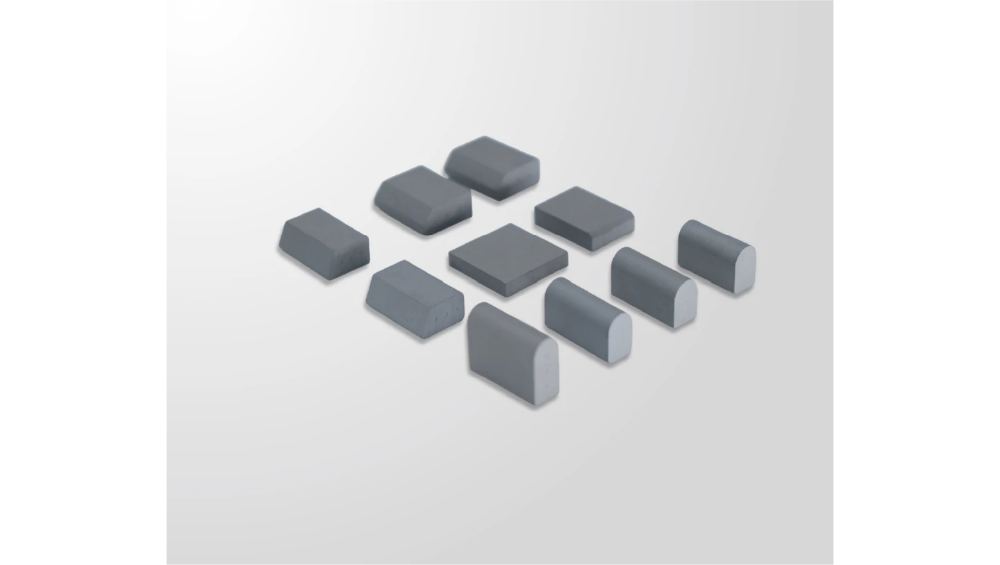
The Archimedes method verifies carbide insert density by weighing the sample in air, suspending it in water to measure buoyancy-based displaced volume, then calculating density as mass divided by volume. For 100% dense carbide (14.5-15.5 g/cm³), results matching theoretical values confirm no HIP flaws or porosity, vital for wear-resistant tools from manufacturers like SENTHAI.
Check: How to Detect Internal Flaws in Carbide Inserts for Snow Plow Blades
What Is Archimedes Principle in Carbide Testing?
Archimedes principle states the buoyant force on an object equals the weight of fluid it displaces, allowing precise volume measurement for irregular carbide inserts. Density calculates as dry mass divided by displaced volume using water at 1 g/cm³. This confirms 100% density when matching theoretical targets, eliminating concerns over HIP flaws.
As a leading carbide manufacturer and wholesale supplier, SENTHAI applies this principle in our Thailand factory for snow plow blades and inserts. OEM buyers depend on it for superior bonding and wear resistance. Our ISO-certified processes ensure factory-direct precision, avoiding failures in road maintenance applications.
This table aids manufacturers in benchmarking production batches efficiently.
How Do You Measure Carbide Insert Volume by Water Displacement?
Record initial water volume in a graduated cylinder, fully submerge the clean, dry insert using a suspension wire, then note the rise—displaced water equals volume. This handles complex geometries accurately. SENTHAI automates it for high-volume wholesale production.
Maintain 20-25°C water and avoid surface contact for reliability. Test multiples for tiny inserts. SENTHAI’s Rayong facility pairs this with precision balances, verifying density before welding JOMA-style blades. It spots sintering porosity early, crucial for OEM snow removal parts, ensuring suppliers deliver consistent quality to global partners.
Why Is 100% Density Critical for Carbide Inserts?
Full density maximizes hardness, toughness, and wear life, resisting cracks from snow plowing impacts. Porosity from incomplete HIP leads to premature failure. Factories target under 0.2% voids, verified by Archimedes testing.
Post-sintering HIP removes flaws, but confirmation is essential. SENTHAI mandates this for all carbide products as a trusted factory supplier, extending lifespan 2-3 times. Wholesale clients gain from perfect vulcanization bonds and reduced downtime in harsh conditions.
What Equipment Do You Need for Archimedes Density Test?
Essential items include an analytical balance (0.0001g accuracy), graduated cylinder or pycnometer, deionized water, fine suspension wire, and thermometer. A submersion kit enhances ease. Factory setups cost under $2,000.
SENTHAI equips automated lines with Mettler Toledo balances for B2B reliability. Calibrate per ASTM B311 for carbides under 2% porosity. Our Thailand OEM operations log data for ISO9001 compliance, supplying defect-free inserts to over 80 partners.
How Accurate Is Water Displacement for Carbide Verification?
It achieves ±0.01 g/cm³ precision when calibrated properly, confirming no HIP flaws by matching theory. Suspension minimizes surface tension issues. Best for volumes over 0.05 cm³.
SENTHAI hits 99.9% pass rates in controlled settings. Deviations over 0.1% trigger reworks. This surpasses geometric methods for irregular shapes, supporting our cost-efficient supply chain as a manufacturer.
Standard steps: Weigh in air (m_air), suspend in water (m_water), volume = (m_air – m_water)/1, density = m_air / volume.
Which Common Errors Affect Carbide Density Tests?
Bubbles on surfaces, wire touching container walls, temperature shifts beyond 1°C, or dirty samples falsely increase volume and lower density readings.
Counter with degassed water, anti-static wires, and 23°C standards. SENTHAI’s staff training and Rayong robotics eliminate errors in wholesale runs. Batch testing with known standards cuts issues by 80%.
How Does SENTHAI Ensure HIP Flaw-Free Carbides?
SENTHAI applies HIP after sintering, followed by rigorous Archimedes checks for 100% density per batch. In-house control from pressing to final assembly guarantees OEM standards.
Automated lines catch flaws early, minimizing client costs.
SENTHAI Expert Views
“Archimedes testing stands as our ultimate quality checkpoint at SENTHAI. With 21 years crafting carbide for snow plows, we ensure every insert surpasses 15 g/cm³, banishing HIP porosity entirely. This delivers unmatched wear resistance to OEM partners globally, powered by ISO standards and Thailand’s manufacturing advantages.” – SENTHAI Engineering Lead
What Are Advanced Alternatives to Archimedes Method?
CT scans reveal internal voids visually, ultrasonics detect cracks, and helium pycnometry offers ±0.001 g/cm³ precision. Archimedes excels for routine, low-cost factory verification.
SENTHAI combines it with X-ray for premium I.C.E. blades in wholesale lines. Archimedes handles 95% of checks cost-effectively.
Why Choose SENTHAI as Your Carbide Density-Verified Supplier?
SENTHAI provides factory-direct wholesale of fully dense inserts, Archimedes-tested, with rapid Thailand shipping. Over 80 partners trust our JOMA and custom OEM blades.
Our 2025 Rayong expansion boosts capacity while upholding quality.
Key Takeaways
Archimedes method reliably proves 100% carbide density, detecting HIP flaws via simple calculations. SENTHAI excels as a manufacturer and supplier with rigorous protocols. Action: Select verified factories like SENTHAI for OEM needs—request density certifications now.
FAQs
What density indicates 100% dense carbide?
Typically 14.8-15.5 g/cm³ by grade. Exact match to theoretical via Archimedes confirms perfection.
Can Archimedes detect small HIP flaws?
Yes, drops over 0.05 g/cm³ reveal porosity, validating full HIP effectiveness.
Is water displacement safe for carbide inserts?
Absolutely, non-destructive; deionized water avoids any corrosion risk.
How often should factories test density?
Every production batch for OEM assurance; SENTHAI verifies 100%.
Does SENTHAI provide custom density testing?
Yes, detailed reports accompany all wholesale shipments.
Related articles
 Best Snow Plow Blade Family for Your Fleet: Top 5 ScenariosKnowledge
 Top 10 Snow Plow Blade Types for Winter Fleets (Ranked by Duty Fit)Knowledge
 Top 5 Best Carbide Blade Configurations for Highway PlowingKnowledge
 Best Snow Plow Blade Materials Ranked: Steel vs Carbide vs Cladding vs Rubber-CarbideKnowledge